Complete Guide to Running a Barrel Racing Operation
Barrel racing barns operate at a different tempo than general boarding facilities. Clients are competitive, horses are athletes under real physical stress, and every detail from footing to feed timing can affect performance. Running this type of operation well requires systems that match the intensity of the sport.
Facility Requirements
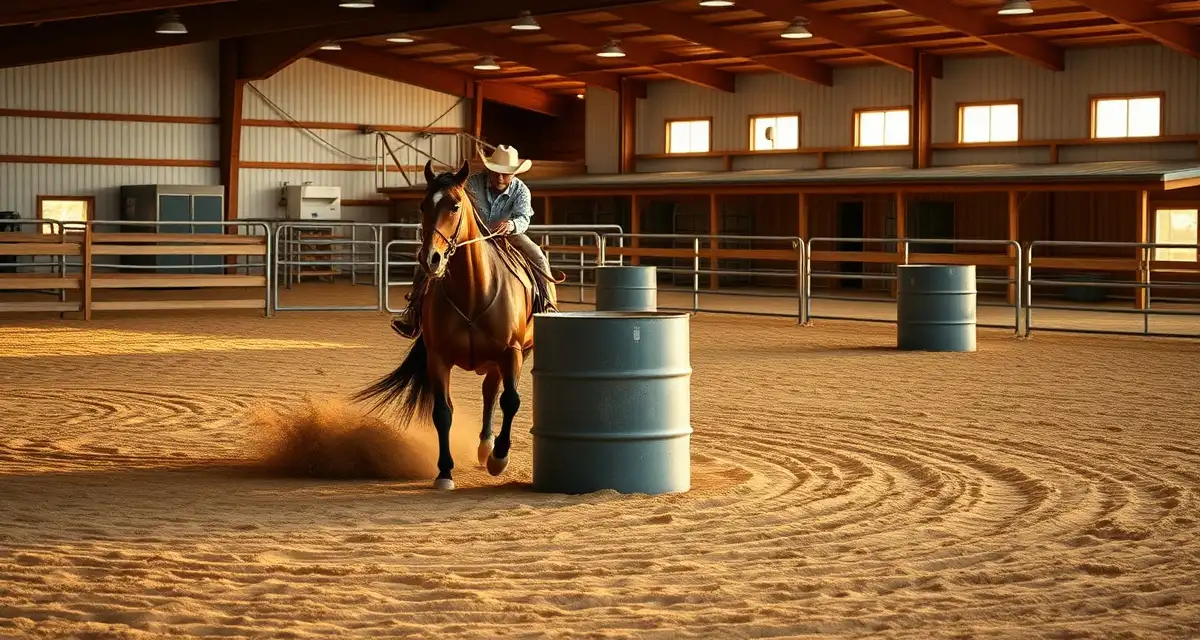
A purpose-built barrel racing facility needs more than a standard arena and stalls. The arena itself should be large enough to accommodate the full pattern with room to rate horses at the start and stop safely at the far end. Standard dimensions call for at least 100 by 200 feet, though larger is better for training purposes.
Footing is the biggest investment you'll make after the structure itself. Sand, rubber, or a blend of both are common choices. What matters most is consistency. Your footing should compact and release in a predictable way. Horses and riders learn to trust footing, and unpredictable surfaces create hesitation and injury risk.
Lighting matters if you intend to offer morning or evening training slots. Many clients work full-time and train before or after business hours. Quality, evenly distributed arena lighting is not cheap, but it dramatically expands your booking capacity.
Beyond the arena, you need adequate stall space, a wash rack, a farrier station, and secure feed and hay storage. A dedicated tack room for clients who haul in frequently is a selling point. Trailer parking that allows easy in-and-out without maneuvering around other rigs is more important at a barrel racing barn than at a general boarding facility.
Structuring Your Training Program
Most barrel racing barns offer some combination of horse training, riding lessons, and colt starting. Be clear about what you offer and what you don't. Clients will respect honest limitations more than overpromised results.
For horses in full training, build a weekly schedule that covers conditioning, pattern work, obstacle training, and rest. The pattern itself should not be drilled daily. Over-drilling creates anticipation, where the horse is thinking about the turn before the rider cues it. Use approach exercises, single barrel work, and speed control drills to keep horses sharp without burning them out mentally.
Colt starting for barrel prospects is a specialty. Young horses need time to develop correct fundamentals before speed is introduced. A barrel horse that was started correctly in their foundational work is far easier to advance than one that learned bad habits early.
Set measurable goals with clients. Document where a horse is at the start of each month, what's being worked on, and what progress has been made. This keeps clients engaged and gives you a professional record of the training work being done. Track this through your horse health and training records so everything stays organized.
Client Management for Barrel Racers
Barrel racing clients tend to be results-oriented. They're watching their horse's times, comparing to other horses at the facility, and evaluating whether the money they're spending is moving the needle. Manage these expectations from the start.
Onboard new training clients with a conversation about realistic timelines. A green horse is not running competitive times in 60 days. A horse with a specific problem such as dropping a shoulder or getting heavy at the second barrel may take months of consistent work to correct. Put these timelines in writing and revisit them at regular intervals.
Communicate proactively. If a horse is having a rough week, tell the owner before they show up and see it themselves. If something great happened in a training session, share it. Clients who feel informed are clients who trust you.
Use BarnBeacon to maintain client records, log training notes, and send updates. A facility that communicates consistently retains clients longer than one that only reaches out when there's a problem.
Billing and Scheduling
Training board is typically billed at a higher rate than basic boarding. Make sure your pricing reflects the actual cost of the work: trainer time, arena use, equipment wear, and the administrative load of managing a training program.
Bill monthly with a clear breakdown of services. If you offer additional services such as hauling to shows, trailering for outside vet visits, or extra conditioning rides, itemize these separately on invoices. Clients appreciate knowing exactly what they're paying for.
Scheduling training rides, lessons, and arena access requires coordination. If you have multiple horses in training and a lesson program running simultaneously, arena conflicts will arise. Build a scheduling system that blocks time for training rides and opens other slots for lessons and independent riding.
Barn staff management becomes critical as your program grows. Define who handles which horses, who covers on weekends, and who communicates with clients in your absence. Clear roles prevent things from falling through the cracks.
Health and Soundness Management
Barrel horses are hard on their bodies. The starts, stops, and tight turns put significant stress on joints, tendons, and feet. Build a proactive soundness monitoring program into your operation.
Work with a performance-oriented equine veterinarian who understands barrel racing athletes. Schedule regular maintenance appointments, joint injections, chiropractic, or bodywork as part of the training program for horses that need it. Document all veterinary and farrier work carefully.
Monitor horses daily for subtle changes: a new fill in a tendon, a change in how a horse tracks, or reluctance in work that wasn't there the week before. Catching issues early keeps horses in work and clients happy.
A well-run barrel racing facility has systems for everything: training, billing, health records, client communication, and show planning. Build those systems intentionally and your operation will run smoothly even during the busiest parts of the competition season.
FAQ
What is Complete Guide to Running a Barrel Racing Operation?
This is a comprehensive resource covering everything needed to successfully run a barrel racing barn, from arena dimensions and footing selection to client management, horse care protocols, and daily operational systems. It addresses the unique demands of a performance-focused facility where horses are athletes and clients are competitors with high expectations.
How much does Complete Guide to Running a Barrel Racing Operation cost?
Running a barrel racing operation involves significant upfront investment. Arena construction, quality footing, and proper lighting can range from $50,000 to well over $200,000 depending on scale. Ongoing costs include feed, veterinary care, farrier services, footing maintenance, and staff. Monthly board rates at dedicated barrel facilities typically range from $500 to $1,500 or more.
How does Complete Guide to Running a Barrel Racing Operation work?
A barrel racing operation works by providing structured training environments, consistent footing, and performance-focused horse care. Clients board their horses, access the arena on scheduled or open slots, and rely on the facility for feeding, turnout, and conditioning support. Operators manage bookings, maintenance, and horse health to keep athletes competition-ready year-round.
What are the benefits of Complete Guide to Running a Barrel Racing Operation?
Running a dedicated barrel racing facility benefits clients with purpose-built footing, extended training hours with quality lighting, and a community of like-minded competitors. For operators, it creates a higher-value boarding niche with motivated clients. Horses benefit from consistent care routines, proper conditioning surfaces, and management tailored to the physical demands of the sport.
Who needs Complete Guide to Running a Barrel Racing Operation?
This guide is essential for anyone planning to open or improve a barrel racing barn, including existing boarding facility owners looking to specialize, competitive barrel racers transitioning into the business side, and equine facility managers seeking to better serve performance horse clients. It's particularly useful for those unfamiliar with the operational intensity competitive equine facilities require.
How long does Complete Guide to Running a Barrel Racing Operation take?
Building a functional barrel racing operation from the ground up typically takes 12 to 24 months, accounting for construction, footing installation, permitting, and client acquisition. Transitioning an existing general boarding facility into a barrel-focused operation can take 6 to 12 months. Developing consistent systems, reputation, and a full client roster often takes two to three years of active operation.
What should I look for when choosing Complete Guide to Running a Barrel Racing Operation?
Look for depth in footing guidance, realistic cost breakdowns, and coverage of client management specific to competitive riders. A strong guide should address arena sizing, lighting, scheduling systems, emergency protocols, and the horse health considerations unique to performance athletes. Practical templates for billing, waivers, and feed programs are a sign the resource is operationally grounded.
Is Complete Guide to Running a Barrel Racing Operation worth it?
Yes, if you're serious about running or improving a barrel racing facility. The competitive equine niche has slim margins for operational errors — poor footing, inconsistent feeding schedules, or inadequate facilities directly affect client results and retention. A thorough operational guide prevents costly mistakes, reduces liability, and helps you build a reputation that attracts serious competitors willing to pay premium board rates.