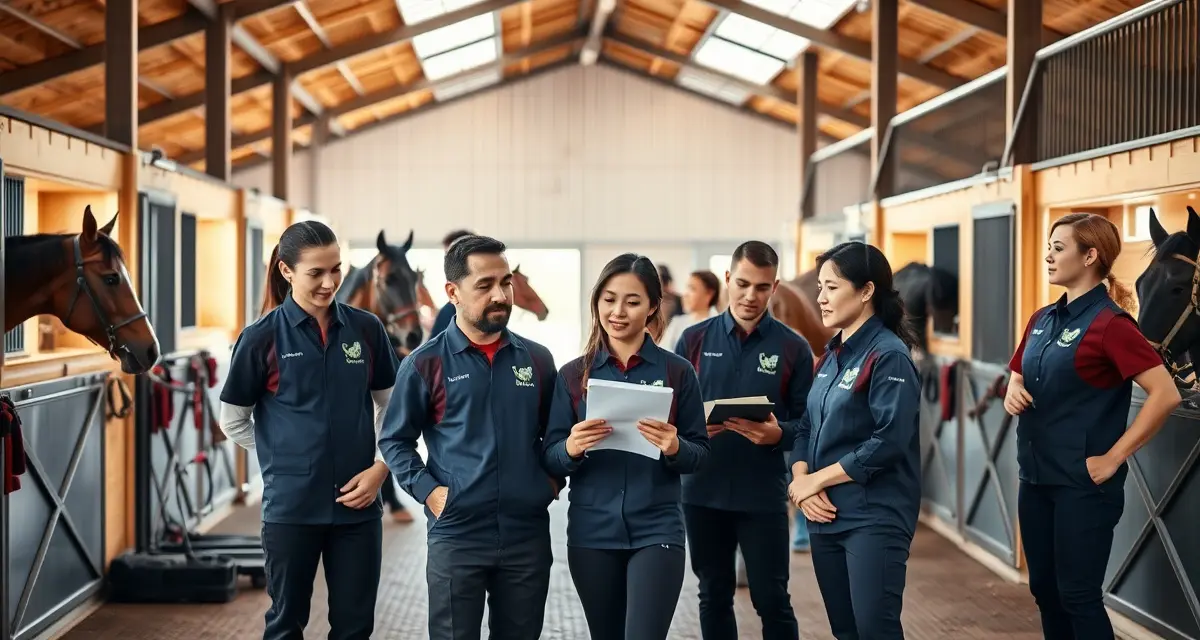
Barn Staff Management: Building and Running a Reliable Team
Staff are simultaneously the most important asset and the biggest operational challenge at a boarding barn. They deliver the care that your clients are paying for. They represent your facility to boarders every day. And they're often working early mornings and weekends for wages that don't attract an unlimited pool of candidates. Managing barn staff well requires clear expectations, good systems, and consistent follow-through.
Hiring for Barn Roles
The skill set for barn work is specific. Technical horse knowledge matters, but reliability, communication, and willingness to follow systems matter more for daily care roles. A highly experienced horse person who shows up inconsistently and ignores protocols is more disruptive to operations than a less experienced person who is reliable and follows instructions.
When hiring, look for:
- Verifiable work history in an equine environment
- References from previous barn managers (not just horse owners)
- Clear communication style during the interview
- Willingness to follow written procedures, even when they think they know a better way
Be specific in your job description about the physical demands (early mornings, heavy lifting, outdoor work in all weather), the schedule expectations, and the role's responsibilities. Vague job descriptions lead to mismatched expectations and early turnover.
Onboarding New Staff
The first two weeks determine whether a new employee is going to be successful. A structured onboarding process that covers your facility's procedures, your software tools, and your expectations prevents the "just figure it out" approach that leads to inconsistent care.
Onboarding should include:
- Tour of the facility with explanation of where everything is
- Introduction to each horse: name, board package, feeding instructions, special care notes, any health conditions
- Walk-through of the daily AM and PM checklists with a senior staff member before doing them alone
- Training on the barn management software, specifically how to complete checklists, log care notes, and look up horse records
- Written copies of all procedures and emergency protocols
See barn staff onboarding for a detailed onboarding framework.
Setting Clear Expectations
Staff cannot meet expectations they don't know about. Document your standards in writing:
- What does a complete morning checklist look like?
- What is the standard for stall cleanliness?
- What is the protocol when a horse shows signs of illness or injury?
- What is the attendance and tardiness policy?
- How should staff communicate with owners who ask questions directly?
Review these expectations explicitly during onboarding and revisit them during performance conversations. "We discussed this in onboarding" is a defensible position. "I assumed you knew" is not.
Scheduling and Coverage
Barn work happens 365 days a year at fixed times. Your scheduling system needs to ensure coverage for AM and PM shifts every day, including weekends and holidays, with a clear plan for when someone calls in sick.
Build your schedule with coverage gaps in mind. Who is the backup for each shift? What is the protocol if no backup is available and the primary can't come in? Having this documented before a crisis is much better than figuring it out at 5 AM when someone texts that they can't make it.
For scheduling tools, see barn staff scheduling and barn calendar scheduling.
Using Checklists for Accountability
Digital checklists through BarnBeacon give barn managers visibility into task completion without requiring physical presence. When the AM checklist shows incomplete at 10 AM, that's a flag to investigate. When the medication log shows a dose wasn't recorded, that's an immediate follow-up. See barn staff checklists for how to build effective checklists.
Performance Management
When a staff member isn't meeting expectations, address it specifically and promptly. "I noticed the water buckets weren't checked yesterday morning and three horses had nearly empty buckets by midday" is specific and actionable. "You need to do better" is not.
Document performance conversations. If the problem continues and leads to termination, documentation protects you. If the problem is resolved, documentation shows what worked.
FAQ
What is Barn Staff Management: Building and Running a Reliable Team?
Barn Staff Management: Building and Running a Reliable Team is a practical guide for boarding barn owners and managers covering how to hire, train, and retain dependable equine care staff. It addresses the unique operational challenges of barn environments—early schedules, physical demands, and the need for consistent animal care—offering actionable frameworks for setting expectations, building systems, and following through on staff accountability.
How much does Barn Staff Management: Building and Running a Reliable Team cost?
This is a free informational article published on BarnBeacon. There is no purchase required to access the guidance. The strategies and frameworks described can be implemented using your existing management resources, though some facilities may choose to invest in scheduling software, HR tools, or professional consultants to support implementation.
How does Barn Staff Management: Building and Running a Reliable Team work?
The approach works by replacing informal, reactive management with clear systems. You define role expectations upfront with specific job descriptions, establish written protocols for daily care tasks, build consistent onboarding and training processes, and use regular check-ins to maintain accountability. The result is a team that operates reliably even when you are not on-site supervising every task.
What are the benefits of Barn Staff Management: Building and Running a Reliable Team?
A well-managed barn team reduces owner burnout, improves consistency of horse care, and builds boarder trust. Clear expectations reduce staff turnover. Written protocols catch errors before they become emergencies. Reliable scheduling means animals are never without care. Collectively these benefits protect your facility's reputation, reduce liability, and create a more sustainable operation you can step away from without anxiety.
Who needs Barn Staff Management: Building and Running a Reliable Team?
Any boarding barn owner, barn manager, or equine facility operator who relies on paid staff to deliver daily horse care will benefit from this guidance. It is especially relevant for facilities scaling beyond what one person can manage alone, barns experiencing high staff turnover, or managers dealing with inconsistent care quality and communication breakdowns among their team.
How long does Barn Staff Management: Building and Running a Reliable Team take?
Building a reliable barn team is an ongoing process rather than a one-time project. Initial hiring and onboarding for a single role might take two to four weeks. Establishing functional systems and seeing consistent team performance typically takes three to six months. Staff retention and culture improvement are continuous commitments that compound over time as processes become embedded in daily operations.
What should I look for when choosing Barn Staff Management: Building and Running a Reliable Team?
Look for a management approach that prioritizes reliability and communication skills alongside technical horse knowledge. Effective barn staff management should include specific written job descriptions, clear protocols for animal care tasks, a structured onboarding process, and regular feedback mechanisms. Avoid frameworks that treat barn staffing as purely informal—horses require consistent care, and that consistency must be built into your systems deliberately.
Is Barn Staff Management: Building and Running a Reliable Team worth it?
Yes. The cost of poor barn staff management—missed feedings, inconsistent turnout, injured horses, lost boarders, and manager burnout—far exceeds the effort required to build better systems. Facilities that invest in clear hiring practices, written protocols, and consistent accountability consistently outperform those running on informal arrangements. For any barn where staff deliver daily care, strong management practices are not optional; they are the foundation of the business.