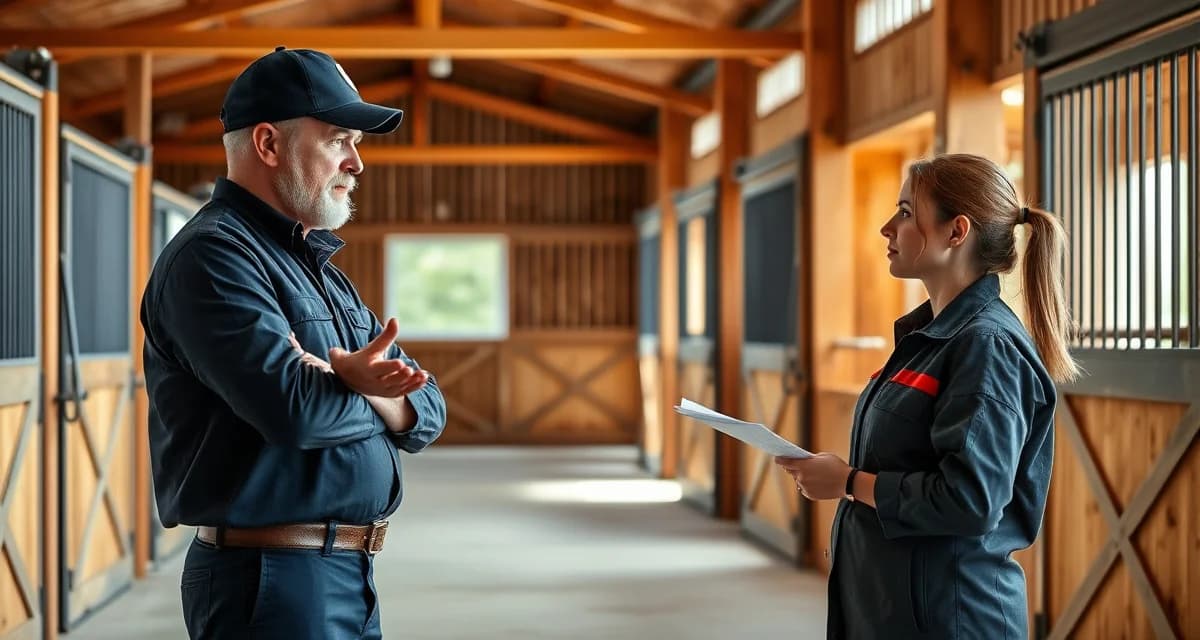
Barn Staff Onboarding: How to Train New Employees Effectively
The first two weeks of a new barn employee's experience determine whether they will become a reliable, capable team member or struggle through a sink-or-swim situation that leads to errors and early turnover. Structured onboarding is not optional overhead. It's an investment in the reliability of your operation.
Day One: Orientation
Day one should be about orientation, not maximum productivity. New employees who are thrown into a full shift on their first day make errors because they don't have the context they need. A few hours of deliberate onboarding prevents weeks of correcting mistakes.
Day one priorities:
- Full facility tour: show every area they'll be responsible for, where supplies are stored, location of first aid kit and emergency information
- Introduction to each horse: name, location, any health conditions or special handling notes
- Review of emergency protocols: who to call for a vet emergency, what to do if a horse is loose, fire evacuation procedure
- Introduction to barn management software: how to log in, how to look up a horse's care instructions
- Introduction to the daily checklist and what each item means
First Week: Supervised Practice
The first week should involve supervised practice on the daily routine before the employee works any shift alone. This doesn't mean the trainer stands and watches every task. It means they work the same shift together, answer questions as they come up, and review the completed checklist together at the end.
By the end of the first week, the new employee should be able to:
- Complete the AM and PM checklists independently
- Look up any horse's feeding instructions, medications, and care notes in the barn management system
- Know the protocol for a horse showing signs of illness or injury
- Know which staff member or manager to contact for different types of situations
Medication Training
Medication administration requires dedicated attention during onboarding. New employees should not administer medications until they have been specifically trained on:
- Which horses are on medications and their administration schedule
- How to read the medication log and record each administration
- The specific administration method for each medication a horse is receiving
- What to do if a horse refuses medication or a dose is missed
This is an area where clear documentation in the barn management system helps significantly. When medication instructions are specific and accessible in BarnBeacon's horse record, new staff can follow them accurately rather than relying on verbal instructions that may vary between staff members.
First Month: Building Competence
During the first month, check in with new employees weekly to identify areas where they're uncertain or inconsistent. Look at their checklist completion records for any recurring gaps. Address specific issues specifically: "I notice you're consistently not logging water observations on the PM checklist. Here's why that matters and what to note."
By the end of the first month, a new employee should be fully independent on daily care tasks, comfortable with the barn management software, and aware of any ongoing horse health situations that require monitoring.
Documentation Access
A major advantage of using barn management software like BarnBeacon during onboarding is that new staff have access to the information they need without having to ask someone. When a new employee can look up a horse's feeding instructions, Coggins status, and medication schedule from their phone, they're more confident and make fewer errors than when they're relying on verbal instructions remembered from the first day.
See barn staff management for the broader staff management framework, and barn staff checklists for how to build the checklists new employees will be learning to use.
FAQ
What is Barn Staff Onboarding: How to Train New Employees Effectively?
Barn staff onboarding is a structured process for introducing new employees to your equine facility's routines, animals, and safety protocols. It covers everything from facility tours and horse introductions to emergency procedures and barn management software. Rather than throwing new hires into a full shift immediately, effective onboarding gives them the context they need to work safely and confidently, reducing early errors and turnover.
How much does Barn Staff Onboarding: How to Train New Employees Effectively cost?
Structured barn staff onboarding costs nothing beyond the time investment of your existing team. The real question is the cost of skipping it: errors, accidents, damaged trust with horse owners, and high turnover. Tools like BarnBeacon that centralize care instructions and daily checklists reduce the time senior staff spend hand-holding new hires, making the process more efficient without adding overhead.
How does Barn Staff Onboarding: How to Train New Employees Effectively work?
Effective barn onboarding starts with a dedicated day-one orientation covering the facility layout, every horse's name and special needs, emergency protocols, and the daily checklist. The first week involves supervised practice on the daily routine before the employee works alone. Barn management software plays a key role, giving new hires a reliable reference for care instructions without needing to interrupt experienced staff with every question.
What are the benefits of Barn Staff Onboarding: How to Train New Employees Effectively?
Structured onboarding reduces errors, improves animal safety, and builds employee confidence. New hires who understand expectations from day one are less likely to miss feeding times, mishandle horses, or skip critical health checks. For horse owners, it means consistent, reliable care. For barn managers, it means fewer corrections and a shorter path to having a fully capable team member contributing independently.
Who needs Barn Staff Onboarding: How to Train New Employees Effectively?
Any barn or equine facility hiring new staff needs a structured onboarding process. This includes full-time grooms, part-time barn hands, seasonal workers, and even experienced equestrians joining a new barn. Prior horse experience doesn't replace facility-specific knowledge. Every new hire needs to learn your horses, your routines, your emergency contacts, and your management systems before working unsupervised.
How long does Barn Staff Onboarding: How to Train New Employees Effectively take?
A solid onboarding program spans at least two weeks. Day one focuses on orientation: tours, horse introductions, emergency protocols, and software setup. The first week involves supervised practice on daily routines. By the end of week two, a well-onboarded employee should be able to handle a standard shift independently and know exactly where to find information they haven't memorized yet.
What should I look for when choosing Barn Staff Onboarding: How to Train New Employees Effectively?
Look for a process that prioritizes context before productivity, includes hands-on supervised practice rather than just verbal instruction, and uses a centralized system for care notes and daily checklists. Good onboarding doesn't rely on a new hire memorizing everything on day one. It gives them reliable reference tools and a clear escalation path so they know what to do when something unexpected happens.
Is Barn Staff Onboarding: How to Train New Employees Effectively worth it?
Yes. The first two weeks of a new barn employee's experience directly predict whether they become a reliable team member or an early turnover. Structured onboarding prevents the errors and accidents that come from sink-or-swim situations, protects your horses, and builds the kind of consistent care that horse owners trust. The time investment pays back quickly in reduced mistakes and a more capable, confident team.