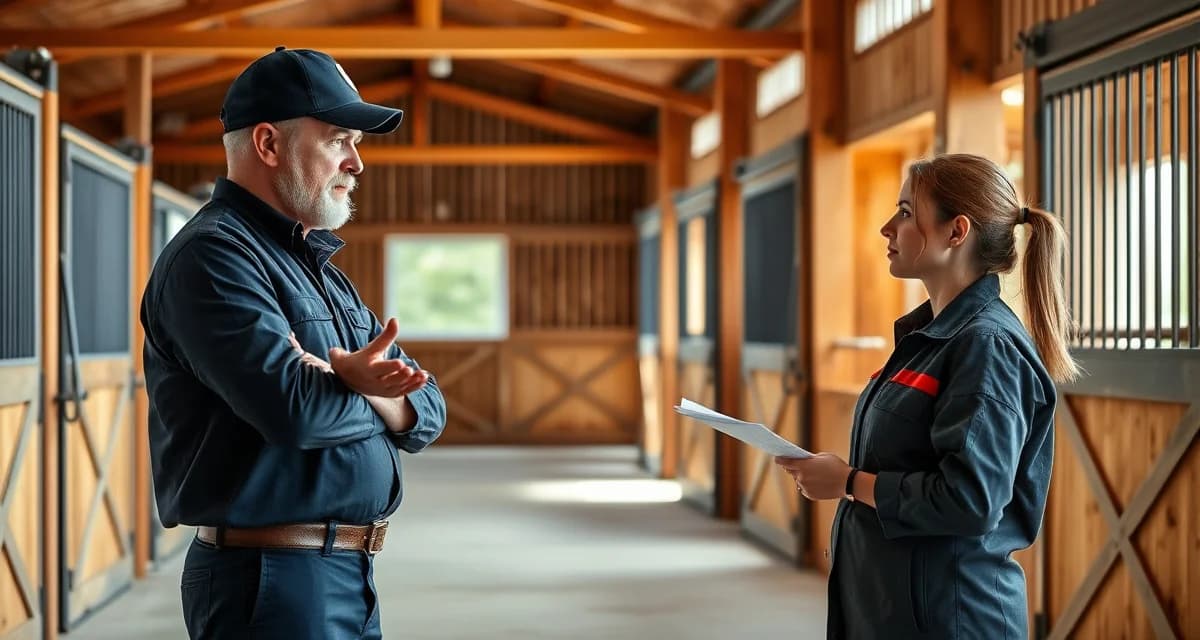
How to Onboard New Barn Staff
Hiring a new barn employee is only the beginning. How you bring that person into your operation determines how long they stay, how well they perform, and whether your horses are properly cared for during the learning curve. Rushed or absent onboarding is one of the leading causes of early turnover in barn work, and the cost of replacing an employee who left within three months because they felt lost is almost always higher than the time a thorough onboarding process would have taken.
This guide walks through a practical onboarding framework that works whether you're a small private barn or a large boarding operation.
Before Day One
Good onboarding starts before the new employee walks in. Prepare a written overview of your barn's daily schedule, feeding protocols, turnout groups, and any horses with special needs or health conditions. This doesn't need to be a formal manual. Even a clear printed sheet that covers morning and evening routines saves you from repeating yourself twenty times in the first week.
Review your existing documentation. If your feeding charts are out of date or your medication logs are scattered, clean them up before a new person tries to learn from them. First impressions of your operation include the quality of your records.
Day One: Safety and Orientation
Start with a safety walk. Show the new employee where fire extinguishers, first aid kits, and emergency contacts are located. Walk the property together and explain any known hazards: the gelding who kicks when approached from the left, the paddock gate that needs to be lifted to latch, the water cross that floods in heavy rain.
Introduce every horse by name and location. For facilities with more than fifteen or twenty horses, a printed barn map with horse names on each stall and paddock is invaluable. New employees who feel confident identifying horses by name and location become functional much faster.
Explain your expectations for how problems get communicated. Does a new employee text you if a horse seems off? Log it in the management system? Leave a written note? Inconsistency here leads to delayed communication on health issues, which can have serious consequences.
The First Week: Building Routine
The first week should be structured so the new employee can shadow an experienced staff member for at least part of each day. Even if you're a one-person operation, working alongside new staff in the first few days gives you a chance to correct habits before they become ingrained.
Walk through feeding protocols for each horse, including how to measure amounts, what supplements go to which horses, and how to log deviations like a horse that doesn't finish its grain. This is where barn management software makes a real difference. With a system like BarnBeacon, feeding notes and observations can be logged in real time from a phone, which gives you visibility into what the new employee is observing and ensures nothing gets lost.
Cover your turnout schedule in detail. Which horses go out together, which need to be separated, and any horses that need to be caught and brought in before others. Turnout management errors cause injuries, and new employees need clear written reference material for group assignments.
Week Two and Three: Expanding Responsibilities
Once the basic routine is solid, begin introducing more complex responsibilities. This might include setting up for farrier or vet appointments, administering medications under supervision, or managing more complex feeding protocols for horses with metabolic conditions.
Continue checking in daily, but shift from constant supervision to structured end-of-day conversations. Ask what the new employee noticed, what questions came up, and what felt unclear. These conversations surface gaps in your documentation and give the employee a channel to flag concerns before they become problems.
Ongoing Communication and Accountability
Clear task assignment is the foundation of a functional barn crew. Use a consistent system for assigning daily tasks so there's no ambiguity about who is responsible for what. When tasks are tracked digitally, you can review completion without hovering, and your new employee has a clear record of what they've done.
Establish a 30-day and 90-day check-in. Ask directly whether they have what they need to do their job well. Barn work is physically demanding and often isolated, and employees who feel supported and informed stay longer.
Good onboarding is not a checklist. It's the process of transferring the knowledge, habits, and standards that make your barn run. The investment you make in those first weeks pays dividends every day afterward.
For related resources, see scheduling task management and owner communication.
FAQ
What is How to Onboard New Barn Staff?
Barn staff onboarding is the structured process of integrating a new employee into your equine operation. It covers safety orientation, daily routines, feeding protocols, horse handling procedures, and barn-specific expectations. A proper onboarding plan ensures new hires understand your horses' needs, your facility's standards, and their responsibilities from day one—reducing costly mistakes and early turnover.
How much does How to Onboard New Barn Staff cost?
Onboarding barn staff costs nothing beyond your time. The real financial risk is skipping it: replacing an employee who leaves within three months due to poor integration typically costs far more than a few hours spent preparing written protocols, walking through routines, and providing structured guidance during the first weeks on the job.
How does How to Onboard New Barn Staff work?
Effective barn staff onboarding works in phases. Before day one, prepare written schedules, feeding charts, and horse-specific notes. Day one focuses on safety orientation and a facility walkthrough. The first week pairs the new hire with experienced staff. Weeks two through four gradually increase independence while supervisors check in regularly and provide feedback.
What are the benefits of How to Onboard New Barn Staff?
A structured onboarding process reduces early turnover, improves horse care consistency, prevents safety incidents, and shortens the learning curve for new hires. Staff who feel properly prepared and supported are more confident, make fewer errors, and are more likely to stay long-term—protecting your investment in recruiting and hiring.
Who needs How to Onboard New Barn Staff?
Any barn hiring staff benefits from a formal onboarding process—whether it's a small private facility or a large boarding operation. Yard managers, grooms, barn hands, and part-time help all need clear guidance on your horses' individual needs, your daily routines, and your safety expectations before working independently.
How long does How to Onboard New Barn Staff take?
A basic onboarding framework spans roughly 30 days. Day one covers safety and orientation. The first week focuses on supervised shadowing and routine learning. Weeks two and three build independence with check-ins. By week four, most employees should handle standard duties confidently. Horses with complex health needs or large operations may require a longer handover period.
What should I look for when choosing How to Onboard New Barn Staff?
Look for a process that covers written protocols, hands-on shadowing, regular feedback, and horse-specific documentation. Avoid vague verbal walk-throughs with no follow-up. The best onboarding frameworks are practical, not bureaucratic—clear printed schedules, updated feeding charts, and a designated mentor matter more than formal manuals.
Is How to Onboard New Barn Staff worth it?
Yes. The time invested in proper barn staff onboarding pays for itself quickly. Employees who feel oriented and supported make fewer mistakes, stay longer, and require less ongoing correction. The alternative—rushed or absent onboarding—leads to higher turnover, inconsistent horse care, and avoidable safety incidents that cost significantly more to address.