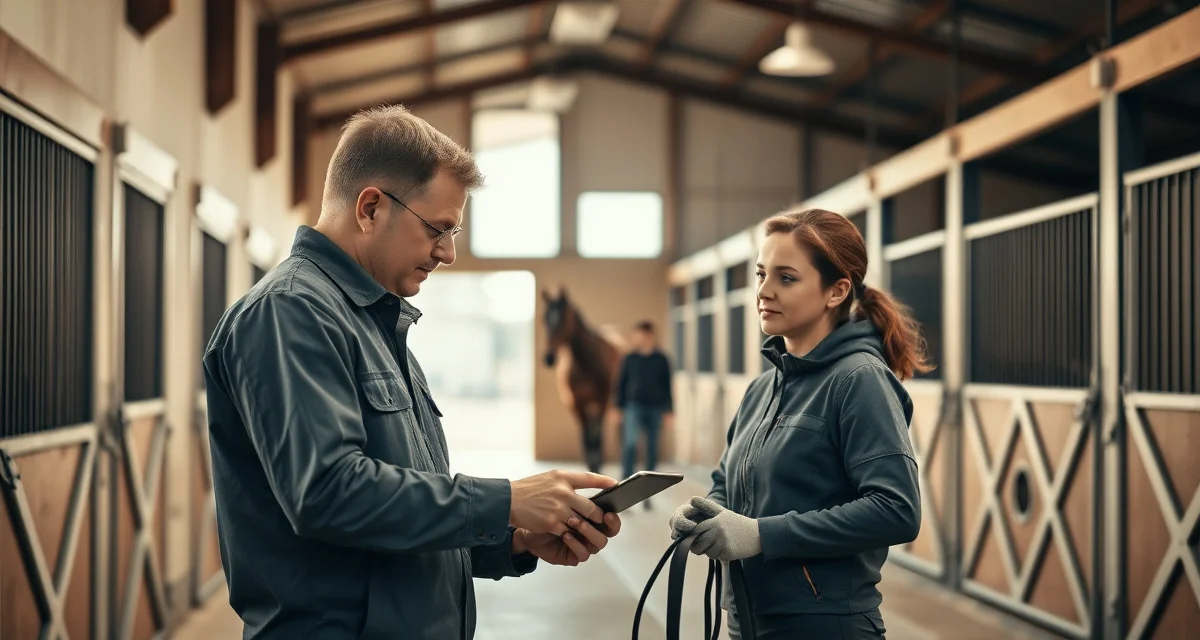
Onboarding New Employees at an Equine Facility
A new barn employee's first week sets the pattern for their entire tenure. New staff who receive structured, thorough onboarding become reliable contributors faster. New staff who are handed a pitchfork and left to figure things out develop habits that may or may not align with your protocols, and unlearning bad habits is harder than teaching good ones from the start.
What Good Onboarding Accomplishes
Effective onboarding does several things simultaneously:
Teaches the job. The specific protocols, procedures, and expectations for the role. Not just what to do but why, which helps staff make good decisions when situations arise that were not explicitly covered.
Introduces the horses. Each horse in the new employee's care section should be introduced specifically. Their name, stall location, any health or behavioral notes, their normal demeanor, and what to watch for. A new employee who can recognize when Halo is not acting like herself is more valuable than one who has memorized every feeding protocol but cannot tell when a horse is off.
Sets communication expectations. How the barn communicates, where to log observations, how shift handoffs work, who to contact for different types of situations. If your onboarding does not cover this, new staff will fill in the gaps with their own assumptions, which may not match your systems.
Establishes access and tools. Any software your barn uses, physical keys or codes, where supplies are stored, and any equipment the new employee will use should be covered during onboarding.
Onboarding Structure
A practical onboarding structure for barn staff:
Before the first day. Paperwork completed (tax forms, emergency contacts), employment agreement signed, access to any required online systems set up, and a schedule for the first week provided.
Day one. Tour of the facility with specific attention to areas relevant to their role. Introduction to all horses in their section, with the manager providing context for each. Review of the daily care schedule and their specific responsibilities. Introduction to the barn management software and how to log observations and tasks.
Days two and three. Shadowing an experienced staff member through a full shift. Working side by side, with the new employee performing tasks and the experienced staff confirming they are done correctly.
Days four and five. Working more independently with the experienced staff available but not necessarily right beside them. End-of-day check-in to address questions and reinforce key points.
First week review. A brief conversation covering what is going well, any questions or confusion, and any areas the manager has observed that need adjustment.
Documentation New Staff Need
Provide new staff with documented versions of your key protocols. These do not need to be long. A one-page overview of the morning routine, a list of each horse with their feeding protocol and any care notes, and your emergency contact protocol are the essentials.
BarnBeacon gives new staff access to the information they need for their role through the platform from day one. Horse care records, feeding protocols, and medication schedules are accessible on their phone rather than requiring them to memorize everything or find a binder.
Common Onboarding Mistakes
Too much information at once. A six-hour first day of instruction before the new employee has worked a single shift is overwhelming. Prioritize what they need to know on day one to do their job safely. Build in the rest over the first week.
Assuming prior knowledge. Even experienced barn staff from other facilities do not know your specific protocols. Make no assumptions about what they already know. Better to explain something they already understand than to skip something critical.
No follow-up. Onboarding that ends after the first week misses the opportunity to reinforce protocols before bad habits solidify. Brief check-ins during the first month keep new staff on track.
Skipping the "why." Staff who understand why a protocol exists are better equipped to follow it correctly and adapt it intelligently when an unusual situation arises. Explaining why you do fecal egg counts before deworming, why shift handoffs need to be written rather than just verbal, and why medication doses need to be logged immediately rather than at end of shift helps new staff understand the reasoning behind your systems.
Good onboarding is an investment that pays back in shorter time to competence, fewer mistakes, and better staff retention. Employees who had a positive, supported start are more likely to stay with a facility than those who were left to sink or swim. See also: staff-management and staff-checklists.
FAQ
What is Onboarding New Employees at an Equine Facility?
Onboarding new employees at an equine facility is the structured process of integrating barn staff into their role, covering protocols, horse introductions, safety procedures, and communication expectations. Unlike a simple orientation, effective equine onboarding is hands-on and specific — teaching not just what to do but why, so staff can make good decisions independently. A strong first week sets the pattern for an employee's entire tenure at the barn.
How much does Onboarding New Employees at an Equine Facility cost?
Onboarding new barn employees costs primarily in time rather than money. Expect to invest several hours per new hire across their first one to two weeks — for guided walkthroughs, horse introductions, and supervised practice. Some facilities use printed checklists or digital tools to streamline the process. The upfront time cost is far lower than the ongoing cost of correcting bad habits or replacing staff who were never properly integrated.
How does Onboarding New Employees at an Equine Facility work?
Effective equine facility onboarding works by moving a new employee through structured stages: barn layout and safety first, then individual horse introductions, then protocol walkthroughs with supervision, then independent work with check-ins. Each stage builds on the last. New staff learn each horse's name, location, temperament, and health notes — so they can recognize when something is off — alongside feeding, turnout, and communication procedures.
What are the benefits of Onboarding New Employees at an Equine Facility?
Structured onboarding produces staff who become reliable contributors faster, make fewer protocol errors, and are better equipped to recognize when a horse is not acting normally. It also reduces turnover — employees who receive clear guidance feel more confident and supported. Facilities with consistent onboarding spend less time correcting bad habits, fewer incidents occur during the transition period, and communication gaps between shifts are significantly reduced.
Who needs Onboarding New Employees at an Equine Facility?
Any equine facility that employs barn staff needs a formal onboarding process — from large boarding operations to small private barns. It matters most when horses have individual health, behavioral, or dietary needs that vary stall to stall. If a new employee is responsible for the care of horses they have never met, structured onboarding is not optional. Even experienced equestrians joining a new barn need facility-specific orientation.
How long does Onboarding New Employees at an Equine Facility take?
A thorough onboarding process for equine facility staff typically spans one to two weeks, depending on the size of the barn and the complexity of the role. The first few days cover safety, layout, and horse introductions. The following days involve supervised protocol practice. By the end of week two, most new staff should be able to complete their responsibilities independently, with check-ins continuing through the first month.
What should I look for when choosing Onboarding New Employees at an Equine Facility?
Look for an onboarding approach that covers horse-specific introductions alongside general protocols — not just a checklist of tasks. Good equine onboarding explains the why behind procedures, sets clear communication expectations, and includes a structured handoff process between shifts. Whether you are building a program from scratch or evaluating an existing one, prioritize any system that helps new staff recognize when individual horses are behaving out of the ordinary.
Is Onboarding New Employees at an Equine Facility worth it?
Yes. The investment in structured onboarding pays back quickly through fewer mistakes, lower turnover, and staff who can identify health or behavioral changes in individual horses. New employees who are left to figure things out develop habits that may not align with your protocols — and unlearning those habits takes longer than teaching correctly from the start. For any barn where horse welfare depends on consistent, attentive care, thorough onboarding is essential.