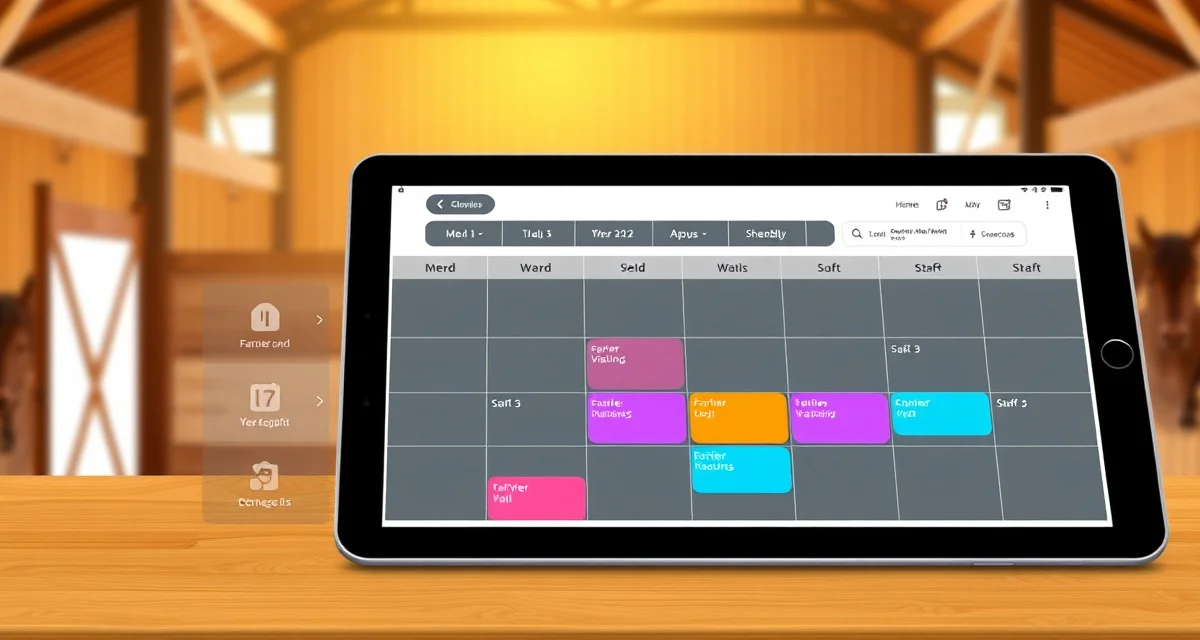
Barn Calendar and Scheduling: Coordinating Your Equestrian Facility
A boarding barn runs on schedules. Farrier visits, vet appointments, lesson blocks, turnout rotations, blanket changes, and staff shifts all need to be coordinated without double-booking, missed appointments, or the barn manager serving as the sole communication hub. A centralized barn calendar solves all of this if it's set up and used correctly.
Why Barn Scheduling Is Harder Than It Looks
Equestrian facilities have multiple overlapping schedules that affect each other:
- Farrier visits require horses to be in their stalls and clean, affecting turnout timing
- Vet appointments often need a staff member or owner present
- Lesson blocks require arena access, which creates conflicts when multiple instructors are scheduling
- Blanketing schedules vary by horse and change with the weather
- Staff shifts need to cover early morning and evening feedings, which are non-negotiable
Managing these schedules separately, whether by whiteboard, individual calendars, or text message chains, creates gaps. When a farrier visit and a lesson block get scheduled in the same arena at the same time, someone has to be the human who catches the conflict. That shouldn't be the barn manager's full-time job.
Components of a Functional Barn Calendar
A well-organized barn scheduling system covers:
Recurring schedules: Daily and weekly events that happen on a fixed schedule, including feeding times, turnout rotations, and regular cleaning tasks. These should be visible to all staff without requiring a daily briefing.
Farrier scheduling: Scheduled farrier visits per horse, with appointment reminders sent to owners who need to be present or who need their horse ready at a specific time. See our farrier scheduling guide for more detail.
Vet appointments: Scheduled vet visits with the horse, owner, and any notes about what's being addressed. Owners who need to be present should receive automated reminders.
Lesson and training blocks: Arena time reservations tied to specific instructors or trainers, with visibility for all staff so conflicts don't happen.
Staff scheduling: Who is working which shifts, with contact information available and coverage for time-off requests.
Facility maintenance: Scheduled maintenance for arenas, water systems, fencing, and equipment so these tasks don't get lost.
Setting Up Your Barn Calendar
Start by listing every category of scheduled event at your facility. Then decide which staff roles need visibility into each category and who has permission to add or edit entries.
A common setup:
- All staff can view the full calendar
- Barn manager and office administrator can create and edit all event types
- Instructors can add and edit their own lesson blocks
- Owners can view their horse's scheduled appointments through the boarder portal
After defining these roles, build out your recurring events first. Get the fixed schedule locked in before adding one-time appointments. This gives you a realistic picture of how much availability you actually have for scheduling farrier visits, vet appointments, and other variable events.
Communicating the Schedule to Owners
Owners need advance notice for anything requiring their presence or preparation: farrier visits where they want to be present, vet appointments they've scheduled, and horse shows or clinics. Automated reminders sent 24 to 48 hours in advance, with the appointment details clearly stated, dramatically reduce no-shows and last-minute scrambles.
For daily operations, a morning status update visible through the owner portal keeps boarders informed without requiring phone calls or texts to the barn manager. See our guide to barn owner communication for how to structure these updates.
BarnBeacon Scheduling Features
BarnBeacon includes a shared barn calendar that connects scheduling to horse records, owner accounts, and staff tasks. When a farrier visit is scheduled for a specific horse, the system can automatically notify the owner and add the appointment to the barn's daily task list so staff know to have the horse ready.
This integration between barn staff management, horse records, and owner communication is what separates a purpose-built barn management platform from using Google Calendar and hoping everyone checks it.
FAQ
What is Barn Calendar and Scheduling: Coordinating Your Equestrian Facility?
Barn calendar and scheduling for equestrian facilities refers to a centralized system that coordinates all recurring and one-time events at a boarding barn — including farrier visits, vet appointments, lesson blocks, turnout rotations, blanket changes, and staff shifts. Rather than managing these through separate whiteboards, text chains, or personal calendars, a unified barn calendar gives everyone visibility into what's happening, when, and with which horses, reducing conflicts and communication overhead.
How much does Barn Calendar and Scheduling: Coordinating Your Equestrian Facility cost?
The cost of barn scheduling tools varies widely. Basic shared calendar apps like Google Calendar are free but require manual setup and lack equine-specific features. Purpose-built barn management software typically ranges from $30 to $150 per month depending on barn size and feature set. Some platforms charge per horse or per user. For most boarding operations, the time saved by the barn manager alone — no more fielding scheduling texts — makes even mid-tier paid tools cost-effective within the first month.
How does Barn Calendar and Scheduling: Coordinating Your Equestrian Facility work?
A barn calendar works by centralizing all schedule types into one shared view accessible to barn managers, staff, instructors, and horse owners. Events like farrier visits are linked to specific horses and stalls, lesson blocks are tied to arena availability, and staff shifts are assigned with role-based visibility. Automated reminders notify the right people before appointments. Conflict detection flags double-bookings before they happen, so the system catches problems rather than a person having to.
What are the benefits of Barn Calendar and Scheduling: Coordinating Your Equestrian Facility?
The primary benefits include fewer scheduling conflicts, less time spent by the barn manager as a communication middleman, better horse care through consistent routines, and cleaner communication with boarders and service providers. Staff know their shifts without phone calls. Owners get automatic reminders for their horse's appointments. Instructors can book arena time without emailing anyone. Over time, a well-maintained barn calendar also creates a useful history of each horse's care and service visits.
Who needs Barn Calendar and Scheduling: Coordinating Your Equestrian Facility?
Any facility managing more than a handful of horses benefits from structured barn scheduling. This includes boarding barns, lesson programs, training facilities, and show barns. The need becomes acute when multiple instructors share arena space, when farriers and vets serve large numbers of horses on rotating schedules, or when staff turnover creates gaps in institutional knowledge. Even small private barns with two or three horses can benefit if the owner is juggling scheduling alongside other responsibilities.
How long does Barn Calendar and Scheduling: Coordinating Your Equestrian Facility take?
Initial setup of a barn calendar system typically takes a few hours to a full day, depending on the number of horses, staff, and recurring schedule types. Entering all boarder information, setting up recurring events, and configuring reminders is the bulk of the work. After that, daily maintenance is minimal — most updates take minutes. The ongoing time investment is far lower than the hours spent each week managing schedules reactively through texts, calls, and manual tracking.
What should I look for when choosing Barn Calendar and Scheduling: Coordinating Your Equestrian Facility?
Look for a system that handles multiple schedule types — not just appointments but recurring routines like turnout and blanketing. It should support role-based access so owners see relevant horse info, staff see their shifts, and instructors see arena availability. Conflict detection, automated reminders, and mobile access are important for a working barn environment. Bonus features include integration with billing, health records, and service provider communication. Avoid generic calendar tools that require heavy workarounds for equine-specific scheduling logic.
Is Barn Calendar and Scheduling: Coordinating Your Equestrian Facility worth it?
For any barn managing multiple horses, staff, or service providers, a structured scheduling system is worth the investment. The hidden cost of uncoordinated scheduling is real: missed farrier appointments, arena conflicts, confused staff, and a barn manager spending hours each week as a human message relay. A good barn calendar pays for itself in time saved and mistakes avoided. Even a free shared calendar used consistently outperforms the average barn's current system of texts and whiteboards.