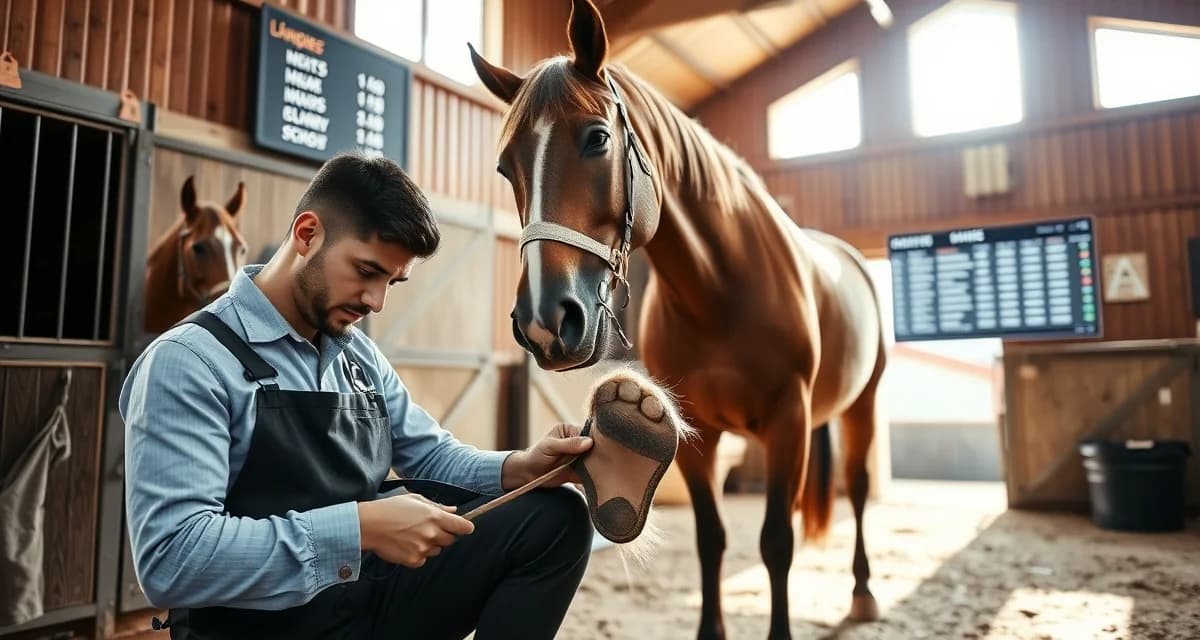
Farrier Scheduling: Setting Up a System That Works for the Whole Barn
Farrier scheduling sounds simple: call the farrier, pick a date, done. At a barn with 30 to 50 horses on various cycles, it is anything but simple. Horses have different cycles, different types of work being done, different owners with different communication expectations, and different positions in the farrier's priority list. A system that manages all of this predictably is worth building.
Understanding the Variables
Before designing a scheduling system, understand the variables you are working with:
Horse cycles: Not every horse is on the same farrier schedule. A shod performance horse in heavy work may need a reset every 5 to 6 weeks. A barefoot horse on pasture may be fine at 8 weeks. A horse in corrective shoeing may need 4-week appointments for a period. Track each horse's specific cycle, not a single barn-wide default.
Types of work: A full set of new shoes costs more and takes longer than a trim. Some horses get front shoes only. Some are barefoot with therapeutic pads. Knowing what each horse needs before scheduling the visit allows you to give the farrier an accurate estimate of the visit length and cost.
Farrier capacity: How many horses can your farrier reasonably see in a single visit? Most farriers have a range of 8 to 12 horses in a typical day visit, depending on the complexity of the work. Do not schedule 20 horses for a 4-hour window.
Owner considerations: Some owners want to be present for their horse's farrier appointments. Some owners have preferred farriers they use for their horse independently. Know who wants to be notified before the visit and what they need to know.
Building the Schedule
The most practical approach for a mid-size facility:
- Maintain a per-horse farrier record that shows the last appointment date, work done, the horse's typical cycle, and the next due date.
- Run a due-soon list two to three weeks before each scheduled farrier visit. This shows which horses are coming up on their cycle and which are already overdue.
- Contact the farrier with a specific list, not a vague request. "We have 12 horses due in the next two weeks. The list includes three full resets, seven trims, and two horses in corrective shoeing. Can you do a full day visit on the 14th or 15th?"
- Confirm the visit and notify owners whose horses are on the list, particularly any owners who want to be present.
- After the visit, update records for each horse: date, work done, farrier observations, and next expected visit.
Handling Scheduling Conflicts
Common scheduling complications:
Horse is out on competition: The horse was on the farrier list but hauled out on the scheduled visit day. Update the record to reflect that it was skipped and add it to the urgent list for the next visit or an interim call.
Horse needs emergency farrier work: A loose shoe, a pulled shoe, a horse going lame from a foot issue. Most farriers can accommodate emergency visits for regular clients. Being a reliable, well-organized barn client makes emergency accommodation more likely.
Farrier cancels: Have a backup protocol. If the farrier cancels and cannot reschedule within a week, do you have a backup farrier contact for horses that are genuinely overdue?
New horse arrives mid-cycle: Add the new horse's farrier information to your records on intake day. If their shoes need attention, contact the farrier for an interim visit rather than waiting for the regular cycle.
Communication with Owners About Farrier Visits
Standard practice should be to notify owners before their horse's farrier appointment. The notification can be simple: "The farrier is coming on Tuesday, March 18th. Your horse is scheduled for a full reset, which will be approximately $150. Please let me know if anything has changed with how you want the shoeing handled."
This communication prevents surprises on the invoice and gives owners a chance to communicate any specific requests before the appointment rather than afterward.
BarnBeacon tracks each horse's farrier history and upcoming due dates, making due-soon list generation automatic rather than a manual review process. For billing workflow after the farrier visit, see farrier billing workflow. For tracking farrier visits as part of the full health record, see farrier scheduling tracking.
FAQ
What is Farrier Scheduling: Setting Up a System That Works for the Whole Barn?
Farrier scheduling for a whole barn is the practice of organizing and managing hoof care appointments across multiple horses with different needs, cycles, and owners. Rather than booking horses one at a time reactively, a structured system tracks each horse's individual schedule—whether they're on a 5-week reset, 8-week trim, or corrective shoeing cycle—and coordinates visits so the farrier can work efficiently while every horse stays on track.
How much does Farrier Scheduling: Setting Up a System That Works for the Whole Barn cost?
Setting up a farrier scheduling system itself has no fixed cost—it's an operational process, not a product. The real cost savings come from reduced missed appointments, fewer emergency calls, and better farrier retention. Barns using management software to automate reminders and track cycles may pay a monthly subscription fee, but the time saved and the reduction in scheduling errors typically justify the investment quickly.
How does Farrier Scheduling: Setting Up a System That Works for the Whole Barn work?
A working farrier scheduling system starts by logging each horse's hoof care type, cycle length, and last appointment date. From that data, you project upcoming due dates and batch horses into farrier visits by grouping animals due around the same time. Owners receive advance notice, horses are confirmed available, and the farrier gets an accurate count and work estimate before arrival—eliminating surprises on visit day.
What are the benefits of Farrier Scheduling: Setting Up a System That Works for the Whole Barn?
A structured system reduces last-minute scrambles, keeps horses on their correct hoof care cycles, and helps farriers plan their routes and workload efficiently. Barn managers spend less time fielding owner questions about when appointments are scheduled. Horses in corrective or therapeutic shoeing stay on critical timelines. Owners feel informed and respected. The farrier relationship strengthens because visits run smoothly and on time.
Who needs Farrier Scheduling: Setting Up a System That Works for the Whole Barn?
Any barn housing more than a handful of horses benefits from a formal farrier scheduling approach. Multi-horse boarding facilities, training barns, and breeding operations are especially good candidates. If you manage horses with mixed schedules—some shod, some barefoot, some on corrective cycles—and multiple owners expecting communication, a system prevents horses from falling through the cracks and keeps everyone aligned.
How long does Farrier Scheduling: Setting Up a System That Works for the Whole Barn take?
Building the system initially takes a few hours: gathering each horse's current cycle, last appointment date, and hoof care type, then entering that data into a tracking tool or spreadsheet. Once established, ongoing maintenance is minimal—updating records after each visit and sending reminders takes less than 30 minutes per farrier day. The upfront investment pays off quickly in time saved during each scheduling cycle.
What should I look for when choosing Farrier Scheduling: Setting Up a System That Works for the Whole Barn?
Look for a system that tracks individual horse cycles rather than using a single barn-wide default. It should make it easy to communicate upcoming appointments to owners, give the farrier an accurate headcount and work estimate before each visit, and flag horses approaching their due date. Whether you use barn management software or a well-structured spreadsheet, consistency and visibility are the two most important features.
Is Farrier Scheduling: Setting Up a System That Works for the Whole Barn worth it?
Yes. For barns with more than 10 to 15 horses, an informal approach almost always results in missed appointments, horses going overdue, and frustrated farriers dealing with inaccurate visit estimates. A reliable system protects the farrier relationship—one of the most valuable and often hardest-to-replace resources in barn management. It also reduces owner complaints and keeps horses in work instead of sidelined by hoof issues caused by scheduling gaps.