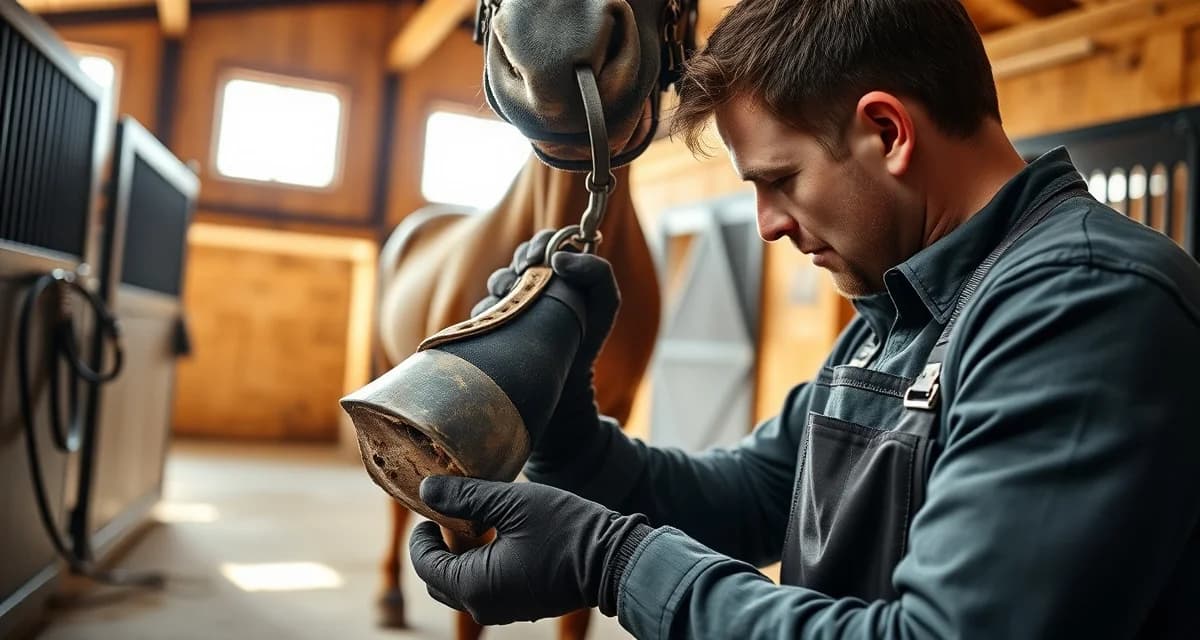
Farrier Scheduling and Tracking: Recording Visits and Managing Cycles
Scheduling and tracking are two sides of the same system. Scheduling determines when the farrier comes and which horses are seen. Tracking captures what happened during each visit and feeds back into the next scheduling decision. A facility that only schedules but does not track ends up without the information it needs to know which horses are due and what was done for each one.
What to Track for Each Farrier Visit
For every horse seen by the farrier, the following should be recorded in the horse's file:
Date of visit: The exact date, not "sometime in March."
Work performed: Be specific. "Shod" is not useful. "Full set of steel shoes, front and rear, with rear pads added, four nails each side front, five each side rear" tells a complete story. At minimum: whether the horse was trimmed or shod, front and/or rear, new shoes or reset, and any specialty additions (pads, wedges, specialty clips, therapeutic modifications).
Farrier name: If you work with more than one farrier, record who did the work.
Farrier observations: Any notes the farrier provided about hoof quality, balance, soundness concerns, or recommendations. This is clinically relevant information that belongs in the health record.
Charge: The charge for this horse's service. This feeds directly into billing.
Next visit date or cycle: Either a specific scheduled date or the expected interval (e.g., "return in 6 weeks").
The Connection Between Tracking and Scheduling
The most direct value of consistent tracking is knowing when each horse is due for its next visit. A horse whose last farrier visit was September 12 on a 6-week cycle is due around October 24. A horse whose last visit was October 1 on an 8-week cycle is due around November 26. Without this data, due dates are estimated from memory or guessed based on how the hooves look.
At a barn with 30 horses, managing this data in your head or on a piece of paper is unreliable. A tracking system that stores the last visit date and cycle per horse and calculates the next due date is the practical solution.
BarnBeacon maintains farrier records within each horse's health file and surfaces upcoming due dates so the barn manager knows who to include on the next farrier visit without conducting a manual review.
Common Tracking Failures and How to Avoid Them
Tracking at the barn level instead of the horse level: A logbook that says "farrier visited, saw 12 horses" is not useful for individual horse management. Records need to exist at the horse level.
Not recording farrier observations: A farrier who notes that a particular horse has thin soles and should not go barefoot has provided clinical information. If that information does not get recorded, it is lost when the farrier next visits and does not remember, or when a new farrier takes over.
Delayed recording: Farrier visits that get recorded "when there's time" often do not get recorded at all. Build the habit of updating records the same day as the visit.
Inconsistent units: If different staff record shoeing types differently ("full set" vs. "front and rear shoes" vs. "all four shod"), the records become inconsistent. Define a standard terminology for common shoeing types and train all staff to use it.
Integrating Farrier Records with Health Records
Farrier visits are health events. Hoof condition affects soundness. Corrective shoeing addresses lameness. Pulled shoes may follow an injury. These connections mean that farrier records belong in the same system as vaccination history, veterinary visits, and other health documentation.
Keeping farrier records isolated in a separate billing spreadsheet creates the problem where the veterinarian doing a lameness evaluation cannot see the shoeing history without asking for it separately. A single integrated health record that includes farrier history gives veterinarians and barn managers the full picture.
For the scheduling process that precedes tracking, see farrier scheduling. For the billing workflow that follows, see farrier billing workflow.
FAQ
What is Farrier Scheduling and Tracking: Recording Visits and Managing Cycles?
Farrier scheduling and tracking is a systematic approach to managing hoof care appointments and recording what happens during each visit. Scheduling determines when your farrier arrives and which horses are seen. Tracking captures the details—work performed, observations, charges, and next due dates—and feeds that information back into future scheduling decisions. Together, they form a complete hoof care management loop that keeps every horse on the right cycle and gives you a reliable clinical record over time.
How much does Farrier Scheduling and Tracking: Recording Visits and Managing Cycles cost?
The cost of farrier scheduling and tracking depends on the tools you use. Basic tracking can be done with spreadsheets or paper records at no cost beyond your time. Dedicated barn management software typically runs $30–$150 per month depending on facility size and features. The more relevant question is the cost of not tracking: missed cycles, duplicate services, billing gaps, and health issues caught too late all carry real financial consequences that a proper system prevents.
How does Farrier Scheduling and Tracking: Recording Visits and Managing Cycles work?
Farrier scheduling and tracking works by combining a forward-looking calendar with a backward-looking record. When a farrier visit is booked, horses are assigned to that appointment based on their individual service cycles—typically every 6–8 weeks. After the visit, details are logged for each horse: date, work performed, farrier name, observations, and charge. The system then calculates each horse's next due date automatically, triggering reminders and populating the next scheduling cycle without manual follow-up.
What are the benefits of Farrier Scheduling and Tracking: Recording Visits and Managing Cycles?
The core benefits are accuracy, accountability, and efficiency. You always know which horses are due and what was done at the last visit. Farrier observations become part of the permanent health record, available to vets and future caretakers. Billing is easier because charges are captured per visit per horse. Patterns emerge over time—hoof quality changes, recurring issues, seasonal variations—that inform better care decisions. For multi-horse facilities, the time savings from automated reminders and cycle tracking alone justify the system.
Who needs Farrier Scheduling and Tracking: Recording Visits and Managing Cycles?
Any facility managing more than a handful of horses benefits from structured farrier scheduling and tracking. This includes boarding barns, training facilities, breeding operations, and therapeutic riding centers. Individual horse owners with multiple horses also gain from the discipline it creates. If you have ever missed a farrier cycle, lost track of what was done at the last visit, had a billing dispute, or received a vet call about a hoof issue you did not know was developing, this system is for you.
How long does Farrier Scheduling and Tracking: Recording Visits and Managing Cycles take?
Setting up a basic farrier scheduling and tracking system takes a few hours: building your horse list, entering existing cycle information, and establishing a record template. Ongoing time per visit is minimal—roughly 2–5 minutes per horse to log what was done. For a 20-horse barn with a quarterly farrier rotation, you might spend 30–45 minutes logging after each visit. The upfront setup investment pays back quickly in reduced administrative scrambling and eliminated missed appointments.
What should I look for when choosing Farrier Scheduling and Tracking: Recording Visits and Managing Cycles?
Look for a system that captures the right data fields: visit date, work type, farrier name, clinical observations, charges, and next due date. It should support per-horse records, not just facility-level appointment logs. Automated cycle reminders are essential for busy facilities. Integration with billing and health records is a significant advantage. If you use barn management software, confirm the farrier module links to the horse's full health history. Flexibility for non-standard cycles matters for horses with therapeutic or seasonal hoof care needs.
Is Farrier Scheduling and Tracking: Recording Visits and Managing Cycles worth it?
Yes. Consistent farrier care is one of the highest-impact preventive health investments you can make for horses, and a tracking system ensures that care actually happens on schedule. Beyond health, the operational benefits—accurate billing, reduced administrative overhead, better communication with farriers and vets—deliver measurable value. Facilities that track farrier visits catch hoof problems earlier, maintain cleaner financial records, and run more professional operations. The system pays for itself many times over in avoided emergency farrier calls and preventable lameness.