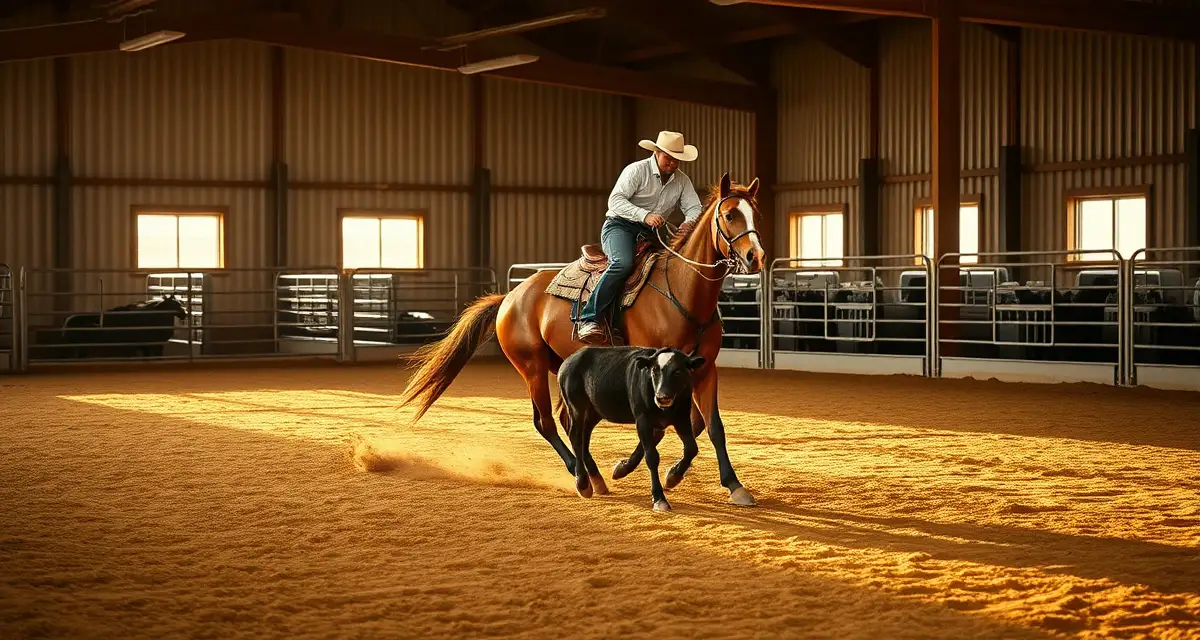
Cutting Horse Barn Operations: Managing a Cutting-Focused Facility
Cutting is one of the most technically demanding Western disciplines, requiring horses and riders to demonstrate the horse's ability to independently work and control cattle. A barn focused on cutting horse training has specific operational requirements around cattle management, training schedules, and the unique demands of horses that work cattle regularly.
What Makes Cutting Barn Operations Unique
Cattle management: Cutting horses need regular exposure to cattle for training, typically fresh cattle or cattle that haven't been worked extensively. The barn itself or a nearby facility needs to manage a cattle herd or have reliable access to working cattle. Cattle care (feeding, health, grazing) is an additional operational layer that pure horse barns don't deal with.
Arena and cattle pen setup: A cutting arena needs proper dimensions (typically at least 100 feet wide and 150 feet deep), good footing for sliding and turning, and cattle pens with a gate system that allows controlled release of individual cattle. Footing maintenance in a cutting arena, particularly the depth and consistency of the pen sand, is critical for horse safety.
Training schedule intensity: Top cutting horses typically work cattle several times per week during active training. The training schedule for a cutting horse is more intensive and requires more coordination than a horse that schools a few days per week.
Competition preparation: Cutting competitions at NCHA-affiliated events require current NCHA membership, registration papers for horses, and NCHA equipment rules compliance. Health documentation for out-of-state events requires current Coggins and often a CVI.
Daily Operations at a Cutting Facility
The daily care routine for cutting horses is similar to other boarding operations in the basic elements: feeding, watering, stall cleaning, turnout, and health monitoring. The differences are in the training schedule and cattle management:
Training sessions: Horses working cattle need to be in appropriate condition and not overly tired from other work. Training schedules should be tracked so horses aren't worked to the point of fatigue-related injury.
Recovery management: After a hard cattle work session, horses need appropriate cooldown, hydration, and sometimes electrolyte support. Monitor horses after intense training for signs of unusual fatigue or soreness.
Cattle pen care: Cattle pens need daily manure removal and fresh water. Cattle stress from poor pen conditions affects cattle quality for training, which affects training quality.
Billing for Cutting Facilities
Cutting horse training billing typically includes:
- Training board (covering stall, feeding, and training rides)
- Cattle fees (a portion of the cost of maintaining or accessing working cattle)
- Entry fee coordination for NCHA-affiliated events
- Blanket, farrier, and veterinary coordination fees
BarnBeacon handles cutting horse training billing with per-horse charge tracking for all of these components. Training rides can be logged as they occur, and cattle fees can be set as a monthly flat rate or allocated per session.
See boarding and training billing for the billing structure, and barn daily operations management for the daily operations framework that applies to any specialized equestrian facility.
FAQ
What is Cutting Horse Barn Operations: Managing a Cutting-Focused Facility?
Cutting Horse Barn Operations: Managing a Cutting-Focused Facility is a comprehensive guide to running a barn dedicated to cutting horse training. It covers the unique operational demands of facilities that work cattle regularly, including arena design, cattle herd management, training schedules, and horse health protocols. Unlike general equine facilities, cutting barns require an integrated approach to both horse and cattle care, making specialized operational knowledge essential for success.
How much does Cutting Horse Barn Operations: Managing a Cutting-Focused Facility cost?
There is no single fixed cost for operating a cutting-focused facility, as expenses vary widely based on location, herd size, and training volume. Key cost drivers include cattle acquisition and feed, arena footing maintenance, specialized equipment, and professional trainers. Startup costs for a purpose-built cutting facility can range from tens of thousands to several hundred thousand dollars, while ongoing monthly operating expenses typically exceed those of a standard horse barn due to cattle management overhead.
How does Cutting Horse Barn Operations: Managing a Cutting-Focused Facility work?
A cutting horse facility operates by integrating cattle management with horse training programs. Fresh cattle are rotated into a properly dimensioned arena, where horses learn to independently control individual animals. Trainers schedule cattle work sessions several times per week per horse, complemented by dry work and conditioning. Arena footing is maintained consistently for safety, cattle pens are managed for animal welfare, and the overall program is structured around competition calendars and horse development timelines.
What are the benefits of Cutting Horse Barn Operations: Managing a Cutting-Focused Facility?
A well-run cutting facility offers horses consistent, high-quality cattle exposure that accelerates skill development and competition readiness. Riders benefit from structured access to trained horses and professional coaching in a purpose-built environment. Facility owners gain a premium boarding and training niche with strong demand among serious competitors. Proper operations also reduce injury risk through maintained footing, appropriate cattle rotation, and disciplined conditioning schedules tailored to the physical demands of cutting.
Who needs Cutting Horse Barn Operations: Managing a Cutting-Focused Facility?
Anyone seriously involved in cutting horse competition needs access to a properly managed cutting facility. This includes professional trainers building client show strings, amateur competitors preparing for NCHA-sanctioned events, and breeders developing young cutting prospects. Barn owners transitioning from general Western disciplines will also benefit from understanding the specific infrastructure and management demands that separate a cutting-focused operation from a standard boarding or training facility.
How long does Cutting Horse Barn Operations: Managing a Cutting-Focused Facility take?
Establishing a fully operational cutting facility typically takes six months to over a year, depending on construction needs, permitting, and cattle sourcing. Training a green horse to competitive cutting readiness generally requires one to three years of consistent cattle work. Daily operations are ongoing, with arena footing checks, cattle feeding, and horse conditioning required year-round. Competition preparation intensifies seasonally around major NCHA events, requiring careful scheduling months in advance.
What should I look for when choosing Cutting Horse Barn Operations: Managing a Cutting-Focused Facility?
When evaluating a cutting facility, prioritize arena dimensions and footing quality — the pen sand depth and consistency directly affect horse safety and performance. Assess cattle management practices, including how frequently cattle are rotated and how herd health is maintained. Look for experienced staff with cutting-specific knowledge, not just general horsemanship. Proximity to NCHA-recognized shows, quality of stabling, and a structured training program with clear progression milestones are also critical factors.
Is Cutting Horse Barn Operations: Managing a Cutting-Focused Facility worth it?
For serious cutting competitors and trainers, a purpose-built cutting facility is absolutely worth the investment. The sport demands specialized infrastructure that general barns simply cannot replicate — cattle access, proper arena footing, and cutting-specific training expertise are non-negotiable for developing competitive horses. While operational costs are higher than standard facilities, the performance outcomes, competitive results, and premium positioning in the cutting horse market provide strong justification for committed participants.