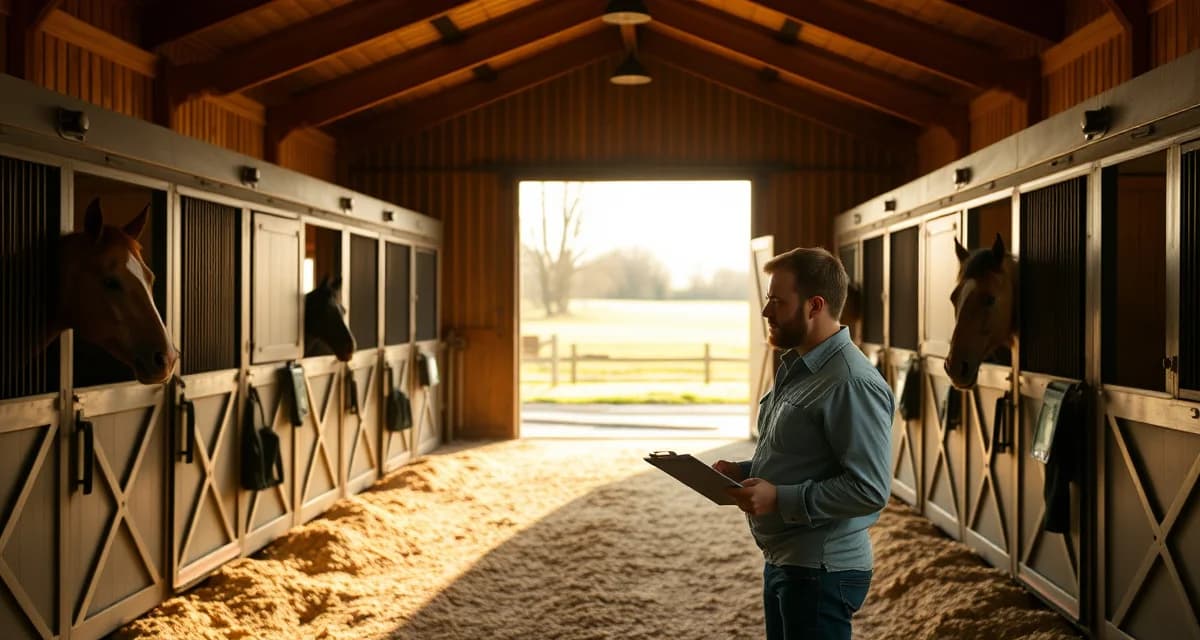
Spring Barn Management Guide
Spring is the most operationally complex season for many equine facilities. Breeding operations enter their busiest period. Performance facilities begin show season preparation. And every barn manager faces the perennial challenge of managing the pasture grass transition, one of the most significant metabolic risk periods of the year for horses prone to laminitis or pasture-associated conditions. Managing spring well sets the operational tone for the entire rest of the year.
TL;DR
- Spring brings rapid changes in forage quality, temperature, and turnout conditions that require proactive management adjustments.
- Transitioning horses onto spring pasture too quickly is a leading cause of laminitis; a gradual introduction protocol is essential.
- Spring is the primary season for annual vaccinations, dental exams, and Coggins testing -- schedule these early.
- Mud management around high-traffic areas reduces injury risk and skin conditions during wet spring conditions.
- A spring barn audit covering equipment, fencing, and water systems catches winter damage before it affects daily operations.
This guide covers the major operational dimensions of spring barn management: pasture and turnout transition, breeding season considerations, show season preparation, health care protocols, and how BarnBeacon's barn management software supports spring operations. The complete barn management guide covers year-round management in more detail.
Pasture and Turnout Transition Management
The spring grass transition is a critical period for horse health management. Early spring pasture grass has significantly higher nonstructural carbohydrate (NSC) content than mature summer grass, and transitioning horses to spring pasture too quickly is a common cause of laminitis, digestive upset, and weight gain.
Gradual turnout introduction is the foundation of safe pasture transition. Horses that have been on limited or no pasture through winter should begin with 15 to 30 minutes of grazing per day and increase access time slowly over two to four weeks rather than being turned out full-time on the first warm day. This applies to most horses, and especially to those with metabolic conditions including insulin dysregulation, equine metabolic syndrome, or any history of laminitis.
At-risk horses require more cautious management. Horses with a history of laminitis, ponies, easy keepers, and horses with known metabolic conditions may need restricted spring pasture access for the entire season rather than gradual transition to full turnout. A veterinary consultation about pasture management for metabolically at-risk horses is worth having before spring arrives.
Grazing muzzles are a practical management tool for horses that need to be on pasture but require restricted grass intake. A properly fitted grazing muzzle allows adequate air, water, and some grass intake while significantly reducing the total amount consumed.
Pasture condition monitoring in spring includes watching for bare spots or overgrazing from winter use, early weed growth, and any areas where improved drainage is needed. Spring is the practical time for pasture renovation, overseeding bare areas, addressing drainage issues, and applying appropriate fertilizer based on soil testing.
Logging turnout time per horse in BarnBeacon during the spring transition gives managers a clear record of how many minutes each horse has been on pasture and supports the gradual increase protocol. A horse that accidentally gets extra pasture time because of a staff miscommunication is a real risk during spring, having a logged record reduces that risk.
Breeding Season Operations
For breeding facilities, spring is the peak operational period of the year. Mare monitoring, AI procedures, and foaling watch activities overlap with routine spring farm management tasks.
Pre-breeding mare exams should be scheduled with your veterinarian before the breeding season begins. Reproductive ultrasound, uterine culture if indicated, and Caslick evaluation are the standard pre-season workup for mares entering a breeding program. Getting these exams completed before the season's first breeding attempt avoids delays.
Breeding season scheduling at a busy breeding operation is a complex coordination task. Mares in active monitoring require regular ultrasound exams, often every 24 to 48 hours as they approach ovulation. AI procedures need to be timed precisely. Semen collection and shipment for outside mares requires logistical coordination with FedEx or other overnight carriers.
Foaling season management overlaps with breeding season at most farms. Mares with late-winter or early-spring due dates require foaling watch during the same period when early-cycling mares are being monitored for breeding. Staffing during this period is often the limiting factor, foaling watch requires nighttime coverage that regular barn staff may not provide.
Record-keeping during breeding season is especially important because reproductive event records need to be accurate for breeding contract compliance, registration applications, and year-end billing. Every ultrasound result, AI procedure, and breeding outcome should be logged in BarnBeacon per mare at the time of the procedure, not reconstructed at the end of the season.
Foaling documentation starting from the moment of foaling, standing time, first nursing, placenta passage, IgG test result, builds the foal's health record from the first day of life. These records matter both for immediate care decisions and for future buyers or veterinarians who will want to know the foal's early history.
Show Season Preparation
Spring is show season preparation time at training and performance facilities. Getting horses, riders, clients, and administrative systems ready for show season requires planning that starts several months in advance.
Horse fitness and conditioning needs to progress through winter and early spring so horses are ready for competition by early show season. Working backward from the first competition date, fitness programs should be structured to bring horses to peak readiness without rushing the conditioning progression.
Entry calendar management is one of the highest-volume administrative tasks during show season preparation. Entry deadlines, class selections, and fees need to be tracked for every horse and every show. Missing an entry deadline is a costly error, both financially (loss of entry fees) and operationally (the horse doesn't compete as planned).
Health documentation for shows must be current. Coggins tests, health certificates, and any vaccine documentation required by the show organization need to be completed and available before departure. Building a per-horse documentation checklist in BarnBeacon and reviewing it two to three weeks before each show prevents last-minute scrambles.
Tack and equipment preparation starts well before show day. Checking tack condition, confirming that all required equipment is available and in good condition, and building a packing list for each horse prevents show day surprises.
Billing setup for show season should be established before the first show. A clear protocol for logging and billing show-related expenses, entries, hauling, stabling, braiding, and day-of costs, ensures that billing is accurate and complete throughout show season. Moving to real-time show expense logging in BarnBeacon, from a mobile device at events, is the most effective way to prevent billing gaps.
Spring Health Care Protocols
Spring is the traditional time for several annual health care procedures, which creates a period of concentrated veterinary and farrier activity at most facilities.
Deworming and fecal egg counts are a spring priority at most facilities. Most equine health programs now recommend fecal egg count testing before deworming, with targeted deworming based on individual horse shedding levels rather than universal calendar-based deworming. Scheduling fecal egg counts in early spring and deworming based on results is the current recommended approach.
Vaccination schedules at most facilities include spring boosters for core vaccines (tetanus, Eastern and Western encephalomyelitis, West Nile virus, rabies) and any risk-based vaccines appropriate for the facility's geography and show exposure (influenza, herpesvirus, strangles). Coordinating the spring vaccination schedule for a large barn requires advance scheduling with the veterinarian and clear records of which horses need which vaccines.
Dental care is often scheduled in spring at facilities that do annual dental floating. Scheduling the veterinarian or equine dental technician for a spring dental day gives all horses their annual checkup and floating before the show season begins.
Spring hoof care includes addressing any winter-related hoof issues, white line disease from wet conditions, hoof cracks from freeze-thaw cycles, or overgrowth from reduced work in winter. The spring farrier appointment is often longer and more involved than a routine trim cycle.
Logging all spring health procedures in BarnBeacon creates the complete health record that each horse carries through the year. Vaccination dates, deworming products and dates, dental work, and farrier notes all go into the per-horse health profile where they are available to any attending veterinarian and to the manager throughout the year.
Facility and Grounds Management in Spring
Beyond horse care, spring brings a substantial facility management workload.
Drainage repairs and improvements identified during winter should be addressed in spring before the next wet season. Standing water in paddocks and around barn areas is both a foot health concern (thrush, mud fever) and a pest breeding ground.
Fence inspection after winter is a priority at any facility with turnout. Winter weather, deer pressure, and frost heave can damage fence lines that appeared sound in fall. Walking every fence line in spring and repairing damage before horses are turned out to spring pasture prevents escapes and injuries.
Manure management becomes more active in spring as outdoor work increases and manure composting conditions improve. Spring is a good time to review manure storage and composting procedures and confirm that fly control measures are in place before fly season begins in earnest.
Equipment maintenance after winter includes servicing tractors, drag equipment, and manure spreaders that have been through a season of winter use. Addressing mechanical issues in spring, before peak demand in summer, reduces the likelihood of equipment failures during high-activity periods.
Scheduling Adjustments for Spring
Spring brings scheduling complexity that winter and summer don't match.
Daylight increases in spring make early-morning and later-evening scheduling practical again for facilities in northern latitudes. Many facilities add arena time or shift lesson schedules as daylight allows more options.
Show schedule coordination with arena scheduling at home requires careful management. If half the barn is at a show on a given weekend, arena usage at home drops but staff needs may be different (fewer horses to ride, more preparation tasks for returning horses after show weekend).
Outdoor facility reopening, arenas that were closed during winter due to footing conditions, pastures that were rested through winter, requires a planned reopening that allows footing to dry and firm before heavy use.
Get Started with BarnBeacon
Spring is one of the highest-activity seasons in barn management, with pasture transitions, annual health appointments, and facility maintenance all converging at once. BarnBeacon's task management and health monitoring tools help you organize the seasonal workflow and track each horse's spring protocol without losing items in the rush. If spring typically means a scramble to coordinate vaccines, dental appointments, and pasture introduction schedules simultaneously, BarnBeacon gives you a single platform to manage all of it.
Frequently Asked Questions
How do I manage spring grass transition safely?
Begin with strictly limited pasture access, 15 to 30 minutes per day, and increase turnout time gradually over two to four weeks as horses adjust to the new grass. Metabolically at-risk horses (history of laminitis, easy keepers, ponies, and horses with insulin dysregulation) need even more conservative management and may require grazing muzzles or restricted spring turnout for the entire season. Log daily turnout times per horse in BarnBeacon during the transition period so that all staff are working from the same protocol and actual turnout times are documented accurately.
What show season billing mistakes should I avoid?
The most common show billing mistakes are missing charges that are incurred at the event and not logged until later, or not at all. Hauling cost splits, day-of stabling, and braiding fees are the most frequently missed charges. The most effective solution is logging all show-related charges in BarnBeacon from a mobile device at the event, as each charge is incurred. By the time the horse returns home, all charges are already in the system and billing requires only a review step rather than a reconstruction.
What spring health care should every horse receive?
The standard spring health care workup at most facilities includes fecal egg count testing followed by targeted deworming if indicated, spring vaccination boosters for core vaccines, dental examination and floating if on an annual schedule, and a farrier appointment to address any winter-related hoof issues. Horses with specific health conditions may need additional veterinary attention, metabolic management as pasture returns, joint maintenance for performance horses returning to work, or respiratory care for horses with recurrent airway conditions. Log all spring health procedures in BarnBeacon to build the complete health record for each horse going into the season.
When should I start transitioning horses onto spring pasture?
Spring pasture transition should begin as soon as consistent new grass growth appears, typically starting with 15-30 minutes of daily grazing and increasing by no more than 15-30 minute increments per week over four to six weeks. Horses at elevated risk for laminitis -- those with EMS, a prior laminitis episode, or high body condition scores -- should have significantly more restricted access, ideally managed with input from the attending vet. Document each horse's transition protocol individually rather than applying a single barn-wide schedule.
What spring maintenance tasks should barn managers complete before the busy season begins?
Before the spring season, inspect and repair fencing damaged by frost heave or winter conditions, service water systems after freeze-thaw cycles, assess arena footing after winter compression and moisture, and schedule annual equipment maintenance for tractors and implements. Completing these tasks in early spring, before horse population peaks, avoids the problem of discovering critical maintenance needs during peak operational demand.
What is Spring Barn Management Guide?
The Spring Barn Management Guide is a practical resource for equine facility managers covering the key operational challenges of the spring season. It addresses pasture transition protocols to reduce laminitis risk, spring health care schedules including vaccinations and dental exams, mud management strategies, fencing and equipment audits after winter, breeding season preparation, and show season readiness. It serves as a seasonal checklist to help barn managers stay ahead of the rapid environmental and biological changes that define spring.
How much does Spring Barn Management Guide cost?
The Spring Barn Management Guide is a free resource available on BarnBeacon. There is no cost to access the article. BarnBeacon publishes educational content to help equine facility managers improve their operations. For those interested in tools that support the practices described in the guide, BarnBeacon also offers barn management software with paid plans, but reading and applying the guidance in this article requires no purchase or subscription.
How does Spring Barn Management Guide work?
The guide works by walking barn managers through each major operational area that requires attention in spring. It explains why spring is uniquely demanding, then provides actionable protocols for each challenge: how to gradually introduce horses to pasture, which health appointments to schedule early, how to address mud around high-traffic areas, and what to inspect during a spring barn audit. Managers can treat it as a structured seasonal checklist to work through each year.
What are the benefits of Spring Barn Management Guide?
The guide helps barn managers reduce preventable health incidents, particularly laminitis caused by abrupt pasture transitions. It consolidates spring priorities into one reference, reducing the chance of missed vaccinations, overlooked fence damage, or delayed farrier and dental appointments. Following a structured spring protocol also improves operational efficiency, sets a productive tone for the show and breeding seasons, and reduces reactive problem-solving by catching issues before they escalate into emergencies.
Who needs Spring Barn Management Guide?
Any equine facility manager responsible for horse health, turnout, and daily barn operations will benefit from this guide. It is especially relevant for managers of performance barns preparing for show season, breeding facilities entering peak season, and any barn housing horses at risk for laminitis or pasture-associated metabolic conditions. Hobby farm owners, professional barn managers, and equine veterinary support staff will all find the seasonal protocols and checklists applicable to their operations.
How long does Spring Barn Management Guide take?
Working through the Spring Barn Management Guide itself takes under 15 minutes. Implementing the recommendations is a seasonal process spanning roughly 6 to 8 weeks, typically from late winter through early spring. Pasture transitions alone are recommended over 2 to 4 weeks. Scheduling and completing veterinary appointments, completing a full barn audit, and addressing mud and fencing issues may run concurrently over the same period depending on facility size and staff availability.
Related Articles
Sources
- American Association of Equine Practitioners (AAEP)
- University of Minnesota Extension Equine Program
- Rutgers Cooperative Extension Equine Program
- Kentucky Equine Research
- The Horse magazine