Day-to-Day Operations of a 4-H Horse Barn
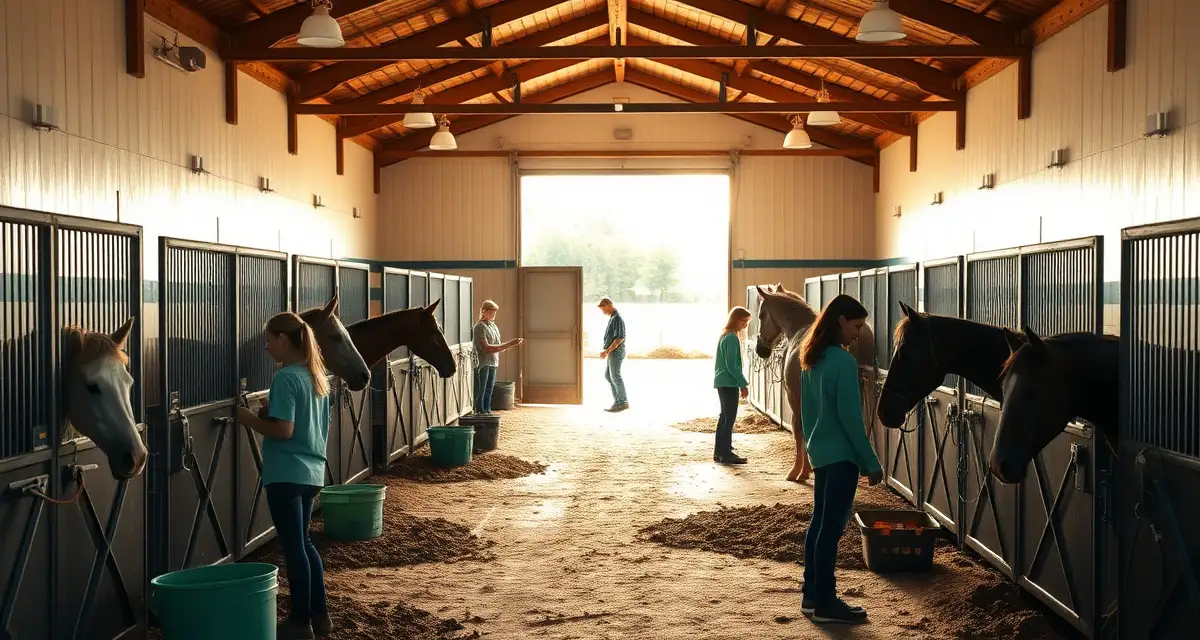
A 4-H horse barn runs differently from a private boarding facility or lesson barn. The horses are cared for primarily by youth members, which means the facility manager or barn supervisor needs to build reliable systems that work even when the young people doing the work are still learning. The goal is to produce good horsemanship while keeping horses healthy and the facility running smoothly.
Structuring the Daily Care Routine
Most 4-H programs require members to be responsible for the daily care of their project animal. In practice, this means members come out before or after school to feed, water, clean stalls, and handle their horse. The barn schedule needs to accommodate school drop-off and pickup times, which typically means early morning feeding windows (6:00 to 8:00 a.m.) and afternoon windows (3:30 to 6:00 p.m.).
The facility still needs a backup plan. When a member is sick, has a family emergency, or simply doesn't show up, the horse still needs care. Most programs have a barn supervisor or program coordinator who completes care for absent members and logs it. That log matters: repeated absences can be grounds for removal from the program, and having written records protects the program's integrity.
Each horse's daily care checklist should include:
- Fresh water check and refill
- Morning and evening hay or grain ration
- Stall cleaning and bedding refresh
- Quick visual health check (attitude, eating, any visible injury)
- Turnout if scheduled
- Grooming if member is present for training
Project Records That Actually Get Used
4-H horse project records are submitted at the end of the project year for evaluation. Members who keep good records do better at project reviews, and better records usually mean better horsekeeping habits overall. The challenge is that teenagers are not naturally enthusiastic record-keepers, so the system has to be simple.
The minimum viable project record includes:
- Monthly care log (who did what care on which day)
- Vet visit log with dates, reason, and treatment
- Farrier log with dates and work done
- Training log with session date, duration, and skills worked
- Health and nutrition record showing feed type, quantity, and any changes
Printed log sheets work fine for many programs, but digital records are becoming more common. Keeping health records in a central system like BarnBeacon and sharing access with members and project leaders keeps everyone working from the same information rather than comparing inconsistent paper records at fair time.
Supervision and Safety Protocols
Youth working with horses need clear, consistently enforced safety rules. Post barn rules visibly and review them with new members at orientation. Rules should cover:
- Halter and lead rope use when moving horses
- No running in the barn aisle
- No working around horses alone (two-person minimum for anything beyond routine feeding)
- Protective footwear required at all times
- Who to call if a horse shows signs of illness or injury
Document any incidents, even minor ones. A horse that pulled away and knocked a member down may not require vet care, but it should be logged. If a pattern emerges around a specific horse or handling situation, you need that documentation to address it.
Communication with Members and Families
In a standard boarding barn, you communicate with adult horse owners who can understand and act on complex information. In a 4-H barn, you communicate with kids and then separately with parents who may have little horse experience. Keep those two communication streams separate.
Communicate with members directly about their horsemanship: care responsibilities, training goals, upcoming deadlines. Communicate with parents about scheduling, billing, safety policies, and any behavioral concerns. Parents don't need a running commentary on every training session, but they do need to hear about absences, safety incidents, and any additional costs promptly.
A monthly one-page update works well for parents: upcoming dates, any reminders about vet and farrier scheduling, and notes about the program calendar. Keep it brief and factual.
Managing Multiple Members and Horses
If your facility hosts multiple 4-H members, you need a clear organizational system. Assign stalls consistently and label them with horse name and member name. Keep feed buckets, hay assignments, and any special dietary instructions written at each stall. Don't rely on members knowing which horse gets what from memory alone.
Track each horse's care completion separately. One member consistently completing care doesn't tell you anything about the next stall over. A simple daily log board in the barn aisle where members initial off completed tasks gives you a quick visual check each day and teaches accountability.
Preparing for End-of-Year Evaluation
Most county 4-H programs conduct a project evaluation before the fair. Members present their horse, demonstrate handling skills, and submit their record book. Prepare members by running mock evaluations a month or two before the real thing. Have them practice presenting their horse to an unfamiliar adult, walking through their record book, and answering questions about their horse's care and nutrition.
The barn's role in this is to make sure health records are current, horses are in good condition, and any outstanding care issues are addressed before the evaluation window.
See also: 4-H barn management software, barn daily care checklists, animal health records
FAQ
What is Day-to-Day Operations of a 4-H Horse Barn?
Day-to-day operations of a 4-H horse barn refers to the structured system of youth-led horse care that keeps horses healthy and facilities running smoothly. Members are responsible for feeding, watering, stall cleaning, and basic health checks on their project horse. A barn supervisor oversees the program, fills in for absent members, and maintains records. The routine is built around school schedules, with morning and afternoon care windows that fit a student's day.
How much does Day-to-Day Operations of a 4-H Horse Barn cost?
There is no single cost for running a 4-H horse barn — expenses vary by county program, facility, and what the family provides. Members typically pay stall fees, supply their own feed, and cover farrier and vet costs for their horse. Some programs charge nominal program fees. County extension offices often subsidize facilities. Families should budget for hay, bedding, equipment, and show entry fees in addition to any barn dues set by the local program.
How does Day-to-Day Operations of a 4-H Horse Barn work?
A 4-H horse barn operates on a schedule built around youth availability. Members arrive during designated morning and evening windows to complete a daily care checklist: fresh water, feed rations, stall cleaning, and a quick visual health check. A barn supervisor monitors the work, logs attendance, and steps in when members are absent. Regular record-keeping, mentorship from experienced leaders, and consistent routines ensure horses receive reliable care even as young members are still learning.
What are the benefits of Day-to-Day Operations of a 4-H Horse Barn?
The primary benefit is structured horsemanship education. Youth develop responsibility, animal husbandry skills, and consistent work habits by caring for a horse daily. Programs instill routine, accountability, and problem-solving under adult supervision. Horses benefit from predictable care schedules that support their health and well-being. Families benefit from an affordable, guided entry point into the equine world, with community support and mentorship built into the program rather than navigating horse ownership entirely on their own.
Who needs Day-to-Day Operations of a 4-H Horse Barn?
4-H horse barn operations are designed for youth ages 8 to 18 who have a project horse enrolled in a county 4-H program. Barn supervisors, program coordinators, and volunteer leaders also need to understand these systems to manage facilities effectively. Parents benefit from knowing how daily care expectations are structured. Anyone considering enrolling a child in a 4-H equine project — or anyone setting up or managing a 4-H barn facility — should understand how these routines function.
How long does Day-to-Day Operations of a 4-H Horse Barn take?
Daily horse care in a 4-H barn typically takes 30 to 60 minutes per session, with two sessions per day — morning and evening. Total daily time commitment is roughly one to two hours depending on stall condition, the horse's needs, and the member's efficiency. Weekly tasks like deep stall cleaning or equipment maintenance add additional time. Over a full project year, members accumulate hundreds of hours of hands-on animal care, which is a core educational goal of the program.
What should I look for when choosing Day-to-Day Operations of a 4-H Horse Barn?
When evaluating a 4-H horse barn program, look for clear written care protocols, an active and accessible barn supervisor, and a system for covering absent members. The facility should have safe stalling, reliable water and feed storage, and a regular vet and farrier schedule. Ask how attendance and care logs are maintained. A well-run program will have defined expectations for members, structured mentorship from experienced leaders, and a track record of horses staying healthy throughout the program year.
Is Day-to-Day Operations of a 4-H Horse Barn worth it?
For families considering 4-H horse ownership, a structured barn program is absolutely worth it. The daily responsibility builds character and horsemanship skills that carry forward regardless of whether a youth continues with horses. Horses enrolled in well-managed 4-H barns receive consistent, supervised care. The program framework reduces the learning curve for new horse families and provides community, mentorship, and accountability. Compared to private boarding without educational structure, a 4-H program delivers significantly more developmental value per dollar invested.