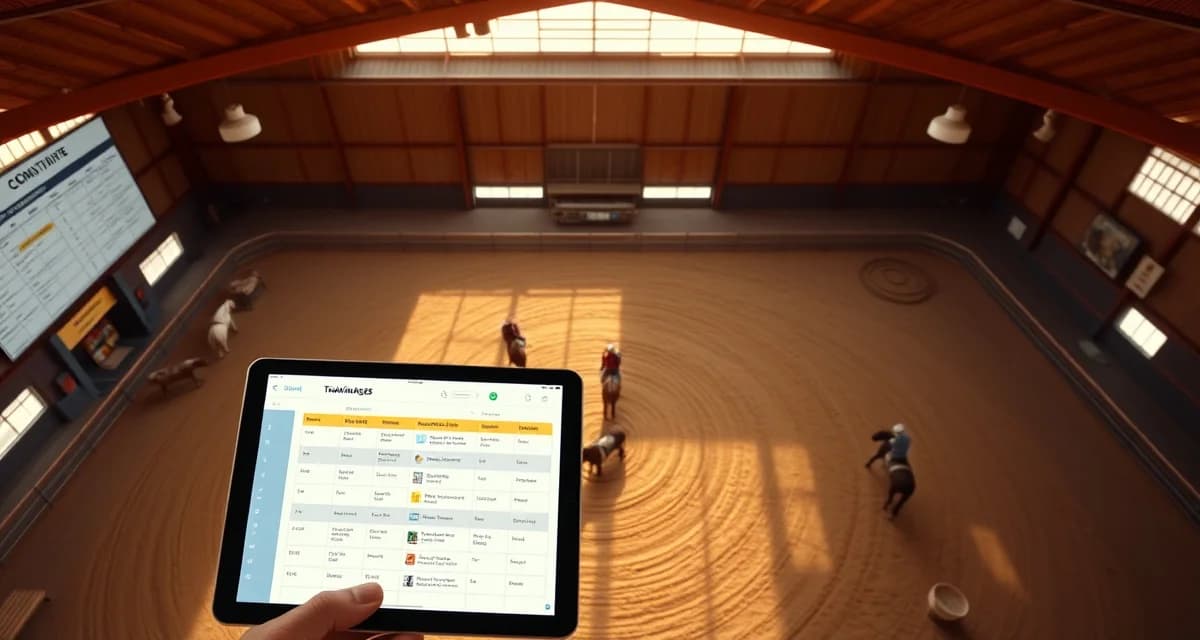
Barrel Racing Barn Scheduling: FAQ for Managers
Barrel-racing barn scheduling is one of the most overlooked operational challenges in the equine industry. Unlike general boarding facilities, barrel racing barns run on tight training windows, competition prep cycles, and shared arena time that generic software simply wasn't built to handle.
TL;DR
- This FAQ covers the most common questions about barrel racing barn scheduling for equine facilities.
- Digital systems reduce manual errors and save time across all key management areas.
- BarnBeacon centralizes records, billing, communication, and scheduling in one platform.
- Most facilities see measurable time savings within the first 30 days of adoption.
- Software works on phones and tablets so staff can log and check data from anywhere on the property.
This FAQ covers the questions barn managers ask most often, with direct answers based on how high-volume barrel racing facilities actually operate.
The Core Problem With Barrel Racing Scheduling
Most barn management tools were designed for boarding or lesson programs. They handle stall assignments and feeding schedules reasonably well, but they fall apart when you need to coordinate arena rotations for speed event training, manage multiple horses per rider, or block time around competition travel schedules.
Barrel racing facilities have unique scheduling needs that generic barn software consistently fails to address. That means managers end up patching together spreadsheets, group texts, and paper calendars, which creates conflicts, missed bookings, and frustrated clients.
What Purpose-Built Scheduling Actually Looks Like
BarnBeacon was built specifically for equine facility scheduling, with features that map directly to how barrel racing operations run. That means arena time blocking by event type, client-facing booking portals, and conflict detection that accounts for horse-specific training requirements, not just open time slots.
When your scheduling tool understands the difference between a pattern run session and a conditioning ride, you stop managing conflicts after they happen and start preventing them entirely.
How do barrel racing barn managers handle scheduling?
Most barrel racing barn managers rely on a combination of manual methods: shared calendars, whiteboards, and direct communication with clients. The problem is that barrel racing training schedules change frequently based on competition calendars, horse condition, and weather, so static systems break down fast.
The most effective managers build scheduling around fixed arena blocks tied to specific training phases, then use a digital system to handle client bookings within those blocks. This keeps the training program structured while giving clients enough flexibility to book around their own competition schedules. Purpose-built barn management software makes this significantly easier by automating conflict detection and sending automated reminders so managers aren't chasing confirmations manually.
What software do barrel racing barns use for scheduling?
Most barrel racing facilities start with general tools like Google Calendar, Calendly, or basic barn management platforms. These work at low volume but create real problems as the facility grows, because they don't account for horse-specific needs, arena capacity limits, or the back-to-back scheduling patterns common in speed event training.
BarnBeacon is purpose-built for equine facility scheduling and handles the specific demands of barrel racing operations, including multi-horse client accounts, arena time segmentation, and integration with competition prep timelines. Facilities that switch from generic tools to BarnBeacon typically report cutting scheduling-related client complaints by more than half within the first 60 days. You can see how this applies specifically to barrel racing barn operations in more detail.
What are the scheduling challenges at barrel racing facilities?
Barrel racing facilities face several scheduling pressures that don't exist at general boarding barns. The biggest ones include:
Arena time conflicts. Barrel racing requires dedicated pattern work space. When multiple clients need the arena for timed runs on the same morning, conflicts escalate quickly without a system that enforces capacity limits.
Competition-driven schedule changes. Clients frequently need to shift training sessions around weekend events, hauling schedules, and recovery days. A scheduling system that can't handle last-minute changes without manual intervention creates constant friction.
Multi-horse client management. Many barrel racing clients run two or three horses at different training stages. Scheduling software that only tracks one horse per client misses this entirely, leading to double-bookings and missed sessions.
Conditioning and rest cycles. High-performance horses need scheduled rest days and conditioning work built into the calendar. Without that visibility, it's easy to inadvertently overbook a horse that should be on a light day.
Trainer availability vs. arena availability. These two variables don't always align. Barrel racing equine facility scheduling requires tools that can match trainer time, arena availability, and horse readiness simultaneously, not just find an open slot on a calendar.
How is billing structured differently at a Barrel Racing facility compared to a general boarding barn?
Competition-focused facilities like Barrel Racing operations typically add event billing layers on top of standard board and training fees. These include entry fees, venue stabling, hauling, and professional services at shows. Capturing these charges in real time, at the event rather than from memory afterward, is the most important billing practice specific to competition-focused facilities.
What records are most important for Barrel Racing horses that travel to competitions?
Competition horses need their Coggins test results, current vaccination records, and a summary of any active health issues accessible from a phone for travel. Some venues require specific documentation at check-in. Health observations from the trip home, including any signs of travel stress, should be logged immediately on return so the training team can factor them into the recovery and reconditioning plan.
How do I track which horses are in the best condition for upcoming events?
Per-horse fitness and health records that log training load, competition history, and the trainer's condition assessments are the foundation for competition readiness decisions. A horse that competed three weekends in a row has a different physical profile than one resting for two weeks, and those decisions need to be based on documented history, not only the trainer's memory. Digital logs that capture each training session's intensity alongside health observations give the clearest picture.
Related Articles
- Barrel Racing Barn Billing: FAQ for Managers
- Barrel Racing Barn Case Study: Complete Guide for Facility Managers
FAQ
What is Barrel Racing Barn Scheduling: FAQ for Managers?
Barrel racing barn scheduling is the process of coordinating arena time, training sessions, competition prep cycles, and horse care across a high-volume equine facility. Unlike general boarding, barrel racing operations involve speed event rotations, multiple horses per rider, and travel blackout windows. A structured scheduling system—ideally digital—keeps these moving parts aligned so trainers, staff, and horses stay on track without conflicts or missed sessions.
How much does Barrel Racing Barn Scheduling: FAQ for Managers cost?
Dedicated barrel racing scheduling software like BarnBeacon typically runs on a monthly subscription model, with pricing scaled to facility size. Most small-to-mid-size barrel barns spend less per month than the cost of a single missed training session or double-booked arena slot. Many platforms offer free trials so managers can validate the fit before committing. The ROI usually appears within the first billing cycle through reduced admin hours alone.
How does Barrel Racing Barn Scheduling: FAQ for Managers work?
A barrel racing scheduling system centralizes arena bookings, training rotations, competition travel blocks, and horse-specific care notes into one shared platform. Staff log sessions from phones or tablets in real time. Managers set recurring blocks for regular clients, flag competition weeks, and adjust rotations as needed. Automated reminders reduce no-shows, and billing integrations tie session logs directly to invoices, eliminating manual reconciliation at month end.
What are the benefits of Barrel Racing Barn Scheduling: FAQ for Managers?
Key benefits include fewer scheduling conflicts, faster billing cycles, and better communication between staff and clients. Barrel racing facilities specifically gain the ability to coordinate arena rotations around speed event training demands, block time for hauling and competition prep, and track per-horse progress notes in one place. Most facilities report measurable time savings within 30 days and improved client retention due to cleaner, more professional operations.
Who needs Barrel Racing Barn Scheduling: FAQ for Managers?
Any barn running barrel racing training programs, performance horse boarding, or speed event coaching benefits from structured scheduling. This includes private training facilities, multi-trainer operations, and larger equine centers that share arena space across disciplines. If your barn manages more than a handful of active barrel horses, coordinates competition travel for clients, or struggles with double-bookings and missed sessions, a dedicated scheduling system is worth evaluating.
How long does Barrel Racing Barn Scheduling: FAQ for Managers take?
Initial setup typically takes one to three days for most facilities. Importing existing client and horse records, configuring arena blocks, and training staff on the platform are the main time investments. BarnBeacon is designed for non-technical users, so no IT background is needed. Day-to-day scheduling tasks that previously took an hour can often be completed in minutes once the system is configured and staff are comfortable using it.
What should I look for when choosing Barrel Racing Barn Scheduling: FAQ for Managers?
Look for a platform built with equine facilities in mind rather than a generic booking tool. Key features include recurring arena block management, per-horse session tracking, competition travel scheduling, mobile access for on-property use, and integrated billing. Client communication tools and automated reminders are strong additions. Prioritize software that your staff will actually use daily—a clean interface matters as much as feature depth when adoption drives the return on investment.
Is Barrel Racing Barn Scheduling: FAQ for Managers worth it?
Yes, for any barrel racing facility managing more than a few active clients, structured scheduling software pays for itself quickly. The combination of reduced scheduling conflicts, faster invoicing, and fewer administrative hours typically exceeds the subscription cost within the first month. Beyond direct savings, cleaner operations improve client confidence and retention. BarnBeacon is purpose-built for equine facilities, which means fewer workarounds and faster value compared to adapting generic scheduling tools.
Sources
- United States Equestrian Federation (USEF), competition rules and facility standards
- American Horse Council, equine industry economic and performance data
- American Association of Equine Practitioners (AAEP), equine athlete health and performance guidelines
- National Reining Horse Association (NRHA) or relevant discipline governing body, standards and resources
- University of Kentucky Equine Initiative, equine business and performance management resources
Get Started with BarnBeacon
BarnBeacon handles the competition billing complexity, health tracking, and owner communication demands that Barrel Racing facilities need, in one platform built for equine operations. Start a free 30-day trial to see how it fits your specific facility type and client mix.