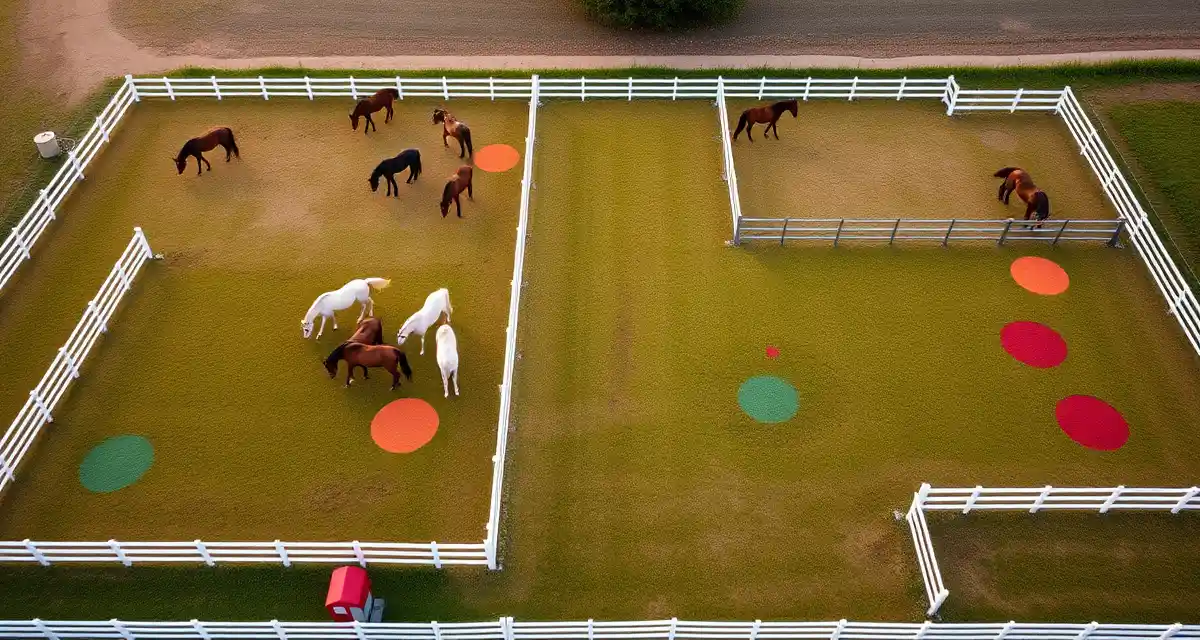
Breeding Farm Turnout Management: Mares, Foals and Stallions
Breeding farm turnout management is one of the most operationally complex tasks in equine care. You are not just rotating horses through paddocks, you are managing reproductive cycles, protecting vulnerable foals, keeping stallions safely separated, and navigating weaning transitions that can turn a calm herd into a chaotic one overnight.
TL;DR
- Turnout scheduling requires written documentation of horse compatibility, paddock assignments, and rotation protocols.
- Horse-to-horse conflicts during turnout are one of the leading causes of injury at boarding facilities.
- Weather-based turnout adjustments need a clear protocol so different staff members make consistent decisions.
- Documenting turnout time per horse allows managers to identify horses that are consistently not getting adequate outdoor time.
- Paddock maintenance schedules tied to turnout logs prevent overuse of small areas and mud-related footing problems.
- BarnBeacon's turnout tracking tools record daily paddock assignments and flag conflicts in the rotation schedule.
The stakes are high. According to industry data, 72% of boarding disputes involve disagreements about turnout records. On a breeding farm, where a single compatibility error can result in injury to a pregnant mare or a newborn foal, the margin for error is essentially zero.
Why Breeding Farm Turnout Is Different From Standard Boarding
A typical boarding barn manages horses with relatively stable social dynamics. A breeding farm does not have that luxury.
Mare status changes weekly. A mare in estrus behaves differently than one in late gestation or early lactation. Stallions require dedicated paddocks with buffer zones. Foals need to stay paired with their dams until weaning, and then need carefully managed separation. Every one of these variables affects who goes where and when.
Without a documented system, staff working different shifts make incompatible decisions. A night groom may not know that a mare was confirmed in foal yesterday, or that the paddock adjacent to the stallion run was flagged as a conflict zone.
Step 1: Map Your Paddocks and Define Compatibility Zones
Identify Stallion Buffer Zones First
Start with your stallions. Every paddock adjacent to a stallion turnout area should be designated as a restricted zone for mares in estrus and for mare-foal pairs with young foals. A stallion that can see, smell, or reach through a fence line creates a risk environment regardless of how well-behaved he is.
Mark these paddocks clearly in your farm map and in any scheduling system you use. This is not optional, it is the foundation of your entire turnout plan.
Categorize Paddocks by Use Type
Assign each paddock a primary designation:
- Mare-foal pairs (soft footing, no shared fence lines with stallions)
- Dry mares / barren mares (can tolerate more social grouping)
- Stallion exclusive (no crossover under any circumstances)
- Weaning transition (isolation-capable, solid fence preferred)
- Reproductive monitoring (close to barn, easy visual access)
This categorization becomes the backbone of your turnout rotation schedule.
Step 2: Build Your Mare and Foal Turnout Protocol
Pair Integrity Is Non-Negotiable
Mare-foal pairs should always turn out together until weaning is formally scheduled. This sounds obvious, but in a busy breeding season with multiple staff shifts, it is easy for a foal to get separated from its dam during a rushed morning turnout.
Document every pair as a locked unit in your scheduling system. No individual turnout for either horse in the pair without a supervisor sign-off.
Account for Foal Age in Paddock Selection
Foals under 30 days old should go to paddocks with the most controlled environments: minimal slope, no standing water, solid perimeter fencing. As foals age past 60 days, you can begin introducing small group turnout with other compatible mare-foal pairs.
Keep group sizes to three pairs maximum in the early stages. Social dynamics in a group of mares with foals can escalate quickly, and more horses means more variables to track.
Adjust for Reproductive Status
A mare confirmed in foal should be flagged in your records immediately. Her paddock assignments should reflect reduced social stress: avoid high-traffic areas, avoid grouping with aggressive mares, and keep her away from weaning paddocks where distressed foals may be vocalizing.
Step 3: Manage Stallion Turnout With Zero Ambiguity
Fixed Schedules, Fixed Paddocks
Stallions should have fixed turnout windows that do not overlap with adjacent paddock use. If your stallion turns out from 7:00 AM to 11:00 AM in Paddock 6, then Paddocks 5 and 7 should be empty during that window.
Write this into your schedule as a hard constraint, not a preference. Any deviation requires a documented reason and supervisor approval.
Log Every Entry and Exit
This is where most farms fall short. A verbal handoff between shifts is not a record. BarnBeacon logs every turnout entry and exit with staff ID, timestamp, and a compatibility check against current horse status, so if a mare was just confirmed in estrus, the system flags a conflict before she goes into a paddock adjacent to the stallion run.
That kind of audit trail is what protects your farm when a dispute arises or an incident needs to be reviewed.
Step 4: Plan Weaning Transitions in Advance
Weaning Is a Turnout Event, Not Just a Husbandry Event
Most farms think of weaning as a feeding and health management milestone. It is also a major turnout disruption. Foals in distress will test fencing. Mares separated from foals will pace, call, and sometimes injure themselves.
Plan your weaning paddock assignments at least two weeks in advance. Identify which paddocks will hold the foals, which will hold the mares, and confirm that the two groups cannot have visual or auditory contact for the first 48 to 72 hours if your protocol calls for abrupt weaning.
Stagger Weaning Dates When Possible
If you have multiple mare-foal pairs to wean in the same season, avoid weaning them all in the same week. Staggering by 10 to 14 days reduces the overall stress load on your facility and gives staff time to monitor each transition properly.
Document each weaning date, the paddocks used, and any behavioral observations in the first 72 hours. This data becomes useful for planning future seasons.
Step 5: Standardize Shift Handoffs With a Written Record
The Shift Gap Is Where Errors Happen
Most turnout incidents on breeding farms happen not because of bad decisions, but because of incomplete information transfer between shifts. The morning crew knows that a mare was moved. The afternoon crew does not.
Your barn daily checklist should include a dedicated turnout status section: which horses are currently out, which paddocks are occupied, any flags or changes since the last shift, and who made the last update.
Require Staff ID on Every Turnout Entry
When a staff member turns a horse out or brings one in, that action should be logged with their name and the time. This is not about blame, it is about having a complete picture when something goes wrong or when a client asks a question you need to answer accurately.
Common Mistakes in Breeding Farm Turnout
Treating stallion buffer zones as flexible. They are not. One exception sets a precedent that erodes the entire protocol.
Failing to update horse status in real time. A mare confirmed in foal at 10:00 AM should have her record updated before the afternoon turnout, not the next morning.
Grouping foals by paddock availability rather than compatibility. Paddock availability is a logistics problem. Compatibility is a safety problem. Solve the safety problem first.
Skipping documentation during busy periods. Breeding season is exactly when documentation matters most, not least.
How do I create a turnout rotation for 30+ horses?
Start by segmenting your herd into fixed groups: stallions, mare-foal pairs, dry mares, and weanlings. Build a rotation within each group rather than across the entire herd. For farms with 30 or more horses, a digital scheduling tool that tracks paddock assignments and flags conflicts is far more reliable than a whiteboard. Assign each group a primary and secondary paddock so you always have a fallback when a paddock needs to rest or dry out.
How do I track paddock assignments across shifts?
Every shift handoff should include a written or digital record of current paddock occupancy, any horses that were moved during the shift, and any flags for the incoming crew. A shared digital log that requires staff ID on each entry eliminates the ambiguity of verbal handoffs. If your farm uses paper records, a single centralized turnout sheet kept at the barn entrance is the minimum standard.
What factors affect horse turnout compatibility?
The primary factors are sex, reproductive status, age, herd rank, and prior history between specific horses. On a breeding farm, reproductive status is the most dynamic variable, a mare in estrus, a mare in late gestation, and a mare with a young foal all have different compatibility profiles even if they are the same horse at different points in the season. Stallion proximity is a hard constraint that overrides all other compatibility considerations.
How do I handle turnout for horses that do not get along?
Horse compatibility for turnout should be assessed during the first week and documented in the horse's care record before the first group turnout. Incompatible horses need paddock assignments that account for fence line contact, not just separation. When a new horse arrives, introduce it to the paddock individually before group turnout and observe the first few sessions. Documenting observed incompatibilities protects the facility when an injury occurs and ensures any staff covering the shift knows which horses cannot be turned out together.
What is the minimum daily turnout time most horses need?
Most horses benefit from at least 4 to 6 hours of daily turnout for physical and mental health. Horses confined to stalls with less turnout show higher rates of stress-related behaviors and digestive issues. The appropriate minimum varies by the horse's work level, age, and any health conditions. Horses on stall rest for injury are an exception, but even those often benefit from controlled hand-walking or small paddock time once a vet approves it. Logging actual turnout time per horse makes it easy to identify horses that are consistently getting less than intended.
How do I manage turnout during extreme weather?
Extreme weather decisions should follow a written protocol that specifies at what temperatures, precipitation types, or footing conditions turnout is modified or cancelled. Staff making individual judgment calls on extreme weather, especially during shift coverage, leads to inconsistency and liability if a horse is injured. A written threshold policy reviewed with all staff, combined with documented actual turnout decisions, protects the facility and ensures horses receive consistent care regardless of who is on duty.
Related Articles
- Best Barn Management Software for Breeding Facilities
- Breeding Barn Barn Management: Complete Guide for Facility Managers
FAQ
What is Breeding Farm Turnout Management: Mares, Foals and Stallions?
Breeding farm turnout management is the practice of safely scheduling and rotating mares, foals, and stallions through paddocks while accounting for reproductive cycles, herd compatibility, and foal vulnerability. It involves written documentation of paddock assignments, rotation protocols, and horse-to-horse compatibility to prevent injury and conflict. On a breeding farm, where a single mistake can injure a pregnant mare or newborn foal, structured turnout management is an essential daily operational discipline, not an optional convenience.
How much does Breeding Farm Turnout Management: Mares, Foals and Stallions cost?
Breeding farm turnout management itself has no fixed cost — it is a core operational responsibility of any breeding facility. The real costs come from poor management: veterinary bills from turnout injuries, liability from boarding disputes (72% of which involve turnout records), and lost breeding outcomes from stressed or injured mares. Investing in management software like BarnBeacon, staff training, and documented protocols typically costs far less than one preventable incident.
How does Breeding Farm Turnout Management: Mares, Foals and Stallions work?
Effective breeding farm turnout management works by assigning each horse a documented paddock schedule based on compatibility, reproductive status, and foal age. Stallions are kept strictly separated from mares and foals. Daily logs track which horse was turned out where and for how long. Weather protocols guide staff decisions consistently across shifts. Rotation schedules prevent paddock overuse. Digital tools like BarnBeacon automate conflict flagging and record-keeping so nothing falls through the cracks.
What are the benefits of Breeding Farm Turnout Management: Mares, Foals and Stallions?
Proper turnout management protects pregnant mares and foals from injury, reduces herd stress, and ensures every horse receives adequate outdoor time. It prevents paddock overuse and mud-related footing hazards. Documented records protect facilities in boarding disputes and support veterinary decision-making. Staff operate consistently across shifts because protocols are written, not assumed. Farms that manage turnout well see fewer injuries, lower vet costs, and stronger client trust.
Who needs Breeding Farm Turnout Management: Mares, Foals and Stallions?
Any operation housing breeding mares, foals, or stallions needs structured turnout management. This includes breeding farms, stallion stations, foaling facilities, and boarding barns that accept pregnant or nursing mares. The higher the horse value and reproductive sensitivity, the more critical formal protocols become. Facilities with multiple staff members especially benefit, since turnout decisions must be consistent regardless of who is on shift.
How long does Breeding Farm Turnout Management: Mares, Foals and Stallions take?
Daily turnout sessions for mares and foals typically run four to eight hours depending on weather, footing, and individual horse needs. The management system itself — building documentation, compatibility charts, rotation schedules, and staff protocols — takes several hours to establish initially but becomes a routine daily workflow. Digital tools reduce the ongoing time burden significantly by automating logs and flagging scheduling conflicts before they become problems.
What should I look for when choosing Breeding Farm Turnout Management: Mares, Foals and Stallions?
Look for a system that covers written compatibility documentation, clear stallion separation protocols, weather-based decision guides, and per-horse turnout tracking. Staff should be able to follow protocols without relying on institutional memory. Paddock rotation schedules should account for footing conditions and overuse prevention. If using software, prioritize tools that flag rotation conflicts automatically and generate records usable for client communication or veterinary reference.
Is Breeding Farm Turnout Management: Mares, Foals and Stallions worth it?
Yes. On a breeding farm, the cost of one turnout-related injury to a pregnant mare, a foal, or a high-value stallion dwarfs any investment in proper management systems. Beyond injury prevention, documented turnout records reduce boarding disputes, support insurance claims, and give veterinarians actionable data. Farms that treat turnout management as a formal operational discipline rather than informal daily habit consistently report fewer incidents and stronger client retention.
Sources
- American Association of Equine Practitioners (AAEP), equine welfare and management guidelines
- University of Minnesota Extension Horse Program, horse housing and turnout management resources
- Rutgers Equine Science Center, equine pasture and turnout management guidance
- American Horse Council, equine industry welfare standards
Get Started with BarnBeacon
BarnBeacon's turnout tracking tools log daily paddock assignments, surface scheduling conflicts, and give every staff member on any shift access to the current rotation plan. Start a free 30-day trial to see how it fits your facility's turnout protocols.