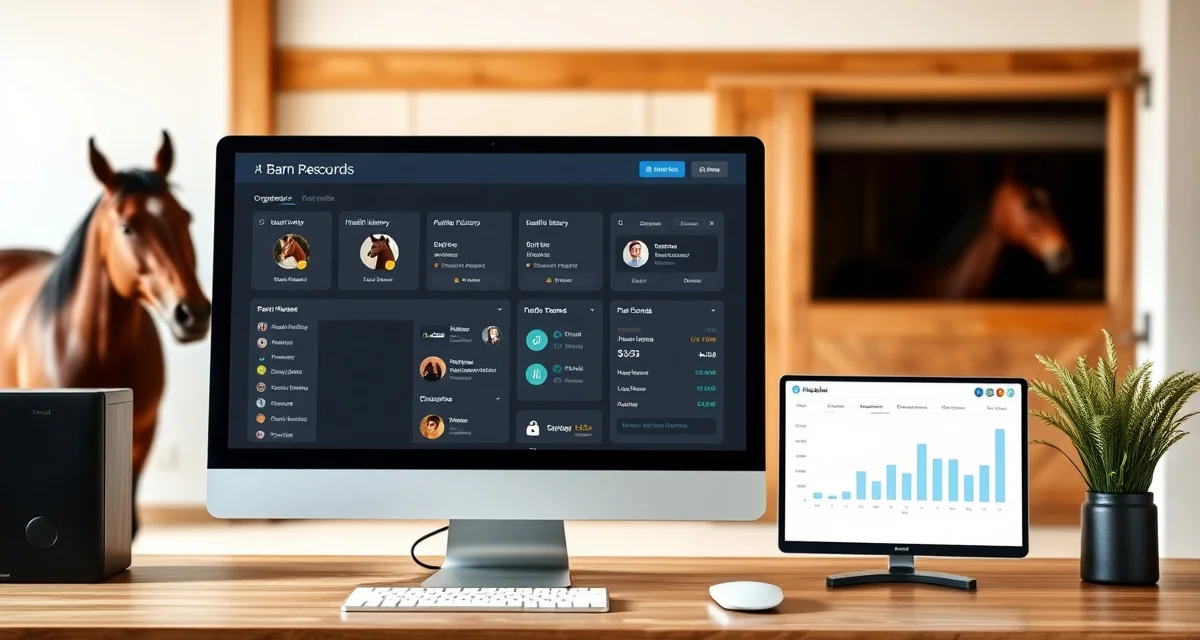
Equine Facility Data Management: Building a Digital Horse Record
Most barn managers are running their operations across a patchwork of spreadsheets, paper files, text threads, and calendar apps. The average barn manager uses 6+ separate tools to track horses, clients, and schedules, and consolidating that into a single system saves an average of 2.4 hours every day.
TL;DR
- Effective equine facility data management at equine facilities relies on consistent written protocols accessible to all staff.
- Digital records reduce errors and create the documentation needed during emergencies, audits, and client disputes.
- Owner visibility into their horse's daily care reduces communication friction and improves retention.
- Centralizing billing, health records, and scheduling in one platform outperforms managing separate tools.
- Staff adoption of digital tools improves when interfaces are mobile-friendly and task-based.
- BarnBeacon supports all core barn management functions from a single platform built for equine facilities.
That time adds up. Over a year, it's more than 870 hours you could spend on the horses, the clients, or simply not working until 10pm.
This guide walks through exactly how to build a complete digital horse record, what data belongs in it, and how to structure your equine facility data management so nothing falls through the cracks.
Why Fragmented Records Cost You More Than Time
When a horse's medication history lives in a notebook, the farrier schedule is in a group text, and the vet invoices are in an email folder, you're not managing a barn, you're managing chaos.
Fragmented data creates real risk. A missed deworming cycle, a duplicate vaccine, a billing dispute with no documentation to back you up. These aren't hypothetical problems; they happen in facilities that rely on disconnected tools.
A proper digital horse record system eliminates that risk by centralizing every touchpoint for every horse in one place.
Step 1: Create a Master Horse Profile
What to Include in the Base Record
Every horse in your facility needs a master profile that serves as the single source of truth. This should include:
- Horse name, breed, age, color, and markings
- Microchip or brand number
- Owner name and emergency contact
- Board type and stall assignment
- Arrival date and any intake notes
This profile isn't just administrative. It's the anchor that every other record connects to, health events, billing, scheduling, and communication all tie back here.
Attach Ownership and Contact Details
Link the horse's profile directly to the owner's account. When you update a horse's record, the owner should be able to see relevant information without you having to send a separate message. This is where a barn management software platform earns its value, it handles that connection automatically.
Step 2: Build the Health History Log
Vaccination and Deworming Records
Document every vaccine with the date administered, product name, lot number, and the vet or staff member who administered it. For deworming, log the product used and the rotation schedule.
This matters for two reasons: regulatory compliance in some states, and liability protection if a health issue arises. A timestamped log is your best defense.
Medication Tracking
Any horse on a daily or short-term medication protocol needs a dedicated medication log. Record the drug name, dosage, frequency, start date, end date, and who administered it.
If a horse is competing, you also need to track withdrawal periods. A digital log with date-based alerts removes the guesswork entirely.
Vet Visit Summaries
After every vet visit, enter a summary that includes the date, attending vet, reason for the visit, findings, treatment administered, and any follow-up instructions. Attach photos if relevant, a picture of a wound or swelling at intake is worth more than a written description six months later.
Step 3: Log Farrier and Dental Records
Farrier Notes
Track every farrier appointment with the date, farrier name, work performed (trim, shoe, reset, specialty work), and any notes on hoof condition. If a horse has a recurring issue like thrush or white line disease, that history needs to be visible at a glance.
Set a recurring reminder for the next appointment. Most horses are on a 6-8 week cycle, but that varies. Don't rely on memory or a sticky note.
Dental Records
Dental work is often the most neglected record in equine facility data management. Log the date, practitioner, procedure, and any findings. Horses typically need dental floating once a year, but performance horses or older horses may need more frequent attention.
Step 4: Track Competition and Performance Records
Event History
For horses in active training or competition, maintain a log of every show or event: date, venue, class, placing, and any notable performance notes. This data is useful for training decisions, sales documentation, and owner communication.
Owners want to see this information without having to ask. A digital record they can access directly reduces your inbox load.
Training Notes
If your facility offers training services, attach training session notes to the horse's profile. Even brief notes, "worked on lateral movement, showed resistance on left rein", build a picture over time that's invaluable for the trainer and the owner.
Step 5: Connect Records to Billing and Scheduling
Why Billing Needs to Be Integrated
This is where most digital horse record keeping systems fall short. Health records and billing are treated as separate systems, which means you're manually cross-referencing when it's time to invoice.
When a vet visit, farrier appointment, or medication administration is logged, it should automatically feed into the billing workflow. That connection eliminates double entry and billing disputes. Billing and invoicing tied directly to horse records means every charge has a documented source.
Scheduling Alignment
Vet appointments, farrier visits, and dental work should all live in the same scheduling system as your daily barn operations. When everything is in one place, you can see conflicts before they happen and communicate proactively with owners and service providers.
Step 6: Set Up Alerts and Audit Trails
Automated Reminders
A digital system should do the remembering for you. Set alerts for:
- Upcoming vaccine due dates
- Medication end dates
- Farrier appointment windows
- Annual dental checks
- Coggins and health certificate expirations
These aren't nice-to-haves. A missed Coggins expiration can prevent a horse from traveling to a show. That's a client relationship problem, not just an administrative one.
Audit Trails
Every entry in a horse's record should be timestamped and attributed to the staff member who made it. This protects you legally, helps with staff accountability, and makes it easy to reconstruct a timeline if a health issue is disputed.
Common Mistakes to Avoid
Starting with paper and planning to digitize later. Later never comes. Start digital from day one, even if the records are incomplete at first.
Using separate apps for each function. A scheduling app, a separate billing tool, and a notes folder in your email is not a system. It's three systems that don't talk to each other.
Not training staff on data entry standards. If three people log vet visits three different ways, the records become unreliable. Standardize your entry format and enforce it.
Skipping the audit trail. If your system doesn't timestamp entries and attribute them to a user, you lose accountability. This matters more than most barn managers realize until they need it.
What is the most important thing a barn manager can do to improve operations?
Centralize your data. The single biggest operational improvement most barn managers can make is moving from scattered tools to one integrated platform that connects horse records, scheduling, billing, and communication. The time savings alone justify the switch, but the reduction in errors and disputes is where the real value shows up.
How do I reduce time spent on barn administration?
Automate the repetitive tasks: reminders, invoicing, and record updates that currently require manual effort. When your digital horse record keeping system is connected to billing and scheduling, you stop re-entering the same information in multiple places. Most facilities that consolidate their tools report saving 2+ hours per day within the first month.
What tools do professional barn managers use?
The most efficient barn managers have moved away from spreadsheets and standalone apps toward integrated barn management platforms. These platforms handle horse health records, owner communication, farrier and vet scheduling, and invoicing in one place. Facilities still using six or more separate tools are leaving significant time and money on the table compared to those running on a unified system.
What is the most common mistake barn managers make with record-keeping?
The most common record-keeping mistake is logging health events, billing items, and care tasks after the fact from memory rather than at the time they occur. Delayed logging introduces errors, omissions, and disputes that are difficult to resolve because the original record does not exist. Moving to real-time digital logging, from any device, is the single most impactful record-keeping improvement available to most facilities.
How does barn management software save time at a multi-horse facility?
The largest time savings come from eliminating manual tasks that recur at high frequency: sending owner updates, generating monthly invoices, tracking care task completion across shifts, and scheduling recurring appointments. At a facility with 25 or more horses, these tasks can consume several hours per day when done manually. Automating the routine layer returns that time without reducing quality of communication or care.
Related Articles
- Barn Management Software Setup: Getting Your Equestrian Facility Operational
- Switching Barn Management Software: Data Migration Guide
FAQ
What is Equine Facility Data Management: Building a Digital Horse Record?
A digital horse record is a centralized profile for each horse at your facility, consolidating health history, feeding protocols, farrier and vet visits, medications, and daily care notes into one accessible system. Instead of hunting through spreadsheets, paper files, and text threads, barn managers can pull up everything they need instantly. Platforms like BarnBeacon are built specifically for equine facilities, replacing the 6+ separate tools most barns currently rely on with a single source of truth for every horse in your care.
How much does Equine Facility Data Management: Building a Digital Horse Record cost?
Most barn management software, including BarnBeacon, operates on a subscription model priced per facility or per horse. Costs vary based on herd size and feature tier, but the investment is typically offset quickly. Barn managers who consolidate their tools save an average of 2.4 hours per day—over 870 hours annually. When you factor in reduced billing errors, fewer missed care tasks, and improved client retention, the ROI is straightforward. Many facilities recover the subscription cost within weeks through operational savings alone.
How does Equine Facility Data Management: Building a Digital Horse Record work?
You start by creating a digital profile for each horse, then populate it with health records, care schedules, feeding instructions, and owner contact details. Staff access the system via mobile or desktop to log daily tasks, flag health concerns, and update records in real time. Owners can view their horse's care history through a client-facing portal. Billing, scheduling, and communications run through the same platform, so nothing lives in a separate app or inbox. The whole system works together rather than in disconnected silos.
What are the benefits of Equine Facility Data Management: Building a Digital Horse Record?
Digital horse records reduce costly errors, create audit-ready documentation, and cut the administrative hours barn managers spend chasing down information. During emergencies, staff can access medical history and emergency contacts instantly. During client disputes, you have timestamped records of every care event. Centralizing billing with care logs reduces invoicing errors and speeds up payments. Owners who can see their horse's daily updates are more satisfied and more likely to stay, directly improving revenue stability for your facility.
Who needs Equine Facility Data Management: Building a Digital Horse Record?
Any barn manager running more than a handful of horses benefits from a structured digital record system. Boarding facilities, training barns, breeding operations, and lesson programs all generate significant data across multiple horses, clients, and service providers. If you currently manage care through spreadsheets, text messages, or paper charts, you are a strong candidate. Larger facilities with multiple staff members especially need centralized records to ensure every team member works from the same information without relying on verbal handoffs.
How long does Equine Facility Data Management: Building a Digital Horse Record take?
Initial setup typically takes a few days to a few weeks depending on herd size and how much historical data you migrate. Creating profiles for existing horses, entering care protocols, and onboarding staff to the system are the main time investments upfront. Once live, daily record-keeping becomes significantly faster than manual methods. Most barn managers report reaching comfortable daily use within two to four weeks. The long-term time savings—over 870 hours per year on average—far outweigh the brief setup period.
What should I look for when choosing Equine Facility Data Management: Building a Digital Horse Record?
Look for a platform designed specifically for equine facilities, not a generic farm or business management tool. Key features include mobile-friendly interfaces for staff doing barn rounds, horse-level health and care history, owner portal access, integrated billing, and scheduling tools. The system should support custom feeding and medication protocols, vet and farrier records, and emergency contact access. Staff adoption is highest when the interface is task-based and intuitive. BarnBeacon is purpose-built for these requirements and covers all core barn management functions in one platform.
Is Equine Facility Data Management: Building a Digital Horse Record worth it?
For most facilities managing five or more horses, yes. The combination of time saved, errors prevented, and client relationships strengthened delivers measurable value quickly. Barn managers currently running operations across multiple disconnected tools are absorbing hidden costs in wasted time, missed charges, and staff miscommunication. A centralized digital record system pays for itself in operational efficiency before you account for the retention benefits of giving owners direct visibility into their horse's care. If you are spending evenings catching up on admin, the answer is almost certainly yes.
Sources
- American Horse Council, equine industry economic impact and facility operations research
- American Association of Equine Practitioners (AAEP), equine health care and management guidelines
- University of Kentucky Equine Initiative, equine business management and industry resources
- Rutgers Equine Science Center, equine management research and extension publications
- The Horse magazine, published by Equine Network, equine facility management reporting
Get Started with BarnBeacon
BarnBeacon brings billing, health records, owner communication, and daily operations into one platform built for equine facilities, so the time you spend on administration goes back to the horses. Start a free 30-day trial with full access to every feature, or schedule a demo to see how it handles your specific facility type.