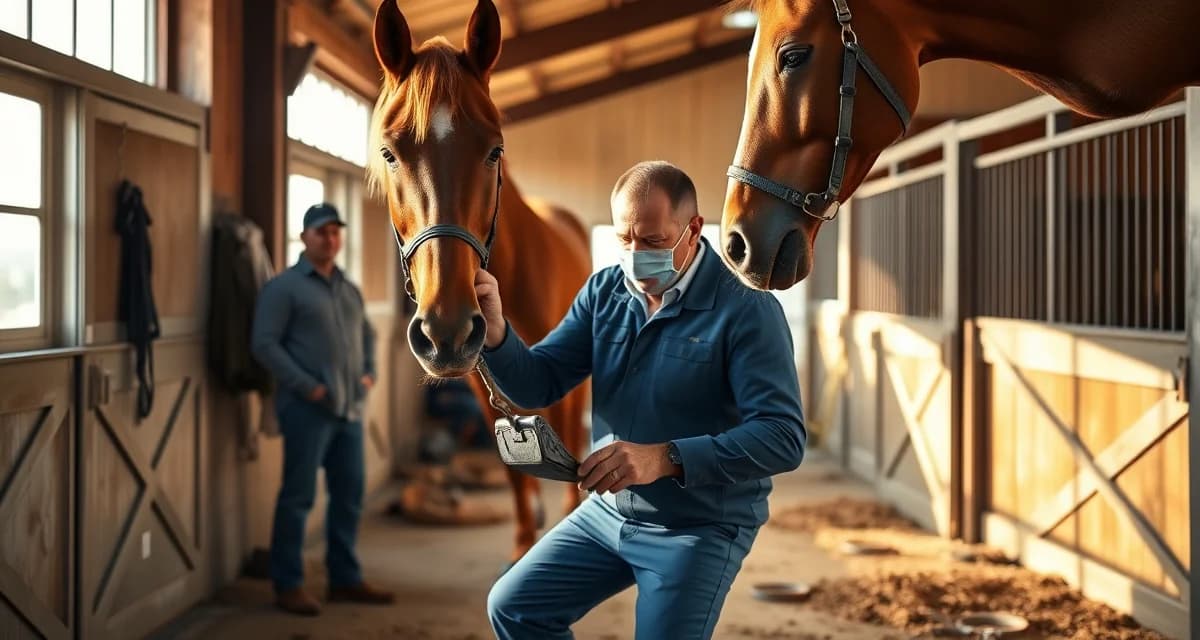
Reining Barn Owner Communication: Updates and Updates
Reining barn owner communication sits in a category of its own. Unlike boarding barns or hunter/jumper programs, reining operations deal with high-stakes performance horses, frequent hauling schedules, NRHA scoring milestones, and owners who are often deeply invested in every training decision. Generic barn software wasn't built for that reality.
TL;DR
- Most farrier scheduling problems stem from poor coordination between barn staff, horse owners, and the farrier.
- A 6-to-8-week trim cycle for most horses means each farrier visit needs to be scheduled before the previous one is complete.
- Written records of each farrier visit, including observations and next scheduled date, prevent horses from falling behind on hoof care.
- Group scheduling for facilities with multiple horses under one farrier reduces travel costs and simplifies coordination.
- Owner notification before farrier visits ensures horses are available and prevents last-minute cancellations.
- BarnBeacon's scheduling tools track farrier visit history per horse and send automated reminders to owners and staff.
Reining disciplines have unique owner communication patterns not covered by generic barn software, and the gap shows up fast when a horse drops a score, needs a hock injection before a major, or qualifies for the Futurity. Owners expect timely, specific, and professional updates. This guide walks you through exactly how to deliver them.
Why Reining Barn Communication Fails (And What to Fix)
Most communication breakdowns in reining barns come down to three problems: updates are too infrequent, too vague, or sent through the wrong channel.
A text message saying "Poco worked good today" doesn't cut it for an owner who paid $2,500 in monthly training fees. They want to know what maneuver was drilled, how the horse responded, and what the plan is heading into the next show. When that detail is missing, owners fill the gap with anxiety, and anxiety leads to phone calls at inconvenient times.
The fix isn't working harder. It's building a structured communication system that runs consistently, regardless of how busy the show season gets.
Step-by-Step: Building a Reining Owner Communication System
Step 1: Segment Your Owners by Communication Preference
Start by asking every owner two questions: How often do you want updates? What format works best for you?
Some owners want a weekly written summary. Others want a quick video after each ride. A few want to be looped in only when something significant happens. Documenting these preferences upfront prevents mismatched expectations later.
Create a simple owner profile for each client that includes their preferred frequency, preferred format (text, email, portal message, video), and any specific concerns about their horse. Review it at the start of each show season.
Step 2: Set a Weekly Update Cadence
Consistency matters more than volume. A reliable weekly update builds more trust than sporadic bursts of communication.
For reining barns, a Tuesday or Wednesday update works well. It covers the previous weekend's show results if applicable, the current week's training focus, and any health or farrier notes. Owners know when to expect it, which reduces the impulse to text you every few days.
Use a template so the update takes less than five minutes to write. Structure it as: Training Focus, Show Results (if applicable), Health/Farrier Notes, and Next Steps.
Step 3: Build Reining-Specific Update Templates
Generic templates don't account for the language reining owners actually care about. Your templates should reference specific maneuvers, NRHA scoring context, and show circuit timelines.
Here's a working example for a training update:
> Horse: Gunner's Poco Lena | Week of: [Date]
> Training Focus: Working on lead departures and building confidence in the spin. Added a second daily session on stops.
> Show Notes: Scored a 71.5 at [Show Name]. Judges noted hesitation in the rundown. Adjusting approach for next weekend.
> Health/Farrier: Shod on Monday, no issues. Hocks checked, all clear.
> Next Steps: Hauling to [Show] on Friday. Targeting 72+ in the Open.
This format takes two minutes to fill in and gives owners exactly what they need.
Step 4: Use Video for High-Impact Moments
A 60-second phone video of a great stop or a clean spin pattern does more for owner confidence than three paragraphs of text.
You don't need professional production. A clean clip from the arena rail, sent through your owner portal or a dedicated messaging channel, shows the work in a way words can't. Aim for at least one video per horse per week during active training periods.
Label the video with the horse's name and what you're showing. "Poco - working on lead departures 4/14" is more useful than an unlabeled clip.
Step 5: Document and Share Farrier and Vet Updates Promptly
Reining horses are athletes. Owners expect to be notified within 24 hours of any farrier visit, vet call, or change in the horse's soundness status.
Build a habit of logging these events immediately after they happen, not at the end of the week. An owner communication portal with mobile logging makes this practical during a busy barn day. When owners see a farrier note posted the same afternoon the farrier was there, it signals professionalism and attention to detail.
Step 6: Set Up Show-Week Communication Protocols
Show weeks require a different communication rhythm. Owners want pre-show updates, real-time results, and a post-show debrief.
Pre-show (48 hours out): Confirm the horse is hauling, share the class schedule, and note any last-minute prep decisions.
Day-of: Send a quick message after the run with the score and a one-line observation. Don't wait until you're back at the barn.
Post-show (within 48 hours): Send a full debrief covering what went well, what needs work, and the plan for the next event.
This three-part protocol keeps owners engaged without requiring you to be on your phone all day.
Step 7: Use a Dedicated Owner Portal Instead of Text Threads
Text threads get buried. Group chats create confusion. Email inboxes are cluttered.
A dedicated owner portal centralizes all communication, documents, invoices, and media in one place. For reining barns specifically, look for a portal that supports reining barn operations workflows, including show scheduling, performance tracking, and farrier logs. BarnBeacon's owner portal is built to adapt to these discipline-specific needs, rather than forcing reining barns into a generic boarding template.
When everything lives in one place, owners can review their horse's history at any time without calling you. That alone reduces inbound communication significantly.
Common Mistakes Reining Barn Managers Make
Waiting until something goes wrong to communicate. Owners who only hear from you when there's a problem start to associate your messages with bad news. Regular positive updates change that dynamic.
Using jargon without context. Not every owner knows what a "two-rein horse" or a "dry work" session means. Briefly explain terms when they're relevant, especially with newer owners.
Skipping updates during busy show stretches. This is when owners are most anxious and most in need of communication. A short update sent from the showgrounds is better than silence.
Treating all owners the same. A hands-off investor owner and a hands-on owner who rides their horse on weekends need completely different communication approaches. Segment accordingly.
Related Articles
- Cutting Barn Owner Communication: Updates and Updates
- Endurance Barn Owner Communication: Updates and Best Practices
FAQ
How do I communicate with reining horse owners?
Set a consistent weekly update schedule using a structured template that covers training focus, show results, health notes, and next steps. Use a dedicated owner portal rather than text threads to keep communication organized and searchable. Add short videos of training sessions to give owners a direct view of their horse's progress.
What do reining owners want to know about their horses?
Reining owners prioritize training progress on specific maneuvers, show scores and judge feedback, soundness and farrier updates, and the plan heading into upcoming events. They want enough detail to feel informed without needing to call for clarification. Timely communication after shows and vet visits matters as much as the content itself.
What owner portal features matter for reining barns?
Look for a portal that supports performance tracking tied to NRHA show schedules, mobile logging for farrier and vet visits, video sharing, and invoice management. The ability to customize update templates for reining-specific language is a feature most generic barn software skips entirely. BarnBeacon's portal is designed to fit discipline-specific workflows rather than generic boarding operations.
What information should I track for each farrier visit?
Each farrier visit record should include the date, which horses were seen, the work performed on each horse, any observations the farrier made about hoof condition or soundness concerns, the next scheduled visit date, and any charges billed. This record is particularly useful when a horse develops a lameness issue and the vet needs a timeline of recent hoof care.
How do I handle it when a horse owner wants to use a different farrier than the one I coordinate?
The most straightforward approach is to document the owner's preferred farrier in that horse's care record and note that the facility does not coordinate appointments for outside farriers. The owner is then responsible for scheduling and ensuring the horse is available. Charging a handling or presence fee if staff time is required to hold the horse during an outside farrier's visit is standard practice and should be disclosed in the boarding contract.
How much advance notice should I give owners before a farrier appointment?
At least 48 hours of advance notice is standard, with 72 hours preferred for owners who need to arrange presence or provide special instructions. Automated appointment reminders through a barn management platform reduce the number of owners who miss or forget about scheduled farrier visits, which is one of the most common causes of missed appointments and the associated rebooking costs.
What is Reining Barn Owner Communication: Updates and Updates?
Reining Barn Owner Communication on BarnBeacon is a specialized approach to keeping reining horse owners informed about their horses' training progress, farrier schedules, NRHA scoring milestones, and hauling updates. Unlike generic barn software, it addresses the unique demands of reining operations—where owners are deeply invested in performance decisions—by providing automated reminders, visit history tracking, and structured updates tailored to high-stakes competitive horses.
How much does Reining Barn Owner Communication: Updates and Updates cost?
BarnBeacon does not publicly list a fixed price for its reining barn owner communication tools, as plans may vary based on facility size and feature needs. To get accurate pricing for your reining operation, it is best to visit the BarnBeacon website directly or contact their team for a quote tailored to your barn's specific scheduling, owner notification, and horse management requirements.
Sources
- American Farrier's Association (AFA), hoof care standards and farrier credentialing
- American Association of Equine Practitioners (AAEP), equine lameness and hoof care guidelines
- University of California Davis Center for Equine Health, hoof health research and resources
- Farrier Focus magazine, professional farriery and equine hoof care publications
Get Started with BarnBeacon
BarnBeacon tracks farrier visit history per horse, sends automated appointment reminders to owners and staff, and keeps scheduling conflicts from slipping through. Start a free 30-day trial to see how BarnBeacon fits your farrier coordination workflow.