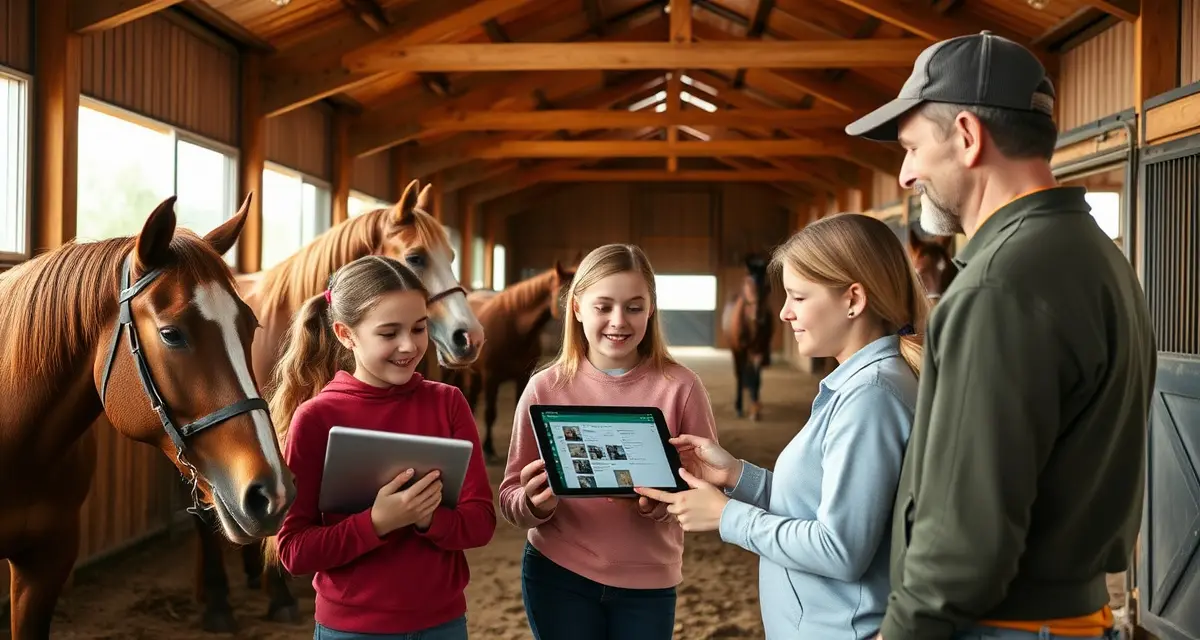
4-H Horse Barn Owner Communication: Updates and Best Practices
Running a 4-H horse barn means managing a unique mix of young riders, involved parents, and horses that are actively competing and developing. Generic barn software rarely accounts for this. 4-H horse disciplines have distinct owner communication patterns that most tools simply weren't built for, from tracking show-readiness milestones to keeping parents informed about their child's horse between lessons and events.
TL;DR
- Most farrier scheduling problems stem from poor coordination between barn staff, horse owners, and the farrier.
- A 6-to-8-week trim cycle for most horses means each farrier visit needs to be scheduled before the previous one is complete.
- Written records of each farrier visit, including observations and next scheduled date, prevent horses from falling behind on hoof care.
- Group scheduling for facilities with multiple horses under one farrier reduces travel costs and simplifies coordination.
- Owner notification before farrier visits ensures horses are available and prevents last-minute cancellations.
- BarnBeacon's scheduling tools track farrier visit history per horse and send automated reminders to owners and staff.
Getting 4-H horse barn owner communication right isn't just about convenience. It directly affects horse welfare, parent trust, and whether families re-enroll next season.
The Problem With How Most Barns Handle Owner Updates
Most barn managers default to a mix of text messages, Facebook group posts, and the occasional email blast. This works until it doesn't. A missed farrier appointment update, a health note that never reached the right parent, or a show prep checklist buried in a group chat thread can create real problems fast.
4-H families are particularly engaged. Parents want to know what's happening with their child's horse, and they want that information in a format that makes sense for the 4-H program calendar, not just a generic boarding schedule.
Step 1: Identify What 4-H Horse Owners Actually Need to Know
Map Your Communication Categories First
Before choosing any tool or template, list out the types of updates you send. For 4-H horse barns, these typically fall into four buckets:
- Health and farrier updates (vet visits, hoof care, deworming schedules)
- Show prep and competition readiness (conditioning notes, equipment checks, entry deadlines)
- Daily care logs (feeding changes, turnout, behavior observations)
- Program-specific milestones (project book requirements, skill assessments, county fair prep)
Most generic barn software covers the first two categories and ignores the last two entirely. That gap is where 4-H barn communication breaks down.
Know Your Audience: Parents, Not Just Owners
In a 4-H barn, the horse owner is often a minor. The person receiving your updates is a parent who may have limited horse knowledge but high involvement. Your communication needs to be clear, jargon-light where appropriate, and actionable.
Step 2: Choose the Right Communication Channel for Each Update Type
Urgent Updates Go Direct
Vet calls, injuries, or same-day schedule changes need immediate, direct contact. Phone or SMS is still the right tool here. Don't bury urgent news in a portal notification that a parent might not check until evening.
Routine Updates Belong in a Structured Portal
Farrier visits, feeding adjustments, and conditioning logs should live somewhere parents can reference later. A dedicated owner communication portal keeps this information organized by horse, searchable, and time-stamped. That matters when a parent asks "when was Biscuit last shod?" and you need an answer in 30 seconds.
Program Updates Need a Broadcast Channel
County fair deadlines, project book reminders, and group show schedules affect every family at once. A broadcast message through your barn management platform, or a well-organized email list, handles this efficiently without creating 15 separate text threads.
Step 3: Build Templates for Your Most Common Updates
Why Templates Save Time and Reduce Errors
A farrier update template takes two minutes to fill out and ensures you never forget to include the key details: which horse, what was done, any follow-up needed, and the next scheduled visit. Without a template, these notes get inconsistent fast.
Here's a simple farrier update template for 4-H horse barns:
> Horse: [Name]
> Date: [Date]
> Farrier: [Name]
> Service: [Trim / Reset / New shoes / Other]
> Notes: [Any concerns flagged, e.g., slight flare on left front]
> Next Visit: [Estimated date]
> Action Required by Owner/Parent: [Yes/No, if yes, describe]
Build similar templates for vet visits, deworming, and show prep check-ins. Store them somewhere your whole team can access and use consistently.
Adapt Templates for 4-H Milestones
Standard barn software templates won't include fields for project book progress or skill level assessments. Add those fields manually or use a platform that lets you customize update types. This is one area where 4-H horse barn operations differ significantly from general boarding facilities.
Step 4: Set a Communication Cadence and Stick to It
Weekly Summaries Work Better Than Ad-Hoc Updates
Parents of 4-H horses respond well to a predictable weekly summary. A short Friday update covering each horse's week, any upcoming schedule changes, and reminders about program deadlines takes 20-30 minutes to produce and dramatically reduces inbound parent questions.
Consistency matters more than frequency. A reliable weekly update builds more trust than sporadic daily messages followed by silence.
Create a 4-H Calendar Overlay
Map your communication schedule against the 4-H program calendar. County fair season, project book deadlines, and skill evaluation windows all create predictable spikes in parent questions. Getting ahead of those with proactive updates reduces the reactive scramble.
Step 5: Use Software That Fits 4-H Workflows
What to Look For in a Barn Communication Tool
Most barn management platforms were built for boarding facilities or training barns. They handle billing and stall assignments well. They handle 4-H-specific communication poorly.
Look for a platform that offers:
- Per-horse update logs visible to specific owners or parents
- Customizable update categories (so you can add "project book milestone" as a field)
- Broadcast messaging for program-wide announcements
- Mobile access for parents who check updates on their phones
- A clear audit trail of what was communicated and when
How BarnBeacon Fits 4-H Horse Barn Needs
BarnBeacon's owner portal adapts to 4-H horse barn workflows in ways that generic tools don't. You can customize the update types your team logs, set which parents receive which notifications, and keep a full communication history per horse. That history becomes useful at the end of the season when parents are reviewing their child's project records.
The platform also supports the kind of 4-H horse barn owner communication that involves multiple stakeholders: the youth member, the parent, and sometimes a club leader or extension agent who needs visibility into the horse's care.
Common Mistakes to Avoid
Mixing urgent and routine updates in the same channel. If parents get both "your horse has a laceration" and "reminder: farrier next Tuesday" as identical text messages, they stop treating any message as urgent.
Skipping the follow-up note. Telling a parent the farrier came is useful. Telling them the farrier flagged a concern and what to watch for is essential. Always include the "so what" in your update.
Using one communication method for everything. No single channel handles all update types well. A layered approach, direct contact for urgent issues, portal for routine logs, broadcast for program updates, is more work to set up but far more effective.
Forgetting the youth member. In 4-H, the young person is the project member. Where age-appropriate, loop them into updates directly. It reinforces responsibility and is consistent with 4-H's educational mission.
Related Articles
- Mounted Patrol Barn Owner Communication: Updates and Best Practices
- Trail Riding Barn Owner Communication: Updates and Best Practices
FAQ
How do I communicate with 4-H horse owners?
Use a layered approach: direct phone or SMS for urgent issues, a structured owner portal for routine care updates and logs, and a broadcast channel for program-wide announcements. Consistency matters more than volume. A reliable weekly summary reduces inbound questions and builds parent trust over time.
What do 4-H horse owners want to know about their horses?
4-H horse parents want health and farrier updates, show prep status, daily care notes, and program milestone progress. Unlike standard boarding clients, they're also tracking project book requirements and county fair readiness. Your updates should address both the horse's physical condition and its progress within the 4-H program structure.
What owner portal features matter for 4-H horse barns?
Look for per-horse update logs, customizable update categories, mobile access, and a full communication history. The ability to customize fields, so you can log 4-H-specific milestones alongside standard care notes, is what separates a useful portal from a generic one. Broadcast messaging for program-wide announcements is also essential during county fair season.
What information should I track for each farrier visit?
Each farrier visit record should include the date, which horses were seen, the work performed on each horse, any observations the farrier made about hoof condition or soundness concerns, the next scheduled visit date, and any charges billed. This record is particularly useful when a horse develops a lameness issue and the vet needs a timeline of recent hoof care.
How do I handle it when a horse owner wants to use a different farrier than the one I coordinate?
The most straightforward approach is to document the owner's preferred farrier in that horse's care record and note that the facility does not coordinate appointments for outside farriers. The owner is then responsible for scheduling and ensuring the horse is available. Charging a handling or presence fee if staff time is required to hold the horse during an outside farrier's visit is standard practice and should be disclosed in the boarding contract.
How much advance notice should I give owners before a farrier appointment?
At least 48 hours of advance notice is standard, with 72 hours preferred for owners who need to arrange presence or provide special instructions. Automated appointment reminders through a barn management platform reduce the number of owners who miss or forget about scheduled farrier visits, which is one of the most common causes of missed appointments and the associated rebooking costs.
What is 4-H Horse Barn Owner Communication: Updates and Best Practices?
4-H Horse Barn Owner Communication: Updates and Best Practices is a guide for barn managers running 4-H horse programs. It covers how to coordinate farrier scheduling, track show-readiness milestones, and keep parents informed about their child's horse between lessons and events. The article outlines best practices like maintaining written farrier visit records, group scheduling to reduce costs, and sending automated owner reminders — all tailored to the unique communication demands of 4-H horse facilities.
How much does 4-H Horse Barn Owner Communication: Updates and Best Practices cost?
BarnBeacon's tools for 4-H horse barn owner communication are available as part of their barn management platform. Pricing varies based on facility size and feature needs. The platform includes scheduling, automated reminders, and farrier visit tracking designed specifically for equine facilities. For current pricing details, visit the BarnBeacon website directly to explore available plans and find the tier that fits your barn's size and communication requirements.
Sources
- American Farrier's Association (AFA), hoof care standards and farrier credentialing
- American Association of Equine Practitioners (AAEP), equine lameness and hoof care guidelines
- University of California Davis Center for Equine Health, hoof health research and resources
- Farrier Focus magazine, professional farriery and equine hoof care publications
Get Started with BarnBeacon
BarnBeacon tracks farrier visit history per horse, sends automated appointment reminders to owners and staff, and keeps scheduling conflicts from slipping through. Start a free 30-day trial to see how BarnBeacon fits your farrier coordination workflow.