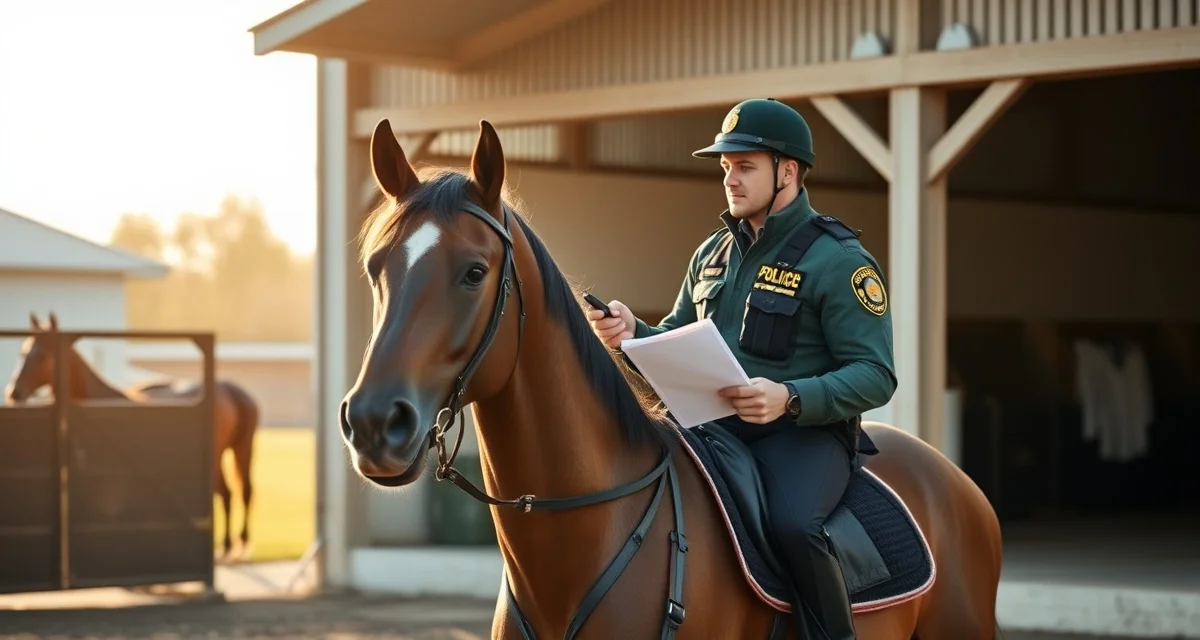
Mounted Patrol Barn Owner Communication: Updates and Best Practices
Mounted patrol barn owner communication runs on a different clock than most equestrian disciplines. Owners aren't tracking show results or training milestones -- they're tracking deployment readiness, fitness levels, hoof condition after pavement work, and equipment status. Generic barn software wasn't built for that, and the gap shows every time a manager tries to send a meaningful update through a tool designed for hunter/jumper barns.
TL;DR
- Effective competition updates mounted patrol owners at equine facilities relies on consistent written protocols accessible to all staff.
- Digital records reduce errors and create the documentation needed during emergencies, audits, and client disputes.
- Owner visibility into their horse's daily care reduces communication friction and improves retention.
- Centralizing billing, health records, and scheduling in one platform outperforms managing separate tools.
- Staff adoption of digital tools improves when interfaces are mobile-friendly and task-based.
- BarnBeacon supports all core barn management functions from a single platform built for equine facilities.
This guide walks through exactly how to structure your communication workflow, what to include in updates, and how to set up a system that keeps mounted patrol horse owners informed without burying your staff in manual reporting.
Why Mounted Patrol Communication Is Different
Most barn management platforms assume owners want to know about lessons, show schedules, and training progress. Mounted patrol owners need something else entirely.
They want to know whether their horse is fit for duty, how the animal held up after a long patrol shift, whether shoes are holding on concrete, and what the vet or farrier flagged at the last check. These are operational updates, not performance updates.
If your current system can't distinguish between those two things, you're either over-communicating the wrong information or under-communicating the right information. Neither builds owner trust.
Step 1: Define Your Update Categories Before You Build Any Template
Separate Duty-Related Updates from General Care Updates
Before you write a single message, map out what mounted patrol owners actually need to know. Most fall into four buckets:
- Duty fitness status -- Is the horse cleared for patrol? Any restrictions?
- Post-patrol condition reports -- How did the horse come off a shift? Any soreness, lameness, or behavioral flags?
- Farrier and vet activity -- Especially relevant for horses working on pavement or in crowd environments
- Equipment and tack condition -- Saddle fit, bit wear, and any gear that needs owner sign-off
Trying to send everything in one weekly email creates noise. Owners stop reading. Separate your update types so owners know exactly what kind of message they're receiving before they open it.
Set Communication Frequency by Category
Duty fitness updates should go out before any scheduled patrol. Post-patrol condition reports should go out within 24 hours of a shift. Farrier and vet updates go out same-day. Equipment flags go out as they arise.
If you're managing 15 or more horses, doing this manually is unsustainable. That's where a structured owner communication portal becomes essential -- not optional.
Step 2: Build Templates for Each Update Type
Duty Fitness Template
Keep it short. Owners need a clear status, not a paragraph.
> Horse: [Name]
> Date: [Date]
> Duty Status: Cleared / Restricted / Pulled from rotation
> Reason (if restricted): [Brief note]
> Next check scheduled: [Date]
That's it. If there's more to say, add one sentence. Don't write a novel.
Post-Patrol Condition Report Template
This one carries more detail because it documents what happened during a shift.
> Horse: [Name]
> Patrol Date/Shift: [Details]
> Duration on duty: [Hours]
> Surface conditions: [Pavement / Grass / Mixed]
> Post-patrol observations: [Gait, attitude, any heat or swelling]
> Action taken: [Ice, rest, vet called, none required]
> Follow-up needed: [Yes/No -- details if yes]
This template also creates a paper trail. If an owner ever questions a horse's condition or a management decision, you have timestamped documentation.
Farrier and Vet Update Template
> Horse: [Name]
> Service date: [Date]
> Provider: [Name]
> Work performed: [Details]
> Recommendations: [Any follow-up care or restrictions]
> Owner action required: [Yes/No]
If owner action is required -- approving a treatment, scheduling a follow-up, authorizing a cost -- flag it clearly. Don't bury it in the middle of a paragraph.
Step 3: Choose the Right Delivery Method for Each Update Type
Don't Use Email for Time-Sensitive Updates
Email is fine for weekly summaries and scheduled reports. It's not reliable for same-day duty status changes or urgent vet flags. Owners miss emails. They don't miss push notifications.
For anything time-sensitive, use a platform that sends mobile notifications directly to owners. If you're managing mounted patrol barn operations at scale, a dedicated owner portal with notification controls is the only way to ensure the right people see the right information at the right time.
Use a Portal for Documentation, Email for Summaries
Think of your owner portal as the record of truth. Every update, every report, every vet note lives there. Email becomes a prompt -- "Log in to see your horse's post-patrol report from last night."
This approach keeps your inbox clean, keeps owners in the habit of checking the portal, and ensures nothing gets lost in a thread.
Step 4: Set Owner Expectations at Onboarding
Create a Communication Agreement
When a new horse enters your mounted patrol program, give the owner a one-page document that explains:
- What types of updates they'll receive
- How frequently each type goes out
- Which updates require a response
- How to reach the barn manager for urgent questions
This eliminates the "why didn't anyone tell me?" conversation. It also sets a professional tone from day one.
Confirm Contact Preferences
Some owners want everything. Some want duty-critical updates only. Ask the question upfront and log the preference in your management system. Sending daily updates to an owner who wanted weekly summaries is just as damaging to the relationship as sending nothing at all.
Step 5: Review and Audit Your Communication System Quarterly
Check What's Actually Being Read
If your portal or email platform tracks open rates, use that data. If a particular update type has low engagement, either the format is wrong or the frequency is off. Adjust before owners start tuning out entirely.
Ask Owners Directly
Once a quarter, send a two-question survey: "Are you getting the information you need?" and "Is there anything you wish we communicated differently?" Most owners won't volunteer this feedback unprompted. A direct ask gets honest answers.
Common Mistakes in Mounted Patrol Owner Communication
Sending updates on a fixed schedule regardless of activity. If a horse had a quiet week with no patrol shifts, a detailed weekly report adds no value. Match your communication volume to actual activity.
Using jargon owners don't understand. "Horse presented with mild digital flexor tension post-shift" means nothing to an owner who isn't a vet. Write in plain language. "Some stiffness in the lower leg after Tuesday's shift -- iced and monitoring" is clearer and more useful.
Failing to document verbal conversations. If you call an owner to discuss a vet finding, follow up with a written summary in the portal. Verbal-only communication creates gaps in the record and misunderstandings down the line.
Treating all owners the same. Some mounted patrol horse owners are law enforcement professionals who want operational briefings. Others are private owners who've leased horses to a program and want reassurance their animal is well cared for. Know your audience.
Related Articles
- 4-H Horse Barn Owner Communication: Updates and Best Practices
- Endurance Barn Owner Communication: Updates and Best Practices
FAQ
How do I communicate with mounted patrol horse owners?
Use a tiered system: a dedicated owner portal for documentation and records, push notifications for time-sensitive updates, and email for weekly summaries. Build templates for each update type -- duty fitness, post-patrol condition, farrier/vet activity -- so your communication is consistent and efficient. Set expectations at onboarding so owners know what to expect and when.
What do mounted patrol owners want to know about their horses?
Mounted patrol owners prioritize operational information over performance metrics. They want to know duty fitness status, how the horse came off a patrol shift, what the farrier or vet found (especially related to hoof and leg condition from pavement work), and whether any equipment issues need attention. Regular, structured updates in these categories build owner confidence and reduce inbound calls to your staff.
What owner portal features matter for mounted patrol barns?
Look for a portal that supports custom update categories, mobile push notifications, timestamped documentation, and owner-specific communication preferences. The ability to log post-patrol condition reports and attach vet or farrier notes directly to a horse's profile is essential. BarnBeacon's owner portal is built to accommodate these discipline-specific workflows, unlike generic platforms that default to lesson and show-based communication structures.
What is the most common mistake barn managers make with record-keeping?
The most common record-keeping mistake is logging health events, billing items, and care tasks after the fact from memory rather than at the time they occur. Delayed logging introduces errors, omissions, and disputes that are difficult to resolve because the original record does not exist. Moving to real-time digital logging, from any device, is the single most impactful record-keeping improvement available to most facilities.
How does barn management software save time at a multi-horse facility?
The largest time savings come from eliminating manual tasks that recur at high frequency: sending owner updates, generating monthly invoices, tracking care task completion across shifts, and scheduling recurring appointments. At a facility with 25 or more horses, these tasks can consume several hours per day when done manually. Automating the routine layer returns that time without reducing quality of communication or care.
What is Mounted Patrol Barn Owner Communication: Updates and Best Practices?
Mounted Patrol Barn Owner Communication: Updates and Best Practices is a guide for equine facility managers who house horses used in law enforcement mounted patrol units. It covers how to structure written update protocols, what deployment-specific information to track—such as hoof condition after pavement work, fitness levels, and equipment status—and how to use digital tools like BarnBeacon to centralize health records, billing, and owner communication in one platform built for professional equine operations.
How much does Mounted Patrol Barn Owner Communication: Updates and Best Practices cost?
BarnBeacon offers tiered pricing plans for equine facility managers, with options scaled to barn size and feature needs. While specific pricing for mounted patrol facilities may vary based on the number of horses and required integrations, BarnBeacon provides a cost-effective alternative to managing separate tools for scheduling, billing, and health records. Contact BarnBeacon directly for a quote tailored to your mounted patrol barn's operational requirements and owner communication volume.
How does Mounted Patrol Barn Owner Communication: Updates and Best Practices work?
The system works by centralizing all horse care data—daily updates, health records, deployment readiness notes, and billing—into a single mobile-friendly platform. Barn managers log updates after each shift, and owners receive structured reports covering fitness, hoof condition, and equipment status. Staff follow consistent written protocols accessible from any device, reducing errors and creating an audit trail. Owner visibility into daily care improves retention and reduces back-and-forth communication that typically falls through the cracks with generic barn software.
Sources
- American Horse Council, equine industry economic impact and facility operations research
- American Association of Equine Practitioners (AAEP), equine health care and management guidelines
- University of Kentucky Equine Initiative, equine business management and industry resources
- Rutgers Equine Science Center, equine management research and extension publications
- The Horse magazine, published by Equine Network, equine facility management reporting
Get Started with BarnBeacon
BarnBeacon brings billing, health records, owner communication, and daily operations into one platform built for equine facilities, so the time you spend on administration goes back to the horses. Start a free 30-day trial with full access to every feature, or schedule a demo to see how it handles your specific facility type.