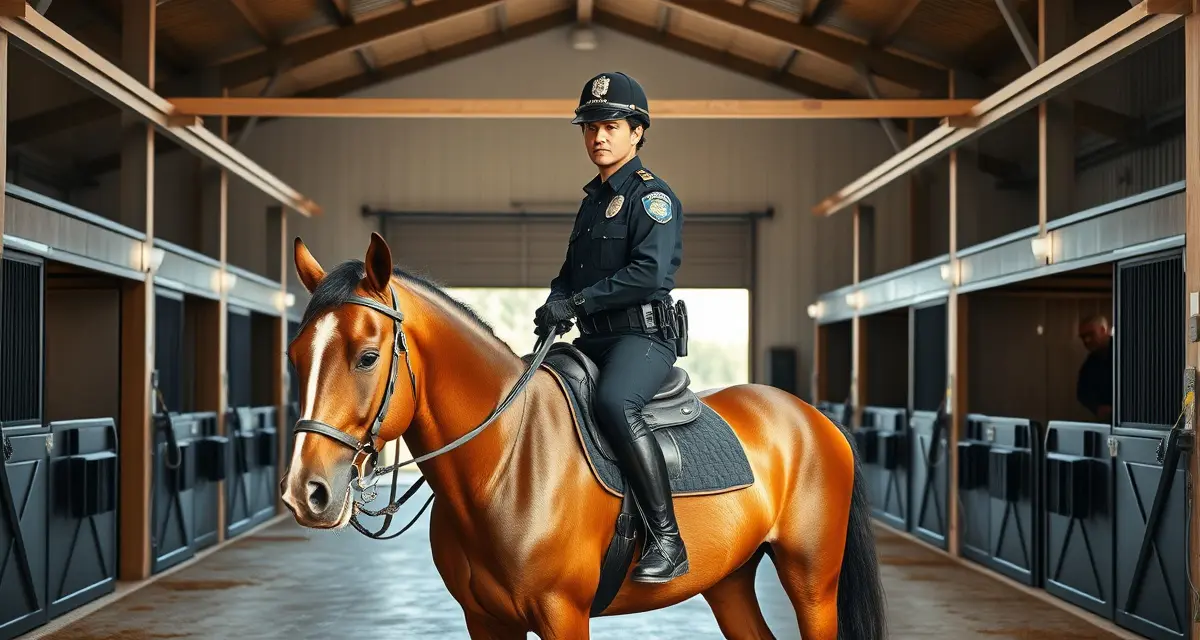
Running a Mounted Patrol or Police Horse Facility
Mounted patrol units occupy a specialized corner of the equine world. Police horses, park patrol horses, and ceremonial horses operated by law enforcement or public safety agencies require facilities and management practices that blend professional barn management with the specific demands of public safety operations. These animals are working horses in a very literal sense, and the management of their facilities reflects both good horsemanship and institutional accountability.
The Mounted Patrol Horse
Police horses are selected and trained for extraordinary tolerance and reliability. They must remain calm in crowds, around sirens and lights, in traffic, near loud music and demonstrations, and in situations that would cause most horses to react unpredictably. The training process is extensive, and the horses represent a significant investment in both time and money.
This means that the horses at a mounted patrol facility are typically highly valuable to the institution, carefully selected, and maintained to a high standard. The barn manager's role is not just to provide good horse care but to maintain the working capacity and fitness of horses that serve a public safety function.
Facility Requirements
Mounted patrol facilities need to meet both standard horse care requirements and the operational needs of a working law enforcement unit. Typical requirements include:
Secure access. Law enforcement facilities typically require controlled access. The barn may be part of a larger secure compound, or may be separately secured with restricted access for authorized personnel.
Equipment storage. Police horse equipment, including specialized saddles, saddlebags, riot gear for the horses, and communication equipment, needs organized, secure storage integrated into the facility.
Wash and treatment areas. Horses returning from duty may need washing, hoof cleaning, and inspection after working in urban environments. A dedicated wash bay with good drainage is important.
Trailer access. Mounted units deploy to events and incidents via trailer. Easy trailer access, including a safe loading area and parking for the unit's horse trailer or van, is a facility requirement.
Farrier and vet access. Police horses work on pavement and varied urban surfaces that demand attentive farrier care. Shoeing considerations for hard surfaces, including correct shoe type and application, are more specialized than for horses working primarily on soft footing.
Documentation and Accountability
Public sector facilities operate under institutional accountability requirements that are often more formal than private barn standards. Documentation of horse health, training hours, deployment logs, and veterinary care may be subject to public records laws and internal accountability systems.
The barn manager at a mounted patrol facility needs to maintain complete, accurate records that can withstand institutional review. Health records, medication administration logs, farrier and veterinary visit documentation, and horse deployment records all need to be organized and accessible.
BarnBeacon's documentation tools are well-suited for this kind of accountability-forward operation, providing timestamped records, complete medication audit trails, and organized health history that meets institutional documentation standards.
Horse Fitness and Conditioning
Police horses are athletes. Their conditioning needs to support the specific demands of their work: carrying a rider in uniform plus equipment for extended periods, standing quietly for long periods during crowd management operations, and performing reliably in high-stress environments.
Fitness programs for police horses balance cardiovascular conditioning, strength, and the mental conditioning that is the hallmark of a good police horse. Rest and recovery are as important as work, and the barn manager needs to track workload to prevent overuse and monitor fitness over time.
Veterinary Protocols
The veterinary protocols for police horses tend to be more comprehensive than for many private horses, partly because of the horses' institutional value and partly because of the institutional accountability requirements. Thorough pre-purchase examinations, comprehensive vaccination and deworming programs, regular lameness evaluations, and documented dental care are all standard at professionally managed mounted units.
Health events that take a horse out of service need to be documented and managed with attention to both the horse's welfare and the operational needs of the unit. Recovery protocols that return horses to full working status safely are essential.
For more on specialized facility operations, see our guides on layup barn operations and medication audit trails.
FAQ
What is Running a Mounted Patrol or Police Horse Facility?
Running a mounted patrol or police horse facility means managing a specialized barn that houses and supports horses used by law enforcement or public safety agencies. These facilities combine professional equine care with institutional accountability, maintaining horses trained to work in high-stress public environments like crowds, traffic, and demonstrations. The barn manager ensures horses remain fit, healthy, and operationally ready to serve their public safety roles.
How much does Running a Mounted Patrol or Police Horse Facility cost?
Costs vary significantly based on agency size and location, but mounted patrol facilities are expensive to operate. Expenses include specialized feed, veterinary care, farrier services, equipment, and staff. Individual police horses can cost $10,000–$25,000 to purchase and train. Annual maintenance per horse typically runs $15,000–$30,000 when accounting for feed, healthcare, and gear. Government agencies fund these programs through departmental budgets, grants, or community donations.
How does Running a Mounted Patrol or Police Horse Facility work?
A mounted patrol facility operates like a professional working barn with added institutional structure. Horses receive daily care, conditioning rides, and continued desensitization training. Staff track health records, equipment readiness, and deployment schedules. Horses rotate between active patrol duty and recovery or training days. Veterinary oversight is routine and rigorous, since a horse that cannot perform removes an officer from active duty and represents a significant resource loss.
What are the benefits of Running a Mounted Patrol or Police Horse Facility?
Mounted patrol units provide crowd control, park patrol, and community engagement that motor vehicles cannot replicate. Horses offer a commanding presence and can access terrain closed to vehicles. They serve as a community relations asset, building goodwill between law enforcement and the public. A well-run facility keeps these horses in peak condition, ensuring officers have reliable, fit mounts ready for both routine patrol and high-demand public safety operations.
Who needs Running a Mounted Patrol or Police Horse Facility?
Mounted patrol facilities are operated by law enforcement agencies, park services, military ceremonial units, and some private security organizations. The staff who need this knowledge include barn managers hired by these agencies, equine professionals transitioning into public safety roles, and agency administrators overseeing facility operations. Any institution maintaining working horses for public service functions will benefit from understanding the unique management demands these specialized programs require.
How long does Running a Mounted Patrol or Police Horse Facility take?
There is no fixed timeline — running a mounted patrol facility is an ongoing operational commitment, not a one-time project. Establishing a new facility typically takes one to three years, covering horse acquisition, training, facility buildout, and staff hiring. Once running, daily operations are continuous. Individual horses may serve actively for ten or more years before retirement, requiring sustained, consistent care throughout their working careers to maintain fitness and behavioral reliability.
What should I look for when choosing Running a Mounted Patrol or Police Horse Facility?
Look for a facility with experienced equine staff who understand both professional horse care and the demands of working police horses. Key factors include robust veterinary partnerships, proper desensitization training programs, secure and well-maintained stabling, clear record-keeping systems, and alignment with agency protocols. Transparency in health records, operational readiness tracking, and staff-to-horse ratios all signal a well-managed program capable of sustaining horses as long-term public safety assets.
Is Running a Mounted Patrol or Police Horse Facility worth it?
For agencies that use them, mounted patrol programs are generally considered worth the significant investment. Studies and departmental reports consistently show mounted units improve crowd management, increase officer visibility, and strengthen community relations in ways motor patrols cannot. The key is operational discipline and proper facility management. A poorly run barn can undermine the entire program through horse injuries or poor fitness. With rigorous management, mounted units deliver unique public safety value that justifies their cost.