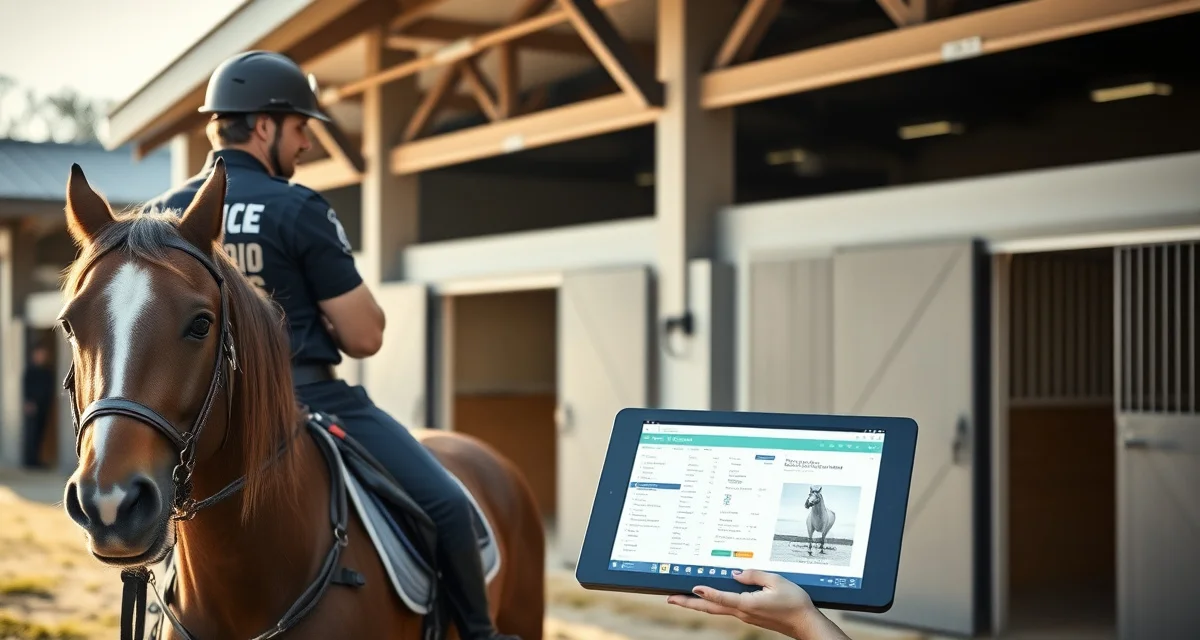
Mounted Patrol Barn Owner Communication: Records and Updates
Most barn management software is built for boarding facilities or show barns. Mounted patrol operations run on a completely different rhythm, and the owner communication patterns that come with them are rarely addressed by generic tools.
TL;DR
- Mounted Patrol facilities benefit from centralized vet records accessible to the treating vet, barn manager, and owner from a single platform.
- Vaccination histories, Coggins results, and current medication lists should be available without searching through paper files during a vet visit.
- Digital vet records with timestamps create an audit trail that protects the barn if a horse's care history is later questioned.
- Mounted Patrol horse health records should include competition eligibility documentation and any discipline-specific compliance requirements.
- Sharing vet records digitally with owners eliminates the communication gap that occurs when verbal summaries replace written documentation.
Mounted patrol horses work irregular shifts, rotate between handlers, and carry health and fitness requirements tied to active duty. Owners need updates that reflect that reality, not a template designed for a hunter/jumper barn.
Why Generic Barn Communication Falls Short for Mounted Patrol
A standard boarding barn sends owners a monthly invoice and the occasional vet note. Mounted patrol barn owner communication involves far more: duty logs, fitness assessments, incident reports, farrier schedules tied to patrol rotations, and health checks that happen on a per-shift basis rather than a monthly calendar.
When owners are law enforcement agencies, municipalities, or individual officers with horses on active service, the stakes for accurate recordkeeping are higher. A missed vet update or an undocumented soundness check can create liability gaps.
Generic software doesn't account for shift-based reporting, duty status flags, or the chain of custody documentation that mounted patrol facilities often need to maintain.
Step 1: Identify What Mounted Patrol Owners Actually Need
Map Your Communication Categories
Before setting up any system, list every type of update your owners receive. For most mounted patrol facilities, this breaks into four categories:
- Health and veterinary records: Vaccinations, soundness checks, injury reports, farrier visits
- Duty and fitness logs: Shift hours, patrol assignments, conditioning work, rest days
- Incident documentation: Any on-duty event that affected the horse, including crowd control exposure, falls, or equipment issues
- Administrative updates: Billing, contract renewals, insurance documentation
Assign Update Frequency to Each Category
Health records typically update after each vet visit or farrier appointment. Duty logs may update daily or per shift. Incident reports should go out within 24 hours of any event. Administrative updates follow your billing cycle.
Mapping this before you build your communication workflow prevents gaps and sets owner expectations clearly.
Step 2: Choose the Right Communication Format for Each Update Type
Real-Time Alerts vs. Scheduled Reports
Not every update needs to land in an owner's inbox the moment it happens. Incident reports and acute health issues warrant immediate notification. Routine duty logs and farrier visits can batch into a weekly or bi-weekly summary.
Mixing these up creates noise. Owners who receive too many low-priority alerts start ignoring the channel, which means they miss the critical ones.
Structured Templates Over Freeform Messages
Freeform messages create inconsistency. One manager writes three sentences; another writes three paragraphs. Owners can't quickly scan for the information they need.
Build a short template for each update category. A vet visit template should include date, attending veterinarian, findings, any treatment administered, and follow-up required. A duty log template should include shift date, handler, hours worked, terrain type, and any notable observations. Consistency makes records usable, not just readable.
Step 3: Set Up a Centralized Owner Portal
Why a Portal Beats Email Threads
Email threads fragment records. An owner searching for a vet report from six months ago has to dig through a chain of messages, attachments, and forwarded notes. A centralized owner communication portal keeps every record in one place, searchable by date, category, or horse.
For mounted patrol facilities, this matters even more because records may be requested by third parties: insurance adjusters, legal teams, or agency administrators who need documentation quickly.
What to Look for in a Portal
The portal needs to support role-based access. A patrol supervisor needs different visibility than an individual officer who owns one horse. Document upload capability is non-negotiable for attaching vet reports, farrier invoices, and incident photos. Audit trails, showing who viewed or acknowledged a record, add a layer of accountability that mounted patrol operations often require.
BarnBeacon's owner portal is built to adapt to these workflows. It supports duty-status flags, shift-based log entries, and structured report templates that match mounted patrol reporting needs rather than forcing a boarding barn format onto a working horse operation.
Step 4: Document Vet and Farrier Records Consistently
Standardize What Gets Recorded
Every vet visit should produce a record with the same fields, every time. Date, provider, horse, findings, treatment, next appointment. No exceptions. When a record is missing a field, it creates questions during audits or insurance claims.
The same applies to farrier visits. Mounted patrol horses work hard surfaces and need consistent hoof care documentation. Record the trim or shoe type, the farrier's name, and any observations about hoof condition.
Attach Source Documents
Whenever possible, attach the original vet invoice or farrier receipt to the digital record. This gives owners a complete paper trail without requiring them to request documents separately. It also reduces back-and-forth between barn staff and owners during billing reconciliation.
For more on structuring your facility's operational records, see the full guide to mounted patrol barn operations.
Step 5: Build an Incident Reporting Workflow
Define What Counts as a Reportable Incident
Not every stumble needs a formal report. Define your threshold clearly: any event that results in injury, any situation where a horse was exposed to an unusual stressor, any equipment failure during patrol. Write this definition into your facility policy so every handler applies it consistently.
Notify Owners Within 24 Hours
When an incident meets your threshold, the owner gets notified within 24 hours. The notification should include what happened, what immediate action was taken, the horse's current status, and what follow-up is planned.
This timeline matters for liability reasons. It also builds trust. Owners who find out about incidents days later through informal channels lose confidence in the facility quickly.
Step 6: Review and Audit Your Communication System Quarterly
Check for Gaps
Every quarter, pull a sample of owner records and verify that every expected update was sent and acknowledged. Look for horses with missing duty logs, vet records that weren't uploaded, or incident reports that were filed internally but never shared with the owner.
Gaps in mounted patrol horse barn updates are not just administrative problems. They can become legal problems if a horse's health history is ever disputed.
Gather Owner Feedback
Ask owners once or twice a year whether the communication they receive is useful. Are they getting too much? Too little? Are there categories of information they want that they're not currently receiving? Mounted patrol owners often have specific reporting requirements tied to their agency or department, and those requirements can change.
How do I communicate with mounted patrol horse owners?
Use a combination of structured templates and a centralized owner portal. Assign each update type a format and a frequency, so owners know what to expect and when. Real-time alerts should be reserved for incidents and acute health issues; routine updates can batch into weekly or bi-weekly summaries. Consistency matters more than volume.
What do mounted patrol owners want to know about their horses?
Mounted patrol owners prioritize duty fitness, health status, and incident documentation. They want to know their horse is sound for active service, that vet and farrier records are current, and that any on-duty event has been documented and reported promptly. Agency-affiliated owners may also need records formatted to meet departmental reporting standards.
What owner portal features matter for mounted patrol barns?
Role-based access, document upload and storage, audit trails, and structured report templates are the core requirements. Duty-status flags and shift-based log entries are features that generic barn software typically lacks but that mounted patrol facilities need. A portal that can generate formatted reports for third-party review, such as insurance or legal requests, adds significant operational value.
How should mounted patrol facilities handle vet records when a horse transfers to a new barn?
When a horse leaves your facility, provide the new barn with a complete digital copy of the horse's health record including vaccination history, Coggins certificate, current medications, and any ongoing treatment plans. Make this a standard part of your departure process rather than something done only when requested. Mounted Patrol horse owners expect continuity of care documentation and a complete transfer record demonstrates your facility's professional standards.
Who at the barn should have permission to view and update vet records?
The barn manager should have full access to view and update vet records. Senior staff responsible for daily care should have read access to the sections relevant to their care duties -- current medications, dietary restrictions, and known conditions. Define access levels before implementing digital records, not after.
Related Articles
FAQ
What is Mounted Patrol Barn Owner Communication: Records and Updates?
Mounted patrol barn owner communication covers the systems and processes used to keep horse owners informed about their animals' health, duty status, and care history at mounted patrol facilities. Unlike standard boarding operations, mounted patrol barns manage horses on active-duty schedules with rotating handlers, requiring more structured documentation. This includes digital vet records, vaccination histories, Coggins results, medication logs, and shift updates shared through a centralized platform accessible to owners, barn managers, and veterinarians.
How much does Mounted Patrol Barn Owner Communication: Records and Updates cost?
The cost varies depending on the barn management software platform you choose. Most digital record-keeping solutions for equine facilities range from free basic tiers to $50–$200 per month for full-featured plans. Some platforms charge per horse or per user. For mounted patrol operations specifically, look for platforms that include vet record sharing and owner communication features rather than paying separately for multiple tools. The cost of going paperless is typically offset by reduced administrative time.
How does Mounted Patrol Barn Owner Communication: Records and Updates work?
It works by centralizing horse health records, handler logs, and owner updates into a single digital platform. Barn managers input vet visit notes, vaccination records, and duty status changes. Owners receive automatic notifications or can log in to view their horse's current records. Veterinarians can access the same data during visits without relying on paper files. Timestamps create a chronological audit trail, and all parties see the same information rather than relying on verbal summaries that can be incomplete or inconsistent.
What are the benefits of Mounted Patrol Barn Owner Communication: Records and Updates?
Key benefits include reduced communication gaps between barn managers and owners, faster vet visits due to readily available health records, and a defensible audit trail if a horse's care history is ever questioned. Digital records eliminate the risk of lost paperwork and ensure vaccination and Coggins documentation is always current. For mounted patrol horses, it also supports compliance tracking tied to active-duty eligibility, reducing the chance that a horse misses a required health clearance before deployment.
Who needs Mounted Patrol Barn Owner Communication: Records and Updates?
Any facility housing horses used in active mounted patrol operations needs this kind of structured communication system. This includes municipal police mounted units, park rangers, ceremonial guard stables, and private security operations that board patrol horses. Owners who co-own or sponsor patrol horses also benefit from transparent access to records. Barn managers overseeing multiple handlers and rotating duty schedules will find centralized communication essential for maintaining accurate, up-to-date documentation without constant back-and-forth calls.
How long does Mounted Patrol Barn Owner Communication: Records and Updates take?
Setting up a digital communication and records system typically takes one to four weeks depending on the size of the facility and how much historical data needs to be migrated. Initial onboarding for a small mounted patrol unit with fewer than ten horses can often be completed in a few days. Ongoing record updates take minutes per horse per visit. The time investment upfront is minimal compared to the hours saved avoiding manual file searches and repeated owner inquiries.
What should I look for when choosing Mounted Patrol Barn Owner Communication: Records and Updates?
Look for a platform that supports vet record uploads with timestamps, Coggins and vaccination tracking, and owner-facing portals with controlled access. The system should allow role-based permissions so veterinarians, barn managers, and owners each see what they need without overexposure. Discipline-specific compliance fields for duty eligibility are important for mounted patrol use cases that generic boarding tools often omit. Audit trail functionality, mobile access, and easy export for regulatory purposes are also worth prioritizing.
Is Mounted Patrol Barn Owner Communication: Records and Updates worth it?
Yes, for mounted patrol facilities managing horses on active-duty schedules with multiple handlers, a structured digital communication system is worth the investment. Verbal updates and paper files create gaps that can lead to missed vaccinations, disputed care histories, or compliance failures. Owners expect transparency, and barn managers benefit from a clear record of every interaction. The combination of reduced administrative burden, stronger owner relationships, and built-in liability protection makes digital records and communication a sound operational decision for any serious mounted patrol operation.
Sources
- American Association of Equine Practitioners (AAEP)
- American College of Veterinary Internal Medicine (ACVIM)
- Cornell University College of Veterinary Medicine
- University of California Davis School of Veterinary Medicine
- The Horse magazine
Get Started with BarnBeacon
Mounted Patrol facility managers who share vet records digitally give treating vets a complete clinical picture, give owners real-time visibility into their horse's care, and give themselves a documented record that protects the facility when health questions arise. BarnBeacon stores each horse's health history in a single accessible record that updates in real time and is accessible from any device. If your current approach to vet record management involves paper files or scattered spreadsheets, BarnBeacon offers a more reliable system.