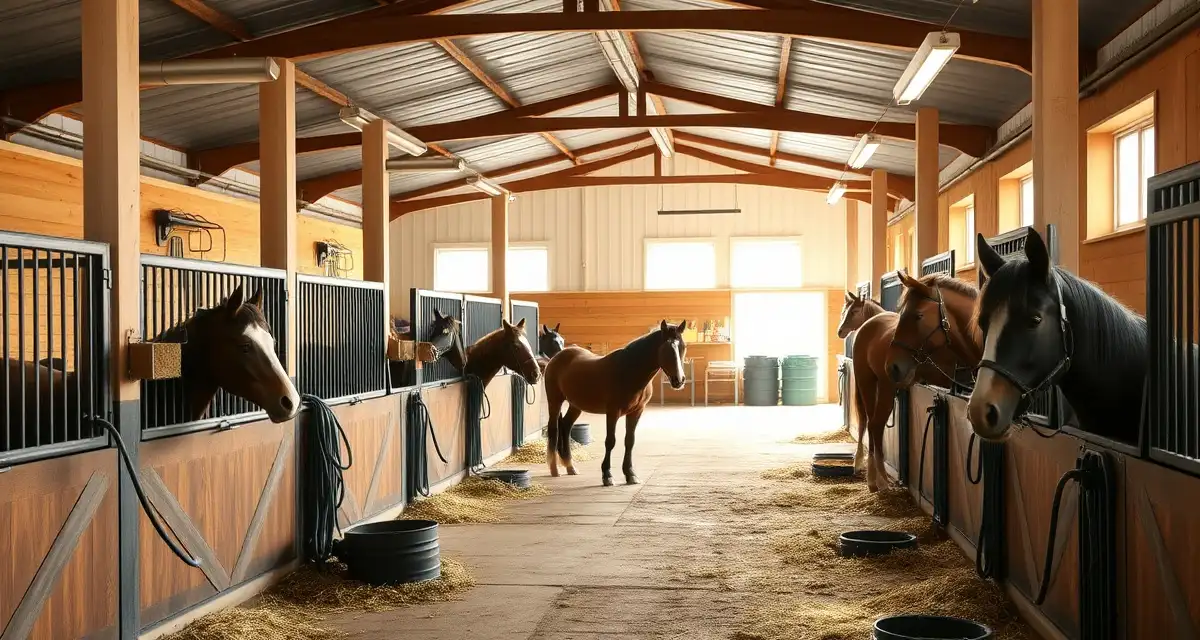
Running a Miniature Horse Facility
Miniature horses present a unique set of management considerations that distinguish their care and facility operations from standard horse barns. What looks like a straightforward scale-down from full-size horse management has its own distinct challenges, particularly around nutrition, health monitoring, and the specific demands of the miniature horse market.
Nutrition and Metabolic Health
The biggest health management challenge with miniature horses is their extreme susceptibility to obesity and associated metabolic conditions. Minis have evolved to thrive on very sparse forage, and in managed settings, they are routinely overfed relative to their caloric needs. Hyperlipemia, hyperinsulinemia, and equine metabolic syndrome are significantly more common in miniature horses than in full-size horses, and they can be life-threatening.
This means your feeding program needs to be genuinely restrictive and carefully monitored. Most miniature horses should have limited hay access, ideally through a slow feeder that extends consumption time without increasing overall intake. Pasture access needs to be managed carefully, particularly when grass is lush. Grain is often entirely unnecessary and contraindicated.
Body condition scoring should be done regularly and rigorously. A mini that looks "normal" to an inexperienced eye may actually be significantly overweight by appropriate scoring standards. Educating owners about appropriate body condition is one of the most important services a mini facility can provide.
Dental Considerations
Miniature horses have the same number of teeth as full-size horses packed into a much smaller mouth. Dental overcrowding, malalignment, and wave mouth are common. Regular dental care, typically twice-yearly rather than annually for many minis, is essential for their nutritional health. Horses that cannot chew properly cannot extract nutrition from forage effectively, which can paradoxically coexist with metabolic obesity.
Foot Care
Miniature horses can develop chronic hoof issues more quickly than full-size horses, partly because their small hooves carry a disproportionate load relative to hoof surface area in overweight individuals, and partly because they are sometimes less manageable for farriers due to their size and behavior. Regular trimming on a six to eight week schedule, combined with good footing in paddocks and stalls, maintains hoof health.
Long-toed miniature horses are at elevated risk for laminitis and should be addressed promptly by a qualified farrier with mini experience.
Housing and Space
Miniature horses can be housed in smaller facilities than full-size horses, but they still need appropriate shelter, safe fencing, and adequate space for movement. Stalls sized for standard horses are perfectly fine for minis; purpose-built mini stalls can be smaller but should still allow the horse to turn around and lie down comfortably.
Fencing for miniature horses needs to be appropriate for their size. Standard four-board fencing with wide spaces may allow a mini to escape or get its head stuck. Fencing with smaller openings or added lower rails is important for paddock safety.
Business Model Considerations
Miniature horse facilities operate in a niche market. Common business models include breeding and sales, boarding for private mini owners, educational programs that use minis as accessible first horses for children, and therapy programs that use minis as emotional support animals.
Breeding miniature horses for sale requires knowledge of the market and realistic expectations about demand. Show minis, particularly those competing in AMHA and AMHR, command significantly higher prices than companion-quality animals. Pricing your offerings appropriately and marketing through breed organizations and show networks is essential for a breeding operation to be financially viable.
Documentation and Management
Miniature horse facilities benefit from the same organized management systems as full-size horse barns, with particular emphasis on nutrition and health tracking. BarnBeacon allows mini facility managers to document feeding protocols, track body condition over time, maintain medication and health records, and manage billing for boarding and other services in one organized system.
For more on specialized facility operations, see our guides on layup barn operations and multi-service barn management.
FAQ
What is Running a Miniature Horse Facility?
Running a miniature horse facility involves managing the specialized housing, feeding, health care, and breeding or sales operations for miniature horses. Unlike standard horse barns, mini facilities must account for unique metabolic sensitivities, scaled-down infrastructure, and a distinct ownership market. Operators oversee daily feeding with strict portion control, regular veterinary monitoring, appropriate shelter, and often a sales or breeding program tailored to hobby farms, therapy programs, or show enthusiasts.
How much does Running a Miniature Horse Facility cost?
Startup costs for a miniature horse facility typically range from $15,000 to $100,000 or more depending on scale, land, and existing infrastructure. Fencing, shelter, and equipment can be less expensive than for full-size horses due to smaller scale. However, veterinary care, specialized farriery, and feed management tools add ongoing costs. Annual per-horse care expenses generally run $1,500 to $3,500, lower than full-size horses but not insignificant across a herd.
How does Running a Miniature Horse Facility work?
A miniature horse facility operates by housing minis in appropriately scaled stalls or paddocks, providing carefully restricted forage through slow feeders, and monitoring body condition regularly to prevent obesity-related illness. Daily routines include feeding, turnout management, and health checks. Facilities may also support breeding programs, foal sales, or boarding services. Successful operations rely on strict nutritional protocols, routine farriery, dental care, and partnerships with veterinarians experienced in miniature horse health.
What are the benefits of Running a Miniature Horse Facility?
Running a miniature horse facility offers unique rewards including lower land and feed requirements than full-size horse operations, broad market appeal across families, therapy programs, and show competitors, and strong community engagement. Minis are long-lived and personable, making them well-suited for diverse uses. A well-run facility can generate revenue through sales, boarding, breeding, and events while offering operators a manageable entry point into the equine industry.
Who needs Running a Miniature Horse Facility?
This type of facility suits hobby farmers, experienced equestrians looking to scale down, therapy program operators, breeders serving the show and pet markets, and agricultural entrepreneurs seeking a niche equine business. It also appeals to those with limited acreage who want a horse operation without the demands of full-size horses. Some operators run mini facilities alongside other livestock or as a retirement transition from larger equine enterprises.
How long does Running a Miniature Horse Facility take?
Establishing a functional miniature horse facility typically takes three to six months for infrastructure buildout, permitting, and initial herd acquisition. Reaching stable operational capacity, including a breeding program or consistent sales pipeline, generally takes one to three years. Daily management is ongoing and year-round with no true off-season. Seasonal considerations like pasture management and foaling schedules require planning ahead, so operators should budget time accordingly from the outset.
What should I look for when choosing Running a Miniature Horse Facility?
When evaluating a miniature horse facility or building your own, prioritize sound nutritional management protocols, appropriate fencing scaled to mini size, shelter that protects from weather without enabling inactivity, and access to a veterinarian familiar with miniature horse metabolic conditions. For purchasing an existing operation, assess herd health records, body condition of current animals, farriery and dental history, and the reliability of feed suppliers. Reputation in the breeding or sales market also matters significantly.
Is Running a Miniature Horse Facility worth it?
For the right operator, running a miniature horse facility is worthwhile. Minis are versatile, in consistent demand, and less physically demanding to handle than full-size horses. The key is entering with realistic expectations: metabolic health management is intensive, margins on sales can be modest, and success depends on disciplined husbandry. Operators who invest in proper nutrition programs, veterinary relationships, and market positioning typically build sustainable, enjoyable operations with strong community ties and long-term viability.