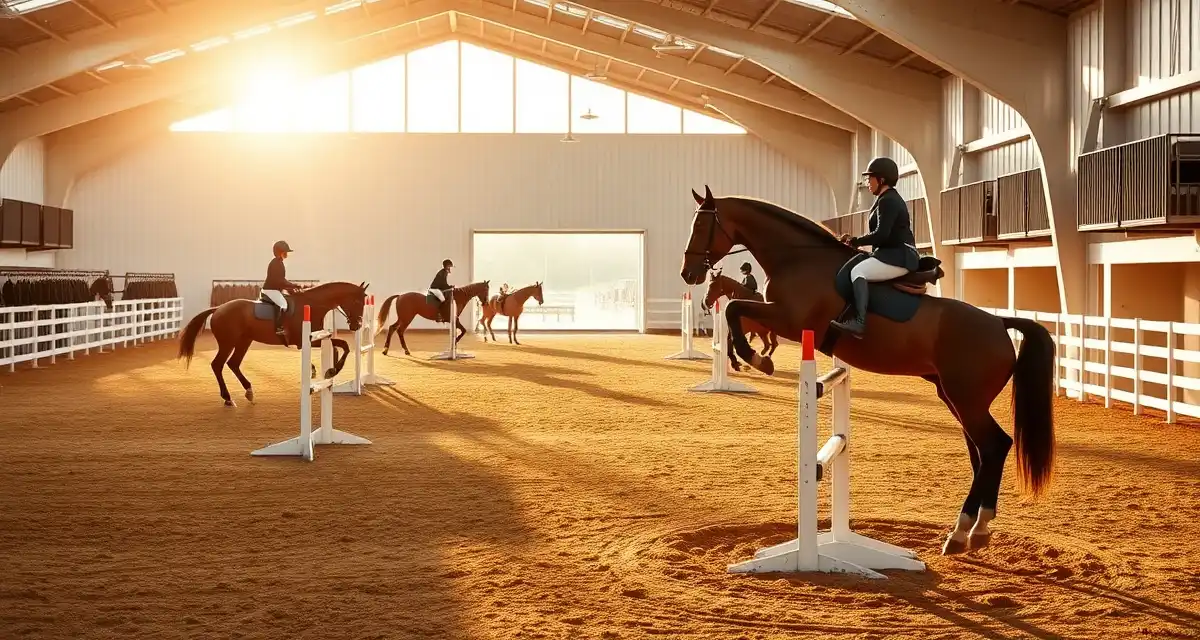
Running a Hunter/Jumper Training Facility
Hunter/jumper facilities operate at a different pace and complexity level than general boarding barns. The competitive calendar drives everything: horses are conditioning for shows, show prep happens on tight timelines, travel coordination is constant, and the relationship between the facility, the trainer, and the owner involves multiple layers of communication and expectation management.
The Operational Calendar
A hunter/jumper facility's operations are structured around the show calendar. If your market has a spring circuit, a summer horse show season, and a fall circuit, your barn's management cycle follows those rhythms.
Plan your operational calendar at the start of each year. Identify the shows your clients typically attend, the travel dates those shows require, the health documentation windows those trips demand (health certificates with limited validity, vaccine boosters needed to meet six-month show requirements), and the staffing implications of high-travel periods.
Pre-season preparation includes a full health records audit for every show horse in the barn. Vaccine status, coggins expiration, USEF passport currency. Finding these gaps in February rather than in April prevents scrambling.
Barn Organization for a Performance Horse Facility
The physical organization of a performance horse facility reflects the work being done there. Tack rooms, grooming areas, wash stalls, and the overall flow from stall to work to cool-down matter more at a facility where horses are worked regularly than at a pure boarding situation.
Common organization priorities for hunter/jumper barns:
Tack rooms. Each horse or trainer typically has dedicated tack storage. Labeling is essential. A busy show barn where multiple trainers work multiple horses cannot have an ambiguous tack storage system.
Grooming supplies. Show grooming is time-intensive and requires specific tools. Organized grooming stations with labeled supplies per horse reduce the time lost to finding equipment.
Jump storage and arena management. Courses need to be built and broken down. A system for organizing poles, standards, and fill means the arena can be set quickly without hunting for specific heights or styles.
Show prep area. Some facilities have dedicated prep areas for braiding, bathing before shows, and final-day preparation.
Communication Between Trainers, Owners, and Barn Management
Hunter/jumper facilities typically involve a three-party relationship: the barn, the trainer, and the owner. Each party has different responsibilities, different information needs, and different communication expectations.
Define clearly at the outset who is responsible for what. Is the trainer responsible for making vet authorization decisions, or does the owner have to be called? Who authorizes farrier services? Who receives health record updates?
Billing often involves trainer and barn charges that appear on the same invoice, which can cause confusion. Clarify the billing structure for new clients: what comes from the barn, what comes from the trainer, and how those charges are presented.
BarnBeacon can organize horse records by trainer or by owner, making it straightforward to see which horses a specific trainer manages or to pull all records for a specific owner's horses.
Staff Roles in a Performance Barn
Performance horse facilities typically have more specialized staff than general boarding barns: grooms, exercise riders, working students, trainers. Defining roles clearly prevents tasks from falling between responsibilities.
Grooms should have explicit responsibility for the horses in their section: health observations, feeding, grooming, tack care. They should know each horse's individual program and care instructions.
Exercise riders need to know conditioning programs, any physical limitations on the horses they ride, and any observations they should make during work (unusual movement, early fatigue).
All staff need access to health records and care instructions regardless of their specific role. See horse care instructions for how to build per-horse care documentation that works across a multi-role staff.
Health and Biosecurity in a High-Exposure Barn
Performance horses travel frequently and encounter large populations of other horses at shows, clinics, and training facilities. Biosecurity at a hunter/jumper barn needs to account for this elevated exposure.
Require a quarantine period for any horse returning from a show before it is reintegrated into the barn population. Monitor for respiratory symptoms in the week following return. Keep biosecurity supplies readily available and train all staff on protocols.
Vaccination currency is more important at a performance barn than at a low-exposure boarding facility. All horses should be current on influenza and rhinopneumonitis vaccinations at all times given the frequency of exposure.
FAQ
What is Running a Hunter/Jumper Training Facility?
Running a hunter/jumper training facility means managing a performance horse operation structured around the competitive show calendar. Unlike general boarding barns, these facilities coordinate conditioning programs, show prep, travel logistics, health documentation, and ongoing communication between trainers, horse owners, and show organizations. The facility serves competitive riders and their horses, providing professional training, turnout, feed, and veterinary coordination timed to regional circuits and national competition schedules.
How much does Running a Hunter/Jumper Training Facility cost?
Operating costs vary significantly by region and facility size, but hunter/jumper training barns typically charge $1,500–$4,000+ per month per horse for full training board. This covers stabling, daily care, training rides, and show preparation. Facility overhead—staff, insurance, arena maintenance, equipment, and health compliance—runs high. Revenue depends on board count, lesson income, and show commissions. Smaller boutique operations with 15–25 horses can be profitable with strong trainer reputation and high client retention.
How does Running a Hunter/Jumper Training Facility work?
A hunter/jumper facility operates on a cycle driven by the show calendar. Management teams plan the year around regional circuits, scheduling conditioning phases, pre-show health audits, coggins and health certificate renewals, and staffing for travel periods. Day-to-day operations include training rides, turnout rotations, feed programs, and owner communication. During show weeks, coordination intensifies around transport, stall reservations, veterinary paperwork, and on-site logistics for horses and riders competing simultaneously.
What are the benefits of Running a Hunter/Jumper Training Facility?
A well-run hunter/jumper facility gives competitive horses and their owners a professional, structured environment that maximizes show performance and minimizes last-minute chaos. Benefits include systematic health record management, experienced show preparation, reliable communication between trainer and owner, and a culture built around competitive success. For horse owners, it removes the logistical burden of managing show entries, health documentation, and travel coordination independently—leaving them focused on riding and competition.
Who needs Running a Hunter/Jumper Training Facility?
Hunter/jumper training facilities serve competitive riders at all levels—from local show amateurs to junior competitors pursuing year-end championships and adult amateurs balancing careers with serious riding. Owners who lack space, time, or expertise to condition and prepare a performance horse independently need a dedicated training barn. Young riders developing junior careers and clients who travel the circuit regularly benefit most from the structured, show-focused environment these facilities provide.
How long does Running a Hunter/Jumper Training Facility take?
There is no fixed timeline—running a hunter/jumper facility is an ongoing operational commitment structured around annual show seasons. Pre-season preparation typically begins 6–8 weeks before the first circuit, with health audits, vaccine scheduling, and coggins renewals completed before April. Individual show prep cycles run 4–12 weeks per horse depending on the competition goal. Year-round management is continuous, with intensity peaking during spring and fall circuits and easing slightly during summer and winter off-seasons.
What should I look for when choosing Running a Hunter/Jumper Training Facility?
When evaluating a hunter/jumper training facility, look for transparent communication practices, organized health record systems, and a trainer with verifiable show results. Ask how they handle pre-show documentation, travel logistics, and owner updates during show weeks. Assess the physical facility—footing quality, stall size, turnout availability, and arena setup. Strong facilities have clear contracts covering training board, show fees, and commissions, and can provide references from current clients with similar competitive goals.
Is Running a Hunter/Jumper Training Facility worth it?
For serious competitive riders, a professionally run hunter/jumper facility is worth the premium over general boarding. The structured show preparation, experienced training staff, and coordinated health compliance reduce costly errors—missed coggins deadlines, improper conditioning, or poor show logistics—that can derail a competitive season. The return on investment is measured in show-ring results, horse welfare, and owner peace of mind. For casual riders without competitive goals, the cost and intensity may exceed their actual needs.