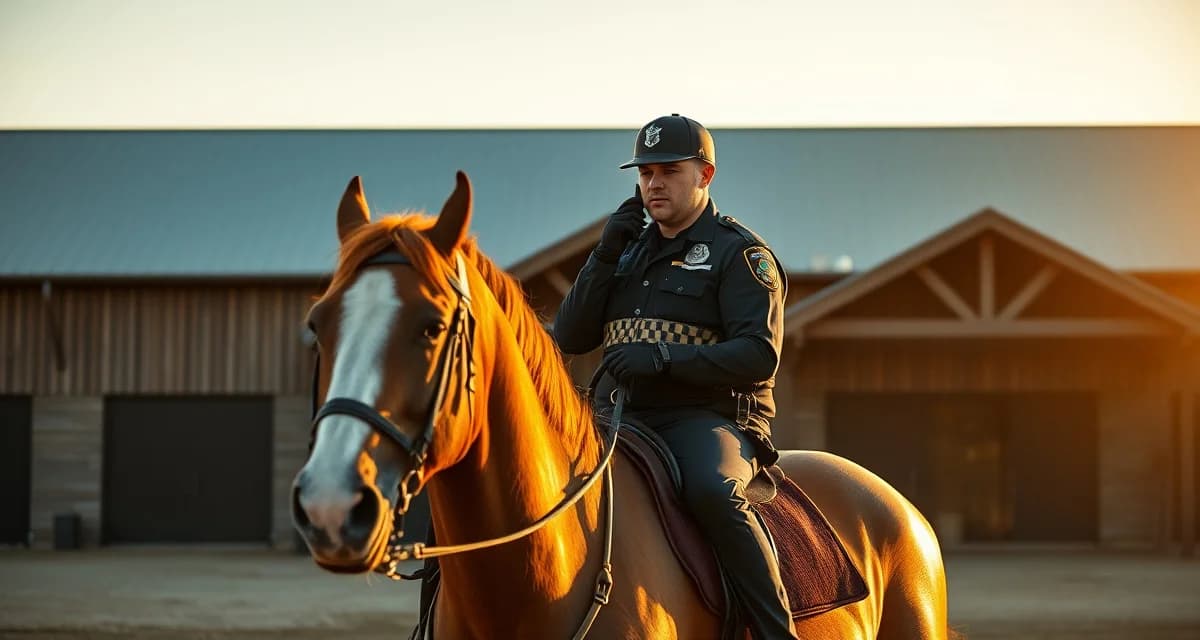
Mounted Patrol Barn Owner Communication: Communication and Updates
Mounted patrol barn owner communication runs on a different clock than recreational or show barns. Horses in active patrol service face higher daily risk exposure, irregular schedules, and performance demands that owners need to track closely. Generic barn management software was not built for this.
TL;DR
- Emergency protocols are only useful if they are written, posted, and reviewed with all staff before an emergency occurs.
- Contact sheets with vet, farrier, and owner information should be in every barn aisle and accessible from every phone.
- Incident documentation immediately after an event protects the facility legally and supports insurance claims.
- Evacuation routes for horses need to be practiced, not just posted: horses trained to load quickly during drills load faster in emergencies.
- Staff who have never seen a colic or lacerations make worse decisions than staff who have reviewed protocols in advance.
- BarnBeacon stores emergency contacts, health records, and Coggins documents accessibly from any device at any time.
Mounted patrol disciplines have unique owner communication patterns not covered by generic barn software, and that gap creates real problems: missed health updates, delayed incident reports, and owners who feel out of the loop on horses doing critical public safety work.
Why Mounted Patrol Communication Is Different
A trail riding barn sends a weekly update. A mounted patrol barn may need to report a hoof injury, a crowd control incident, and a tack inspection result all in the same afternoon.
Owners who donate or loan horses to mounted patrol units are often deeply invested stakeholders. They expect timely, structured updates, not a text message two days after something happened. The communication standard has to match the operational standard.
Step 1: Map Your Communication Triggers
Identify What Requires Immediate Notification
Not every update is equal. Start by listing the events that require same-day owner contact. These typically include:
- Any injury during patrol duty
- Veterinary calls or emergency treatment
- Behavioral incidents involving the public
- Equipment failure affecting the horse
- Temporary removal from active duty
Build this list with your unit supervisor and veterinarian before you set up any system. If you do not define the triggers first, you will default to inconsistent communication.
Identify Routine Update Categories
Routine updates run on a predictable schedule. For most mounted patrol barns, this means daily feeding and health checks, weekly conditioning reports, and monthly farrier and vet summaries.
Separating urgent from routine is the foundation of a communication system that owners actually trust.
Step 2: Choose the Right Communication Channel for Each Update Type
Urgent Alerts
Phone calls remain the most reliable channel for genuine emergencies. Follow every call with a written summary sent through your owner portal within two hours. This creates a record and ensures nothing gets lost in a verbal exchange.
Routine Updates
A dedicated owner communication portal handles routine updates far better than group texts or email chains. Portals give owners a single place to review feeding logs, conditioning notes, and vet records without having to ask for them.
BarnBeacon's owner portal is built to adapt to mounted patrol workflows, including duty logs and incident reporting fields that general barn software simply does not include.
Formal Reports
Monthly or quarterly formal reports should be formatted documents, not casual messages. Include duty hours, health status, conditioning benchmarks, and any incidents with outcomes. Owners who loan horses to patrol units often need this documentation for insurance or tax purposes.
Step 3: Build Your Message Templates
Why Templates Matter
Inconsistent communication creates anxiety. When owners receive a detailed report one month and a two-line email the next, they start to wonder what is being left out.
Templates standardize your output without making it feel robotic. A good template has a fixed structure but leaves room for specific details.
Core Templates to Build First
Incident Report Template
Include: date, time, location, nature of incident, horse's condition immediately after, veterinary involvement (yes/no), current status, and next steps.
Routine Health Update Template
Include: date, feeding notes, observed behavior, any physical observations (coat, hooves, weight), conditioning activity completed, and next scheduled vet or farrier visit.
Return to Duty Notification
Include: reason for removal from duty, treatment or rest period completed, clearance source (vet name and date), and return date.
Keep each template to one page or less. Owners read short, structured updates. They skim long ones.
Step 4: Set Owner Expectations at Intake
The Intake Communication Agreement
When a horse enters your mounted patrol program, the owner should sign a communication agreement that specifies exactly what they will receive and when. This is not bureaucratic overhead. It prevents the most common source of owner complaints: "I didn't know."
The agreement should cover update frequency, emergency contact protocol, who the primary point of contact is, and how formal reports will be delivered.
Onboarding Owners to Your Portal
If you use a digital portal, walk every owner through it at intake. Show them where to find health logs, how to read duty reports, and how to submit questions. An owner who knows how to use the system will use it, and that reduces the volume of one-off calls and texts you field every week.
For a deeper look at how digital tools fit into the broader operation, see mounted patrol barn operations.
Step 5: Maintain a Communication Log
Why You Need a Paper Trail
Mounted patrol barns operate in a liability environment that recreational barns do not. If a horse is injured during a public event and the owner later claims they were not informed, you need documentation that proves otherwise.
Log every owner communication: date, channel, content summary, and who sent it. Your portal should do this automatically. If you are using email, keep a dedicated folder per owner.
Audit Your Communication Quarterly
Every three months, review your communication logs for gaps. Look for owners who have not received a formal report, horses whose health logs have incomplete entries, and incidents that were verbally communicated but never followed up in writing.
A 15-minute quarterly audit catches problems before they become disputes.
Common Mistakes to Avoid
Waiting for owners to ask. Proactive communication builds trust. Reactive communication erodes it. If something happened, the owner should hear it from you first.
Using personal cell phones as the primary channel. When the person who manages communication leaves or is unavailable, the system breaks. Centralize communication through a platform that the whole team can access.
Sending the same update format for urgent and routine news. If every message looks the same, owners cannot quickly identify what needs immediate attention. Use clear subject lines and formatting to signal urgency.
Skipping the follow-up after a verbal call. A phone call is not a record. Always follow urgent calls with written documentation.
How do I communicate with mounted patrol horse owners?
Use a tiered system: phone calls for emergencies, a digital owner portal for routine updates and health logs, and formal written reports on a monthly or quarterly schedule. Define your communication triggers before you build any system, and make sure every owner signs an intake agreement that sets expectations from day one.
What do mounted patrol owners want to know about their horses?
Owners want to know their horse is safe, healthy, and being used appropriately. That means regular health and feeding updates, prompt incident reports, conditioning progress, and documentation of any veterinary or farrier visits. Owners who loan horses to patrol units often also need formal records for insurance or tax purposes, so structured monthly reports matter more here than in recreational settings.
What owner portal features matter for mounted patrol barns?
Look for a portal that supports duty logs and incident reporting fields, not just feeding and health notes. You need the ability to attach vet and farrier records, send urgent alerts separately from routine updates, and maintain a full communication log for liability purposes. BarnBeacon's owner communication portal includes fields built specifically for working horse disciplines, including mounted patrol reporting requirements.
How often should staff review emergency protocols?
Emergency protocols should be reviewed with all staff at least twice per year, and with each new employee during onboarding. Physical drills for horse evacuation, even informal ones, build the muscle memory that makes actual emergencies less chaotic. A protocol that has never been practiced will not function as intended under stress. Documenting review dates and participants creates a record that supports the facility's insurance position.
What information should be in a barn emergency contact sheet?
The emergency contact sheet should include the primary veterinarian's number, the emergency or after-hours vet line, the farrier, the feed supplier for emergencies, each horse owner's name and emergency contact, the facility owner or manager's number, and the addresses and phone numbers of the nearest large animal vet clinic and equine hospital. This sheet should be posted in the barn aisle and saved digitally in a location accessible from every staff member's phone.
How should I document a horse injury incident at my facility?
Document the incident immediately: the time, the horse, the nature of the injury, how it was discovered, what was done in response, and who was notified. Photograph the injury before and after first aid. Note any environmental factors that may have contributed, such as fencing condition or footing. Notify the owner the same day, by phone before sending a written summary. This documentation is essential for insurance purposes and protects the facility if the owner later claims inadequate response.
Related Articles
FAQ
What is Mounted Patrol Barn Owner Communication: Communication and Updates?
Mounted patrol barn owner communication refers to the structured systems and protocols that keep horse owners informed about their animals during active patrol service. Unlike recreational boarding, mounted patrol horses face daily risk exposure, irregular duty schedules, and specific performance tracking needs. Effective communication covers incident reports, health updates, emergency notifications, and routine check-ins. BarnBeacon is purpose-built to handle this communication layer, giving barn managers and owners a shared, real-time view of each horse's status.
How much does Mounted Patrol Barn Owner Communication: Communication and Updates cost?
BarnBeacon offers tiered pricing based on barn size and feature needs. There is no single fixed cost because facilities vary widely in horse count, staff size, and communication volume. Most mounted patrol barns find the investment modest compared to the liability exposure from a missed incident report or delayed emergency response. Contact BarnBeacon directly for a quote tailored to your operation. The cost of a single undocumented incident or disputed insurance claim typically exceeds a full year of software fees.
How does Mounted Patrol Barn Owner Communication: Communication and Updates work?
BarnBeacon centralizes all owner communication into one platform accessible from any device. Barn managers log daily reports, health observations, and incidents as they occur. Owners receive notifications in real time rather than waiting for a phone call or end-of-day summary. Emergency contacts, Coggins documents, vet records, and farrier notes are stored and retrievable instantly. Staff follow documented protocols rather than improvising. The result is a consistent, auditable communication trail that protects both the facility and the horse owner.
What are the benefits of Mounted Patrol Barn Owner Communication: Communication and Updates?
The core benefits include faster incident response, reduced liability exposure, and stronger owner trust. Owners of patrol horses need timely, accurate updates because their animals are working assets with public safety implications. Documented communication protects barn operators during insurance claims or disputes. Digital health records eliminate paper filing gaps. Staff accountability improves when protocols are written and tracked. For owners who cannot be on-site daily, BarnBeacon provides the visibility they need without requiring constant phone calls to the barn.
Who needs Mounted Patrol Barn Owner Communication: Communication and Updates?
Any barn housing horses in active mounted patrol service needs a structured owner communication system. This includes municipal and county law enforcement stables, park ranger facilities, event security barns, and private contractors providing patrol horses. Facility managers responsible for multiple horses and multiple owners benefit most, particularly when staff turnover is frequent or shifts vary. If your barn is still relying on informal text threads or paper logs to keep patrol horse owners informed, a dedicated communication system is overdue.
How long does Mounted Patrol Barn Owner Communication: Communication and Updates take?
Setup typically takes one to two days for initial data entry including horse profiles, owner contacts, emergency protocols, and document uploads. Staff onboarding is straightforward and does not require technical background. Ongoing daily use adds only minutes per horse per shift for routine updates. Incident reports take five to fifteen minutes depending on complexity. The time investment is front-loaded during setup; daily operation is designed to fit into existing barn routines rather than add administrative burden on top of them.
What should I look for when choosing Mounted Patrol Barn Owner Communication: Communication and Updates?
Look for a system built around equine-specific workflows rather than generic farm or livestock management. Key features for mounted patrol use include real-time incident reporting, emergency contact access from mobile devices, document storage for Coggins and health records, and an audit trail for every communication. Ease of use matters because staff in the field need to log updates quickly. Also evaluate whether the platform supports multiple owners per horse and whether notification preferences can be customized per owner.
Is Mounted Patrol Barn Owner Communication: Communication and Updates worth it?
For mounted patrol operations, yes. The gap between informal communication and a structured system is where liability accumulates and owner relationships break down. A single undocumented incident, delayed health alert, or lost Coggins file can cost more than years of software fees. Owners who receive consistent, professional updates are more confident in the facility and more likely to stay long term. BarnBeacon is not overhead — it is the infrastructure that makes a patrol barn run safely and professionally at the standard these horses and their owners deserve.
Sources
- American Association of Equine Practitioners (AAEP), equine emergency response guidelines
- American Red Cross, first aid training resources applicable to farm environments
- National Fire Protection Association (NFPA), fire safety standards for agricultural structures
- United States Department of Agriculture (USDA), livestock emergency preparedness resources
- American Horse Council, equine facility safety and emergency planning guidance
Get Started with BarnBeacon
BarnBeacon stores emergency contacts, health records, and Coggins documents in one place accessible from any phone at any time, so the information you need in an emergency is never locked in a binder in the office. Start a free 30-day trial to see how it fits your facility's safety protocols.