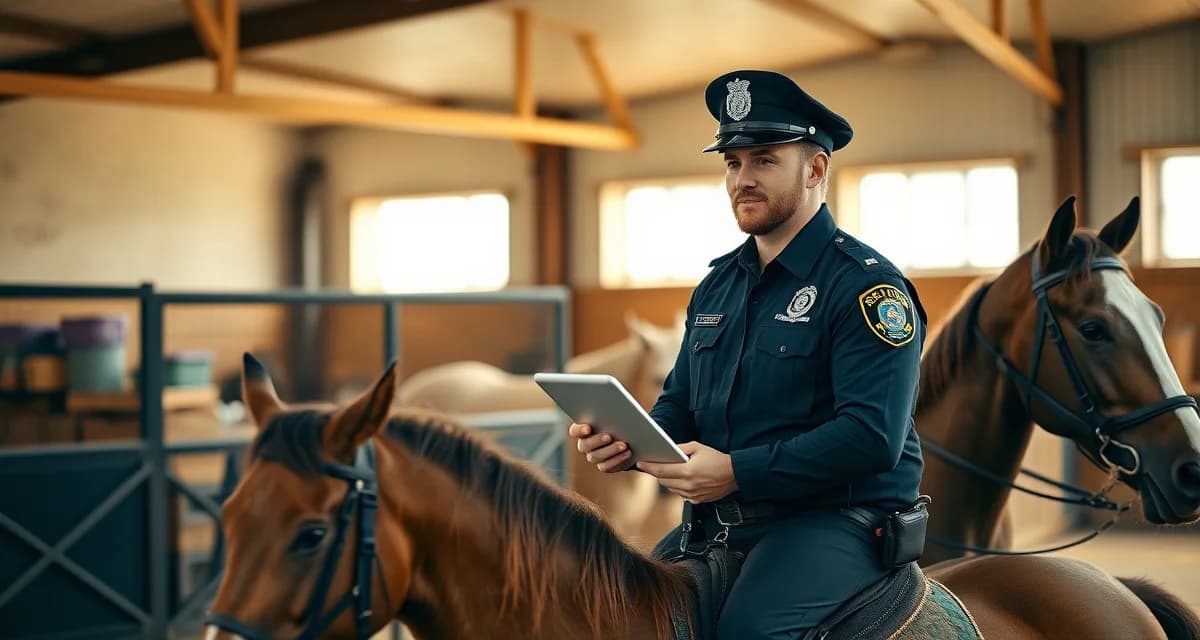
Mounted Patrol Barn Owner Communication: FAQ for Managers
Mounted patrol barn owner communication sits at the intersection of law enforcement logistics and equine facility management, a combination that generic barn software was never built to handle. Facilities supporting police, park ranger, or military mounted units face communication demands that differ sharply from boarding barns or training stables.
TL;DR
- Mounted Patrol barns have owner communication requirements that differ meaningfully from general boarding facilities
- Purpose-built software reduces time spent on owner communication tasks by several hours per week compared to manual processes
- Generic tools lack the fields and workflows specific to Mounted Patrol operations, leading to gaps in records and billing
- Facilities that move to dedicated owner communication software report improved accuracy and fewer client disputes
- Documentation requirements at Mounted Patrol facilities often carry compliance implications that manual records cannot adequately support
- The right owner communication system should match your actual daily workflows, not require workarounds to fit a general template
Why Mounted Patrol Owner Communication Is Different
Most barn management platforms assume a straightforward owner relationship: one horse, one owner, one billing cycle. Mounted patrol facilities don't work that way.
Horses at these facilities may be owned by a municipality, a department, a nonprofit, or a private donor. The "owner" communicating with barn staff might be a procurement officer, a unit commander, or a city budget manager, not someone who has ever touched a horse. That gap creates real friction when it comes to health updates, incident reports, and maintenance requests.
Generic platforms also lack the audit trail depth that government-affiliated owners often require. When a horse is injured on duty or requires emergency veterinary care, the communication record may become part of an official report. A missed message or an informal text thread doesn't cut it.
BarnBeacon was built with these scenarios in mind, offering purpose-built tools for mounted patrol barn operations that address the specific communication structure these facilities require.
How do mounted patrol barn managers handle owner communication?
Effective mounted patrol barn managers treat owner communication as a formal process, not an informal one. They establish defined communication channels for different message types: routine health updates go through one pathway, incident reports through another, and billing or procurement questions through a third.
Most experienced managers document every owner-facing communication, including verbal conversations, with timestamps and follow-up confirmations. This matters because government owners in particular may need to reference those records months later during audits or budget reviews. Managers who rely on text messages or email threads without a centralized log create unnecessary risk for themselves and their facilities.
The strongest communication systems include scheduled reporting cadences, such as weekly health summaries and monthly condition reports, so owners receive consistent information without having to request it. Proactive communication reduces the volume of inbound owner inquiries and builds institutional trust over time.
What software do mounted patrol barns use for owner communication?
Most mounted patrol facilities start with whatever is available, often a combination of spreadsheets, email, and general-purpose barn management software. The problem is that none of those tools were designed for the ownership structures or compliance requirements these facilities face.
Purpose-built barn management software that includes owner portals, structured messaging, and documented communication logs is a significant step up. BarnBeacon specifically addresses mounted patrol equine facility owner communication by providing role-based access, so a city procurement officer sees the financial and inventory data relevant to them, while a unit commander sees horse readiness and health status.
Key features to look for in any platform include: timestamped message logs, customizable report templates for different owner types, incident documentation workflows, and the ability to attach veterinary or farrier records directly to owner communications. Facilities that have moved to structured software report fewer miscommunications and faster response times when urgent situations arise.
What are the owner communication challenges at mounted patrol facilities?
The most common challenge is mismatched expectations. Government or institutional owners often expect formal, documented reporting on a regular schedule. Barn staff accustomed to informal horse owner relationships may not default to that level of structure, which creates gaps.
A second major challenge is multi-stakeholder ownership. A single horse may have a purchasing department, a unit supervisor, and a city council liaison all expecting updates, but with different information needs. Without a system that supports segmented communication, managers end up sending redundant messages or, worse, sending the wrong level of detail to the wrong person.
Emergency communication is a third pressure point. When a duty horse is injured or becomes ill, the communication chain at a mounted patrol facility can involve veterinarians, unit commanders, department heads, and legal or risk management staff simultaneously. Facilities without a clear protocol and a platform that supports rapid, documented multi-party communication often find themselves managing the communication crisis as much as the actual emergency.
Finally, turnover in government ownership contacts is a persistent issue. Personnel changes mean the barn manager's primary contact may shift without notice, and communication history stored in personal email accounts disappears with the departing employee. Centralized platforms with persistent communication records solve this directly.
What does software for mounted patrol facilities typically cost?
Dedicated equine management software is typically priced at a flat monthly rate, often between $50 and $200 per month depending on the platform and feature set. Purpose-built tools like BarnBeacon are structured for independent facility owners rather than large commercial operations, keeping costs accessible for single-barn managers.
How long does it take to transition from spreadsheets to dedicated software?
Most facilities complete the core setup for a platform like BarnBeacon in under a week. Horse profiles, service templates, and billing configurations can be imported or entered incrementally. The majority of managers see a reduction in administrative time within the first billing cycle after switching.
Can mounted patrol barn staff access the software from the barn aisle?
Yes. BarnBeacon is designed for mobile use, allowing staff to log health observations, complete task checklists, and send owner updates from a phone without returning to an office. Mobile access is particularly important at facilities where staff spend most of their day in the barn rather than at a desk.
Related Articles
FAQ
What is Mounted Patrol Barn Owner Communication: FAQ for Managers?
Mounted Patrol Barn Owner Communication: FAQ for Managers is a structured resource addressing the unique communication challenges faced by facilities supporting police, park ranger, or military mounted units. Unlike standard boarding barns, these facilities must manage complex owner relationships, compliance documentation, and specialized billing workflows. This FAQ helps barn managers understand what effective communication systems should include, how to evaluate software options, and how to streamline operations that generic barn management platforms were never designed to handle.
How much does Mounted Patrol Barn Owner Communication: FAQ for Managers cost?
Cost varies depending on the software platform and facility size, but dedicated mounted patrol barn management tools are typically priced on a monthly subscription basis. Most facilities find the investment offsets labor costs quickly — purpose-built software reduces time spent on owner communication tasks by several hours per week compared to manual processes. When evaluating cost, factor in time savings, reduced billing disputes, and compliance documentation value rather than comparing only the subscription fee to free or generic tools.
How does Mounted Patrol Barn Owner Communication: FAQ for Managers work?
Effective mounted patrol barn owner communication works by centralizing horse records, owner contacts, billing, and compliance documentation into a single system designed for law enforcement and government agency relationships. Rather than adapting generic tools with workarounds, purpose-built platforms provide fields and workflows specific to mounted unit operations. Managers input daily care logs, incident reports, and billing data, which are then shared with the appropriate owners or agency contacts through structured, auditable communication channels.
What are the benefits of Mounted Patrol Barn Owner Communication: FAQ for Managers?
The primary benefits include reduced administrative time, fewer billing disputes, improved compliance documentation, and clearer communication with government agency clients. Facilities using dedicated software report significantly fewer errors compared to manual recordkeeping. Audit trails satisfy compliance requirements that paper or spreadsheet records cannot adequately support. Managers also benefit from consistent communication workflows that reduce the back-and-forth typically caused by missing or inconsistent records across multiple horse owners or agency handlers.
Who needs Mounted Patrol Barn Owner Communication: FAQ for Managers?
Barn managers and facility administrators responsible for housing police, park ranger, military, or other government-affiliated mounted units need this resource most. It is also relevant to law enforcement stable coordinators, equine program directors, and anyone transitioning from manual communication methods to dedicated software. Facilities that currently use generic barn apps or spreadsheets and are experiencing gaps in records, billing confusion, or compliance concerns will find the most immediate value in this guidance.
How long does Mounted Patrol Barn Owner Communication: FAQ for Managers take?
The time required depends on your current systems and facility size. Switching from manual processes or generic software to a purpose-built platform typically involves an initial setup period of one to four weeks to migrate records and configure workflows. Ongoing, managers report saving several hours per week once the system is running. Evaluating your options, including reading resources like this FAQ and trialing software, should be factored into your planning timeline before committing to a platform.
What should I look for when choosing Mounted Patrol Barn Owner Communication: FAQ for Managers?
Look for a platform specifically designed for mounted patrol or government-affiliated equine operations rather than a generic boarding app adapted with workarounds. Key features include multi-owner and agency billing support, compliance-grade documentation, audit trails, incident reporting fields, and role-based access for law enforcement or agency contacts. Evaluate whether the software matches your actual daily workflows without requiring manual workarounds. Also consider vendor support quality, data export options, and whether the tool can scale with your facility's operational complexity.
Is Mounted Patrol Barn Owner Communication: FAQ for Managers worth it?
Yes, for most mounted patrol facilities managing more than a handful of horses or agency relationships, dedicated owner communication software is worth the investment. The compliance documentation alone — which manual records cannot adequately support — often justifies the cost. Facilities that make the switch consistently report improved accuracy, fewer client disputes, and hours of administrative time saved each week. If your current process involves spreadsheets, email chains, or generic barn apps with constant workarounds, a purpose-built solution will deliver measurable operational improvement.
Sources
- American Association of Equine Practitioners (AAEP)
- American Competitive Trail Horse Association (ACTHA)
- American Horse Council
- UC Davis Center for Equine Health
- American Horse Council Economic Impact Study
Get Started with BarnBeacon
The management questions answered in this guide all have a practical answer: systems built around your mounted patrol unit's actual workflows. BarnBeacon gives managers the documentation tools, billing infrastructure, and owner communication platform to address the challenges described here without manual workarounds. Start a free trial and see how the platform fits your daily operation.