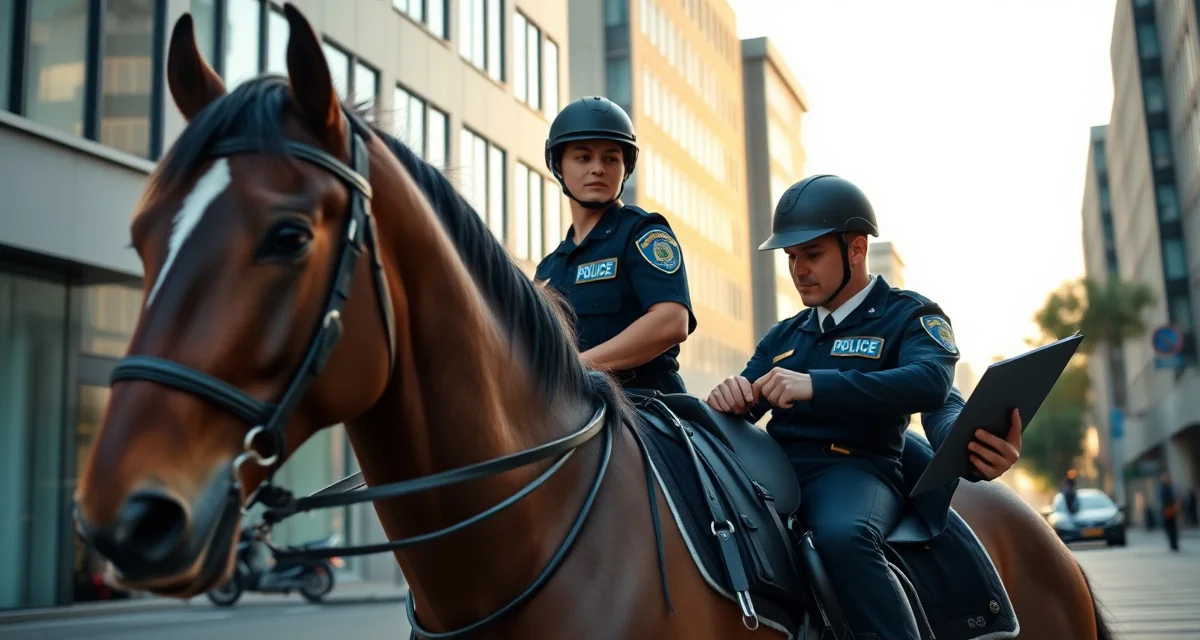
Mounted Patrol Barn Owner Communication: Health and Updates
Mounted patrol barn owner communication runs on a different clock than recreational or competition barns. Horses in active patrol service face higher daily physical demands, irregular schedules, and exposure to urban environments that create unique health reporting needs. Generic barn management software rarely accounts for any of this.
TL;DR
- Health observations logged at the point of care, not reconstructed at shift end, are the only reliable clinical record
- Daily baseline documentation for each horse creates the comparison point that makes anomaly detection meaningful
- medication tracking must include product name, dose, route, and withdrawal period for any horse in a regulated program
- Vet instructions delivered verbally during farm visits are frequently misremembered; written confirmation before the vet leaves is the standard
- Health alert protocols should remove judgment calls from staff: define triggers in writing so action is automatic
- Owner notification within 30 minutes of a health event, including a documented timeline, reduces disputes and builds confidence
Most barn software treats all horse owners the same. Mounted patrol owners are not typical clients. They are often government agencies, law enforcement departments, or nonprofit organizations with formal reporting requirements, multiple stakeholders, and zero tolerance for gaps in health documentation.
Why Mounted Patrol Communication Needs Its Own Approach
A patrol horse working a downtown beat logs more stress events in a single shift than a trail horse sees in a month. Crowd exposure, pavement work, irregular feeding windows, and equipment wear all create health variables that need to be tracked and reported consistently.
Owners in this discipline frequently need documentation for budget justification, insurance claims, and service continuity planning. A missed lameness note or delayed vet update is not just an inconvenience. It can affect a horse's deployment status and an agency's operational capacity.
Step 1: Identify Who Receives Updates and What They Need
Map Your Stakeholder List
Mounted patrol barn managers often report to multiple parties simultaneously. The horse's legal owner might be a city department, while the handler is a sworn officer, and the approving authority is a police captain who never visits the barn.
List every stakeholder for each horse and define what information each party needs. A handler needs daily health status. A department administrator needs monthly summaries. An insurance contact needs incident-specific documentation.
Define Update Frequency by Role
Set a communication cadence before you build any templates. Daily check-in reports go to handlers. Weekly summaries go to supervisors. Formal health reports go to department owners on a monthly or quarterly cycle. Incident reports go to all parties immediately.
Step 2: Build a Health Update Template for Patrol-Specific Variables
Include Patrol-Relevant Health Markers
Standard barn health templates track feed, water, and general behavior. Mounted patrol templates need additional fields: hoof condition after pavement work, leg heat or swelling post-shift, behavioral stress indicators, tack fit notes, and any exposure incidents such as crowd contact or chemical exposure.
A template that does not capture these variables will leave gaps in your documentation that matter when a horse is pulled from service or when an owner needs to justify a vet expense.
Use Consistent Scoring Systems
Wherever possible, replace narrative descriptions with scored fields. A lameness score of 0-5 is more defensible than "moving a little stiff." Body condition scoring, pain face scoring, and hydration checks all benefit from standardized scales that different staff members can apply consistently across shifts.
Step 3: Choose a Communication Channel That Fits Patrol Workflows
Why Email Alone Fails
Email threads get buried. Attachments get lost. When a department administrator needs to pull six months of health records for a budget review, a folder of forwarded emails is not a workable archive.
Mounted patrol barns need a centralized owner portal where records are organized by horse, searchable by date, and accessible to the right stakeholders without requiring barn staff to manually compile reports.
What to Look for in an Owner Portal
The owner communication portal you choose needs to support role-based access, so a handler sees daily logs while a department administrator sees summary reports. It also needs to support document attachments for vet invoices, farrier records, and incident reports.
Notification controls matter too. Patrol horse owners often need real-time alerts for health incidents, not just scheduled updates. A portal that only sends weekly digests will not meet the communication standards most mounted patrol programs operate under.
Step 4: Set Up Automated Alerts for High-Priority Events
Define What Triggers an Immediate Notification
Not every health note needs to interrupt a department administrator's day. But some events do. Define your escalation triggers in writing: any lameness above a score of 2, any temperature above 101.5°F, any injury requiring veterinary attention, any behavioral incident during service.
When these events occur, your communication system should send an automatic alert to the appropriate stakeholders within minutes, not hours.
Document the Response Chain
Every alert should have a documented response chain. Who receives the notification? Who confirms receipt? Who authorizes the next step? Building this into your communication workflow removes ambiguity during high-stress situations and creates an audit trail that protects both the barn and the owning agency.
Step 5: Deliver Monthly Health Summaries That Owners Can Use
Format for Non-Equestrian Readers
Many mounted patrol horse owners are administrators or officials who do not have an equestrian background. Monthly summaries need to be readable by someone who does not know what a coffin joint is.
Use plain language. Lead with service status: is the horse fit for duty, on modified duty, or out of service? Follow with a brief health narrative, then attach supporting documentation. Keep the main summary to one page.
Include Trend Data
A single month of health data is less useful than a trend. If a horse has shown elevated leg heat after every Friday night shift for three months, that pattern matters for deployment decisions. Your monthly summary should flag trends, not just report current status.
For a deeper look at how communication fits into broader barn operations, the mounted patrol barn operations guide covers workflow integration in detail.
Common Mistakes in Mounted Patrol Owner Communication
Waiting for owners to ask. Proactive communication builds trust and reduces the volume of inbound inquiries. If owners are regularly calling to check on their horses, your update cadence is too slow.
Using the same template for all horses. A horse in active patrol service and a horse on medical leave need different reporting formats. Customize your templates to reflect each horse's current status.
Skipping documentation on minor incidents. A small cut that heals in three days still needs to be logged. Minor incidents that recur become patterns. Patterns that are undocumented become disputes.
Failing to confirm receipt. Sending an update is not the same as delivering it. For high-priority communications, require acknowledgment from the receiving party and log the confirmation.
How should a barn manager respond when a horse's health observation is outside normal baseline?
Log the observation immediately with the time, specific findings, and the staff member's name. Contact the attending veterinarian if the deviation is outside the parameters defined in the horse's care plan. Notify the owner in writing, including what was observed and what action was taken. This sequence creates a defensible record and demonstrates appropriate professional response.
What should every horse's health record include at minimum?
At minimum, a horse's health record should include vaccination dates and products, deworming history, dental exam dates, farrier schedule, medication logs with product and dose, and any veterinary findings or diagnoses. For horses in regulated disciplines, drug testing withdrawal periods for recent treatments must also be tracked. A record that cannot be produced quickly during an inspection or a dispute is effectively no record at all.
How often should vital signs be checked for horses on stall rest or recovery programs?
Vital signs for stall rest or recovery horses should be checked at every feeding, at minimum twice daily. For horses in acute recovery or following surgery, more frequent checks may be required; follow the veterinarian's written protocol. Log temperature, respiration, and heart rate each time and flag any reading outside baseline before the next check.
FAQ
What is Mounted Patrol Barn Owner Communication: Health and Updates?
Mounted patrol barn owner communication for health and updates is a structured system for documenting and sharing horse health information between barn staff and owners in law enforcement or patrol contexts. Unlike standard barn management, it accounts for the unique demands of active service horses—higher physical workload, urban exposure, and regulated medication protocols—ensuring that health observations, vet instructions, and incident reports reach owners accurately and on time.
How much does Mounted Patrol Barn Owner Communication: Health and Updates cost?
There is no single fixed cost, as pricing depends on the barn management software or communication platform you choose. Many platforms offer tiered subscriptions ranging from basic messaging tools to full-featured equine management systems with medication tracking, daily logs, and automated alerts. Costs typically range from $30 to $200+ per month depending on herd size and feature set. Some departments offset costs through operational budgets rather than individual owner fees.
How does Mounted Patrol Barn Owner Communication: Health and Updates work?
The system works by capturing health observations at the point of care—during feeding, grooming, or post-ride checks—and logging them digitally in real time. Staff record daily baselines, flag anomalies, track medications with full dosage and withdrawal details, and document vet instructions in writing. Automated alerts notify owners within a defined window of any health event, creating a timestamped communication trail that is accessible to all authorized parties.
What are the benefits of Mounted Patrol Barn Owner Communication: Health and Updates?
Key benefits include faster anomaly detection through consistent daily baselines, reduced medication errors with structured tracking fields, fewer disputes thanks to documented communication timelines, and greater owner confidence in their horse's care. For regulated programs, written records protect both the department and the barn. Staff also benefit from clear protocols that remove judgment calls during high-pressure situations, making responses more consistent and defensible.
Who needs Mounted Patrol Barn Owner Communication: Health and Updates?
Any barn housing horses in active mounted patrol or law enforcement service needs this system. This includes municipal police stables, sheriff's department equine units, park patrol facilities, and private barns contracting horses to patrol programs. Barn managers, stable hands, veterinarians, and the horse owners themselves—often the department or individual officers—all interact with the system to maintain accurate, shared health records across irregular shift schedules.
How long does Mounted Patrol Barn Owner Communication: Health and Updates take?
Initial setup of a structured communication system typically takes one to two weeks, covering software configuration, staff training, and establishing baseline health records for each horse. Day-to-day, logging a health observation takes two to five minutes at the point of care. Owner notifications should go out within 30 minutes of a health event. The investment in setup time pays back quickly through fewer missed observations and faster veterinary response.
What should I look for when choosing Mounted Patrol Barn Owner Communication: Health and Updates?
Look for real-time point-of-care logging rather than end-of-shift data entry, structured medication fields that capture product name, dose, route, and withdrawal period, and automated owner alerts with configurable time triggers. The platform should support written vet instruction records, shift handoff summaries, and a clear audit trail. Bonus features include photo attachments for wound documentation and role-based access so owners see relevant updates without accessing staff-only records.
Is Mounted Patrol Barn Owner Communication: Health and Updates worth it?
Yes, for barns managing service horses in patrol programs, a structured health communication system is worth it. The alternative—verbal updates, informal texts, and reconstructed shift logs—creates gaps that lead to missed health events, medication errors, and owner disputes. A documented, timely communication trail protects the barn, the department, and the horse. The operational cost is modest compared to the liability risk of a poorly documented health incident in an active service animal.
Sources
- American Association of Equine Practitioners (AAEP)
- United States Equestrian Federation (USEF)
- American Competitive Trail Horse Association (ACTHA)
- American Horse Council
- Kentucky Equine Research
Get Started with BarnBeacon
Health records that live on a clipboard in the barn aisle cannot protect your horses or your facility the way a real-time digital system can. BarnBeacon gives mounted patrol units the health logging, alert, and owner notification tools to document care at the point of service, catch anomalies early, and build a defensible record automatically. Start a free trial and see how your health tracking changes in the first two weeks.