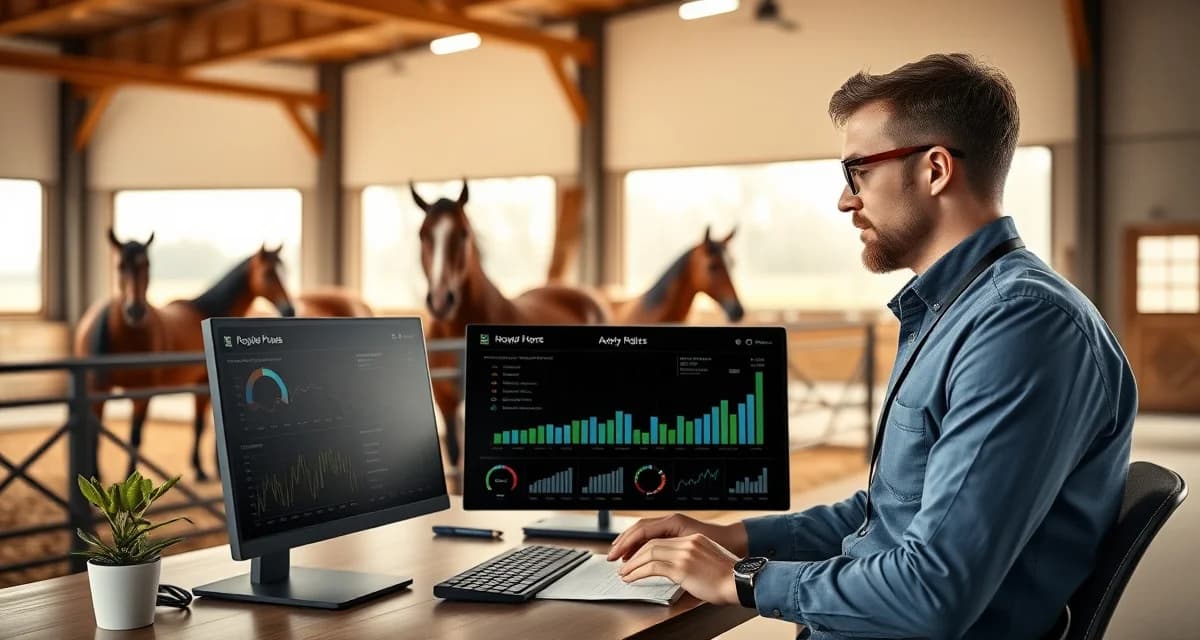
Mounted Patrol Barn Health Monitoring: FAQ for Managers
Mounted patrol barn health monitoring is one of the most demanding operational challenges in equine facility management. Unlike private boarding barns or competition stables, mounted patrol facilities run horses in high-stress, irregular-schedule environments where a missed health signal can take a working animal off duty for weeks.
TL;DR
- Mounted Patrol barns have health monitoring requirements that differ meaningfully from general boarding facilities
- Purpose-built software reduces time spent on health monitoring tasks by several hours per week compared to manual processes
- Generic tools lack the fields and workflows specific to Mounted Patrol operations, leading to gaps in records and billing
- Facilities that move to dedicated health monitoring software report improved accuracy and fewer client disputes
- Documentation requirements at Mounted Patrol facilities often carry compliance implications that manual records cannot adequately support
- The right health monitoring system should match your actual daily workflows, not require workarounds to fit a general template
Generic barn software was not built for this. Mounted patrol facilities have unique health monitoring needs that standard tools consistently fail to address, from shift-based care handoffs to tracking horses that work overnight or in extreme weather conditions.
Why Mounted Patrol Health Monitoring Is Different
Patrol horses work unpredictable hours alongside multiple handlers across rotating shifts. That means health data gets fragmented across paper logs, verbal handoffs, and individual officer notes. By the time a pattern emerges, the problem has already progressed.
The stakes are also higher. A patrol horse that goes lame or develops colic mid-shift is not just a welfare issue. It is a public safety gap. Facilities need monitoring systems that flag changes in real time, not at the next morning check.
BarnBeacon was built with this operational reality in mind. Its purpose-built tools for mounted patrol equine facility health monitoring close the gaps that generic platforms leave open.
How BarnBeacon Addresses the Gap
Most barn management software treats health monitoring as a secondary feature, a notes field or a basic log. BarnBeacon treats it as the core function, with structured daily health checks, shift-to-shift handover records, and automated alerts tied to individual horse profiles.
For mounted patrol managers, this means every handler who touches a horse logs the same structured data points. Vital signs, gait observations, feed and water intake, and behavioral flags all feed into a single timeline. Nothing falls through the cracks between shifts.
You can also review mounted patrol barn operations workflows in detail to see how health monitoring integrates with daily scheduling and duty assignments.
How do mounted patrol barn managers handle health monitoring?
Most mounted patrol barn managers rely on a combination of daily visual checks, handler-reported observations, and scheduled veterinary assessments. The challenge is consistency. With multiple officers caring for the same horses across different shifts, health data often lives in separate places and does not get synthesized until a problem is obvious.
High-performing facilities use structured check-in protocols tied to each shift handoff. Every handler completes the same health checklist before and after a duty period. When that data is captured digitally and tied to a horse's profile, managers can spot trends like gradual weight loss, subtle lameness, or changes in water intake before they become emergencies.
BarnBeacon supports this with shift-based health logging that requires handlers to complete a standardized form before marking a horse as ready for duty.
What software do mounted patrol barns use for health monitoring?
Most mounted patrol facilities either use generic equine management software not designed for their environment, or they rely on paper logs and spreadsheets. Neither option gives managers the real-time visibility they need.
Purpose-built tools like BarnBeacon are designed specifically for the operational structure of mounted patrol facilities. Features include shift-linked health records, multi-handler access with role-based permissions, automated alerts for missed check-ins, and exportable health histories for veterinary review. This is meaningfully different from a boarding barn platform with a notes field bolted on.
When evaluating software, look for shift-based logging, alert thresholds tied to individual horse baselines, and the ability to track health data across multiple handlers without losing continuity.
What are the health monitoring challenges at mounted patrol facilities?
The three biggest challenges are shift fragmentation, handler variability, and high operational tempo.
Shift fragmentation means health observations made by one officer rarely reach the next one in a structured way. Verbal handoffs miss details. Paper logs get skipped when shifts are busy. Handler variability means different officers notice and report different things, so the data is inconsistent even when it is captured. High operational tempo means horses are often pulled for duty before a full health assessment is completed.
Mounted patrol equine facility health monitoring requires a system that enforces consistency without slowing down operations. That means short, structured digital check-ins that take under two minutes, automatic escalation when a flag is raised, and a manager dashboard that shows the health status of every horse at a glance.
What does software for mounted patrol facilities typically cost?
Dedicated equine management software is typically priced at a flat monthly rate, often between $50 and $200 per month depending on the platform and feature set. Purpose-built tools like BarnBeacon are structured for independent facility owners rather than large commercial operations, keeping costs accessible for single-barn managers.
How long does it take to transition from spreadsheets to dedicated software?
Most facilities complete the core setup for a platform like BarnBeacon in under a week. Horse profiles, service templates, and billing configurations can be imported or entered incrementally. The majority of managers see a reduction in administrative time within the first billing cycle after switching.
Can mounted patrol barn staff access the software from the barn aisle?
Yes. BarnBeacon is designed for mobile use, allowing staff to log health observations, complete task checklists, and send owner communication from a phone without returning to an office. Mobile access is particularly important at facilities where staff spend most of their day in the barn rather than at a desk.
FAQ
What is Mounted Patrol Barn Health Monitoring: FAQ for Managers?
Mounted patrol barn health monitoring is the systematic tracking of horse health, care handoffs, and medical records within law enforcement or public safety equine units. Unlike standard boarding operations, mounted patrol facilities operate on shift schedules, deploy horses in high-stress environments, and face compliance documentation requirements. A dedicated monitoring approach ensures that every horse's condition is recorded accurately across shifts, reducing the risk of missed health signals that could sideline a working animal.
How much does Mounted Patrol Barn Health Monitoring: FAQ for Managers cost?
Costs vary depending on whether a facility uses manual processes, generic barn software, or purpose-built solutions. Manual systems carry hidden costs in staff hours, errors, and compliance risk. Generic software typically runs $50–$150 per month but often requires workarounds for patrol-specific workflows. Purpose-built platforms designed for working horse facilities may cost more upfront but typically reduce administrative labor by several hours per week, making the total cost of ownership significantly lower over time.
How does Mounted Patrol Barn Health Monitoring: FAQ for Managers work?
Effective mounted patrol health monitoring works by logging each horse's condition at every shift handoff, flagging anomalies in vital signs or behavior, and maintaining a time-stamped record accessible to all authorized staff. Purpose-built software replaces paper logs and spreadsheets with structured digital workflows that match how patrol facilities actually operate — including duty status tracking, veterinary event logging, and automated alerts when a horse's metrics fall outside normal ranges.
What are the benefits of Mounted Patrol Barn Health Monitoring: FAQ for Managers?
Key benefits include faster detection of health issues before they escalate, cleaner documentation for compliance and liability purposes, smoother shift handoffs with less reliance on verbal communication, and reduced time spent on administrative tasks. Facilities using dedicated health monitoring software report fewer disputes over care records, better visibility into each horse's duty readiness, and improved coordination between handlers, supervisors, and veterinary staff across multiple shifts.
Who needs Mounted Patrol Barn Health Monitoring: FAQ for Managers?
Any manager overseeing a mounted patrol unit, police horse stable, or public safety equine program needs a structured health monitoring approach. This includes law enforcement stable managers, park service equine coordinators, and military working horse facility supervisors. The need is especially acute at facilities with multiple shifts, rotating handlers, or horses that alternate between active duty and recovery — situations where informal communication creates dangerous gaps in health oversight.
How long does Mounted Patrol Barn Health Monitoring: FAQ for Managers take?
Setting up a basic health monitoring workflow typically takes one to two weeks, including data migration and staff onboarding. Daily monitoring itself is ongoing, but purpose-built software reduces per-shift documentation time to under 15 minutes per horse compared to 30–45 minutes with manual methods. Initial configuration of alerts, duty status fields, and compliance report templates adds setup time but pays back quickly through reduced administrative burden in the weeks that follow.
What should I look for when choosing Mounted Patrol Barn Health Monitoring: FAQ for Managers?
Look for software that supports shift-based care handoffs, duty status tracking, and customizable health fields specific to working horses. Compliance documentation export, veterinary record integration, and role-based access for handlers versus supervisors are essential. Avoid generic barn management tools that require workarounds to capture patrol-specific data — gaps in those workarounds become liability gaps. Prioritize vendors with experience supporting working animal programs who can demonstrate the system handling real patrol facility workflows.
Is Mounted Patrol Barn Health Monitoring: FAQ for Managers worth it?
Yes, for facilities where horses are active-duty assets and documentation carries compliance or legal weight. A missed health event in a mounted patrol context doesn't just affect one animal — it can affect operational capacity, expose the organization to liability, and create gaps in official records. The return on investment comes from reduced staff hours, fewer avoidable veterinary escalations, cleaner audit trails, and the ability to make faster, better-informed decisions about a horse's readiness for duty.
Sources
- American Association of Equine Practitioners (AAEP)
- American Horse Council
- Kentucky Equine Research
- UC Davis Center for Equine Health
- Penn State Extension Equine Program
Get Started with BarnBeacon
The management questions answered in this guide all have a practical answer: systems built around your mounted patrol unit's actual workflows. BarnBeacon gives managers the documentation tools, billing infrastructure, and owner communication platform to address the challenges described here without manual workarounds. Start a free trial and see how the platform fits your daily operation.