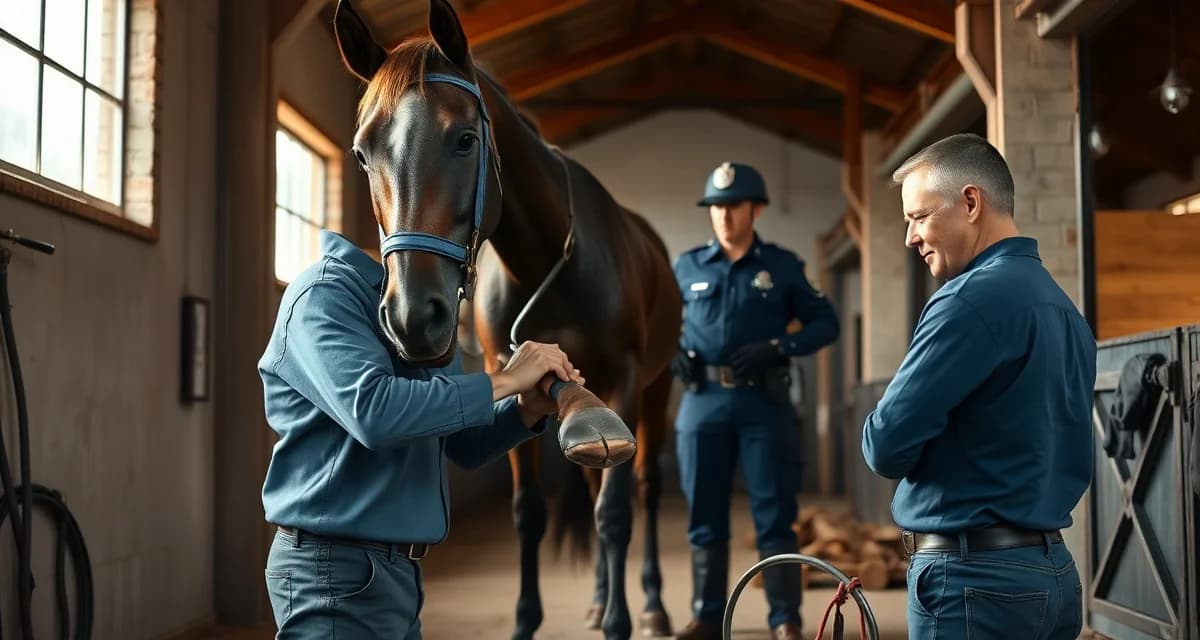
Mounted Patrol Barn Owner Communication: Updates and Updates
Mounted patrol barn owner communication runs on a different clock than most equestrian disciplines. Owners aren't watching their horses compete on weekends, they're trusting your barn to keep working animals fit, sound, and ready for active duty, often without being on-site for weeks at a time.
TL;DR
- Most farrier scheduling problems stem from poor coordination between barn staff, horse owners, and the farrier.
- A 6-to-8-week trim cycle for most horses means each farrier visit needs to be scheduled before the previous one is complete.
- Written records of each farrier visit, including observations and next scheduled date, prevent horses from falling behind on hoof care.
- Group scheduling for facilities with multiple horses under one farrier reduces travel costs and simplifies coordination.
- Owner notification before farrier visits ensures horses are available and prevents last-minute cancellations.
- BarnBeacon's scheduling tools track farrier visit history per horse and send automated reminders to owners and staff.
Generic barn management software wasn't built for this. Most tools assume a show barn or boarding model where owners check in regularly. Mounted patrol barns need structured, consistent reporting that covers duty readiness, health status, and farrier cycles, not just feeding notes.
Why Mounted Patrol Communication Is Different
A trail riding barn might send a monthly update. A mounted patrol barn needs to communicate on a schedule tied to deployment rotations, fitness assessments, and equipment checks.
Owners of patrol horses are often government agencies, law enforcement departments, or municipal bodies. They have reporting requirements of their own. When you send them an update, it may go into an official record, which means accuracy and format matter more than they do in a typical boarding context.
The stakes are also higher. A horse that's off duty due to a hoof issue or lameness isn't just inconvenient, it creates a staffing gap in a working unit. Owners need to know about problems fast, not at the end of the month.
Step 1: Map Your Communication Triggers
Identify What Requires Immediate Notification
Not every update is equal. Start by listing the events that require same-day or next-day owner notification. These typically include:
- Any lameness or soundness concern
- Farrier visits and findings
- Veterinary calls, treatments, or medications administered
- Changes in duty status or fitness assessment
- Equipment issues affecting the horse's work
Identify What Goes Into Routine Reports
Routine updates can be batched weekly or bi-weekly. These include feeding and weight notes, conditioning progress, turnout observations, and upcoming scheduled appointments.
Separating urgent from routine prevents alert fatigue. If owners get a notification every time a horse eats breakfast, they'll start ignoring your messages, including the important ones.
Step 2: Build a Reporting Template for Each Update Type
Farrier Update Template
Farrier visits are one of the most critical communication points for mounted patrol barns. A horse's hoof condition directly affects its duty readiness.
Your farrier update should include: date of visit, farrier name, work performed (trim, shoe, reset, corrective), any concerns noted, next scheduled visit, and current duty status recommendation. Keep it factual and brief, two to three sentences per section.
Veterinary and Health Update Template
For vet visits, include the reason for the call, findings, treatment administered, any medications and withdrawal periods, and expected return-to-duty timeline. If the horse is on restricted work, state that explicitly.
Owners should never have to ask "is my horse cleared for duty?", your update should answer that before they think to ask.
Routine Weekly Report Template
A weekly summary works well as a short structured form: current weight and condition score, conditioning work completed, any behavioral observations, upcoming appointments, and a one-line duty readiness status.
Consistency in format matters. When owners receive the same structure every week, they can scan it in 30 seconds and flag anything that looks different from last week.
Step 3: Choose the Right Delivery Channel
Why Email Alone Isn't Enough
Email works for formal reports, but it creates a documentation problem. Threads get buried, attachments get lost, and there's no easy way for an owner to pull up a horse's full history without digging through months of messages.
For mounted patrol barns, you need a system that stores updates against each horse's record and gives owners access to that history on demand.
Owner Portals Built for Working Horse Barns
An owner communication portal solves the documentation problem by keeping every update, photo, and report attached to the horse's profile. Owners log in and see a complete timeline, not a fragmented email chain.
BarnBeacon's owner portal is built to adapt to mounted patrol barn workflows, including duty status fields, fitness tracking, and the kind of structured reporting that agency owners expect. Most generic barn apps don't include duty-readiness fields or the ability to customize report templates by discipline.
Step 4: Set Owner Expectations at Intake
Create a Communication Agreement
When a new horse enters your barn, give the owner a one-page communication agreement. This document should outline: how often they'll receive routine updates, what triggers an immediate notification, which channel you'll use for each type of update, and who to contact if they have questions between reports.
This prevents the 11pm text asking "did my horse get shod today?" It also protects you if an owner later claims they weren't informed about a health issue.
Confirm Contact Preferences
Some agency owners want updates sent to a facilities manager, not an individual. Others need a copy sent to a veterinary officer. Get this right at intake and document it in your barn management system.
For more on structuring intake and daily operations for working horse facilities, see mounted patrol barn operations.
Step 5: Document Everything in One Place
Why Paper Logs Don't Scale
If you're managing six or more patrol horses, paper logs become a liability. When an owner asks for a six-month health history, you're either spending an hour pulling records or admitting you don't have them organized.
Digital records attached to each horse's profile mean you can pull a complete history in under a minute. That's the standard agency owners increasingly expect.
Photo and Video Documentation
For farrier visits and soundness assessments, photos add credibility to your reports. A photo of a freshly shod hoof or a short video of a horse moving out after a lameness concern tells the owner more than a written description alone.
BarnBeacon allows photo and video attachments directly within update posts, so documentation stays with the record rather than sitting in someone's camera roll.
Common Mistakes to Avoid
Sending updates too infrequently. Mounted patrol owners don't want to chase you for information. If they're calling to ask for updates, your reporting schedule isn't frequent enough.
Using inconsistent formats. When every update looks different, owners spend time figuring out what they're reading instead of absorbing the information. Pick a template and stick to it.
Burying the duty status. Every update to a mounted patrol horse owner should include a clear duty status line. Don't make them read three paragraphs to find out if their horse is cleared for work.
Failing to document verbal conversations. If you call an owner about a health concern, follow up with a written summary in the portal. Verbal-only communication creates gaps in the record.
Related Articles
FAQ
How do I communicate with mounted patrol horse owners?
Use a combination of structured templates and a digital owner portal that stores updates against each horse's record. Separate urgent notifications (lameness, vet calls, duty status changes) from routine weekly reports. Establish a communication agreement at intake so owners know exactly what to expect and when.
What do mounted patrol owners want to know about their horses?
Mounted patrol owners prioritize duty readiness above everything else. They want to know current soundness status, farrier and vet visit outcomes, conditioning progress, and any factors that could affect the horse's availability for active duty. Agency owners often have their own reporting requirements, so clear and factual updates in a consistent format are essential.
What owner portal features matter for mounted patrol barns?
Look for a portal that supports custom report templates, duty status fields, photo and video attachments, and a full update history per horse. Generic boarding software often lacks discipline-specific fields. BarnBeacon's owner portal includes features built around working horse barn workflows, including the structured reporting formats that mounted patrol barn managers and agency owners rely on.
What information should I track for each farrier visit?
Each farrier visit record should include the date, which horses were seen, the work performed on each horse, any observations the farrier made about hoof condition or soundness concerns, the next scheduled visit date, and any charges billed. This record is particularly useful when a horse develops a lameness issue and the vet needs a timeline of recent hoof care.
How do I handle it when a horse owner wants to use a different farrier than the one I coordinate?
The most straightforward approach is to document the owner's preferred farrier in that horse's care record and note that the facility does not coordinate appointments for outside farriers. The owner is then responsible for scheduling and ensuring the horse is available. Charging a handling or presence fee if staff time is required to hold the horse during an outside farrier's visit is standard practice and should be disclosed in the boarding contract.
How much advance notice should I give owners before a farrier appointment?
At least 48 hours of advance notice is standard, with 72 hours preferred for owners who need to arrange presence or provide special instructions. Automated appointment reminders through a barn management platform reduce the number of owners who miss or forget about scheduled farrier visits, which is one of the most common causes of missed appointments and the associated rebooking costs.
What is Mounted Patrol Barn Owner Communication: Updates and Updates?
Mounted Patrol Barn Owner Communication covers the structured systems and processes barn managers use to keep mounted patrol horse owners informed about their animals' care, farrier schedules, and health status. Because mounted patrol horses are working animals and owners are rarely on-site, consistent communication through tools like BarnBeacon ensures horses stay fit, sound, and ready for duty without gaps in hoof care or veterinary attention.
How much does Mounted Patrol Barn Owner Communication: Updates and Updates cost?
BarnBeacon's communication and scheduling tools for mounted patrol barn management are available through their subscription plans, which vary based on facility size and feature needs. Pricing details are listed on the BarnBeacon website. The platform includes farrier visit tracking, automated owner reminders, and scheduling coordination features designed specifically for working horse facilities where owners cannot monitor their horses daily.
Sources
- American Farrier's Association (AFA), hoof care standards and farrier credentialing
- American Association of Equine Practitioners (AAEP), equine lameness and hoof care guidelines
- University of California Davis Center for Equine Health, hoof health research and resources
- Farrier Focus magazine, professional farriery and equine hoof care publications
Get Started with BarnBeacon
BarnBeacon tracks farrier visit history per horse, sends automated appointment reminders to owners and staff, and keeps scheduling conflicts from slipping through. Start a free 30-day trial to see how BarnBeacon fits your farrier coordination workflow.