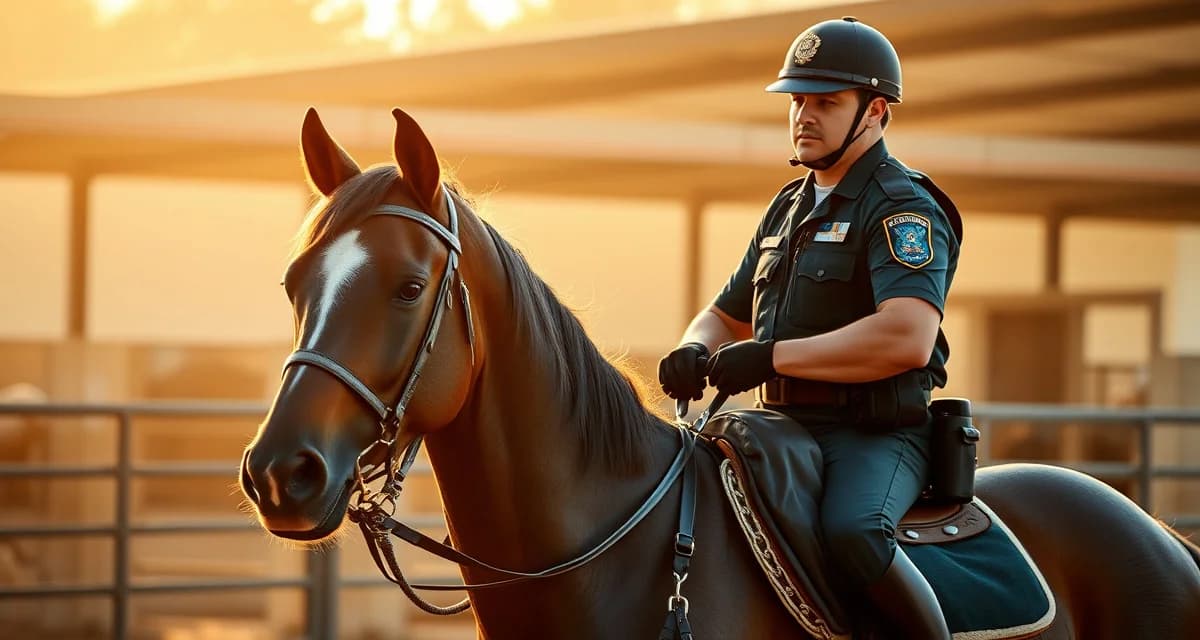
Mounted Patrol Barn Owner Communication: Updates and Updates
Mounted patrol barn owner communication runs on a different clock than most equestrian disciplines. Owners aren't watching for show results or training milestones, they need duty readiness reports, incident documentation, and health status updates tied to active patrol schedules. Generic barn software wasn't built for that, and the gap shows.
TL;DR
- Owner communication is the top factor in boarding client retention, ranked above facility quality and pricing in surveys
- Structured daily updates take under 30 seconds to log when built into care workflows and deliver outsized retention value
- Health alerts sent within 30 minutes of an event, with a documented response timeline, build owner confidence
- Billing transparency, specifically itemized invoices and pre-approval for large expenses, prevents most financial disputes
- An owner communication portal gives clients a single place to check updates and reduces inbound call volume significantly
- Written onboarding communication expectations reset habits from a boarder's previous barn and prevent early misunderstandings
Most barn management platforms assume a competitive or recreational context. Mounted patrol operations require structured reporting that holds up to scrutiny, satisfies department or organization requirements, and keeps private owners informed about horses that may be working in high-stress public environments.
Why Mounted Patrol Communication Is Different
A trail riding barn sends a photo and a note. A mounted patrol barn may need to document a horse's behavior during a crowd control event, log a veterinary check after a long-duty shift, or report equipment condition alongside the animal's status.
Owners in this discipline often have contractual or organizational relationships with the patrol unit. They want accountability, not just reassurance. That means your communication system needs to be consistent, timestamped, and retrievable.
Step 1: Establish a Communication Schedule Before You Need It
Set Baseline Expectations at Intake
When a horse enters your mounted patrol program, define communication frequency in writing. Weekly updates are standard for active-duty horses. Post-incident reports should go out within 24 hours. Owners should know exactly when and how they'll hear from you.
Document this in your boarding or partnership agreement. Vague promises about "regular updates" create friction later, especially if a horse is involved in an incident that draws organizational attention.
Build a Reporting Calendar
Map your communication touchpoints to your patrol schedule. If horses rotate on weekly duty cycles, your update cadence should match. A horse coming off a weekend event deployment needs a different post-shift report than one that spent the week in turnout.
Use a shared calendar or your barn management platform to schedule recurring updates so nothing falls through the cracks during busy operational periods.
Step 2: Choose the Right Communication Channels
Owner Portals Over Group Texts
Group texts and email chains work until they don't. When an owner needs to find a specific health update from three months ago, a text thread is useless. An owner communication portal keeps every update organized, searchable, and tied to the individual horse's record.
For mounted patrol operations specifically, portability matters. Barn managers and patrol coordinators often aren't at a desk. A mobile-accessible portal means updates get logged in the field, not reconstructed from memory at the end of the day.
Photo and Video Documentation
Mounted patrol owners want visual confirmation of their horse's condition, especially after duty shifts. A photo of the horse post-patrol, showing coat condition, leg soundness, and overall demeanor, communicates more than a paragraph of text.
Build photo updates into your post-shift routine. It takes 90 seconds and eliminates a significant portion of owner inquiry calls. BarnBeacon's owner portal lets you attach photos directly to shift reports, so the visual record stays connected to the operational context.
Step 3: Structure Your Updates for Mounted Patrol Reporting
Use a Consistent Report Template
Consistency matters more than detail volume. An owner who receives the same structured format every week can scan it quickly and flag anything that looks different. A free-form narrative requires them to read every word to find what changed.
A basic mounted patrol update template should include:
- Duty status: Active, standby, rest, or medical hold
- Shift summary: Hours worked, environment type (crowd, trail, ceremony), notable incidents
- Health and condition: Appetite, hydration, any lameness or skin observations
- Equipment notes: Tack condition, fit issues, anything flagged for attention
- Next scheduled duty: So owners know what's coming
Separate Routine Updates from Incident Reports
Routine weekly updates and incident reports serve different purposes and should look different. An incident report needs a timestamp, a description of what happened, immediate actions taken, and follow-up steps. Mixing this into a routine update format buries critical information.
When something significant happens, a horse spooks during a public event, shows signs of stress, or requires emergency veterinary attention, send a standalone incident report immediately. Follow up with your normal weekly update on schedule. Don't combine them.
Step 4: Log Health and Veterinary Information in Real Time
Don't Reconstruct Records After the Fact
Mounted patrol horses work in demanding conditions. Hoof wear, muscle soreness, and stress-related health issues are occupational realities. Owners need to know these are being monitored, not discovered after they've progressed.
Log veterinary visits, farrier appointments, and health observations as they happen. If your barn management system connects to your mounted patrol barn operations workflow, those records should flow directly into owner-facing reports without requiring manual re-entry.
Flag Trends, Not Just Events
A single observation of mild stiffness after a shift is routine. Three consecutive post-shift stiffness notes is a trend that warrants veterinary attention and owner notification. Your communication system should make it easy to spot patterns across multiple updates.
BarnBeacon's owner portal surfaces this kind of longitudinal data automatically, so you're not manually reviewing weeks of notes to identify what's changed.
Step 5: Make It Easy for Owners to Respond
Two-Way Communication Matters
Owners sometimes have information you need: a horse's history with specific crowd types, a known sensitivity to certain equipment, or a behavioral pattern the owner has observed over years. A one-way broadcast system cuts that off.
Your portal or communication platform should allow owners to reply to updates, ask questions, and flag concerns without those messages getting lost in a general inbox. Threaded communication tied to specific horses keeps conversations organized.
Set Response Time Expectations
Tell owners how quickly they can expect a reply to non-urgent questions. 24 to 48 business hours is reasonable for routine inquiries. Urgent health or safety concerns should have a direct contact method, a phone number, not a portal message.
Common Mistakes in Mounted Patrol Owner Communication
Sending updates only when something goes wrong. Owners who only hear from you during problems start to associate your messages with bad news. Regular routine updates build trust and make difficult conversations easier.
Using jargon without context. "Horse was on perimeter detail, showed mild digital pulse post-shift" means something to you. It may not mean anything to an owner without a law enforcement or equine health background. Translate operational and clinical language into plain terms.
Skipping updates during busy operational periods. The weeks when you're most stretched are exactly when owners are most anxious. A brief update is better than silence, even if it's just a photo and two sentences confirming the horse is well.
No documentation trail. Verbal updates don't exist in a dispute. Every significant communication should be logged in a system that timestamps and stores it.
How does BarnBeacon compare to spreadsheets for barn management?
Spreadsheets require manual updates, lack real-time notifications, and create version control problems when multiple staff members are working from different files. BarnBeacon centralizes records, pushes alerts automatically based on logged events, and connects care records to billing and owner communication in one system. Most facilities report saving several hours per week after switching from spreadsheets.
What is the setup process like for BarnBeacon?
Most facilities complete the initial setup in under a week. Horse profiles, service templates, and billing configurations can be imported from existing records or entered directly. BarnBeacon's US-based support team is available to assist with setup, and most managers are running their first billing cycle through the platform within days of starting.
Can BarnBeacon support a barn with multiple staff members?
Yes. BarnBeacon supports multiple user accounts with role-based access, so barn managers, barn staff, and owners each see the information relevant to their role. Task assignments, completion logs, and communication history are all attached to the barn's account rather than to individual staff phones or email addresses.
FAQ
What is Mounted Patrol Barn Owner Communication: Updates and Updates?
Mounted patrol barn owner communication refers to the structured system of updates, reports, and alerts that barn managers use to keep law enforcement agency owners informed about their horses. Unlike recreational boarding, mounted patrol operations require duty readiness reports, incident documentation, and health status updates tied to active patrol schedules. These communications ensure horses are fit for service, owners are aware of any health or behavioral changes, and all parties maintain clear records for operational accountability.
How much does Mounted Patrol Barn Owner Communication: Updates and Updates cost?
Most mounted patrol barn owner communication systems are offered as part of broader barn management software, typically ranging from $50 to $200 per month depending on the number of horses and features included. Some platforms charge per-stall fees. Purpose-built tools with patrol-specific reporting modules may cost more but reduce administrative labor significantly. Many providers offer free trials, and the ROI is measurable through reduced owner call volume, fewer billing disputes, and improved boarder retention rates.
How does Mounted Patrol Barn Owner Communication: Updates and Updates work?
The system works by embedding communication checkpoints directly into daily care workflows. Barn staff log health checks, feeding notes, duty readiness status, and any incidents through a mobile app or web portal. Owners receive automated or manually triggered updates via text, email, or an owner-facing dashboard. Structured templates ensure consistency, and time-stamped logs create an audit trail. Health alerts go out within 30 minutes of an event, and billing updates are tied to pre-approved expense thresholds.
What are the benefits of Mounted Patrol Barn Owner Communication: Updates and Updates?
Key benefits include improved boarder retention, fewer inbound calls from concerned owners, and a documented record of care that protects the barn in disputes. For mounted patrol operations specifically, structured duty readiness reporting helps agencies plan deployments with confidence. Incident documentation with clear response timelines builds owner trust. Itemized billing reduces financial friction. Owners gain a single portal for all updates, reducing miscommunication and the administrative burden on barn staff managing high-stakes, service-oriented horses.
Who needs Mounted Patrol Barn Owner Communication: Updates and Updates?
Any barn boarding horses used in active law enforcement or mounted patrol service needs this type of communication system. This includes municipal police stables, sheriff department equine units, park ranger programs, and private facilities contracted to house patrol horses. Agency administrators, individual officer-owners, and barn managers all benefit. Facilities transitioning from recreational boarding to patrol contracts especially need structured communication protocols, since patrol horse owners have fundamentally different update expectations than competitive or pleasure riders.
How long does Mounted Patrol Barn Owner Communication: Updates and Updates take?
When built into existing care workflows, structured updates take under 30 seconds to log per horse per check-in. Daily duty readiness reports, health status notes, and feeding logs can be completed in a single mobile session during morning rounds. Health alerts should be sent within 30 minutes of an incident. Onboarding a new owner to the communication portal typically takes one short walkthrough. The upfront time investment in setup pays back quickly through reduced reactive communication and fewer owner interruptions throughout the day.
What should I look for when choosing Mounted Patrol Barn Owner Communication: Updates and Updates?
Look for patrol-specific reporting templates that go beyond generic barn software. Priority features include duty readiness status fields, incident documentation with timestamping, health alert triggers with configurable response windows, and an owner-facing portal that aggregates all updates in one place. Billing transparency tools with itemized invoices and pre-approval workflows for large expenses are essential. Also evaluate mobile usability for staff logging updates during rounds, integration with existing scheduling tools, and whether the platform supports multiple agency or owner account types.
Is Mounted Patrol Barn Owner Communication: Updates and Updates worth it?
Yes, for barns operating in the mounted patrol space, structured owner communication is one of the highest-return investments available. Research consistently ranks owner communication above facility quality and pricing as the top factor in boarding client retention. For patrol operations specifically, where horses represent active duty assets, communication failures carry operational and liability consequences beyond typical boarding disputes. The cost of a dedicated system is far outweighed by reduced churn, fewer billing conflicts, and the trust built through consistent, timely, documented updates.
Sources
- American Association of Equine Practitioners (AAEP)
- American Competitive Trail Horse Association (ACTHA)
- American Horse Council
- UC Davis Center for Equine Health
- American Horse Council Economic Impact Study
Get Started with BarnBeacon
Owner communication that runs on group texts and personal phones is a system waiting to break. BarnBeacon gives mounted patrol units the structure to deliver consistent, horse-specific updates automatically, keep health alerts separate from routine notices, and give owners portal access to their horse's complete history. Start a free trial and see what your communication looks like when it runs through a system built for it.