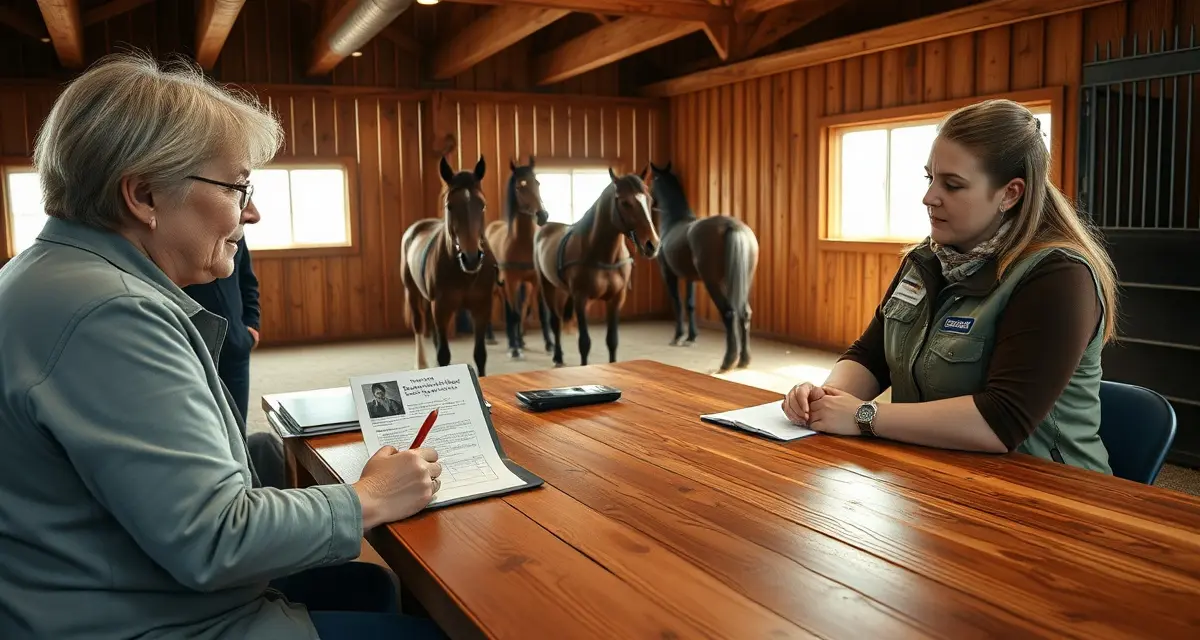
4-H Horse Barn Owner Communication: Communication and Updates
Running a 4-H horse barn means managing more than horses. You're coordinating with parents, youth members, project advisors, and county extension offices, often all at once. Generic barn software wasn't built for that, and it shows.
TL;DR
- Emergency protocols are only useful if they are written, posted, and reviewed with all staff before an emergency occurs.
- Contact sheets with vet, farrier, and owner information should be in every barn aisle and accessible from every phone.
- Incident documentation immediately after an event protects the facility legally and supports insurance claims.
- Evacuation routes for horses need to be practiced, not just posted: horses trained to load quickly during drills load faster in emergencies.
- Staff who have never seen a colic or lacerations make worse decisions than staff who have reviewed protocols in advance.
- BarnBeacon stores emergency contacts, health records, and Coggins documents accessibly from any device at any time.
4-H horse disciplines have unique owner communication patterns not covered by generic barn software. Show schedules shift. Project deadlines stack up. Parents need documentation for county records. If your current system is a group text thread and a whiteboard, you're already behind.
This guide walks through exactly how to build a reliable 4-H horse barn owner communication system, step by step.
Why 4-H Horse Barn Communication Is Different
Most barn management tools assume a simple model: one horse, one owner, one invoice. 4-H doesn't work that way.
A single horse might have a youth member as the primary handler, a parent as the financial contact, and a project leader who needs progress updates for county records. That's three different people who need different information at different times.
Add in show season prep, vet checks required for fair entries, and the documentation trail that county extension offices expect, and you have a communication load that generic tools simply weren't designed to handle.
Step-by-Step: Building Your 4-H Owner Communication System
Step 1: Map Your Audience Before You Message Them
Before you send a single update, identify who actually needs what information.
Create a simple contact matrix for each horse in your barn. List the youth member, the parent or guardian, and any project advisors or club leaders. Note what each person needs: financial updates go to parents, project progress notes go to advisors, daily care updates go to the youth member.
This takes 20 minutes to set up and saves hours of repeated messages and missed communications.
Step 2: Set a Communication Cadence and Stick to It
Inconsistent updates are the number one complaint from 4-H horse parents. They don't need daily messages, but they do need to know when to expect news.
A workable baseline for most 4-H horse barns: weekly care summaries, immediate alerts for health or injury issues, and 30-day advance notice for any show prep requirements or vet documentation deadlines. Post your schedule somewhere visible, and tell every new family what to expect when they board.
Step 3: Use Templates for Recurring Updates
You will send the same types of messages dozens of times per season. Write them once, use them forever.
Build templates for: weekly care check-ins, farrier visit confirmations, vet appointment reminders, show entry deadline notices, and fair documentation requests. Keep each template under 150 words. Parents are busy. Youth members are busier.
Step 4: Centralize Documentation in One Place
County fair entries, health certificates, Coggins tests, and project records all need to be accessible when someone asks for them. If those documents live in three different email threads and a filing cabinet, you will lose time you don't have.
An owner communication portal solves this by giving each family a single login where they can pull documents, review updates, and confirm upcoming appointments without calling you. That's time back in your day.
Step 5: Build a Show Season Communication Timeline
Show season is where 4-H horse barn communication either holds together or falls apart. Build a written timeline at the start of each season.
Work backward from your county fair date. Mark every deadline: entry forms, vet checks, health certificates, equipment inspections. Assign a communication trigger to each one, so reminders go out automatically or on a set schedule. Families who know what's coming don't panic. Families who don't, do.
Step 6: Create a Protocol for Urgent Updates
Health emergencies, injury incidents, and unexpected facility issues need a different communication channel than your weekly newsletter.
Designate one method for urgent alerts, whether that's a direct phone call, an SMS blast, or a push notification through your barn management platform. Make sure every family knows what that channel is and that they should watch for it. Test it at the start of each season so nothing gets missed when it matters.
Step 7: Collect Feedback and Adjust
At the end of each show season, send a short survey to your 4-H families. Ask three questions: Did you feel informed? Was there anything you wished you'd known sooner? What would make communication easier next year?
You'll get actionable answers. Most barn managers skip this step and repeat the same communication gaps year after year.
Common Mistakes in 4-H Horse Barn Communication
Treating all contacts the same. Parents and youth members need different information. Sending everything to everyone creates noise and trains people to ignore your messages.
Using too many channels. If you're communicating by text, email, Facebook group, and paper flyers simultaneously, nothing is the system. Pick a primary channel and use others only as backup.
Skipping documentation. 4-H horse projects require paper trails. If a parent asks for a vet record six months after the fact and you can't produce it, that's a trust problem. Store everything in one place from day one.
Waiting until show season to communicate show requirements. Families need 30 to 60 days to prepare for fair entries, vet appointments, and equipment checks. Surprise deadlines create chaos and complaints.
Not confirming receipt of critical messages. For anything involving health, safety, or fair deadlines, require a confirmation response. A message sent is not a message received.
How BarnBeacon Supports 4-H Horse Barn Workflows
BarnBeacon's owner portal adapts to 4-H horse barn workflows and reporting needs in ways that generic platforms don't. The portal supports multi-contact records, so you can route financial updates to parents and project notes to advisors from the same horse profile.
For 4-H horse barn operations, the platform includes document storage with permission controls, so county extension records stay accessible to the right people without cluttering every family's view. Show season timelines can be built directly into the communication schedule, with automated reminders tied to your fair calendar.
What some tools lack is the ability to distinguish between contact types within a single horse record. When a parent, a youth member, and a project advisor all need different updates, a flat contact list creates more work, not less.
Related Articles
- Mounted Patrol Barn Owner Communication: Communication and Updates
- Pony Club Barn Owner Communication: Communication and Updates
FAQ
How do I communicate with 4-H horse owners?
Start by mapping who needs what: parents handle finances, youth members handle daily care updates, and project advisors need progress documentation. Use a centralized platform with multi-contact support so you can route the right message to the right person without sending everything to everyone. Set a consistent schedule and stick to it.
What do 4-H horse owners want to know about their horses?
Parents primarily want to know their horse is healthy, that show deadlines are on track, and that any vet or farrier visits are documented. Youth members want to know about daily care, training progress, and anything that affects their project work. Both groups want advance notice on deadlines, not last-minute alerts.
What owner portal features matter for 4-H horse barns?
Look for multi-contact records that let you assign different message types to different people within one horse profile. Document storage with easy retrieval is essential for county fair records and health certificates. Show season calendar integration and automated reminders will save you the most time during your busiest months.
How often should staff review emergency protocols?
Emergency protocols should be reviewed with all staff at least twice per year, and with each new employee during onboarding. Physical drills for horse evacuation, even informal ones, build the muscle memory that makes actual emergencies less chaotic. A protocol that has never been practiced will not function as intended under stress. Documenting review dates and participants creates a record that supports the facility's insurance position.
What information should be in a barn emergency contact sheet?
The emergency contact sheet should include the primary veterinarian's number, the emergency or after-hours vet line, the farrier, the feed supplier for emergencies, each horse owner's name and emergency contact, the facility owner or manager's number, and the addresses and phone numbers of the nearest large animal vet clinic and equine hospital. This sheet should be posted in the barn aisle and saved digitally in a location accessible from every staff member's phone.
How should I document a horse injury incident at my facility?
Document the incident immediately: the time, the horse, the nature of the injury, how it was discovered, what was done in response, and who was notified. Photograph the injury before and after first aid. Note any environmental factors that may have contributed, such as fencing condition or footing. Notify the owner the same day, by phone before sending a written summary. This documentation is essential for insurance purposes and protects the facility if the owner later claims inadequate response.
What is 4-H Horse Barn Owner Communication: Communication and Updates?
4-H Horse Barn Owner Communication: Communication and Updates is a practical guide for barn managers running 4-H horse programs. It covers how to coordinate effectively with parents, youth members, project advisors, and county extension offices. Topics include building reliable emergency protocols, maintaining accessible contact sheets, documenting incidents, practicing evacuation drills, and using tools like BarnBeacon to centralize health records and Coggins documents so every stakeholder stays informed from any device.
How much does 4-H Horse Barn Owner Communication: Communication and Updates cost?
The guide itself is free to read on BarnBeacon. The communication and management features described, including centralized emergency contacts, health records, and Coggins document storage, are available through BarnBeacon's barn management platform. Pricing depends on your barn's size and needs. Visit BarnBeacon's website for current subscription options. For 4-H barns managing multiple horses, members, and county documentation requirements, a dedicated platform typically costs far less than the time lost to disconnected group texts and paper records.
Sources
- American Association of Equine Practitioners (AAEP), equine emergency response guidelines
- American Red Cross, first aid training resources applicable to farm environments
- National Fire Protection Association (NFPA), fire safety standards for agricultural structures
- United States Department of Agriculture (USDA), livestock emergency preparedness resources
- American Horse Council, equine facility safety and emergency planning guidance
Get Started with BarnBeacon
BarnBeacon stores emergency contacts, health records, and Coggins documents in one place accessible from any phone at any time, so the information you need in an emergency is never locked in a binder in the office. Start a free 30-day trial to see how it fits your facility's safety protocols.