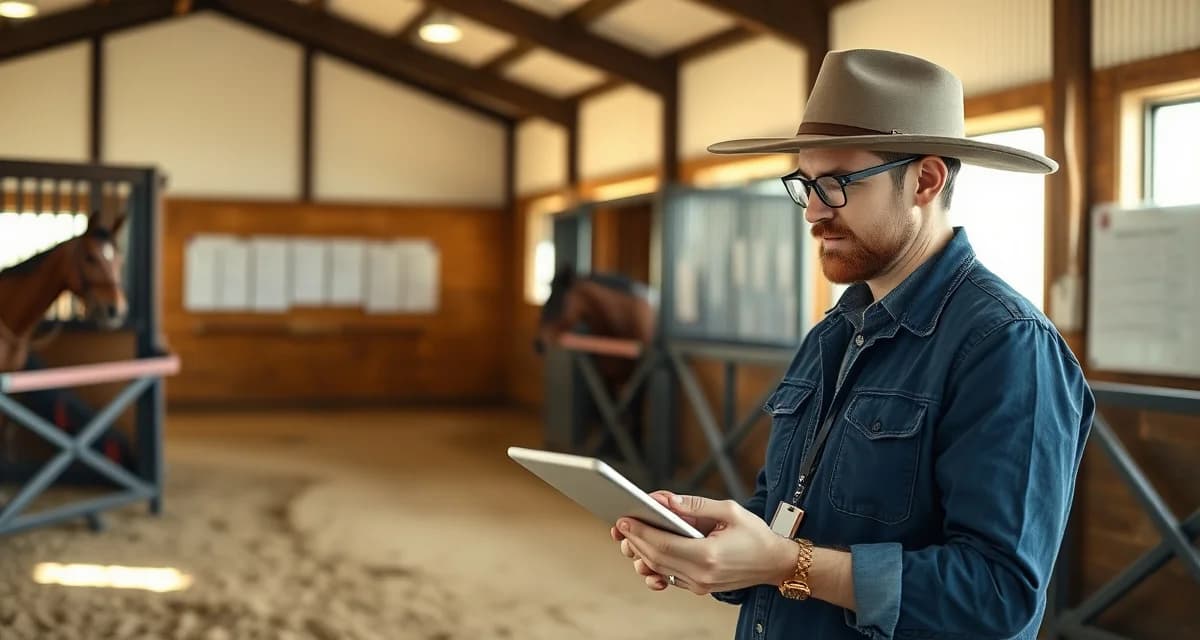
Cutting Barn Owner Communication: Communication and Updates
Cutting barn owner communication is not the same as managing a boarding facility or a hunter/jumper program. Owners in the cutting world are tracking NCHA points, futurity eligibility windows, cow exposure schedules, and show entry deadlines that can close weeks in advance. Generic barn software was not built for any of that.
TL;DR
- Emergency protocols are only useful if they are written, posted, and reviewed with all staff before an emergency occurs.
- Contact sheets with vet, farrier, and owner information should be in every barn aisle and accessible from every phone.
- Incident documentation immediately after an event protects the facility legally and supports insurance claims.
- Evacuation routes for horses need to be practiced, not just posted: horses trained to load quickly during drills load faster in emergencies.
- Staff who have never seen a colic or lacerations make worse decisions than staff who have reviewed protocols in advance.
- BarnBeacon stores emergency contacts, health records, and Coggins documents accessibly from any device at any time.
Cutting disciplines have unique owner communication patterns not covered by generic barn software, and that gap creates real problems: missed entry windows, frustrated owners, and trainers spending hours on the phone instead of in the pen.
The Problem With How Most Cutting Barns Communicate
Most cutting barns still run on text threads, group chats, and the occasional phone call. That works when you have five horses. It breaks down fast when you have twenty-five horses across multiple owners, some of whom are actively showing and some who are in development.
The information owners need changes constantly. A horse in early futurity prep needs different updates than one that just competed at a major. Without a structured system, trainers default to reactive communication, only reaching out when something goes wrong or when an entry deadline is already close.
Step 1: Identify What Cutting Owners Actually Need to Know
Separate Routine Updates From Event-Driven Updates
Routine updates cover feeding, health checks, turnout, and general conditioning. These can be batched and sent on a schedule, daily or every few days, without requiring a phone call.
Event-driven updates are time-sensitive: a horse came up lame, an entry window opens in 48 hours, or a cow work session produced a notable result worth documenting. These need to go out immediately and through a channel the owner will actually see.
Map the Cutting-Specific Information Categories
Before you build any communication system, list out what your owners actually ask about. For most cutting barns, that includes:
- Cow work frequency and quality notes
- NCHA points tracking and eligibility status
- Futurity and derby entry deadlines
- Show schedule and hauling logistics
- Veterinary and farrier visits
- Video of training sessions or competition runs
Once you have that list, you can build templates and workflows around it instead of reinventing the wheel every time an owner texts you.
Step 2: Choose the Right Communication Channel for Each Update Type
Use a Dedicated Owner Portal for Routine Reporting
A dedicated owner communication portal keeps routine updates out of your personal text messages and creates a searchable record for both you and the owner. When an owner asks "how many times did my horse work cattle last month," you have an answer in three clicks instead of scrolling through a chat history.
Portals also let you attach photos and video directly to a horse's record, which matters in cutting because video of a training session is often worth more than a written description.
Reserve Direct Contact for Urgent Situations
Phone calls and direct texts should be reserved for situations that require an immediate decision: a veterinary emergency, a scratched entry, or a significant change in a horse's training plan. When you use direct contact for everything, owners stop treating it as urgent.
Set that expectation early. Tell new owners at onboarding that routine updates will come through the portal and that a direct call from you means something needs their attention.
Step 3: Build Templates for Your Most Common Updates
Cow Work Report Template
A simple cow work report should include the date, the horse, a brief description of what was worked on, any notable positives or concerns, and a next-step note. Four to six sentences is enough. Owners do not need a novel; they need enough information to feel informed and to trust that you are paying attention.
Show Recap Template
After a competition, owners want to know the placing, the score if applicable, NCHA points earned, and your honest read on how the horse performed relative to where they are in their development. Include a note on what you are focusing on next. This is also a good place to link a video clip if you have one.
Entry Deadline Reminder Template
Send this at least two weeks before a deadline closes. Include the show name, the entry deadline date, the estimated costs, and a clear ask: "Let me know by [date] if you want to enter." Give them a specific response deadline so you are not chasing confirmations the night before entries close.
Step 4: Set a Communication Cadence and Stick to It
Weekly Updates for Active Show Horses
Horses that are actively showing or in final prep for a major event should get weekly updates. Owners with horses at this stage are more invested and more anxious. Consistent communication reduces the number of check-in texts you receive.
Bi-Weekly Updates for Development Horses
Horses in early training or long-term development do not change as quickly week to week. A bi-weekly update is appropriate and sustainable. If something significant happens between updates, send a note, but do not feel obligated to manufacture weekly content for a horse that is doing steady, uneventful work.
Monthly Summary for Pasture or Recovery Horses
Horses that are turned out or recovering from an injury need minimal communication. A monthly summary with a photo is usually sufficient. Owners appreciate knowing their horse is comfortable and cared for without receiving updates that imply more is happening than actually is.
Step 5: Use BarnBeacon to Manage Cutting-Specific Workflows
BarnBeacon's owner portal adapts to cutting barn workflows in ways that generic barn management tools do not. You can configure update categories that match cutting-specific reporting needs, including cow work logs, NCHA points tracking, and futurity eligibility notes.
For cutting barns managing cutting barn operations across multiple show strings, BarnBeacon lets you send targeted updates to specific owner groups rather than blasting every owner with information that only applies to a subset of horses. That keeps communication relevant and reduces owner fatigue.
The portal also stores video and photo attachments directly on each horse's profile, so owners can review training footage without you having to re-send files every time they ask.
Common Mistakes in Cutting Barn Owner Communication
Waiting until owners ask. Proactive communication builds trust. Reactive communication breeds anxiety. If an owner is texting you to ask for updates, your cadence is already too slow.
Using the same channel for everything. When urgent messages and routine updates arrive through the same channel, owners stop treating any of it as urgent. Separate your channels by priority.
Skipping the video. In cutting, a written description of a training session is a poor substitute for footage. If you are not capturing and sharing video regularly, you are missing the most valuable communication tool available to you.
Forgetting entry deadlines until it is too late. Build entry deadline reminders into your calendar system or your barn management software. Missing a futurity entry window is not a recoverable mistake with most owners.
Related Articles
- Endurance Barn Owner Communication: Communication and Updates
- Mounted Patrol Barn Owner Communication: Communication and Updates
FAQ
How do I communicate with cutting horse owners?
Use a structured system that separates routine updates from urgent communications. A dedicated owner portal handles regular reporting, while direct contact is reserved for time-sensitive decisions. Set this expectation at onboarding so owners know what to expect and when.
What do cutting owners want to know about their horses?
Cutting horse owners primarily want updates on cow work frequency and quality, NCHA points and eligibility status, show results, entry deadlines, and veterinary or farrier visits. Video of training sessions and competition runs is consistently the most valued form of update you can provide.
What owner portal features matter for cutting barns?
Look for a portal that supports cutting-specific update categories like cow work logs and points tracking, allows video and photo attachments on individual horse records, and lets you send targeted updates to specific owner groups. Generic barn software often lacks these discipline-specific configurations, which is where a tool like BarnBeacon provides a clear advantage.
Cutting barn owner communication works best when it is structured, consistent, and built around the specific information cutting owners actually care about. Start with the templates, set your cadence, and use a portal that fits the way your barn actually operates.
How often should staff review emergency protocols?
Emergency protocols should be reviewed with all staff at least twice per year, and with each new employee during onboarding. Physical drills for horse evacuation, even informal ones, build the muscle memory that makes actual emergencies less chaotic. A protocol that has never been practiced will not function as intended under stress. Documenting review dates and participants creates a record that supports the facility's insurance position.
What information should be in a barn emergency contact sheet?
The emergency contact sheet should include the primary veterinarian's number, the emergency or after-hours vet line, the farrier, the feed supplier for emergencies, each horse owner's name and emergency contact, the facility owner or manager's number, and the addresses and phone numbers of the nearest large animal vet clinic and equine hospital. This sheet should be posted in the barn aisle and saved digitally in a location accessible from every staff member's phone.
How should I document a horse injury incident at my facility?
Document the incident immediately: the time, the horse, the nature of the injury, how it was discovered, what was done in response, and who was notified. Photograph the injury before and after first aid. Note any environmental factors that may have contributed, such as fencing condition or footing. Notify the owner the same day, by phone before sending a written summary. This documentation is essential for insurance purposes and protects the facility if the owner later claims inadequate response.
What is Cutting Barn Owner Communication: Communication and Updates?
Cutting barn owner communication refers to the specialized information exchange between cutting horse trainers and owners, covering NCHA points tracking, futurity eligibility windows, cow exposure schedules, and show entry deadlines. Unlike generic boarding facilities, cutting programs require proactive updates on competition timelines, health records, and emergency protocols. BarnBeacon is designed to support this workflow by centralizing emergency contacts, Coggins documents, and health records in one platform accessible from any device.
How much does Cutting Barn Owner Communication: Communication and Updates cost?
BarnBeacon's pricing is not detailed within this article. For current subscription plans and pricing information specific to cutting barn management features, visit the BarnBeacon website directly. Costs typically vary based on the number of horses managed, staff accounts, and features required. Given that cutting barns have unique needs around NCHA tracking and entry deadlines, it is worth comparing plans to ensure the tier you select supports those specialized communication workflows.
Sources
- American Association of Equine Practitioners (AAEP), equine emergency response guidelines
- American Red Cross, first aid training resources applicable to farm environments
- National Fire Protection Association (NFPA), fire safety standards for agricultural structures
- United States Department of Agriculture (USDA), livestock emergency preparedness resources
- American Horse Council, equine facility safety and emergency planning guidance
Get Started with BarnBeacon
BarnBeacon stores emergency contacts, health records, and Coggins documents in one place accessible from any phone at any time, so the information you need in an emergency is never locked in a binder in the office. Start a free 30-day trial to see how it fits your facility's safety protocols.