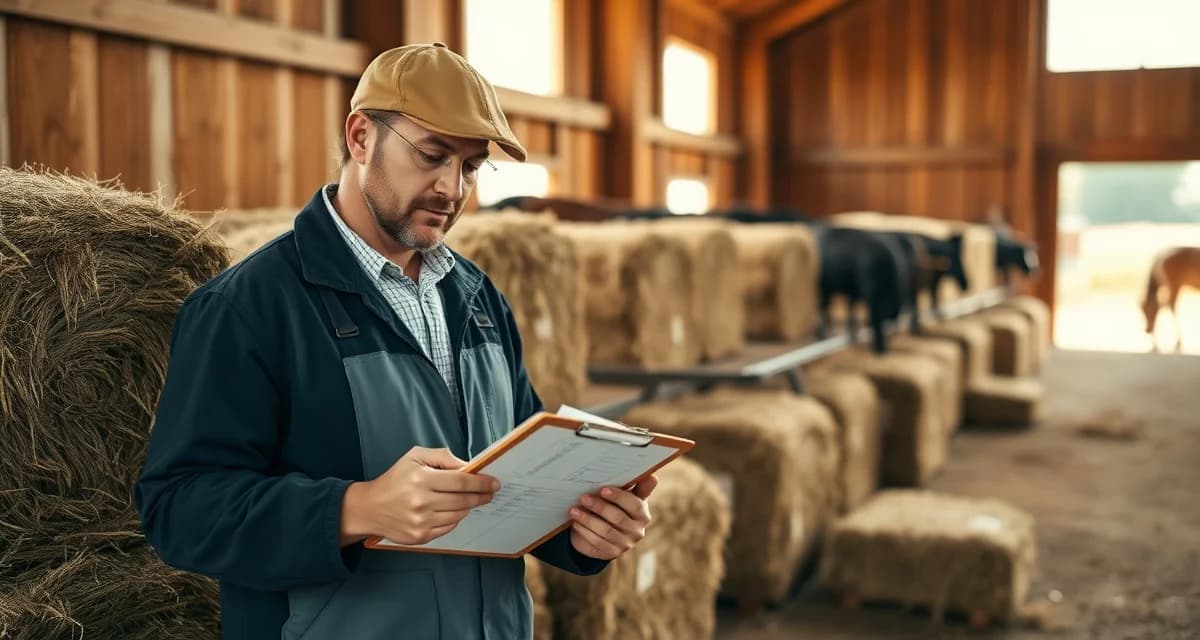
Hay Quality Tracking for Horse Barn Managers
Feed errors are the second leading cause of preventable colic, according to AAEP 2023 data. Most of those errors don't happen because barn managers are careless. They happen because hay quality information lives in one person's head, on a sticky note, or in a spreadsheet no one checks before the evening feed.
TL;DR
- Feed errors are the second leading cause of preventable colic, according to AAEP data
- All rations should be measured by weight, not volume; different feeds have very different densities per scoop
- Any concentrate change must follow a 7-to-14-day transition to reduce colic and GI upset risk
- A feed card is only useful if it is current; updates must push to all staff in real time, not just to a posted board
- Fixed feeding windows within 30 minutes of schedule reduce ulcer risk from irregular gastric acid cycles
- Verbal feed change handoffs are the most common source of dosing errors in multi-staff barns
Hay quality tracking in a barn environment needs to be systematic, visible to every staff member, and tied directly to individual horse feed cards. Here's how to build that system.
Why Hay Quality Tracking Fails in Most Barns
The problem isn't that managers don't know their hay is different from lot to lot. It's that the information doesn't travel. A new load arrives on Tuesday, the barn manager notes the higher dust level, but the Thursday night groom doesn't know. A horse with heaves gets the wrong flake.
Spreadsheets make this worse, not better. They can't push an alert when a feed change is pending, and they require someone to actively open and update them. By the time the data is entered, the feed has already been distributed.
Step 1: Establish a Hay Lot Numbering System
Create a Consistent Lot ID Format
Every load of hay that enters your barn should get a unique lot ID the moment it arrives. A simple format works: supplier initials, delivery date, and a sequential number. For example, GVF-0614-02 means Green Valley Farm, June 14th, second delivery.
Write this ID on the bale stack with a paint marker or hang a tag. This ID becomes the reference point for every quality note, analysis result, and feeding adjustment tied to that load.
Record Delivery Basics at Arrival
At intake, log the following for each lot:
- Supplier name and contact
- Hay type (timothy, orchard grass, alfalfa, mixed)
- Bale count and estimated weight
- Visual assessment: color, leaf retention, stem thickness
- Smell check: musty, fresh, fermented
- Dust level: none, light, moderate, heavy
- Moisture estimate or meter reading if available
This takes under five minutes per delivery and gives you a baseline before any analysis comes back.
Step 2: Send Samples for Forage Analysis
Which Tests to Order
A basic forage panel from a certified lab costs between $25 and $45 and gives you the numbers that matter most for horse nutrition: crude protein, acid detergent fiber (ADF), neutral detergent fiber (NDF), non-structural carbohydrates (NSC), and relative feed value (RFV).
For horses with metabolic conditions like insulin resistance or PPID, the NSC percentage is critical. Hay above 10-12% NSC is generally considered high-risk for these horses. You need that number on file before the hay goes into their nets.
Attach Analysis Results to the Lot Record
When the lab report comes back, attach it directly to the lot ID record. Don't file it separately. The lot ID is the anchor. Anyone pulling up that lot should see the analysis, the intake notes, and any feeding flags in one place.
Step 3: Flag Quality Issues and Set Feeding Restrictions
Dust and Respiratory Flags
Hay with moderate to heavy dust should be flagged immediately, and that flag needs to reach every person who handles feed. Horses with heaves, IAD, or any respiratory sensitivity cannot receive dusty hay without soaking or steaming first.
This is where most barn systems break down. The flag exists somewhere, but it doesn't follow the hay to the stall. BarnBeacon solves this by generating individual feed cards visible to all staff on mobile devices, updated in real-time. When a lot is flagged for dust, every feed card for at-risk horses updates automatically. No one has to remember to tell the weekend staff.
NSC Flags for Metabolic Horses
If a lot comes back above your threshold for NSC, flag it at the lot level and cross-reference your horse list for any animals on low-sugar diets. Those horses either need a different lot or the hay needs to be soaked for 30-60 minutes to reduce soluble carbohydrates by up to 30%.
Document the soaking protocol in the feed card, not just in a manager's note. The person doing the 6 AM feed needs to see it without asking anyone.
Step 4: Build Individual Horse Feed Cards That Reference Lot Data
What Goes on a Feed Card
A feed card is the single source of truth for how each horse gets fed. It should include:
- Hay type and approved lot IDs
- Flake count or weight per feeding
- Any preparation requirements (soaking, steaming, double-flaking)
- Supplements and timing
- Restrictions and flags (dust sensitivity, NSC limit, allergy notes)
- Date last updated and who updated it
For a deeper look at structuring feeding schedules across a large barn, see our guide on feeding schedules.
Keep Feed Cards Visible and Current
A feed card printed two months ago is a liability. Horses change. Hay lots change. Owners request adjustments. The card has to reflect today's reality, not last season's.
Digital feed cards that update in real-time eliminate the version control problem entirely. When a new lot comes in with different NSC values, the system flags which horses need a feeding adjustment before the hay ever reaches a stall.
Step 5: Document Owner-Requested Changes and Vet Instructions
Create a Change Log for Every Horse
Every time a feed change is made, log it: who requested it, when, and why. This matters for liability, for vet communication, and for catching patterns. If a horse starts showing loose manure two weeks after a hay lot change, you want to be able to trace that back.
If you're also tracking medications alongside feed changes, a connected system is far more efficient. Our medication tracking documentation covers how to link vet instructions to daily feed and care records.
Equine hay analysis record keeping isn't optional for performance barns
Trainers, owners, and vets increasingly expect documented forage data. When a horse underperforms or shows a health change, the first question is often "what changed in the diet?" If you can pull up lot-by-lot analysis records with timestamps, you're ahead of 90% of barns.
Common Mistakes to Avoid
Mixing lots without documentation. When a new load arrives before the old one is gone, it's tempting to stack them together. Don't. Keep lots physically separated and clearly labeled until the old lot is fully consumed. Mixing makes analysis data meaningless.
Relying on visual inspection alone. Hay can look fine and still be high in NSC or harbor mold in the center of bales. Visual checks are a starting point, not a substitute for lab analysis.
Updating the manager's copy but not the feed cards. Information that doesn't reach the person doing the feeding doesn't exist. Every quality update needs to flow directly to the point of use.
Skipping documentation for "just this once" changes. One undocumented substitution is how feeding errors start. Log every deviation, even temporary ones.
How do I handle feed changes requested by a horse owner?
All feed change requests from owners should be filtered through the barn manager and confirmed with the attending veterinarian if the change is clinically significant. Document the request, the authorization, and the effective date before anything changes in the feed room. A verbal request from an owner to a staff member that bypasses the manager is the most common path to a feeding error.
What is the safest way to introduce a new feed at my barn?
Transition over a minimum of seven days, starting with 25% new feed mixed with 75% old feed and shifting the ratio every two to three days. Document the transition schedule on each affected horse's feed card so every feeder knows the correct ratio on each day of the transition. Mark each day complete to track progress and catch any horse that goes off feed during the change.
How should I store feed to prevent spoilage and contamination?
Store bulk feed in sealed, rodent-proof containers in a dry, ventilated space. Keep feed off the ground and away from direct sunlight. Most commercial horse feeds have a 90-day shelf life once opened; label bags or containers with the opening date and rotate stock so older product is used first. Contaminated or spoiled feed should be disposed of immediately, never fed.
FAQ
What is Hay Quality Tracking for Horse Barn Managers?
Hay quality tracking for horse barn managers is a systematic process for recording, communicating, and acting on differences between hay lots across a barn. Because hay varies in protein, energy, and moisture from load to load, tracking ensures every staff member knows what is currently in the barn, how it differs from the last delivery, and how individual horse rations should adjust. The goal is to move feed quality information out of one person's head and into a shared, real-time system.
How much does Hay Quality Tracking for Horse Barn Managers cost?
Basic hay quality tracking can be implemented for little to no cost using paper feed cards and a consistent intake protocol. Lab testing a hay sample runs roughly $25–$50 per analysis through university extension services. Digital barn management platforms that include feed tracking and staff communication features typically range from $30 to $150 per month depending on herd size. The right investment depends on barn scale, staff count, and how many horses have diet-sensitive conditions.
How does Hay Quality Tracking for Horse Barn Managers work?
Effective hay quality tracking starts at delivery: a sample is pulled, the lot is labeled, and any lab results or visual notes are logged against that lot number. Feed cards for each horse are then updated to reflect current hay characteristics. When a new lot replaces an old one, the transition is documented and communicated to all staff before the next feed. Digital systems push updates in real time; paper systems require a clear posted protocol that every shift checks before feeding.
What are the benefits of Hay Quality Tracking for Horse Barn Managers?
The core benefit is reduced colic risk. Feed errors are the second leading cause of preventable colic, and most errors stem from information gaps rather than carelessness. A visible tracking system ensures ration changes follow proper 7-to-14-day transitions, prevents staff from feeding a new hay lot at full rate without knowing it, and keeps horses with metabolic conditions like EMS or PPID protected from unmonitored calorie or sugar spikes between deliveries.
Who needs Hay Quality Tracking for Horse Barn Managers?
Any barn running more than one staff member across multiple shifts needs hay quality tracking. The risk scales with herd size, diet complexity, and staff turnover. Barns housing horses with chronic conditions such as ulcers, Cushings, or laminitis have the least margin for undocumented feed changes. Competition barns where performance horses are on tight nutritional programs are equally high-risk. Even small private barns benefit when a second caretaker or farm sitter steps in.
How long does Hay Quality Tracking for Horse Barn Managers take?
Setting up a basic tracking system takes a few hours: create a feed card template, establish a hay intake checklist, and brief staff on the protocol. Hay lab results take five to ten business days if mailed to an extension lab, or 24 to 48 hours through some commercial labs. Ongoing tracking adds only a few minutes per new delivery. The time cost is minimal compared to the veterinary expense and recovery time associated with a single colic episode.
What should I look for when choosing Hay Quality Tracking for Horse Barn Managers?
Look for a system that is visible to every staff member without requiring them to seek out the information. Real-time updates matter more than sophistication; a shared digital feed card that pushes notifications beats a binder no one checks. Prioritize lot-level documentation, clear transition protocols, and easy logging at the point of delivery. If evaluating software, confirm it ties hay records directly to individual horse profiles rather than storing feed data in a separate silo.
Is Hay Quality Tracking for Horse Barn Managers worth it?
Yes. A single colic episode can cost $500 to $10,000 or more depending on severity, and feed-related colics are largely preventable. Hay quality tracking removes the most common failure point in barn nutrition management: the information handoff between staff and shifts. Beyond colic prevention, horses on accurately tracked rations tend to maintain more consistent body condition, which reduces long-term feed waste and veterinary intervention. The system pays for itself the first time it catches a lot change before it reaches the feed tub.
Sources
- American Association of Equine Practitioners (AAEP)
- American Horse Council
- Kentucky Equine Research
- UC Davis Center for Equine Health
- Penn State Extension Equine Program
Get Started with BarnBeacon
A feeding system is only as reliable as its documentation. BarnBeacon gives equine facilities individual digital feed cards that update in real time, push alerts when rations change, and log every feeding with a timestamp and staff name. If feed errors are part of your current risk picture, start a free trial and build your first grain feeding schedule in a system built to close the information gap.