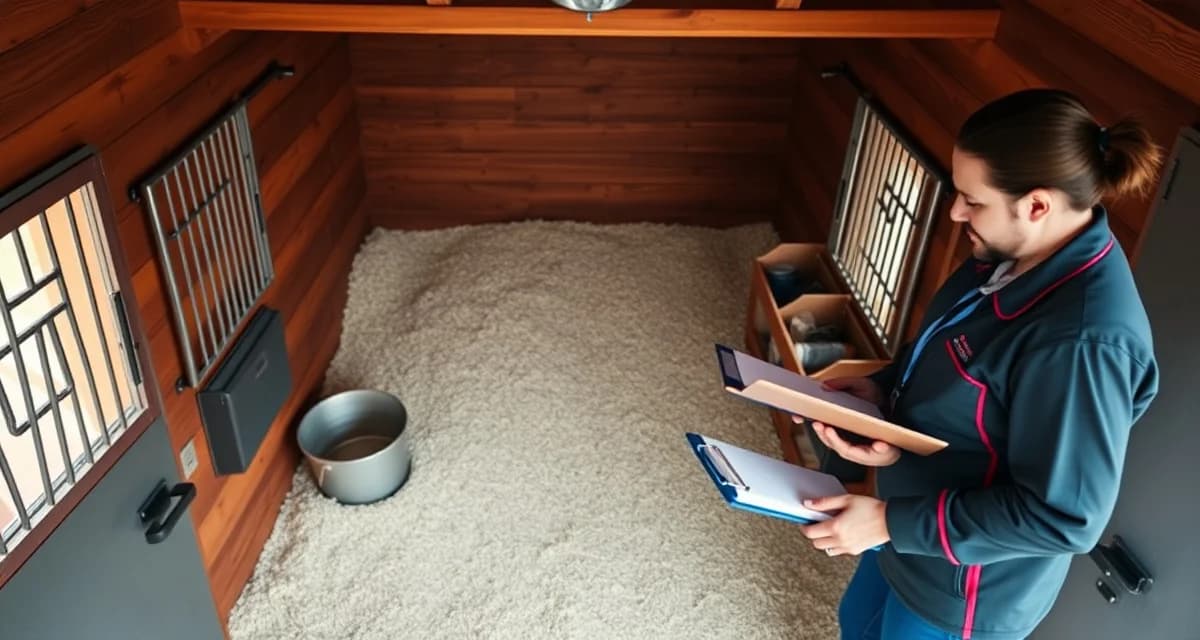
Horse Barn Housekeeping SOP: Standard Operating Procedures
Most barn managers know what a clean stall looks like. The problem is making sure every stall, cleaned by every staff member, on every shift, meets that same standard. Facilities with digital cleaning accountability see 44% fewer stall quality complaints, not because their staff is better, but because expectations are documented and completion is tracked.
TL;DR
- Effective barn management requires systems that match actual daily workflows, not adapted generic tools
- Per-horse record keeping with digital access reduces the response time to owner questions from hours to seconds
- Automated owner communication and health alerts reduce inbound calls while increasing owner satisfaction and retention
- Billing errors cost barns thousands of dollars annually; point-of-service charge logging is the most effective prevention
- Staff accountability systems with named task assignments and completion logs prevent care gaps without micromanagement
- Purpose-built equine software connects health records, billing, and owner communication in one place
A horse barn housekeeping SOP turns your cleaning standards from institutional knowledge into a repeatable, verifiable process.
Why Verbal Standards Fail
When cleaning expectations live in someone's head, they degrade over time. A new groom interprets "clean the stall" differently than a 10-year veteran. Corners get cut during busy mornings. Wet spots get missed on night checks. Without a written SOP and a way to verify completion, you're managing by complaint rather than by standard.
The fix is a documented procedure that specifies what gets done, how often, and by whom.
How to Build Your Horse Barn Housekeeping SOP
Step 1: Define the Scope of Each Cleaning Zone
Start by listing every area that requires regular housekeeping. Most equine facilities break down into four zones:
- Individual stalls (daily mucking, bedding refresh, water and feed station cleaning)
- Barn aisles (sweeping, mat cleaning, equipment storage)
- Tack room (equipment organization, surface wiping, leather care storage)
- Visitor and common areas (restrooms, viewing areas, entry points)
Each zone needs its own task list, frequency, and acceptance criteria. Don't combine them into a single checklist, it makes accountability harder to assign.
Step 2: Write Stall Cleaning Standards with Measurable Criteria
Vague language creates inconsistent results. Instead of "remove waste," write "remove all manure and wet bedding, leaving no wet spots larger than a hand's width." Instead of "add bedding," write "bring total bedding depth to 6 inches at stall center."
Your stall SOP should cover:
- Manure and soiled bedding removal (full strip vs. top-dress schedule)
- Wet spot identification and treatment
- Bedding type, quantity, and distribution standard
- Water bucket or automatic waterer cleaning frequency
- Feed tub inspection and cleaning
- Stall door, latch, and wall inspection for safety hazards
Pair this with your stall cleaning schedule so staff know not just how to clean, but when each task is due.
Step 3: Set Aisle and Common Area Standards
Aisles take more abuse than any other area in the barn. Shavings track out of stalls, hay falls from nets, and equipment migrates from its designated spot. Your aisle SOP should specify:
- Sweep frequency (minimum twice daily in active barns)
- Mat cleaning schedule (weekly scrub, daily debris removal)
- Equipment return-to-storage rules after each use
- Hose and drain maintenance
- Lighting and ventilation checks
Tack rooms need their own section. Specify where each category of equipment lives, how bridles are hung, how saddles are stored, and what surface cleaning is required weekly. A tack room SOP prevents the slow drift toward disorganization that happens in every busy facility.
Step 4: Assign Responsibility by Zone and Shift
An SOP without assigned ownership is a suggestion. Each task needs a named role (not necessarily a named person) and a shift. Morning crew handles full stall mucking. Evening crew handles water checks and aisle sweep. Night check handles a visual pass and any emergency spot cleaning.
Use your barn daily checklist to translate the SOP into a shift-by-shift task list that staff can work through and sign off on.
Step 5: Build in a Verification Step
This is where most equine facility cleaning procedures break down. A checklist that gets marked complete without verification is just paperwork. You need a way to confirm the work was done to standard.
Options range from supervisor spot checks (time-intensive and inconsistent) to digital tools that timestamp completion and attach photo documentation. BarnBeacon, for example, timestamps every stall cleaning with the responsible staff member and supports photo attachments, so a manager can review morning stall condition without walking every aisle. That kind of stall-by-stall completion tracking closes the gap between "it's on the checklist" and "it was actually done."
Some platforms lack this granularity. If your software only shows that a barn was cleaned rather than which stalls were completed by which staff member, you lose the accountability that makes SOPs work.
Step 6: Document Corrective Action Procedures
Your SOP should include what happens when a stall or area fails inspection. Define the re-clean standard, who is responsible for the re-clean, and how the failure gets logged. This isn't punitive, it's how you identify whether a problem is a one-time miss or a pattern that needs retraining.
Keep a 30-day log of failed inspections by zone. If the same stall or the same staff member appears repeatedly, you have a training issue, not a compliance issue.
Common Mistakes to Avoid
Writing the SOP once and never updating it. Bedding suppliers change, horse populations shift, and new staff bring new gaps. Review your SOP quarterly and update it when procedures change.
Using one checklist for all staff levels. A new groom needs more detail than an experienced barn hand. Consider a detailed version for onboarding and a condensed daily version for experienced staff.
Skipping visitor area standards. Client-facing areas reflect directly on your facility's reputation. Restrooms, viewing areas, and entry points should have the same documented standards as stalls, they just get checked on a different schedule.
Treating photo documentation as optional. Photos create an objective record that protects both staff and management. If a horse owner claims a stall was dirty at 8 AM and your staff logged a photo at 7:45 AM showing clean bedding, the record speaks for itself.
What should a stall cleaning schedule include?
A stall cleaning schedule should specify the full-strip frequency (typically weekly or bi-weekly depending on bedding type), daily mucking times, water and feed station cleaning intervals, and who is responsible for each task by shift. It should also note any horse-specific requirements, such as horses on stall rest who need more frequent checks.
How do I track which staff member cleaned each stall?
The most reliable method is a digital task management system that requires staff to log completion against their user profile, with a timestamp. Paper sign-off sheets work but are easy to backfill and hard to audit. Tools like BarnBeacon assign stall-level completion to individual staff members, creating a clear record without relying on manual logs.
How do I verify stalls are cleaned to standard?
Verification requires either a physical inspection by a supervisor or photo documentation attached to the completed task. Supervisor spot checks are effective but don't scale across large facilities or multiple shifts. Photo documentation tied to a timestamped completion log gives managers a way to review quality remotely and creates an auditable record for client disputes or insurance purposes.
How does BarnBeacon compare to spreadsheets for barn management?
Spreadsheets require manual updates, lack real-time notifications, and create version control problems when multiple staff members are working from different files. BarnBeacon centralizes records, pushes alerts automatically based on logged events, and connects care records to billing and owner communication in one system. Most facilities report saving several hours per week after switching from spreadsheets.
What is the setup process like for BarnBeacon?
Most facilities complete the initial setup in under a week. Horse profiles, service templates, and billing configurations can be imported from existing records or entered directly. BarnBeacon's US-based support team is available to assist with setup, and most managers are running their first billing cycle through the platform within days of starting.
Can BarnBeacon support a barn with multiple staff members?
Yes. BarnBeacon supports multiple user accounts with role-based access, so barn managers, barn staff, and owners each see the information relevant to their role. Task assignments, completion logs, and communication history are all attached to the barn's account rather than to individual staff phones or email addresses.
FAQ
What is Horse Barn Housekeeping SOP: Standard Operating Procedures?
A Horse Barn Housekeeping SOP is a documented set of standard operating procedures that defines exactly how stalls, aisles, feed rooms, and common areas should be cleaned, by whom, and how often. Rather than relying on verbal instructions or institutional knowledge, an SOP converts your barn's cleaning expectations into a written, repeatable process. This ensures every staff member performs tasks to the same standard, every shift, regardless of experience level or who is on duty.
How much does Horse Barn Housekeeping SOP: Standard Operating Procedures cost?
A barn housekeeping SOP itself costs nothing to create—it's a document, not a product. The real investment is in the tools used to implement and track it. Basic digital options start free or under $50/month, while purpose-built equine facility software with task tracking, staff accountability, and owner communication typically runs $100–$300/month depending on barn size. The cost is almost always offset by reduced billing errors, lower turnover from clearer expectations, and fewer owner complaints.
How does Horse Barn Housekeeping SOP: Standard Operating Procedures work?
A horse barn housekeeping SOP works by documenting every cleaning task in writing—what gets done, how it gets done, and when. Staff are assigned named tasks with defined completion standards. Digital systems log who completed each task and when, creating an auditable record. Managers can review completion rates, identify gaps, and address issues before they affect horse health or owner satisfaction. The SOP replaces memory and guesswork with a consistent, verifiable workflow.
What are the benefits of Horse Barn Housekeeping SOP: Standard Operating Procedures?
The core benefits are consistency, accountability, and owner confidence. Documented SOPs eliminate ambiguity so new and experienced staff perform tasks to the same standard. Tracked completion logs prevent care gaps and reduce manager oversight burden. Barns using digital cleaning accountability report 44% fewer stall quality complaints. Owners receive faster, more accurate responses to questions about their horse's care, which improves retention and reduces inbound calls to barn staff.
Who needs Horse Barn Housekeeping SOP: Standard Operating Procedures?
Any barn with more than one staff member benefits from a housekeeping SOP. It's essential for boarding facilities, training barns, lesson programs, and equine rehabilitation centers where multiple people handle daily care. If a task has ever been skipped because someone assumed another person did it, or if cleaning quality varies noticeably by shift or employee, an SOP is the right fix. Growing barns especially need one before adding staff, not after problems appear.
How long does Horse Barn Housekeeping SOP: Standard Operating Procedures take?
Creating a basic SOP takes one to three hours: list every recurring task, define the standard for completion, assign frequency, and document it. Rolling it out to staff takes a single training session. Digital implementation—loading tasks into management software, setting up accountability tracking, and onboarding staff—typically takes a few days. The ongoing time cost is minimal; the system runs the checklist so managers spend less time following up and more time on higher-value work.
What should I look for when choosing Horse Barn Housekeeping SOP: Standard Operating Procedures?
Look for specificity over generality. A good SOP names exact tasks, defines what 'done' looks like, and assigns clear ownership. For software, prioritize tools built for equine facilities rather than adapted generic platforms—horse care workflows don't map cleanly to restaurant or janitorial software. Ensure the system supports named staff assignments, completion timestamps, and easy manager review. Bonus if it integrates with health records and owner communication so everything lives in one place.
Is Horse Barn Housekeeping SOP: Standard Operating Procedures worth it?
Yes, for any barn managing multiple horses or staff. The upfront effort of documenting procedures pays back quickly in reduced complaints, fewer billing errors, and less time spent chasing accountability. Barns without SOPs rely on memory and goodwill—both of which degrade under staff turnover and busy seasons. A well-implemented SOP protects horse welfare, reduces owner churn, and gives managers a real-time view of barn operations without micromanaging every shift.
Sources
- American Association of Equine Practitioners (AAEP)
- American Horse Council
- Kentucky Equine Research
- UC Davis Center for Equine Health
- Penn State Extension Equine Program
Get Started with BarnBeacon
Running a equine facility well requires the right tools behind the right protocols. BarnBeacon gives managers the health record tracking, billing automation, and owner communication infrastructure to operate efficiently without adding administrative staff. Start a free trial and see how the platform fits the way your barn already works.