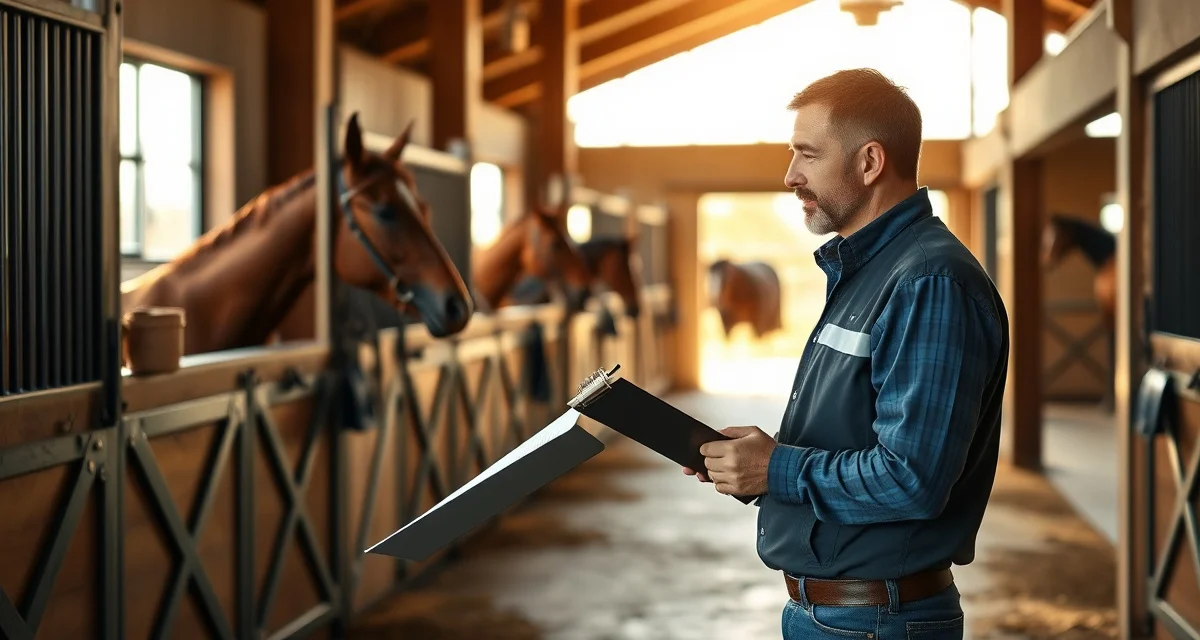
Horse Barn Inspection Form: Free Template for Facilities
A horse barn inspection form is only useful if it actually gets used. Most barn managers know what to look for, but without a consistent checklist, small hazards get missed, maintenance falls behind, and liability exposure grows quietly in the background.
TL;DR
- Effective barn management requires systems that match actual daily workflows, not adapted generic tools
- Per-horse record keeping with digital access reduces the response time to owner questions from hours to seconds
- Automated owner communication and health alerts reduce inbound calls while increasing owner satisfaction and retention
- Billing errors cost barns thousands of dollars annually; point-of-service charge logging is the most effective prevention
- Staff accountability systems with named task assignments and completion logs prevent care gaps without micromanagement
- Purpose-built equine software connects health records, billing, and owner communication in one place
This page gives you a free, practical template you can use today, plus context on how professional facilities are moving beyond paper-based inspections entirely.
The Problem With Ad Hoc Barn Inspections
The average barn manager uses 6+ separate tools to run daily operations, and inspection records are often the most fragmented piece of all. Notes end up in text messages, spiral notebooks, or not recorded at all.
When something goes wrong, whether it's an injury, a lease dispute, or an insurance claim, documentation gaps become expensive problems. A standardized horse barn inspection form closes that gap before it opens.
What a Horse Barn Inspection Form Should Cover
A complete equine facility inspection template covers six core areas. Each one carries real risk if left unchecked.
Stall Condition
- Flooring: check for uneven surfaces, exposed concrete, or worn mats
- Walls and kick boards: look for cracks, splinters, or loose boards
- Doors and latches: test every latch; horses are skilled at finding the one that doesn't catch
- Bedding depth and cleanliness: note wet spots, manure accumulation, and ammonia odor
- Lighting: confirm bulbs are working and fixtures are protected from horse contact
Water Systems
- Automatic waterers: check for blockages, float function, and water temperature in cold months
- Buckets and troughs: inspect for algae, cracks, or sharp edges
- Drainage: confirm water isn't pooling in stalls or aisles after cleaning
Fencing
- Walk the perimeter and note any broken boards, loose wire, or leaning posts
- Check gate hinges and latches for rust or failure
- Inspect electric fence continuity if applicable
- Note any areas where horses are crib-biting or rubbing fence lines down
Footing
- Arena footing: check depth, compaction, and moisture level
- Paddock footing: look for deep mud, hard ruts, or standing water
- Aisle footing: confirm rubber mats are flat and not curling at edges
Equipment and Storage
- Inspect hay storage for moisture intrusion or mold
- Check fire extinguisher placement and expiration dates
- Confirm first aid kits are stocked and accessible
- Review tack room organization and note any damaged equipment
Safety Hazards
- Exposed nails, screws, or wire anywhere horses or people move
- Blocked emergency exits or aisle obstructions
- Chemical storage: confirm pesticides, fly spray, and medications are locked and labeled
- Lighting in high-traffic areas at night
Free Horse Barn Inspection Form Template
Use this as a printed checklist or adapt it to a digital form. Rate each item: Pass / Needs Attention / Fail.
| Area | Item | Status | Notes |
|---|---|---|---|
| Stalls | Flooring condition | | |
| Stalls | Wall and kick board integrity | | |
| Stalls | Door latches functional | | |
| Stalls | Bedding depth adequate | | |
| Stalls | Lighting working | | |
| Water | Automatic waterers functional | | |
| Water | Buckets/troughs clean | | |
| Water | Drainage clear | | |
| Fencing | Perimeter integrity | | |
| Fencing | Gate latches secure | | |
| Fencing | Electric fence continuity | | |
| Footing | Arena depth and moisture | | |
| Footing | Paddock drainage | | |
| Footing | Aisle mats flat and secure | | |
| Equipment | Hay storage dry | | |
| Equipment | Fire extinguishers current | | |
| Equipment | First aid kits stocked | | |
| Safety | No exposed hardware | | |
| Safety | Emergency exits clear | | |
| Safety | Chemicals locked and labeled | | |
Inspector name:
Date:
Next scheduled inspection:
Follow-up items assigned to:
Who Should Use This Template
This template works for any horse facility: boarding barns, training operations, lesson programs, and private farms with multiple horses. It's particularly useful for facilities that need to demonstrate due diligence to insurance carriers or boarding clients.
If you manage a facility with staff, assign each inspection section to a specific person and set a completion deadline. Accountability by name produces better results than a general "someone check this" approach.
Beyond the Checklist: How Professional Facilities Manage Inspections
Paper checklists and spreadsheets solve the documentation problem but create a new one: the data sits in isolation. An inspection note about a broken latch doesn't automatically connect to a maintenance work order, a billing adjustment, or a communication to the horse owner.
That's the gap that barn management software is designed to close. Instead of six separate tools handling inspections, health records, scheduling, and client communication independently, an integrated platform keeps everything connected.
BarnBeacon is built specifically for horse facilities. Health records, billing and invoicing, client messaging, and scheduling all live in one place, so an inspection finding can trigger a work order, a client notification, and a billing note without switching between apps. That consolidation is where the 2.4 hours of daily time savings comes from.
What to Look for in an Equine Facility Inspection Template or Platform
Most tools in this space handle one task well. A standalone form builder gives you documentation but no workflow. A scheduling app manages appointments but doesn't connect to health or billing records.
When evaluating any solution, ask whether it connects inspection records to the rest of your operation. Can a flagged safety item generate a maintenance task automatically? Can a health note from an inspection be shared with a vet or owner without retyping it? If the answer is no, you're still managing the gaps manually.
What is the most important thing a barn manager can do to improve operations?
Standardize your documentation. Consistent records for inspections, health events, and client communications reduce errors, protect you legally, and make it easier to delegate tasks to staff. A horse barn inspection form is a simple starting point that pays dividends when something goes wrong.
How do I reduce time spent on barn administration?
Consolidate your tools. Most barn managers spend significant time re-entering information across separate apps for scheduling, billing, health records, and communication. Moving to an integrated platform eliminates that duplication. Facilities using BarnBeacon report saving an average of 2.4 hours per day compared to managing those tasks separately.
What tools do professional barn managers use?
Professional barn managers typically use some combination of scheduling software, a health record system, invoicing tools, and a communication platform. The most efficient operations use a single platform that connects all of these functions rather than managing them in isolation. An equine facility inspection template is often the first step toward building that kind of systematic approach.
How does BarnBeacon compare to spreadsheets for barn management?
Spreadsheets require manual updates, lack real-time notifications, and create version control problems when multiple staff members are working from different files. BarnBeacon centralizes records, pushes alerts automatically based on logged events, and connects care records to billing and owner communication in one system. Most facilities report saving several hours per week after switching from spreadsheets.
What is the setup process like for BarnBeacon?
Most facilities complete the initial setup in under a week. Horse profiles, service templates, and billing configurations can be imported from existing records or entered directly. BarnBeacon's US-based support team is available to assist with setup, and most managers are running their first billing cycle through the platform within days of starting.
Can BarnBeacon support a barn with multiple staff members?
Yes. BarnBeacon supports multiple user accounts with role-based access, so barn managers, barn staff, and owners each see the information relevant to their role. Task assignments, completion logs, and communication history are all attached to the barn's account rather than to individual staff phones or email addresses.
FAQ
What is Horse Barn Inspection Form: Free Template for Facilities?
A horse barn inspection form is a structured checklist used by barn managers to systematically evaluate facility safety, maintenance, and compliance. The free template from BarnBeacon covers stall conditions, fencing, water systems, fire safety, and equipment. It replaces ad hoc walkthroughs with a repeatable process that catches small hazards before they become costly problems or liability risks.
How much does Horse Barn Inspection Form: Free Template for Facilities cost?
The horse barn inspection form template on BarnBeacon is completely free to download and use. There are no sign-up fees or paywalls. Facilities looking to go beyond a paper form can explore purpose-built barn management software, which typically runs on a per-horse monthly subscription model and includes digital inspections alongside health records, billing, and owner communication.
How does Horse Barn Inspection Form: Free Template for Facilities work?
Download the template, print it or load it on a tablet, then walk your facility section by section — stalls, aisles, paddocks, water supply, electrical, and fire safety equipment. Each item gets a pass, fail, or needs-attention mark. Completed forms should be dated, signed, and filed. Most managers complete a full walkthrough in 20–40 minutes depending on facility size.
What are the benefits of Horse Barn Inspection Form: Free Template for Facilities?
A consistent inspection form reduces missed hazards, keeps maintenance schedules on track, and creates a paper trail that protects you in liability or insurance situations. It also improves communication between staff shifts and gives owners confidence that the facility is professionally managed. Over time, inspection logs reveal recurring problem areas so you can address root causes rather than repeat repairs.
Who needs Horse Barn Inspection Form: Free Template for Facilities?
Any facility housing horses benefits from a structured inspection form — boarding barns, training centers, breeding operations, riding schools, and private farms. It is especially valuable for multi-staff operations where different people conduct daily checks. Facilities with high horse-to-staff ratios or aging infrastructure benefit most, as hazards accumulate faster than informal walkthroughs can catch them.
How long does Horse Barn Inspection Form: Free Template for Facilities take?
A full barn inspection using this template takes most managers 20 to 45 minutes for a typical boarding or training facility. Daily spot checks of high-priority areas like stalls, water, and fencing can be done in 10 minutes. Scheduling a full inspection weekly and a brief daily walkthrough covers most liability and safety requirements without overburdening staff time.
What should I look for when choosing Horse Barn Inspection Form: Free Template for Facilities?
Look for a template that matches your facility type and covers all critical zones — stalls, exterior fencing, water systems, electrical, fire extinguishers, and emergency access. It should have space for notes, a signature line, and a date field for record-keeping. Digital formats that integrate with your barn management system are preferable so inspection history is searchable and shareable with owners or insurers.
Is Horse Barn Inspection Form: Free Template for Facilities worth it?
Yes. A documented inspection routine is one of the lowest-cost risk management tools available to barn operators. It reduces veterinary emergencies caused by undetected hazards, lowers insurance exposure, and demonstrates professionalism to boarding clients. Facilities that pair the form with purpose-built barn software gain additional value through connected health records and automated owner communication, making the investment in any system straightforward to justify.
Sources
- American Association of Equine Practitioners (AAEP)
- United States Equestrian Federation (USEF)
- American Horse Council
- Kentucky Equine Research
- UC Davis Center for Equine Health
Get Started with BarnBeacon
Running a equine facility well requires the right tools behind the right protocols. BarnBeacon gives managers the health record tracking, billing automation, and owner communication infrastructure to operate efficiently without adding administrative staff. Start a free trial and see how the platform fits the way your barn already works.