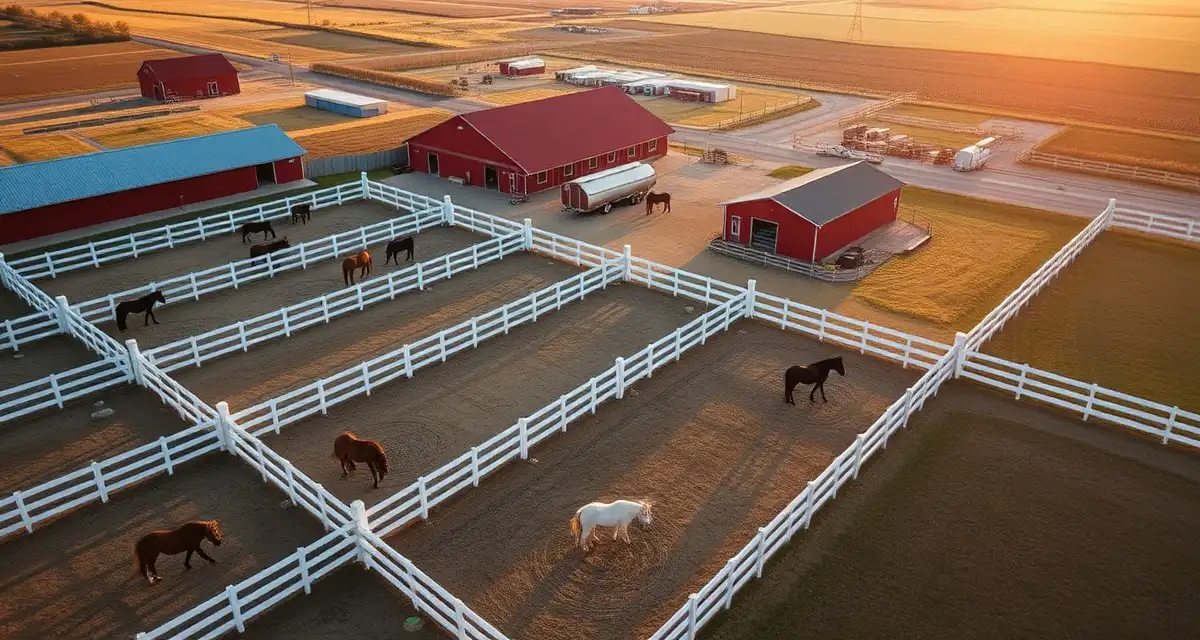
Running a Horse Boarding Business in North Dakota: Guide for Barn Owners
Horse boarding is a $4B+ industry across the United States, and North Dakota barn owners are carving out a real share of that market. Whether you're running a full-care operation near Bismarck or a self-care setup in the Red River Valley, the fundamentals of a profitable horse boarding business in North Dakota come down to pricing, compliance, and operations.
TL;DR
- Horse boarding startup costs commonly reach $4 or more before a first horse arrives, depending on facility scope
- Break-even modeling should use 70% occupancy as the threshold, not full capacity
- Labor is underestimated by most new barn owners; budget 40% higher than your initial projection
- Feed and bedding alone can run $200 to $400 per horse per month at most US facilities
- A 90-day cash reserve is the practical minimum buffer for a new boarding operation
- Barn management software reduces administrative labor by hours per week, directly improving your break-even point
Most state-specific guidance for boarding barn owners simply doesn't exist. This guide fills that gap.
What North Dakota Boarding Barn Owners Need to Know
The Local Market Context
North Dakota has a strong agricultural backbone, which means horse ownership is common and boarding demand is steady. Competition tends to be regional rather than dense, so barn owners who run tight operations and communicate well with clients hold a real advantage.
Seasonal factors matter here. Harsh winters mean your facility costs spike from November through March. Factor heating, bedding, and extra labor into your annual budget before you set monthly rates.
Licensing and Legal Requirements
North Dakota does not require a specific "horse boarding license" at the state level, but you are operating a business and must comply with standard requirements. Register your business with the North Dakota Secretary of State, obtain a federal EIN, and check with your county for any local zoning or agricultural land-use permits.
Liability is your biggest legal exposure. A well-drafted boarding agreement that includes a liability waiver is essential. North Dakota follows agritourism liability protections under state law, which can limit your exposure if your operation qualifies. Consult an equine attorney before opening your doors.
Pricing Horse Boarding in North Dakota
Rates vary by region and service level, but here are realistic benchmarks for the state:
- Full care (stall, feed, turnout): $350 to $600/month
- Partial care: $200 to $350/month
- Pasture/self-care: $100 to $200/month
Urban-adjacent barns near Fargo or Bismarck can push toward the top of those ranges. Rural operations typically compete on value and personal service. Add-on services like blanketing, fly spray, and extra feedings are common revenue boosters that many barn owners undercharge for.
Review your rates annually. Feed and bedding costs have risen significantly since 2021, and your pricing should reflect current input costs, not what you charged three years ago.
Insurance for North Dakota Boarding Operations
Carry at minimum:
- General liability insurance (minimum $1M per occurrence)
- Care, custody, and control coverage for horses in your care
- Property insurance for your barn, equipment, and feed
Some carriers specialize in equine operations. Markel and USAA are commonly used by barn owners. Expect to pay $1,500 to $4,000 annually depending on herd size and facility value.
Contracts and Client Communication
Every horse that steps onto your property should be covered by a signed boarding agreement. Your contract should specify payment plans, notice periods, feed and care protocols, and what happens in a veterinary emergency.
Clear communication with horse owners reduces disputes and improves retention. Many North Dakota barn owners still rely on text threads and paper records, which creates gaps. Moving to a structured system makes a measurable difference in how professional your operation appears and how efficiently you run it.
Managing Your Barn Operation Day-to-Day
This is where most boarding barns lose money quietly. Missed invoices, undocumented add-ons, and informal communication all erode your margins over time.
Barn management software built for equine operations handles billing, owner messaging, and horse health records in one place. BarnBeacon is designed specifically for boarding barn operations like those running across North Dakota, giving you tools to automate invoicing, log daily care notes, and keep clients informed without extra admin hours.
For a broader look at building a boarding business from the ground up, the horse boarding business guide covers everything from facility planning to client acquisition.
How does BarnBeacon compare to spreadsheets for barn management?
Spreadsheets require manual updates, lack real-time notifications, and create version control problems when multiple staff members are working from different files. BarnBeacon centralizes records, pushes alerts automatically based on logged events, and connects care records to billing and owner communication in one system. Most facilities report saving several hours per week after switching from spreadsheets.
What is the setup process like for BarnBeacon?
Most facilities complete the initial setup in under a week. Horse profiles, service templates, and billing configurations can be imported from existing records or entered directly. BarnBeacon's US-based support team is available to assist with setup, and most managers are running their first billing cycle through the platform within days of starting.
Can BarnBeacon support a barn with multiple staff members?
Yes. BarnBeacon supports multiple user accounts with role-based access, so barn managers, barn staff, and owners each see the information relevant to their role. Task assignments, completion logs, and communication history are all attached to the barn's account rather than to individual staff phones or email addresses.
FAQ
What is Running a Horse Boarding Business in North Dakota: Guide for Barn Owners?
This guide covers everything North Dakota barn owners need to launch and operate a profitable horse boarding business. It addresses startup costs, pricing strategy, compliance requirements, labor budgeting, and day-to-day operations. Whether you're planning a full-care facility near Bismarck or a self-care setup in the Red River Valley, the guide fills the gap left by generic advice by providing state-specific context grounded in North Dakota's agricultural market and climate realities.
How much does Running a Horse Boarding Business in North Dakota: Guide for Barn Owners cost?
Startup costs for a North Dakota horse boarding operation commonly reach $4 or more per horse before the first boarder arrives, depending on facility scope. Ongoing feed and bedding expenses typically run $200 to $400 per horse per month. Labor costs are consistently underestimated — budget at least 40% higher than your initial projection. Maintaining a 90-day cash reserve is the practical minimum buffer when launching a new boarding operation.
How does Running a Horse Boarding Business in North Dakota: Guide for Barn Owners work?
A horse boarding business works by housing, feeding, and caring for horses owned by clients in exchange for monthly boarding fees. Operators choose between full-care models, where the barn handles all feeding and turnout, and self-care models, where owners handle their own horse's daily needs. Profitability depends on pricing that reflects true costs, maintaining at least 70% occupancy, and using barn management software to reduce administrative overhead.
What are the benefits of Running a Horse Boarding Business in North Dakota: Guide for Barn Owners?
Running a boarding barn in North Dakota offers steady recurring revenue tied to the state's strong agricultural culture and established horse-owning community. Demand is relatively stable year-round. Owners benefit from predictable monthly income, the ability to scale services over time, and low customer acquisition costs in tight-knit equestrian communities. Barn management software further improves margins by cutting administrative labor by several hours per week.
Who needs Running a Horse Boarding Business in North Dakota: Guide for Barn Owners?
This guide is designed for aspiring and existing barn owners in North Dakota who want a realistic framework for building a sustainable boarding operation. It's especially useful for agricultural landowners considering a new revenue stream, equestrians transitioning from hobby to business, and operators who already run a facility but struggle with pricing, cash flow, or compliance. Anyone managing horses for paying clients in North Dakota will find actionable guidance here.
How long does Running a Horse Boarding Business in North Dakota: Guide for Barn Owners take?
Building a viable North Dakota horse boarding business from concept to first boarder typically takes several months to over a year, depending on whether infrastructure already exists. Permitting, facility construction or renovation, insurance setup, and client acquisition all take time. Once operational, reaching the recommended 70% occupancy break-even threshold may take additional months. Planning with a realistic timeline and a 90-day cash reserve prevents the most common early-stage failures.
What should I look for when choosing Running a Horse Boarding Business in North Dakota: Guide for Barn Owners?
When evaluating how to structure your North Dakota boarding operation, prioritize realistic cost modeling over optimistic projections. Look for a pricing structure that accounts for full labor costs, feed, bedding, and overhead — not just mortgage and utilities. Choose barn management software that reduces administrative time. Assess your local market for demand and competition. Ensure your boarding contracts, liability waivers, and insurance coverage are appropriate for North Dakota's legal environment.
Is Running a Horse Boarding Business in North Dakota: Guide for Barn Owners worth it?
Yes — for landowners and equestrians in North Dakota with the right property and market access, a horse boarding business is a viable and often rewarding venture. The state's horse-owning culture creates consistent local demand. Success requires disciplined cost management, accurate break-even modeling at 70% occupancy, and a willingness to invest in operations from day one. With proper planning and realistic expectations, boarding barns in North Dakota can generate dependable recurring income.
Sources
- American Association of Equine Practitioners (AAEP)
- American Horse Council
- Kentucky Equine Research
- UC Davis Center for Equine Health
- American Horse Council Economic Impact Study
Get Started with BarnBeacon
A sound business plan and a reliable management system are two halves of the same operation. BarnBeacon gives boarding barns in North Dakota the billing automation, health record management, and owner communication tools that make the operational half work as well as the financial plan describes. Start a free trial and see how the platform fits the way your barn runs.