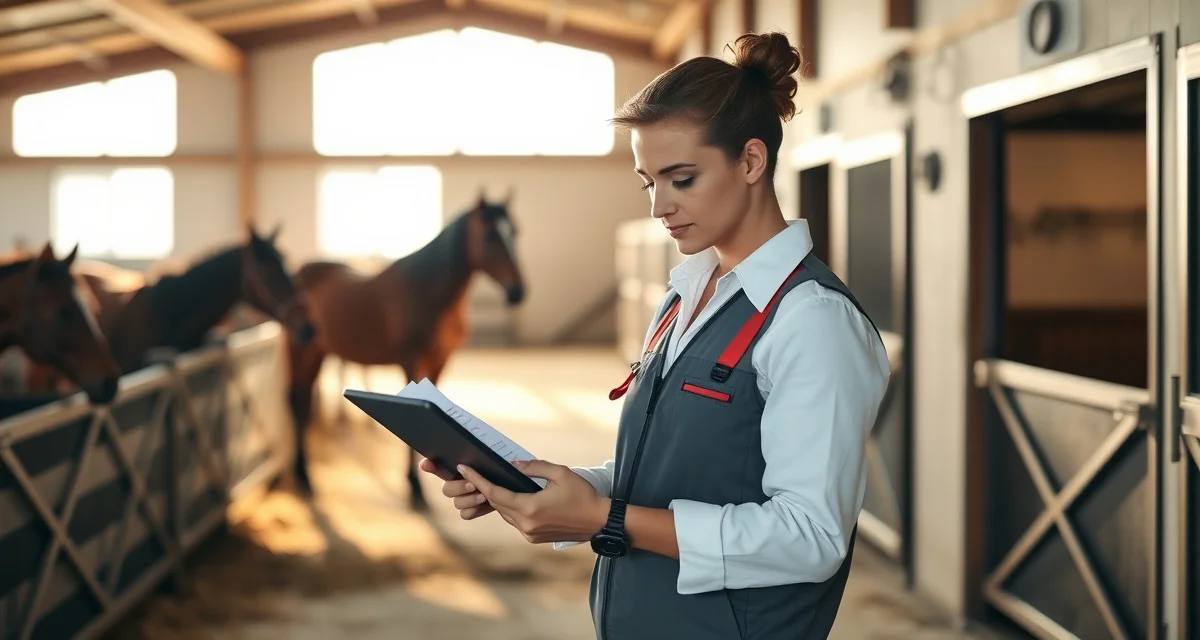
Horse Facility Daily Report: Automating Owner Communication
Horse owners want to know their animals are safe, fed, and healthy. Barn managers want to spend time with horses, not writing update emails. The horse facility daily report sits at the center of that tension, and most facilities are still handling it manually.
TL;DR
- Checklists assigned to specific named staff members have higher completion rates than shared or unassigned task lists
- Digital completion records with timestamps create an audit trail that paper checklists cannot provide
- Per-horse daily checklists tied to each animal's care plan catch individual health changes that generic barn rounds miss
- Morning and evening shift handover checklists prevent the communication gaps where care tasks fall through
- A completed checklist is your documentation that due diligence happened; an incomplete one is a liability exposure
- Review completion rates weekly to identify patterns in missed tasks before they become care or safety incidents
The average barn manager uses 6+ separate tools to run daily operations, and consolidating those workflows saves an estimated 2.4 hours per day. That time is currently being lost to copy-pasting notes, chasing down vet records, and fielding the same "how's my horse doing?" texts from owners.
Why Manual Daily Reports Break Down
When a barn manager writes daily updates by hand, accuracy suffers. Notes get written hours after the fact, details get missed, and the format changes depending on who's writing that day.
Owners notice the inconsistency. Some start calling more. Others disengage entirely because they feel out of the loop. Neither outcome is good for retention or trust.
The problem compounds at scale. A 30-horse facility sending individual owner communication takes 45-60 minutes per day on communication alone. That's time that could go toward actual horse care.
What a Complete Daily Report Should Include
A useful horse facility daily report is not just a "your horse ate today" checkbox. Owners and managers both benefit when reports carry real operational detail.
Every daily report should cover:
- Feed and water intake with any deviations from the normal ration
- Turnout time and which paddock or pasture the horse used
- Behavior notes including energy level, social behavior, and anything unusual
- Health observations such as manure consistency, coat condition, or signs of discomfort
- Medication administered with dosage, time, and administering staff member
- Exercise or training activity completed that day
- Farrier, vet, or vendor visits that occurred or are scheduled
When this information is captured consistently, it also becomes a health record. Patterns emerge. You catch the horse that's been off feed for three days before it becomes a colic call.
How to Set Up Automated Daily Reports with BarnBeacon
BarnBeacon connects health tracking, billing, communication, and scheduling in one platform built specifically for horse facilities. Instead of pulling data from six different places, staff enter information once and the system handles distribution.
Here's how to get the reporting workflow running.
Step 1: Configure Your Horse Profiles
Start by building out each horse's profile in BarnBeacon. Include the owner's contact information, preferred communication method (email or SMS), feeding instructions, medication schedules, and any standing vet notes.
This profile becomes the foundation for every daily report. The system pulls from it automatically so staff aren't re-entering the same baseline information every day.
Step 2: Set Up Your Daily Checklist Templates
BarnBeacon lets you build custom checklist templates by horse, by barn section, or by care package level. A horse on full care gets a different checklist than one on pasture board.
Assign each checklist to the appropriate staff member and set the time window for completion. The system tracks who completed what and when, which matters for accountability and liability.
Step 3: Train Staff to Log in Real Time
The biggest failure point in any reporting system is delayed data entry. Train staff to log observations as they work, not at the end of the day.
BarnBeacon's mobile interface is built for barn conditions: large buttons, offline capability, and fast entry. A staff member can log a feeding, note a behavioral observation, and flag a health concern in under 90 seconds.
Step 4: Configure Owner Report Delivery
In the owner communication settings, choose when daily reports go out and in what format. Most facilities set delivery for early evening, after all horses have been checked for the night.
Owners receive a clean, formatted summary tied to their specific horse. They don't see other horses' records. They don't get a wall of text. They get the information they actually want, delivered consistently.
Step 5: Connect Billing to Daily Activity Logs
This is where BarnBeacon separates itself from tools that only handle one piece of the puzzle. When a vet visit, farrier appointment, or extra service is logged in the daily report, it can automatically populate a billing line item.
No more end-of-month scrambling to remember what was done. No more disputes over charges that weren't communicated. The billing and invoicing workflow runs directly from the same data that feeds the daily report.
Step 6: Review the Dashboard Weekly
Once daily reports are running automatically, the manager's job shifts from data entry to oversight. BarnBeacon's dashboard surfaces patterns: which horses are consistently off feed, which owners open their reports, which staff are completing checklists on time.
This is the operational intelligence that barn management software should deliver. Not just a digital version of a paper form, but a system that tells you where to focus attention.
Common Mistakes When Automating Daily Reports
Trying to Automate Before Standardizing
If your current process is inconsistent, automating it just makes the inconsistency faster. Before turning on automated reports, agree on what gets logged, what language to use, and what counts as a reportable health observation.
Spend one week writing reports manually using the new standard. Then automate.
Sending Too Much Information
Owners want to know their horse is okay. They do not need a 400-word essay every evening. Keep automated reports concise: key observations, any flags, and a confirmation that the horse was seen and cared for.
Reserve longer communication for situations that actually warrant it, like a vet visit or a behavioral change that needs owner input.
Skipping the Health Flag Workflow
Daily reports are most valuable when they trigger action. Configure BarnBeacon to alert the barn manager when a staff member flags a health concern in a daily log. Don't let those flags sit in a report that gets read the next morning.
The equine barn daily report system only works as a safety net if someone is watching the net.
Not Communicating the Change to Owners
When you switch from ad-hoc updates to automated daily reports, tell owners what's changing and why. Some will be skeptical. Show them a sample report. Explain that they'll now get consistent information every day instead of updates only when something goes wrong.
Most owners respond positively once they understand the format.
What is the most important thing a barn manager can do to improve operations?
Standardize before you automate. The facilities that run most efficiently have documented processes for feeding, turnout, health checks, and communication before they introduce any software. Once the standard exists, tools like BarnBeacon can enforce and scale it. Without the standard, technology just accelerates the chaos.
How do I reduce time spent on barn administration?
Consolidate your tools. Most of the administrative burden in barn management comes from moving information between disconnected systems: a spreadsheets for feeding, a separate app for scheduling, manual invoices, and text threads for owner communication. Switching to a single platform that handles the equine barn daily report system, billing, and scheduling eliminates most of that transfer work and recovers hours each week.
What tools do professional barn managers use?
The most efficient barn managers use integrated platforms rather than stacking single-purpose apps. BarnBeacon covers daily reporting, health tracking, owner communication, scheduling, and billing in one place. Managers who still rely on spreadsheets, generic project management tools, or paper logs typically spend significantly more time on administration and have less consistent records to show for it.
How does BarnBeacon compare to spreadsheets for barn management?
Spreadsheets require manual updates, lack real-time notifications, and create version control problems when multiple staff members are working from different files. BarnBeacon centralizes records, pushes alerts automatically based on logged events, and connects care records to billing and owner communication in one system. Most facilities report saving several hours per week after switching from spreadsheets.
What is the setup process like for BarnBeacon?
Most facilities complete the initial setup in under a week. Horse profiles, service templates, and billing configurations can be imported from existing records or entered directly. BarnBeacon's US-based support team is available to assist with setup, and most managers are running their first billing cycle through the platform within days of starting.
Can BarnBeacon support a barn with multiple staff members?
Yes. BarnBeacon supports multiple user accounts with role-based access, so barn managers, barn staff, and owners each see the information relevant to their role. Task assignments, completion logs, and communication history are all attached to the barn's account rather than to individual staff phones or email addresses.
FAQ
What is Horse Facility Daily Report: Automating Owner Communication?
A horse facility daily report is a structured communication system that automatically compiles care updates, feeding logs, health observations, and task completions into a formatted summary sent to horse owners. Rather than barn managers manually writing individual emails or fielding texts, the system pulls from completed digital checklists to generate consistent, timestamped reports that keep owners informed without interrupting barn operations.
How much does Horse Facility Daily Report: Automating Owner Communication cost?
Most automated daily report systems are included within broader barn management software, typically ranging from $50 to $200 per month depending on facility size and horse count. Some platforms charge per horse or per owner portal. Standalone reporting tools are less common. Many providers offer free trials, and the time savings alone — estimated at over two hours daily for an average barn — often justifies the cost quickly.
How does Horse Facility Daily Report: Automating Owner Communication work?
Staff complete digital checklists tied to individual horses throughout the day, logging feeding, turnout, medication, and health observations with timestamps. At a scheduled time, the system compiles completed checklist data into a formatted report and delivers it to each owner via email or an app. Barn managers review before sending or set fully automated delivery. Owners receive consistent updates without needing to call or text.
What are the benefits of Horse Facility Daily Report: Automating Owner Communication?
Automated daily reports reduce owner anxiety, cut down on inbound 'how's my horse?' texts, and free barn managers from repetitive writing tasks. They also create a documented care record with timestamps, which protects facilities in disputes or liability situations. Owners feel more connected to their horse's routine, which improves retention and trust. Consistent reporting also helps catch health pattern changes earlier than informal communication allows.
Who needs Horse Facility Daily Report: Automating Owner Communication?
Any boarding facility, training barn, or equine rehabilitation center managing horses for multiple owners benefits from automated daily reporting. It's especially valuable when managing 10 or more horses, running a professional training program, or operating with multiple staff across morning and evening shifts. Facilities where owner communication is currently handled ad hoc via text or email will see the most immediate operational improvement.
How long does Horse Facility Daily Report: Automating Owner Communication take?
Initial setup — importing horse profiles, assigning care plans, and configuring report templates — typically takes a few hours to a full day depending on facility size. Once configured, staff spend no additional time on reporting; the system compiles data from their existing checklist completions. Owners receive reports automatically. Most facilities are fully operational within one to two weeks of onboarding.
What should I look for when choosing Horse Facility Daily Report: Automating Owner Communication?
Look for per-horse checklist customization, timestamp logging, automated delivery scheduling, and owner portal access. Shift handover features, completion rate tracking, and vet record integration are strong differentiators. Avoid systems that require duplicate data entry or lack mobile-friendly interfaces for barn staff. Integration with existing tools — farrier scheduling, health records, billing — reduces the number of separate platforms your team needs to manage daily.
Is Horse Facility Daily Report: Automating Owner Communication worth it?
For most boarding and training facilities, yes. The combination of time savings, reduced owner inquiries, documented care records, and improved client retention typically outweighs subscription costs within the first month. Facilities that have switched from manual reporting consistently report fewer owner complaints, better staff accountability, and stronger professional reputation. If owner communication is currently a daily friction point, automating it delivers measurable ROI quickly.
Sources
- American Association of Equine Practitioners (AAEP)
- United States Equestrian Federation (USEF)
- American Horse Council
- Kentucky Equine Research
- UC Davis Center for Equine Health
Get Started with BarnBeacon
The steps in this guide only deliver results when the tools behind them match your actual daily workflows. BarnBeacon gives equine facilities the task management, health logging, and owner communication infrastructure to run the protocols described here without adding administrative overhead. Start a free trial and build your first digital task system around your horses' real care plans.