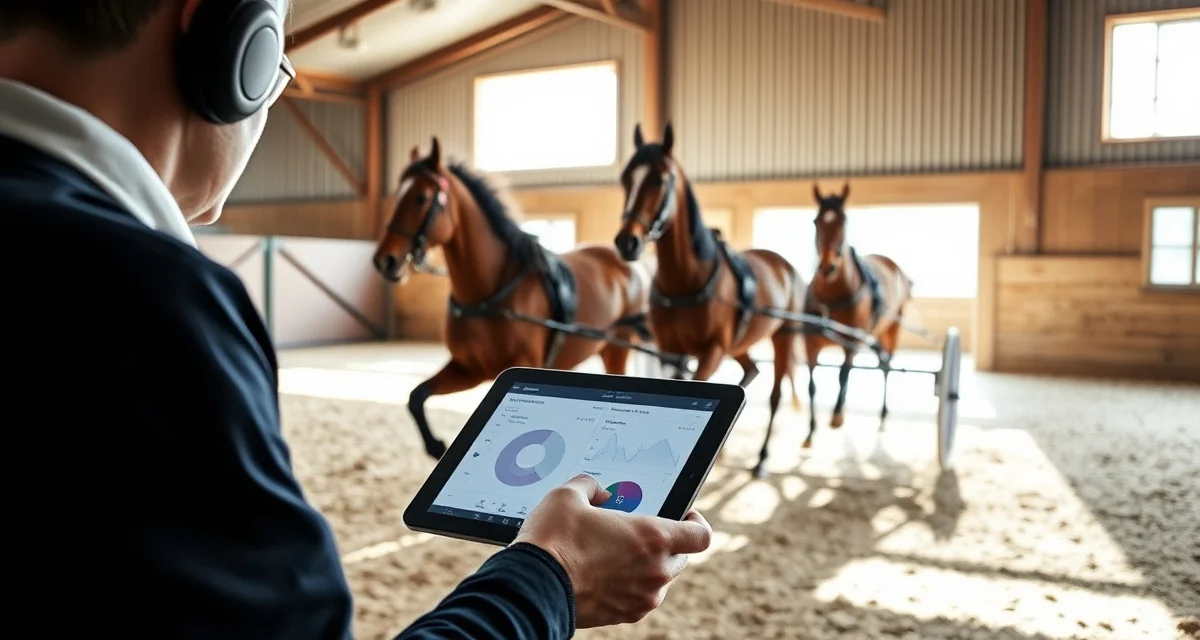
Combined Driving Barn Owner Communication: Daily Updates and Best Practices
Combined driving barn owner communication runs on a different clock than most equestrian disciplines. Owners tracking a horse through dressage, marathon, and cones phases need granular, phase-specific updates that generic barn software simply doesn't provide.
TL;DR
- Checklists assigned to specific named staff members have higher completion rates than shared or unassigned task lists
- Digital completion records with timestamps create an audit trail that paper checklists cannot provide
- Per-horse daily checklists tied to each animal's care plan catch individual health changes that generic barn rounds miss
- Morning and evening shift handover checklists prevent the communication gaps where care tasks fall through
- A completed checklist is your documentation that due diligence happened; an incomplete one is a liability exposure
- Review completion rates weekly to identify patterns in missed tasks before they become care or safety incidents
Most barn management platforms treat all disciplines the same. That gap creates real friction for combined driving facilities, where a horse's training status, fitness load, and competition readiness shift week to week across three distinct phases.
Why Combined Driving Communication Is Different
Combined driving horses carry a unique workload. A horse in marathon prep has different daily reporting needs than one in dressage schooling or cones practice. Owners want to know which phase their horse is working in, how the carriage work is progressing, and whether the fitness build is on schedule.
Generic update templates don't capture this. Sending a standard "worked well today" message to a combined driving owner leaves out the context they're paying for. Discipline-specific communication builds trust and reduces the back-and-forth calls that eat into a barn manager's day.
How to Set Up Daily Owner Communication for a Combined Driving Barn
Step 1: Define Your Update Categories by Phase
Start by mapping your communication structure to the three phases of combined driving. Create separate update categories for dressage work, marathon conditioning, and cones schooling. Each category should have its own set of standard fields.
For dressage updates, include movement quality, collection progress, and any specific figures worked. For marathon, log distance covered, terrain type, and how the horse handled obstacles. For cones, note accuracy, time faults in practice, and pole knockdowns.
Step 2: Build a Daily Report Template
A daily report template should take no more than three minutes to complete per horse. Keep it structured so staff can fill it out consistently without needing to write from scratch each time.
A workable template includes: phase worked (dressage/marathon/cones/rest), duration, a 1-5 condition score, one sentence on highlights, and one sentence on anything to watch. Add a photo or short video field for days when something notable happens. Owners respond well to visual updates, especially during marathon conditioning when fitness changes are visible.
Step 3: Set a Consistent Delivery Schedule
Pick a delivery window and stick to it. Most combined driving owners prefer updates between 6:00 and 8:00 PM, after the day's work is done. Sending updates at random times trains owners to expect inconsistency.
For horses in active competition prep, consider a twice-daily format: a brief morning check-in covering overnight status and the day's plan, then a full report in the evening. This is especially useful in the six weeks before a recognized event.
Step 4: Use an Owner Portal Built for Equestrian Workflows
Email chains and text threads break down fast when you're managing multiple horses across multiple owners. An owner communication portal centralizes updates, keeps a searchable history, and lets owners access their horse's records without calling the barn.
Look for a portal that lets you tag updates by discipline phase, attach media, and log health and farrier notes alongside training reports. BarnBeacon's owner portal is built to adapt to combined driving workflows, so you're not forcing a discipline-specific operation into a generic template.
Step 5: Log Competition-Specific Updates Separately
When a horse is competing, owners need a different type of communication. Pre-event updates should cover travel status, horse condition on arrival, and any equipment checks. During the event, a brief post-phase message after dressage and marathon keeps owners informed without overwhelming them.
Post-event, send a structured debrief: scores by phase, any veterinary checks, recovery status, and the plan for the following week. This closes the loop and sets expectations for the next training cycle.
Step 6: Handle Sensitive Updates Directly
Lameness, illness, or a poor competition result should never arrive as a portal notification. Call first, then follow up in writing through the portal for documentation purposes.
Combined driving horses face specific physical demands, particularly during marathon season. Owners of horses in heavy conditioning work are attuned to any change in soundness. A proactive call when you notice early stiffness or a minor scrape builds far more trust than a message they read hours later.
Common Mistakes in Combined Driving Owner Communication
Using the same template for all disciplines. A dressage barn update and a combined driving update serve different purposes. If your template doesn't have fields for obstacle work or marathon distance, you're missing the information combined driving owners actually want.
Inconsistent update timing. Owners who don't hear from the barn by their expected time will call or text. That interruption costs more time than a consistent daily report would have.
Skipping rest day updates. A short "rest day, horse looks well, eating and drinking normally" message takes 30 seconds and prevents owners from assuming no news is bad news.
Overloading updates with jargon. Not every owner competes or has a deep technical background. Write updates in plain language. "Worked through the serpentine at collected trot, good bend both directions" is more useful than a string of dressage abbreviations.
No photo or video cadence. Combined driving owners often can't visit the barn frequently. A weekly video of their horse working in harness or on the marathon course keeps them connected and reduces anxiety between visits.
Integrating Updates with Barn Operations
Daily owner communication shouldn't exist in a silo. When your update system connects to your combined driving barn operations records, you get a complete picture: training logs, vet visits, farrier appointments, and competition schedules all in one place.
This integration matters most during competition season. When a horse's marathon conditioning log, vet check history, and competition schedule are all accessible in one system, you can give owners accurate, confident answers to any question they ask.
How does BarnBeacon compare to spreadsheets for barn management?
Spreadsheets require manual updates, lack real-time notifications, and create version control problems when multiple staff members are working from different files. BarnBeacon centralizes records, pushes alerts automatically based on logged events, and connects care records to billing and owner communication in one system. Most facilities report saving several hours per week after switching from spreadsheets.
What is the setup process like for BarnBeacon?
Most facilities complete the initial setup in under a week. Horse profiles, service templates, and billing configurations can be imported from existing records or entered directly. BarnBeacon's US-based support team is available to assist with setup, and most managers are running their first billing cycle through the platform within days of starting.
Can BarnBeacon support a barn with multiple staff members?
Yes. BarnBeacon supports multiple user accounts with role-based access, so barn managers, barn staff, and owners each see the information relevant to their role. Task assignments, completion logs, and communication history are all attached to the barn's account rather than to individual staff phones or email addresses.
FAQ
What is Combined Driving Barn Owner Communication: Daily Updates and Best Practices?
Combined driving barn owner communication refers to the structured system of daily updates, phase-specific reports, and digital checklists that keep horse owners informed across dressage, marathon, and cones training phases. Unlike generic barn software, this approach tracks each horse's individual care plan, fitness load, and competition readiness as it shifts week to week. It typically includes timestamped task completion records, shift handover checklists, and named staff accountability to ensure nothing falls through the cracks.
How much does Combined Driving Barn Owner Communication: Daily Updates and Best Practices cost?
Dedicated combined driving communication systems vary widely in cost. Basic digital checklist tools may start around $30–$80 per month, while full barn management platforms with phase-specific reporting can run $100–$300 or more monthly depending on herd size and features. Many platforms offer per-horse pricing. The cost of poor communication—missed care tasks, liability exposure from incomplete records, or an injured horse—typically far exceeds any software subscription.
How does Combined Driving Barn Owner Communication: Daily Updates and Best Practices work?
Combined driving barn owner communication works by assigning daily checklists to named staff members for each horse, tied to that animal's individual care plan and current training phase. Completed tasks generate timestamped digital records visible to owners in real time. Morning and evening shift handovers are logged to prevent gaps. Owners receive phase-specific updates covering dressage conditioning, marathon fitness work, or cones preparation, giving them granular visibility rather than generic daily summaries.
What are the benefits of Combined Driving Barn Owner Communication: Daily Updates and Best Practices?
The core benefits include higher task completion rates when checklists are assigned to specific staff rather than shared lists, a digital audit trail that protects the barn from liability disputes, and earlier detection of individual health changes through per-horse daily tracking. Owners gain real confidence in their horse's care, reducing call volume for barn staff. Weekly completion rate reviews also let managers spot recurring gaps before they escalate into safety or welfare incidents.
Who needs Combined Driving Barn Owner Communication: Daily Updates and Best Practices?
Any barn managing combined driving horses for competitive owners benefits from structured daily communication. This includes private training facilities, event yards, and boarding barns where horses are actively competing across all three phases. It's especially critical for facilities handling multiple horses at different competition readiness levels simultaneously. Owners who travel or cannot visit daily, and barn managers coordinating multiple staff across morning and evening shifts, will see the greatest operational and relationship benefits.
How long does Combined Driving Barn Owner Communication: Daily Updates and Best Practices take?
Setting up a combined driving communication system typically takes one to two weeks for initial configuration—mapping horses to care plans, building phase-specific checklists, and training staff on the platform. Daily operation adds minimal time: most digital checklist systems are designed for completion in under five minutes per horse per shift. Owners begin receiving meaningful, phase-specific updates within the first week, and completion rate patterns become reviewable after roughly four to six weeks of consistent use.
What should I look for when choosing Combined Driving Barn Owner Communication: Daily Updates and Best Practices?
Look for a platform that supports per-horse checklists tied to individual care plans rather than generic barn-wide task lists. Named staff assignment with timestamped completion is non-negotiable for accountability and audit trails. Phase-specific reporting fields matter for combined driving—dressage, marathon, and cones updates should be distinct. Shift handover workflows, mobile-friendly interfaces for barn staff, and owner-facing dashboards or notifications are strong indicators that the tool was built for serious equestrian operations.
Is Combined Driving Barn Owner Communication: Daily Updates and Best Practices worth it?
For combined driving facilities, yes. The discipline demands a level of phase-specific detail and individual horse tracking that paper systems and generic barn apps cannot reliably deliver. Documented, timestamped care records reduce liability exposure, and structured handovers prevent the gaps where health issues go unnoticed. Owners with horses in active competition preparation expect transparency; delivering it builds trust and retention. The operational discipline that good communication systems enforce also tends to improve overall barn safety and care standards.
Sources
- American Association of Equine Practitioners (AAEP)
- United States Equestrian Federation (USEF)
- American Driving Society (ADS)
- American Horse Council
- UC Davis Center for Equine Health
Get Started with BarnBeacon
The steps in this guide only deliver results when the tools behind them match your actual daily workflows. BarnBeacon gives combined driving barns the task management, health logging, and owner communication infrastructure to run the protocols described here without adding administrative overhead. Start a free trial and build your first digital task system around your horses' real care plans.