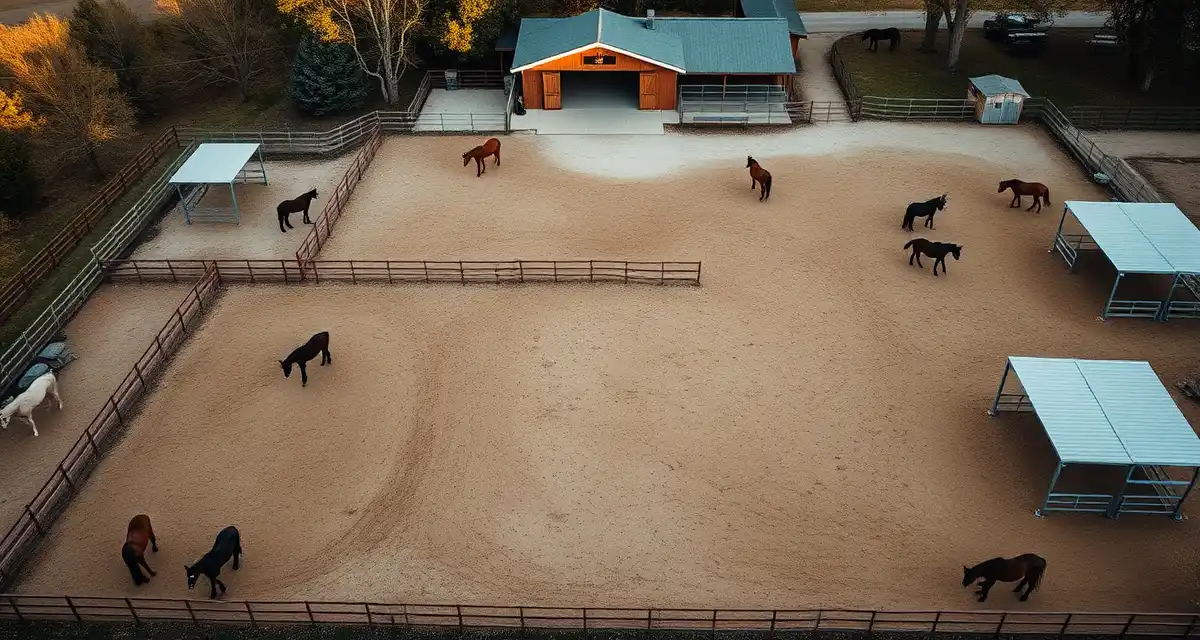
Lesson Barn Turnout Rotation: Balancing Rest and Availability
Managing a lesson barn means solving a problem most horse facilities never face: horses that need daily turnout for their physical and mental health, but also need to be clean, dry, and available on a fixed lesson schedule. Get the balance wrong and you end up with either burned-out horses or paddocks full of mud-caked animals that aren't ready to work.
TL;DR
- Turnout scheduling decisions should be documented with the reasoning to protect the facility in liability situations
- Horse compatibility assessments before group turnout prevent injuries and reduce herd management emergencies
- Pasture rotation schedules based on grass recovery periods reduce overgrazing and maintain forage quality year-round
- Turnout injuries are among the most common sources of liability claims at boarding facilities
- Written turnout protocols signed by owners at move-in establish consent and reduce disputes about field decisions
- Tracking turnout hours per horse per day supports health monitoring and helps identify horses spending excessive time stalled
According to industry data, 72% of boarding disputes involve disagreements about turnout records. In a lesson barn, where multiple staff members handle horses across morning and afternoon shifts, that risk multiplies fast.
Why Lesson Barn Turnout Is Different
A standard boarding barn can turn horses out for eight to twelve hours without much coordination. A lesson barn cannot. A horse scheduled for a 10 a.m. beginner lesson needs to be caught, groomed, and tacked by 9:45 at the latest. That means turnout windows are compressed, and every paddock assignment has to account for the lesson calendar.
The stakes are also higher. Lesson horses work hard. Adequate turnout directly affects their soundness, temperament, and longevity. Cutting corners on rest to cover scheduling gaps is a short-term fix that shortens careers.
Step 1: Audit Your Current Turnout Windows
Map the Lesson Schedule First
Before you assign a single paddock, pull your full weekly lesson schedule and mark every horse's first and last ride of the day. Work backward from the first lesson to set a hard "catch by" time, then forward from the last lesson to set a turnout start time.
For most lesson barns, this creates two usable windows: an early morning slot (roughly 6:00 to 8:30 a.m.) and an afternoon slot (roughly 1:00 to 4:00 p.m.). Horses with no afternoon lessons can extend into a longer block.
Identify Your High-Demand Horses
Not all lesson horses carry the same workload. Identify which horses are booked five or six days a week versus two or three. High-demand horses need priority access to the longer turnout windows, not the leftover slots. Build the rotation around them first.
Step 2: Build the Rotation Grid
Assign Paddocks by Compatibility Groups
Horses that can share a paddock should be grouped before you build the schedule. Compatibility depends on herd dynamics, size differences, and known behavioral history. Mixing incompatible horses wastes time when staff has to separate a fight and creates injury risk right before a lesson.
A working rotation grid should list each horse, their compatible paddock group, their lesson days, and their available turnout windows. A spreadsheets works at small scale, but for 15 or more horses it becomes a daily management problem. Purpose-built tools like those described in our turnout rotation guide handle conflict detection automatically.
Build in Buffer Time
A common mistake is scheduling turnout right up to the catch time with no margin. Horses don't always come to the gate. Paddocks get muddy. Staff get pulled to other tasks. Build a 20-minute buffer between the end of turnout and the time the horse needs to be in the crossties.
Step 3: Integrate Turnout With Your Daily Operations Checklist
Connect Turnout Status to the Whole Barn
Turnout doesn't happen in isolation. A horse that's out in the paddock shouldn't be on the farrier's list for that morning, shouldn't have a vet appointment scheduled during that window, and shouldn't be pulled for a last-minute lesson booking without someone updating the board.
Your barn daily checklist should include a turnout status column that's updated in real time, not just at the start of the day. When staff check off tasks, turnout status should be visible to anyone making scheduling decisions.
Use Staff ID Logging to Close the Accountability Gap
This is where most barns lose control. A horse gets turned out by the morning crew, the afternoon crew assumes it's still out, and no one catches it before a 3 p.m. lesson. Or the reverse: a horse gets brought in early by a well-meaning volunteer and the record doesn't reflect it.
BarnBeacon logs every turnout entry and exit with a staff ID, timestamp, and compatibility check at the point of assignment. That audit trail means any staff member can see exactly who turned out which horse, when, and whether the paddock grouping was flagged as compatible. No more end-of-day disputes about what happened during the morning shift.
Step 4: Track Fitness and Rest Alongside Turnout
Turnout Is Not the Same as Rest
A horse that spends three hours running the fence line in a new paddock group is not resting. Fitness tracking in a lesson barn context means noting not just whether a horse was turned out, but what the turnout quality looked like. Was the horse calm? Did it move freely? Was there any lameness or stiffness observed when it came in?
Log these observations at catch time. Over weeks, patterns emerge. A horse that consistently comes in stiff from a particular paddock may have a footing issue. A horse that's agitated every Monday may need a longer weekend window.
Flag Horses That Are Falling Behind on Turnout
A riding school horse turnout schedule should include a weekly summary of actual turnout hours per horse, not just planned hours. Horses that consistently get less than their target due to weather, scheduling conflicts, or high lesson demand need to be flagged before the deficit affects their behavior or soundness.
Set a minimum weekly threshold for each horse and track against it. If a horse hits Thursday with only four hours of turnout logged for the week, that's a signal to prioritize it Friday and Saturday even if it means some schedule juggling.
Common Mistakes in Lesson Barn Turnout Management
Treating turnout as a reward rather than a requirement. Turnout is a welfare need, not a bonus. Horses that misbehave in lessons still need turnout time.
Letting the lesson schedule dictate turnout without pushback. If a horse is booked for six lessons in a week with no adequate turnout windows, that's a scheduling problem, not a horse problem. Someone needs to flag it.
Relying on verbal handoffs between shifts. "I think the bay gelding is still out" is not a record. Every turnout movement needs a written or digital log entry.
Ignoring paddock compatibility until there's an incident. Compatibility should be assessed and documented before horses share space, not after a kick or bite.
How do I create a turnout rotation for 30+ horses?
Start by grouping horses into compatible pairs or small groups, then map each group to available paddock space. Build the rotation around your lesson schedule, assigning the longest turnout windows to your highest-workload horses. For herds of 30 or more, a digital tool that flags scheduling conflicts and tracks actual versus planned turnout hours is essential. Manual spreadsheets at that scale create too many gaps.
How do I track paddock assignments across shifts?
Every turnout movement needs a logged entry that includes the horse, the paddock, the time, and the staff member responsible. A shared digital board visible to all shifts is more reliable than a whiteboard or verbal handoff. Look for systems that timestamp entries and attach a staff ID so there's no ambiguity about what happened between shifts.
What factors affect horse turnout compatibility?
The main factors are herd hierarchy, sex, size, and known behavioral history. Mares and geldings are often separated, though this varies by barn. Horses with a history of aggression need careful pairing or solo turnout. New horses should be introduced gradually, starting with fence-line contact before shared paddock time. Footing, paddock size, and feed competition also affect how well a group functions together.
How does BarnBeacon compare to spreadsheets for barn management?
Spreadsheets require manual updates, lack real-time notifications, and create version control problems when multiple staff members are working from different files. BarnBeacon centralizes records, pushes alerts automatically based on logged events, and connects care records to billing and owner communication in one system. Most facilities report saving several hours per week after switching from spreadsheets.
What is the setup process like for BarnBeacon?
Most facilities complete the initial setup in under a week. Horse profiles, service templates, and billing configurations can be imported from existing records or entered directly. BarnBeacon's US-based support team is available to assist with setup, and most managers are running their first billing cycle through the platform within days of starting.
Can BarnBeacon support a barn with multiple staff members?
Yes. BarnBeacon supports multiple user accounts with role-based access, so barn managers, barn staff, and owners each see the information relevant to their role. Task assignments, completion logs, and communication history are all attached to the barn's account rather than to individual staff phones or email addresses.
FAQ
What is Lesson Barn Turnout Rotation: Balancing Rest and Availability?
Lesson barn turnout rotation is a structured scheduling system that balances daily outdoor time for lesson horses with their availability for riding sessions. Unlike private boarding barns, lesson facilities must ensure horses are clean, dry, and ready on a fixed timetable while still meeting their physical and mental health needs. The rotation coordinates multiple horses across morning and afternoon shifts, documenting which horses go out, when, and with whom to maintain consistency across staff and protect the facility from liability disputes.
How much does Lesson Barn Turnout Rotation: Balancing Rest and Availability cost?
Turnout rotation itself has no direct cost — it's an operational process, not a paid service. However, the infrastructure supporting it varies widely. Basic hand-written logs cost nothing. Barn management software runs $30–$150 per month. Paddock improvements, fencing upgrades, and forage management add capital costs. The real financial consideration is the cost of getting it wrong: vet bills from turnout injuries, lost lesson revenue from unavailable horses, and liability claims, which are among the most common disputes at boarding facilities.
How does Lesson Barn Turnout Rotation: Balancing Rest and Availability work?
A turnout rotation system works by assigning each horse a designated turnout window that fits around the lesson schedule. Horses are grouped by compatibility, turned out in designated paddocks, and brought in cleaned and ready before their lesson slots. Staff document each horse's turnout hours daily. Pastures are rotated on grass recovery cycles to prevent overgrazing. Written protocols establish the rules upfront, and scheduling tools help coordinate multiple horses across shifts so no horse is accidentally double-booked or missed.
What are the benefits of Lesson Barn Turnout Rotation: Balancing Rest and Availability?
Consistent turnout rotation reduces stress, improves horse behavior in lessons, and lowers the risk of stall vices and musculoskeletal issues. Structured scheduling means horses arrive at lessons calm and ready rather than wound up from stall confinement. Documented records protect the facility in the 72% of boarding disputes that involve turnout disagreements. Pasture rotation maintains forage quality year-round. Compatibility screening before group turnout prevents injuries. Overall, a well-run rotation supports horse welfare, staff efficiency, and client confidence.
Who needs Lesson Barn Turnout Rotation: Balancing Rest and Availability?
Any lesson barn with more than a handful of horses needs a formal turnout rotation. The more horses, shifts, and staff involved, the more critical the system becomes. Facilities running both morning and afternoon lesson programs are especially vulnerable to gaps in coverage and miscommunication. Barns with boarding clients alongside lesson horses face added complexity because owner expectations must be managed. If your staff are making ad hoc decisions about who goes out and when, a documented rotation system is overdue.
How long does Lesson Barn Turnout Rotation: Balancing Rest and Availability take?
Designing a turnout rotation takes one to two days of planning: auditing each horse's schedule, assessing herd compatibility, mapping paddock capacity, and drafting written protocols. Once implemented, the daily execution adds only minutes per horse. Pasture rotation planning should happen seasonally, with grass recovery periods factored in for your region. The upfront documentation work — including owner consent forms and staff protocols — is the longest part, but it pays off immediately in fewer disputes and smoother daily operations.
What should I look for when choosing Lesson Barn Turnout Rotation: Balancing Rest and Availability?
Look for a system that accounts for lesson scheduling conflicts before turnout windows are set, not after. Prioritize compatibility assessments — grouping horses incorrectly is one of the most common sources of turnout injuries and liability claims. Ensure whatever tracking method you use is accessible to all staff on all shifts. Written owner consent forms at move-in are non-negotiable. For pasture health, build in rotation cycles based on local grass recovery rates. Software tools should log turnout hours per horse to support health monitoring.
Is Lesson Barn Turnout Rotation: Balancing Rest and Availability worth it?
Yes. Turnout rotation is one of the highest-leverage management systems a lesson barn can implement. Horses that get adequate, consistent turnout are healthier, sounder, and better behaved in lessons — directly protecting your revenue. Documented protocols reduce liability exposure in disputes. Pasture rotation extends the life of your fields and reduces feed costs. The investment is primarily time and process, not money. For any barn running a serious lesson program, the cost of not having a rotation system is far higher than the cost of building one.
Sources
- American Association of Equine Practitioners (AAEP)
- National Cutting Horse Association (NCHA)
- American Competitive Trail Horse Association (ACTHA)
- American Horse Council
- Kentucky Equine Research
Get Started with BarnBeacon
Turnout decisions carry real liability, and documentation is the difference between a defensible record and an exposed facility. BarnBeacon gives lesson barns the tools to log turnout schedules, document compatibility assessments, and record any incidents with timestamps and staff identification. Start a free trial and build your turnout documentation system before you need it.