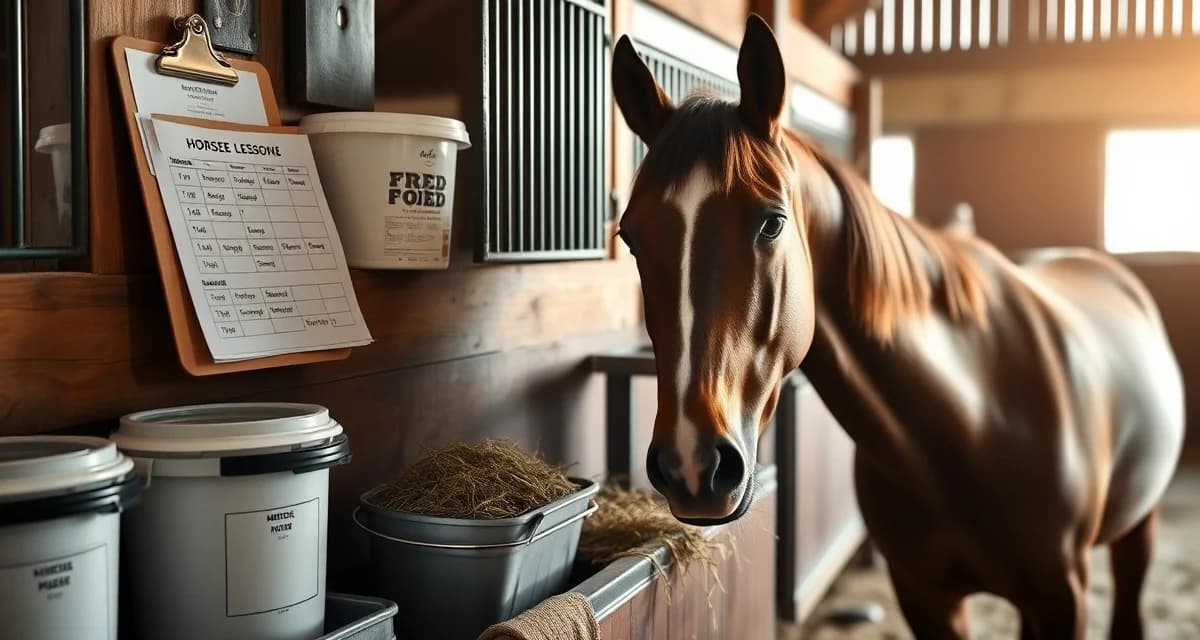
Lesson Horse Feeding Schedule: Balancing Work and Nutrition
Feed errors are the #2 cause of preventable colic according to AAEP 2023 data. For a lesson barn running multiple horses through back-to-back rides, that risk compounds every single day.
TL;DR
- Feed errors are the second leading cause of preventable colic, according to AAEP data
- All rations should be measured by weight, not volume; different feeds have very different densities per scoop
- Any concentrate change must follow a 7-to-14-day transition to reduce colic and GI upset risk
- A feed card is only useful if it is current; updates must push to all staff in real time, not just to a posted board
- Fixed feeding windows within 30 minutes of schedule reduce ulcer risk from irregular gastric acid cycles
- Verbal feed change handoffs are the most common source of dosing errors in multi-staff barns
A lesson horse feeding schedule isn't just about what goes in the bucket. It's about timing, workload, individual horse needs, and making sure every staff member and working student is working from the same information at the same time.
Why Lesson Horses Have Unique Feeding Demands
Lesson horses work harder and more irregularly than most privately owned horses. A single horse might carry a beginner at 9am, a trotting lesson at 11am, and a jumping student at 2pm. That kind of schedule creates real physiological stress if feeding isn't managed around it.
The core challenge is that lesson barns run on people, and people make mistakes when information is scattered across whiteboards, paper feed sheets, and memory.
Step 1: Establish a Pre-Lesson Feeding Window
The 1-Hour Rule
Horses should not work hard within one hour of eating grain. For light walk-trot lessons, 30 minutes may be acceptable, but for anything involving canter work, jumping, or extended trotting, one hour is the minimum.
Build your morning grain feeding around your first lesson slot, not around staff convenience. If lessons start at 8am, grain goes out no later than 6:45am.
Hay Is Different
Free-choice hay or a small hay net before a lesson is generally fine and can actually reduce gastric acid during exercise. Don't pull hay entirely before lessons. Focus your timing restrictions on grain and high-starch feeds.
Step 2: Map Each Horse's Workload to Their Feed Amount
Match Calories to Work
A horse doing six 30-minute lessons per week has different caloric needs than one doing two light trail rides. Most lesson horses are easy keepers who get overfed because staff default to a standard scoop for everyone.
Assign each horse a feed category: light work, moderate work, or heavy work. Review those categories monthly, especially when lesson schedules shift seasonally.
Account for Age and Condition
Older school horses often need senior feed or added fat to maintain weight despite regular work. Young horses in a lesson program may need more protein to support muscle development. A one-size-fits-all approach leads to horses that are either overweight and lethargic or underweight and sour.
Step 3: Build Individual Feed Cards for Every Horse
This is where most barns fall short. A whiteboard with names and bucket counts isn't a feed card. A real feed card includes the horse's name, current weight or body condition score, AM and PM grain amounts, hay allocation, any supplements, feeding restrictions, and the date it was last updated.
When feed cards live on paper or a static spreadsheet, they go stale. Staff work from outdated information, and no one knows it until a horse colics or loses weight.
BarnBeacon generates individual digital feed cards that are visible to all staff on mobile devices and update in real-time. When a vet changes a horse's grain ration after a lameness evaluation, that change appears on every device immediately. No one is feeding last week's instructions. You can explore how structured feeding schedules reduce error rates across multi-horse operations.
Step 4: Set Post-Exercise Feeding Rules
The Cool-Down Window
After moderate to hard work, wait at least 30 minutes before feeding grain. The horse's gut motility is altered during exercise, and feeding too soon increases colic prevention. Water should be available immediately after work, in small amounts if the horse is still hot.
Post-Work Hay
Offering hay after a lesson while the horse cools down is a good practice. It encourages the horse to relax, supports gut health, and keeps them occupied during grooming and untacking.
Step 5: Coordinate Turnout Timing with Feeding
Turnout on lush pasture right after grain feeding creates a compounding sugar load. If your horses have access to spring or fall grass, either turn them out before grain or wait 90 minutes after feeding.
For lesson horses on a tight schedule, this often means adjusting turnout to early morning before the first feeding, or late afternoon after the post-lesson grain has had time to digest.
Track turnout windows alongside feeding times so staff can see the full picture in one place rather than managing two separate systems.
Step 6: Create a System for Feed Changes
The Biggest Operational Risk
Feed changes are where lesson barns lose control. A vet recommends a new supplement. An owner calls in a request. A horse drops weight and the barn manager adjusts the ration. If those changes aren't communicated instantly to every person who touches that horse, someone will feed the old amount.
spreadsheets can't alert staff when a feed change is pending. Manual update systems rely on whoever is in the barn at the right moment seeing the right note. That's not a system. That's luck.
A proper feed change workflow includes a timestamp, who authorized the change, what changed, and confirmation that the update has been seen by feeding staff. For barns also managing medications alongside feed, integrating those records matters too. See how medication tracking can be managed in the same system to reduce the chance of missed doses or conflicts with feed timing.
Common Mistakes in Lesson Horse Feeding
Feeding by the scoop, not by weight. Hay and grain should be measured by weight, not volume. Scoop density varies by feed type and how tightly it's packed.
Ignoring body condition changes. Lesson horses get handled by many people, which means no single person is watching the whole picture. Assign someone to do monthly body condition scoring on every horse.
Skipping the pre-lesson check. Before a horse goes into a lesson, someone should know when it last ate. This is especially important for horses that are stall-kept and fed on a fixed schedule.
Not updating feed cards after vet visits. Post-visit feed adjustments are the most commonly missed update in a busy lesson barn.
FAQ
How do I manage feeding schedules for 30+ horses?
The only way to manage feeding at that scale without errors is a digital system with individual horse profiles. Paper and whiteboards don't scale. You need a platform where each horse has a current feed card, changes are logged with timestamps, and staff can confirm feedings from their phones. Manual systems at that volume guarantee missed updates.
What should a horse feed card include?
A complete feed card includes the horse's name, body condition score or current weight, AM grain amount, PM grain amount, hay allocation per feeding, all supplements with amounts and timing, any feeding restrictions (pre-lesson windows, post-exercise rules), and the date the card was last reviewed. It should also note who authorized the current ration.
How do I handle owner-requested feed changes across a whole barn?
Owner requests need to go through a single point of authorization, typically the barn manager or head trainer, before any change is made. Once approved, the update should push to every staff member immediately. Verbal requests passed through working students or part-time staff are how feed errors happen. Build a written request and approval process, and make sure the updated feed card is visible to everyone feeding that horse before the next meal.
How do I handle feed changes requested by a horse owner?
All feed change requests from owners should be filtered through the barn manager and confirmed with the attending veterinarian if the change is clinically significant. Document the request, the authorization, and the effective date before anything changes in the feed room. A verbal request from an owner to a staff member that bypasses the manager is the most common path to a feeding error.
What is the safest way to introduce a new feed at my barn?
Transition over a minimum of seven days, starting with 25% new feed mixed with 75% old feed and shifting the ratio every two to three days. Document the transition schedule on each affected horse's feed card so every feeder knows the correct ratio on each day of the transition. Mark each day complete to track progress and catch any horse that goes off feed during the change.
How should I store feed to prevent spoilage and contamination?
Store bulk feed in sealed, rodent-proof containers in a dry, ventilated space. Keep feed off the ground and away from direct sunlight. Most commercial horse feeds have a 90-day shelf life once opened; label bags or containers with the opening date and rotate stock so older product is used first. Contaminated or spoiled feed should be disposed of immediately, never fed.
What is Lesson Horse Feeding Schedule: Balancing Work and Nutrition?
A lesson horse feeding schedule is a structured plan that coordinates what, when, and how much each lesson horse is fed based on their individual workload, weight, and health needs. Unlike privately owned horses, lesson horses work irregular hours with multiple riders daily, making consistent timing and accurate ration management critical. Key elements include weight-based measuring, 7-14 day feed transitions, fixed feeding windows within 30 minutes of schedule, and real-time communication tools that keep all staff working from the same current feed information to reduce colic and ulcer risk.
How much does Lesson Horse Feeding Schedule: Balancing Work and Nutrition cost?
Implementing a lesson horse feeding schedule itself has no direct cost — it is a management practice, not a product. However, tools that support accurate scheduling, such as barn management software with digital feed cards and staff notifications, typically range from free basic plans to $50-$150 per month depending on barn size and features. The real cost consideration is the risk of not having a system: feed errors are the second leading cause of preventable colic, and veterinary colic treatment can easily run $500-$10,000 or more per incident.
Sources
- American Association of Equine Practitioners (AAEP)
- American Competitive Trail Horse Association (ACTHA)
- American Horse Council
- Kentucky Equine Research
- UC Davis Center for Equine Health
Get Started with BarnBeacon
A feeding system is only as reliable as its documentation. BarnBeacon gives lesson barns individual digital feed cards that update in real time, push alerts when rations change, and log every feeding with a timestamp and staff name. If feed errors are part of your current risk picture, start a free trial and build your first grain feeding schedule in a system built to close the information gap.