Horse Feeding Management by Type: Leisure, Performance, Senior, Metabolic
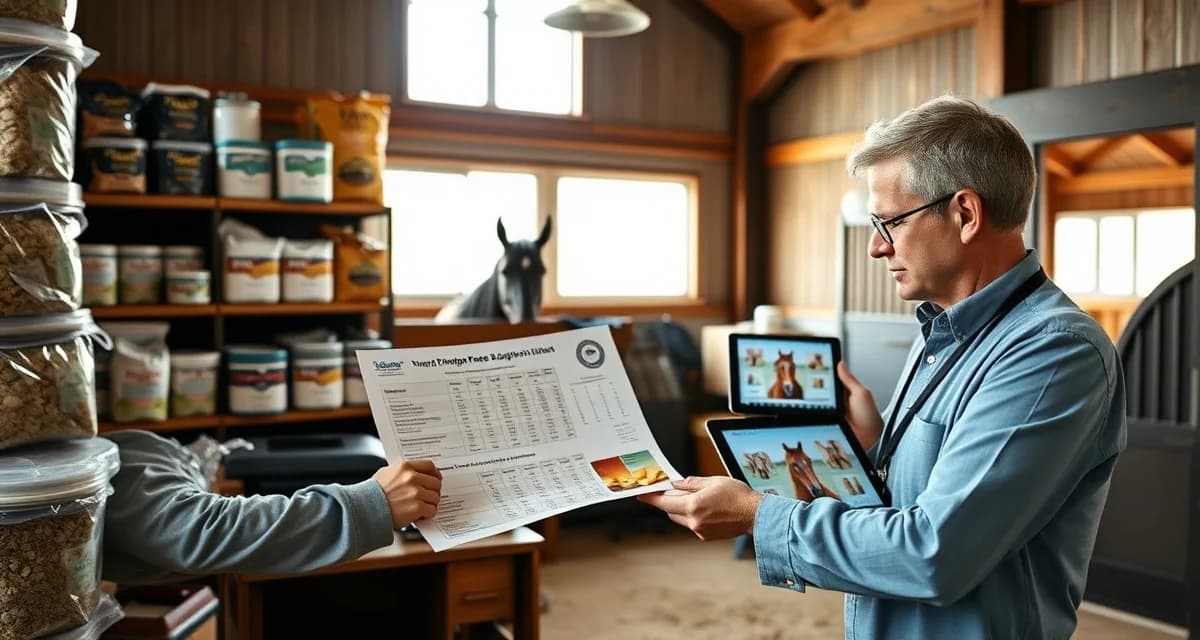
Walk into the feed room of a well-run 40-horse barn and you'll see exactly why feeding management is one of the hardest things to do consistently.
TL;DR
- Effective feeding management by horse type at equine facilities relies on consistent written protocols accessible to all staff.
- Digital records reduce errors and create the documentation needed during emergencies, audits, and client disputes.
- Owner visibility into their horse's daily care reduces communication friction and improves retention.
- Centralizing billing, health records, and scheduling in one platform outperforms managing separate tools.
- Staff adoption of digital tools improves when interfaces are mobile-friendly and task-based.
- BarnBeacon supports all core barn management functions from a single platform built for equine facilities.
Stall 1: hay only, no grain, needs to stay at BCS 5 or she'll founder again. Stall 2: 6 quarts of performance grain twice daily, oil added at PM feeding, soaked hay net in the morning. Stall 3: senior feed soaked for 20 minutes, beet pulp added in winter, pergolide hidden in the bottom scoop. Stall 4: competing Saturday, no grain today, just hay and electrolytes in water.
Four horses. Four completely different protocols. And at 6am when a working student who's been here three weeks is doing morning feeding, the margin for error is higher than you want it to be.
This guide covers how to build and manage feeding systems for each major horse type you're likely to have in your barn.
Leisure Horses: Simple Protocols, Still Worth Documenting
Leisure horses, older adults in light trail work, semi-retired horses, horses in pasture board, typically have the simplest feeding needs. Good quality hay, maybe a ration balancer or mineral, fresh water.
But "simple" doesn't mean undocumented.
Why leisure horses still need written protocols:
Even a hay-only horse has specifics. How much hay? What quality, grass, mixed, alfalfa? Does she get it in a slow feeder or loose? Does she have access to a salt block? Does she share her paddock with others?
When your regular person is away and someone else is doing feeding, "she just gets hay" leaves too much room for interpretation. How much hay is "some hay"? A flake? Three flakes? Half a bale?
What a leisure horse protocol in BarnBeacon looks like:
- AM: 1 flake (approx 6 lbs) timothy grass hay, check and fill water bucket
- PM: 1 flake timothy grass hay, add 1 oz loose mineral supplement mixed in small amount of water
- Hay net: yes (she eats too fast without it)
- No grain
- Note: does not share paddock, keep gate latched
That's 60 seconds to enter and zero ambiguity for anyone who covers.
Recreational Performance Horses: Managing Energy and Recovery
Horses in regular riding programs, lessons, weekend trail, light competition, need more than hay but not the intensity of a full performance nutrition program.
The core challenge: Energy balance. These horses need enough calories to support their work without getting fat, and the right type of calories, fiber and fat rather than excessive starch and sugar.
Typical protocol elements:
- Forage base: free-choice or measured hay (grass or mixed)
- Moderate grain or complete feed: 2–4 lbs per day depending on workload
- Joint supplement: appropriate for age and work level
- Electrolyte top-dress on heavy work days
Where feeding management matters:
These horses' feed needs vary by workload. A lesson horse working 5 days a week in summer needs more calories than the same horse on light work in winter. BarnBeacon's seasonal protocol feature lets you set a summer protocol and a winter protocol, switching between them as workload changes.
Lesson program feeding complexity:
In a 15-horse lesson program, you might have 8 horses on different amounts of the same grain, 3 on different grain types, and 4 on hay only. The substitute person filling in during your vacation needs to know exactly what goes in each bucket. Feed room labels help. BarnBeacon protocols on mobile help more.
Performance Horses: High-Stakes Precision Feeding
A performance horse, show jumper, dressage horse, barrel racer, eventer, reiner, is a high-output athlete whose feeding directly affects their performance, health, and competition eligibility.
The precision requirements:
Performance horse feeding isn't just about how much, it's about when, in what form, and sometimes what to withhold.
Common performance horse feeding complexity:
- Multiple grain feeds per day (often 3x for horses in heavy work)
- Specific hay types and amounts timed around training
- Oil supplementation (1–2 cups daily for energy and coat)
- Targeted supplements: electrolytes, joint support, gastric support, hoof supplements
- Pre-competition protocol changes: some horses are pulled from grain the day before a show, others get specific preparation feeds
The competition medication interaction:
Performance horses competing under USEF, FEI, or other sanctioning bodies need their feeding protocols carefully tracked alongside their medication records. Some supplements contain substances that fall under prohibited substance rules. Feeding something "natural" that triggers a positive test is still a violation. BarnBeacon's show prep mode links feeding and medication records for competition review.
Managing multiple performance horses:
A show barn with 15 performance horses might have 15 different feeding protocols. The challenge is making sure every one of those protocols is executed correctly, every day, by whoever is feeding.
BarnBeacon handles this by showing the feeding person a per-horse view when they're working the stalls. Instead of memorizing 15 protocols, they tap the horse's name and see exactly what goes in the bucket. Any deviations, horse refused grain, bucket wasn't cleaned, extra hay added, are logged with a note.
Senior Horses: Complex Protocols, Non-Negotiable Consistency
Senior horses (typically 18+, though every horse is different) are often the most complex feeding cases in a boarding barn.
What makes senior feeding different:
Dentition. Senior horses have less tooth surface remaining and may not be able to chew long-stem hay effectively. Quidding, dropping wet balls of partially chewed hay, is the classic sign. Some seniors need soaked hay cubes or pellets instead of (or in addition to) loose hay. Some need a complete senior feed as their primary roughage source.
Metabolic disease. Many seniors have PPID (Cushing's) or EMS (Equine Metabolic Syndrome), both of which require low-sugar, low-starch diets. The 26-year-old with both conditions can't have alfalfa, can't have sweet feed, and needs her grass hay tested for NSC if possible.
Medication hidden in feed. Pergolide for PPID, thyroid supplements, NSAIDs for arthritis, these medications often go in the feed. The specific method matters: pergolide can be detected by some horses if it's too prominent in the feed and they'll refuse it. Your protocol needs to specify exactly how to hide it.
Weight maintenance. Senior horses lose weight more easily than younger horses and often need significantly more calories to maintain condition. Feeds like rice bran, beet pulp, and fat-supplemented senior feeds add calories without the sugar/starch load.
What a senior horse feeding protocol in BarnBeacon looks like:
For a 24-year-old PPID mare in moderate body condition:
AM Feeding:
- 1 scoop (2 lbs) senior pelleted feed, soaked 20 minutes in warm water
- 1 cup soaked beet pulp (soak overnight, already in feed room bucket)
- 1 pergolide tablet crushed and mixed in the bottom of the feed bowl, put the feed ON TOP so she eats through it
- Half scoop ration balancer
- 1 flake soaked timothy/orchard mix hay (soak in hay net for 30 min before)
- Fill large water bucket (she drinks more than average, check twice daily)
PM Feeding:
- 1 scoop senior feed soaked as above
- 1 flake soaked hay
- Add joint supplement powder to feed
- Note: if she hasn't cleaned up her PM hay by night check, note it, she normally finishes everything
That's a complex protocol. If whoever feeds her Saturday morning doesn't have this in front of them, something gets missed.
Metabolic Horses: Low-Sugar Management as a Medical Requirement
Horses with Equine Metabolic Syndrome (EMS) or active laminitis management aren't just on a diet, they're on a medical protocol. Getting the feeding wrong can literally cause a laminitis flare.
What metabolic feeding management requires:
Hay testing and analysis. Metabolic horses ideally eat hay with NSC under 10–12%. If your hay isn't tested, soaking it for 30–60 minutes in cold water (or 15 minutes in hot water) removes some of the soluble sugars. This needs to be part of the protocol, not an afterthought.
No access to fresh grass. Pasture grass, especially in spring flush and after frost, is extremely high in simple sugars. Metabolic horses may need to be on a dry lot 24/7 or limited to very short, controlled grazing at low-risk times.
No grain or sweet feed. Not a small amount. Zero. These horses can have a laminitis flare from a single miscalculated grain feeding by a substitute staff member.
Specific permitted feeds. Unmolassed beet pulp (rinsed and soaked), low-NSC hay, ration balancer for metabolic horses, salt.
BarnBeacon for metabolic horses:
The metabolic feeding protocol needs the strongest language in any feed protocol: "NO GRAIN EVER." BarnBeacon allows you to add bold warning notes to a horse's feeding protocol and to the horse's profile overview. When a new or substitute staff member opens this horse's record, the first thing they see is the dietary restriction.
Multi-Type Barns: Managing the Complexity
Most boarding barns have all of these horse types under one roof. The organizational challenge is ensuring that the complexity doesn't lead to errors.
Practical strategies:
Color-coded feed buckets. Each horse has their own labeled bucket. Supplement bags are stored in labeled bins or boxes per horse in the feed room. Reduces the chance of anyone mixing up what goes where.
Morning vs. evening protocols clearly separated. In BarnBeacon, AM and PM feeding protocols are separate entries. Staff see only what's relevant to their shift.
Exception notes front and center. Any horse with a critical dietary restriction (metabolic, founder history, competition medication window) has a visible flag in BarnBeacon so whoever feeds them sees it before they open the protocol.
Weekly protocol review. Feeding protocols change, horses gain or lose weight, medications change, show schedules change. A weekly 10-minute review of all active protocols catches outdated entries before they become errors.
Related Articles
- Horse Feeding Management at Boarding Facilities: Complete Guide
- Horse Feeding Management at Breeding Facilities: Complete Guide
- Horse Feeding Management at Layup Facilities: Complete Guide
- Horse Feeding Management at Lesson Facilities: Complete Guide
FAQ
How do I manage feeding for horses with very different dietary needs?
The key is one source of truth. Whether you use laminated stall cards or BarnBeacon's digital protocols, every horse needs a written, up-to-date record that shows exactly what they get, when, and how it's prepared. The more different your horses' needs are, the more important it is that protocols are specific, visible, and updated immediately when anything changes.
Does BarnBeacon allow different feeding protocols for metabolic versus performance horses?
Yes. Each horse in BarnBeacon has its own feeding protocol with unlimited customization, feed type, amounts, timing, preparation instructions, and notes. You can include critical restriction warnings (like "NO GRAIN, metabolic horse, laminitis risk") that appear prominently when any staff member opens that horse's record. AM and PM protocols are separate, and any changes sync to all staff devices immediately.
What feeding features does BarnBeacon have for horses with special dietary needs?
BarnBeacon's feeding module supports per-horse recipes with preparation instructions, critical warning notes, visual flags for dietary restrictions, shift-specific protocol views, and logging of any deviation from the protocol (refused feed, preparation change, missed feeding). For metabolic and senior horses, the combination of protocol documentation and deviation logging creates a record that's valuable both for daily management and for veterinary review when health changes occur.
What is the most common mistake barn managers make with record-keeping?
The most common record-keeping mistake is logging health events, billing items, and care tasks after the fact from memory rather than at the time they occur. Delayed logging introduces errors, omissions, and disputes that are difficult to resolve because the original record does not exist. Moving to real-time digital logging, from any device, is the single most impactful record-keeping improvement available to most facilities.
How does barn management software save time at a multi-horse facility?
The largest time savings come from eliminating manual tasks that recur at high frequency: sending owner updates, generating monthly invoices, tracking care task completion across shifts, and scheduling recurring appointments. At a facility with 25 or more horses, these tasks can consume several hours per day when done manually. Automating the routine layer returns that time without reducing quality of communication or care.
What is Horse Feeding Management by Type: Leisure, Performance, Senior, Metabolic?
Horse feeding management by type refers to the practice of creating individualized nutrition protocols for each horse based on their workload and health status. Leisure horses often need forage-only diets to maintain healthy body condition. Performance horses require calorie-dense grain programs timed around training. Senior horses may need soaked feeds and supplements for easier digestion. Metabolic horses require strict low-sugar, low-starch diets to prevent conditions like laminitis. Managing these differences consistently across a full barn requires clear written protocols and reliable record-keeping systems.
How much does Horse Feeding Management by Type: Leisure, Performance, Senior, Metabolic cost?
Horse feeding management by type is not a product or service with a price tag — it is an operational practice every barn already performs. The real cost question is how much time and risk come with managing it manually versus digitally. Errors in feeding protocols can result in costly veterinary bills, client disputes, or horse health crises. Platforms like BarnBeacon centralize feeding records, instructions, and staff task management to reduce those risks without requiring multiple separate tools.
How does Horse Feeding Management by Type: Leisure, Performance, Senior, Metabolic work?
Effective feeding management by horse type works by documenting each horse's protocol in a centralized system and making those instructions accessible to every staff member at feeding time. A working student, barn manager, or emergency fill-in should be able to pull up stall-by-stall instructions without guessing. Digital platforms allow barns to log what was fed, flag deviations, and share updates with owners in real time. This creates accountability across shifts and reduces the risk of costly mistakes when personnel change.
Sources
- American Horse Council, equine industry economic impact and facility operations research
- American Association of Equine Practitioners (AAEP), equine health care and management guidelines
- University of Kentucky Equine Initiative, equine business management and industry resources
- Rutgers Equine Science Center, equine management research and extension publications
- The Horse magazine, published by Equine Network, equine facility management reporting
Get Started with BarnBeacon
BarnBeacon brings billing, health records, owner communication, and daily operations into one platform built for equine facilities, so the time you spend on administration goes back to the horses. Start a free 30-day trial with full access to every feature, or schedule a demo to see how it handles your specific facility type.