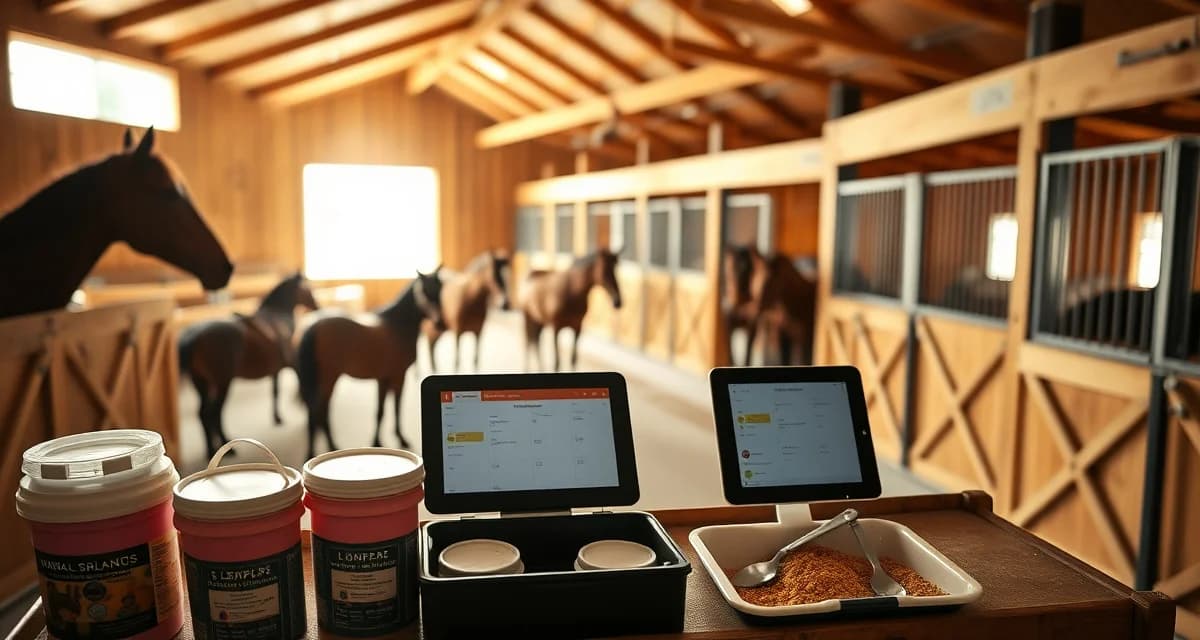
Feeding Schedule for 50 Horses: Barn Manager Workflow
Feed errors are the second leading cause of preventable colic, according to AAEP 2023 data. At 50 horses, the margin for error is thin and the consequences of a missed diet change or a misfed supplement are real. Building a feeding schedule for 50 horses isn't just about knowing what each horse eats. It's about making that information available to every staff member, every shift, without relying on memory or a whiteboard that gets wiped.
TL;DR
- Feed errors are the second leading cause of preventable colic, according to AAEP data
- All rations should be measured by weight, not volume; different feeds have very different densities per scoop
- Any concentrate change must follow a 7-to-14-day transition to reduce colic and GI upset risk
- A feed card is only useful if it is current; updates must push to all staff in real time, not just to a posted board
- Fixed feeding windows within 30 minutes of schedule reduce ulcer risk from irregular gastric acid cycles
- Verbal feed change handoffs are the most common source of dosing errors in multi-staff barns
This guide walks through the exact workflow to build, assign, and maintain a large barn feeding operation.
Why 50 Horses Is the Breaking Point for Manual Systems
At 10 or 15 horses, a printed sheet works. At 50, it breaks down fast. Horses have different owners, different vets, different dietary restrictions, and diets that change week to week based on health, training load, or competition schedules.
Spreadsheets can't push an alert when a feed change is pending. Paper cards get wet, lost, or ignored. Staff turnover means institutional knowledge walks out the door. The system has to carry the information, not the people.
Step 1: Audit Every Horse's Current Diet
Start with a full inventory
Before you build any schedule, you need a complete picture of what every horse is currently eating. Pull vet records, owner instructions, and any existing feed sheets. Flag horses on restricted diets, horses with allergies, and horses receiving supplements or medications.
At 50 horses, you'll likely find inconsistencies. Some horses will have outdated instructions on file. Some will have verbal agreements with owners that were never documented. This audit is where you catch those gaps before they become incidents.
Categorize by feeding complexity
Group horses into tiers: standard hay-only, hay plus grain, hay plus grain plus supplements, and medicated or restricted. This tells you where to concentrate staff attention and where errors are most likely to occur. Horses in the medicated or restricted tier need the most verification at every feeding.
Step 2: Build Individual Feed Cards for Every Horse
What goes on a feed card
A feed card is the single source of truth for each horse's diet. It should include the horse's name and stall number, morning and evening rations (hay weight, grain type, grain amount), all supplements with exact doses and timing, any medications with administration notes, water and salt requirements, and the date the card was last updated.
For a deeper look at what a complete feed card structure looks like, see our guide to feeding schedules.
Make cards digital and mobile-accessible
A printed card in a stall pocket is better than nothing. A digital card that updates in real-time and is visible on every staff member's phone is significantly better. BarnBeacon generates individual feed cards for each horse that are accessible on mobile and update the moment a change is made. When a vet calls in a diet modification at 7 a.m., every person feeding that morning sees the updated card before they reach the stall.
This is the core problem with tools that require manual updates: the lag between when a change is made and when it reaches the person holding the feed scoop is where errors happen.
Step 3: Assign Staff Feeding Zones
Divide the barn into feeding sections
At 50 horses, one person cannot feed the entire barn in a reasonable window. Divide stalls into sections of 10 to 15 horses and assign a primary feeder and a backup to each section. Document these assignments in writing, not just verbally.
Each feeder should be responsible for verifying their section's feed cards at the start of every shift, not just following memory from the previous day. Diets change. The verification step is non-negotiable.
Build a handoff protocol
When shifts change, the outgoing feeder should flag any horses that didn't finish their feed, any new instructions received, and any behavioral observations. A five-minute verbal handoff is fine, but it needs to be backed by a written or digital log. Large barn horse feeding management fails most often at shift transitions, not during the feeding itself.
Step 4: Create a Diet Change Workflow
Standardize how changes get submitted
Every diet change, whether it comes from a vet, an owner, or a trainer, should go through one intake point. That might be a barn manager email address, a form in your barn management software, or a direct message channel. The key is that changes don't get made by whoever happens to be standing in the barn when the owner calls.
Establish a rule: no feed change takes effect until it's documented and confirmed by the barn manager or a designated deputy.
Push changes to all relevant staff immediately
Once a change is approved, it needs to reach every person who feeds that horse. If you're managing this through a platform like BarnBeacon, the updated feed card is visible instantly across all devices. If you're using a spreadsheet or paper system, you need a manual notification process, which means someone has to remember to do it. That's a single point of failure at scale.
For horses also receiving medications, feed changes often interact with dosing schedules. Keep your medication tracking system linked to your feed records so changes in one are reflected in the other.
Step 5: Run a Daily Verification Check
Use a completion log, not just a feeding log
There's a difference between recording that a horse was fed and confirming that the correct ration was given. Build a completion log that requires feeders to check off each item on the feed card, not just mark the horse as done.
At 50 horses, a barn manager can't watch every feeding. The log is your audit trail. If a horse colics and the vet asks what changed in the last 48 hours, you need to be able to answer that question in under two minutes.
Review flagged horses daily
Any horse that didn't finish feed, received a new supplement, or had a diet change in the last 72 hours should be on a daily review list. This takes five minutes at morning check-in and catches problems before they escalate.
Common Mistakes in Large Barn Feeding Management
Relying on verbal communication for diet changes. At 50 horses, verbal instructions don't scale. They get misheard, forgotten, or passed on incorrectly.
Using one feed sheet for the whole barn. A single document that lists all 50 horses is hard to use at the stall. Individual feed cards, whether physical or digital, reduce the chance of a feeder misreading a row.
Not dating feed cards. If a card doesn't show when it was last updated, staff have no way to know if it's current. Every card should show a last-modified date.
Skipping the completion log on busy days. The days when the barn is most chaotic are exactly when the log matters most. Make it a non-negotiable part of the feeding routine, not an optional add-on.
Treating all horses as equal feeding risk. Horses on restricted diets, post-surgical horses, and horses with metabolic conditions need a higher level of verification. Flag them clearly in your system.
How do I manage feeding schedules for 30+ horses?
The same principles apply at 30 as at 50: individual feed cards, zone-based staff assignments, and a documented change workflow. The main difference is that at 30 horses you may be able to manage with a simpler tool, but you still need a system that doesn't rely on memory or verbal communication. Digital feed cards that update in real-time are the most reliable option at any scale above 20 horses.
What should a horse feed card include?
A complete feed card should include the horse's name, stall number, morning and evening hay rations (by weight), grain type and amount, all supplements with exact doses and timing, any medications with administration notes, dietary restrictions or allergies, and the date the card was last updated. If the horse is on a vet-prescribed diet, include the vet's name and the date the prescription was issued.
How do I handle owner-requested feed changes across a whole barn?
Route all owner requests through a single intake point, whether that's a barn manager email, a software form, or a designated communication channel. No change goes into effect until it's reviewed and approved by the barn manager and documented in the horse's feed record. Once approved, the update should reach all feeders immediately, either through an automatic push notification in your barn management software or a manual notification process with a confirmation step. Never rely on the owner to communicate the change directly to feeding staff.
How do I handle feed changes requested by a horse owner?
All feed change requests from owners should be filtered through the barn manager and confirmed with the attending veterinarian if the change is clinically significant. Document the request, the authorization, and the effective date before anything changes in the feed room. A verbal request from an owner to a staff member that bypasses the manager is the most common path to a feeding error.
What is the safest way to introduce a new feed at my barn?
Transition over a minimum of seven days, starting with 25% new feed mixed with 75% old feed and shifting the ratio every two to three days. Document the transition schedule on each affected horse's feed card so every feeder knows the correct ratio on each day of the transition. Mark each day complete to track progress and catch any horse that goes off feed during the change.
How should I store feed to prevent spoilage and contamination?
Store bulk feed in sealed, rodent-proof containers in a dry, ventilated space. Keep feed off the ground and away from direct sunlight. Most commercial horse feeds have a 90-day shelf life once opened; label bags or containers with the opening date and rotate stock so older product is used first. Contaminated or spoiled feed should be disposed of immediately, never fed.
FAQ
What is Feeding Schedule for 50 Horses: Barn Manager Workflow?
A feeding schedule for 50 horses is a structured barn management system that documents every horse's ration, supplement, and timing requirements and makes that information accessible to all staff across every shift. Unlike a simple printed sheet, a proper large-barn feeding workflow includes weight-based measurements, transition protocols for diet changes, and real-time update mechanisms so no staff member is working from outdated information. It eliminates reliance on memory or verbal handoffs, which are the most common sources of dosing errors in multi-staff operations.
How much does Feeding Schedule for 50 Horses: Barn Manager Workflow cost?
A feeding schedule workflow for 50 horses is not a product with a price tag — it is a set of operational practices and documentation systems your barn adopts. If you implement it manually using feed cards and spreadsheets, the cost is staff time. If you use barn management software to automate feed card distribution and real-time updates, costs vary by platform. Either way, the cost of not having a reliable system — emergency vet calls, colic treatment, and horse downtime — far exceeds any software subscription.
How does Feeding Schedule for 50 Horses: Barn Manager Workflow work?
The workflow starts by creating an individual feed card for each horse that specifies hay type and weight, concentrate type and weight, and all supplements with exact doses. Feeding windows are set within 30-minute fixed intervals to support gastric health. Any diet change follows a 7-to-14-day transition protocol. Feed cards are distributed to all staff in real time, not posted on a single whiteboard. Each feeding shift is logged so managers can verify completion and catch missed feedings before they become health incidents.
What are the benefits of Feeding Schedule for 50 Horses: Barn Manager Workflow?
The core benefit is error reduction at scale. With 50 horses and multiple staff shifts, the risk of a missed supplement, an incorrect ration, or a skipped diet transition is high. A structured feeding workflow closes those gaps by standardizing measurements by weight rather than volume, enforcing feed change transition timelines, and ensuring every staff member has the same current information. The downstream benefits include lower colic incidence, better body condition consistency across the herd, reduced staff confusion, and a clear audit trail if a health issue arises.
Who needs Feeding Schedule for 50 Horses: Barn Manager Workflow?
Any barn operating with 20 or more horses and more than one staff member handling feeding is a candidate. At 50 horses, the need becomes critical. This includes boarding barns with horses on individualized diets, training facilities managing horses in different work phases, breeding operations with mares and foals on specialized nutrition plans, and large private farms with multiple caretakers. If feed information is currently living on a whiteboard, in someone's memory, or in a notebook only one person reads, a structured workflow is overdue.
How long does Feeding Schedule for 50 Horses: Barn Manager Workflow take?
Building the initial workflow — inventorying each horse's diet, creating weight-based feed cards, and setting feeding windows — typically takes one to two days for a barn of 50 horses. Staff training on the system adds another half day. The ongoing time cost is minimal once the system is running: feed card updates should be immediate when a vet or nutritionist changes a diet, and shift logs take minutes per feeding. The upfront investment is modest relative to the hours lost responding to preventable health events.
What should I look for when choosing Feeding Schedule for 50 Horses: Barn Manager Workflow?
Look for a system that supports weight-based measurements, not volume-based scoops, since feed density varies significantly. It should allow real-time updates to feed cards so all staff see changes immediately without relying on a physical board. Transition protocols for concentrate changes should be trackable. Shift logging should be simple enough that staff actually use it. If evaluating software, prioritize mobile accessibility so staff can reference feed cards in the barn, not just at a desk. Integration with vet and nutritionist records is a meaningful bonus.
Is Feeding Schedule for 50 Horses: Barn Manager Workflow worth it?
Yes. Feed errors are the second leading cause of preventable colic according to AAEP 2023 data, and at 50 horses the probability of an error under a manual or informal system is not theoretical — it is routine. A single colic case requiring veterinary intervention typically costs more than a year of barn management software. Beyond economics, a reliable feeding workflow protects horse welfare, reduces staff stress around handoffs, and gives barn managers confidence that the operation runs correctly even when they are not present for every shift.
Sources
- American Association of Equine Practitioners (AAEP)
- American Competitive Trail Horse Association (ACTHA)
- American Horse Council
- Kentucky Equine Research
- UC Davis Center for Equine Health
Get Started with BarnBeacon
A feeding system is only as reliable as its documentation. BarnBeacon gives equine facilities individual digital feed cards that update in real time, push alerts when rations change, and log every feeding with a timestamp and staff name. If feed errors are part of your current risk picture, start a free trial and build your first grain feeding schedule in a system built to close the information gap.