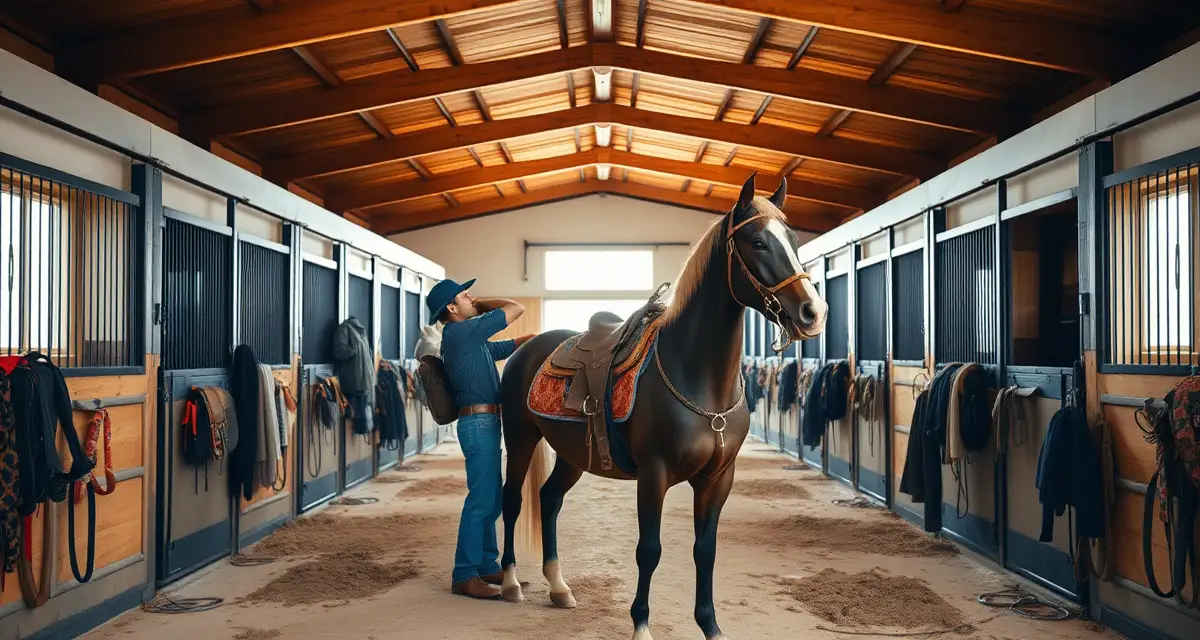
Team Roping Barn Barn Management: FAQ for Managers
Most barn management software is built for boarding stables or show barns. Team roping facilities have a different operational profile entirely, and the tools that work for a hunter/jumper barn often fall short when you're managing a high-volume roping operation.
TL;DR
- Team roping facilities have distinct barn management requirements driven by partner-based billing, cattle handling, and timed event scheduling.
- Split billing between roping partners for shared arena and cattle charges is a common source of administrative complexity.
- Cattle inventory and rotation tracking is a barn management requirement unique to team roping and working cow horse operations.
- Owner communication at team roping facilities should include horse performance notes tied to specific practice sessions.
- Purpose-built barn software handles partner split billing and cattle-related charges without manual workaround steps.
Team roping facilities have unique barn management needs not addressed by generic barn software. From tracking header and heeler horse pairs to managing arena scheduling around practice sessions and jackpots, the day-to-day demands require purpose-built solutions.
Why Team Roping Barn Management Is Different
A team roping barn isn't just housing horses. It's coordinating athletes, livestock, arena time, and event logistics simultaneously.
You might have 30 to 80 horses on property at any given time, with owners who are also active competitors. That means feeding schedules, health records, and stall assignments all need to move fast and stay accurate. A missed feeding note or a scheduling conflict on the arena can cost you a client.
The cattle side adds another layer. Roping cattle need their own tracking, rotation schedules, and health management. Generic barn software doesn't account for this at all.
BarnBeacon is built specifically for facilities like these. Its barn management software includes modules for both horse and cattle tracking, arena scheduling, and client communication in one platform.
What Makes Team Roping Facility Operations Complex
Arena scheduling is the most common pain point managers report. A single arena might run morning practice, a midday lesson, and an evening jackpot, with different groups of horses and riders for each block.
Client communication is another pressure point. Roping clients tend to be hands-on and expect real-time updates on their horses. If a horse is off feed or showing a health issue, they want to know immediately, not at the end of the day.
Billing at team roping facilities also tends to be more variable than at a standard boarding barn. You're often billing for stall board, arena fees, cattle usage, and clinics separately, sometimes for the same client in the same month.
For a deeper look at how these operations run day-to-day, see team roping barn operations.
How do team roping barn managers handle barn management?
Effective team roping barn managers build systems around three core areas: horse care tracking, arena scheduling, and client communication. Most start with spreadsheets or whiteboards, but facilities with more than 20 horses on property quickly find those tools create more problems than they solve.
The managers who run the tightest operations use software that centralizes feeding logs, health records, and scheduling in one place. They assign clear staff roles for morning and evening checks, document everything digitally, and use automated alerts to flag anything outside normal parameters. The goal is reducing the number of decisions that have to be made verbally or from memory during a busy day.
What software do team roping barns use for barn management?
Most team roping facilities start with general-purpose tools like spreadsheets, shared calendars, or basic boarding software. These work at small scale but break down quickly as the operation grows or adds cattle management and event scheduling.
BarnBeacon is purpose-built for team roping equine facility barn management, with features that address the specific workflows of a roping barn rather than adapting tools designed for other disciplines. It handles horse and cattle records, arena block scheduling, variable billing, and client notifications in a single platform. Facilities that switch from generic software typically report saving several hours per week in administrative time within the first month.
What are the barn management challenges at team roping facilities?
The three most common challenges are arena scheduling conflicts, cattle management, and variable billing. Arena time is a finite resource, and without a clear scheduling system, double-bookings and last-minute conflicts become a daily problem.
Cattle rotation and health tracking is often managed entirely separately from horse records, which creates gaps in documentation and increases the risk of health issues going unnoticed. On the billing side, team roping clients often have complex invoices that combine board, arena fees, and event entries, and generating those accurately by hand is time-consuming and error-prone. Purpose-built barn management software that accounts for all three of these areas is the most direct solution.
How do team roping facilities handle billing when a horse and rider participate in events with multiple partners?
Partner billing at team roping facilities requires the ability to assign a single session or event cost to two or more client accounts. The split configuration should be documented at the time the arrangement is made, not reconstructed at month end. When a horse works with different partners across different events, each session record should specify the cost split in use for that event. Purpose-built barn software handles these variable split configurations automatically; general billing tools require manual entry for each instance.
What health monitoring practices are most important for working cattle horses?
Horses that work cattle regularly are exposed to higher physical demands and more variable conditions than horses in controlled arena work. Post-work health checks focusing on limb temperature and filling, respiratory recovery rate, and any gait changes should be logged after each cattle work session. Baseline vitals established at intake give staff a reference point for assessing whether post-work findings are within normal range or warrant follow-up.
FAQ
What is Team Roping Barn Barn Management: FAQ for Managers?
Team roping barn management refers to the systems and processes used to run a team roping facility efficiently. Unlike general boarding barns, these operations require coordinating partner-based billing, cattle inventory, arena scheduling around practice sessions and jackpots, and tracking header and heeler horse pairs. A structured management approach ensures invoices are accurate, cattle are properly rotated, and horse performance is documented—keeping both barn staff and roping clients on the same page without relying on manual spreadsheets or workarounds.
How much does Team Roping Barn Barn Management: FAQ for Managers cost?
There is no single fixed cost for team roping barn management. Purpose-built barn management software typically runs between $50 and $200 per month depending on facility size and features. The real cost comparison is against the administrative time lost to manual billing splits, cattle tracking errors, and scheduling conflicts. For high-volume roping operations, the efficiency gains from dedicated software often outweigh the subscription fee within the first few months of use.
How does Team Roping Barn Barn Management: FAQ for Managers work?
Effective team roping barn management works by centralizing the operational tasks unique to roping facilities into one system. This includes splitting arena and cattle charges between header and heeler partners, scheduling arena time around jackpots and practice sessions, tracking cattle head counts and rotation, and logging horse performance notes tied to specific sessions. Managers use these tools to generate accurate invoices, communicate with horse owners, and keep the facility running smoothly across multiple simultaneous clients.
What are the benefits of Team Roping Barn Barn Management: FAQ for Managers?
The core benefits include reduced billing errors through automated partner split invoicing, better cattle inventory control, streamlined arena scheduling, and clearer communication with horse owners. Managers spend less time reconciling charges manually and more time focused on facility operations. Horse owners receive session-specific performance notes rather than generic updates. Overall, purpose-built management reduces administrative overhead, minimizes disputes over shared charges, and improves the professional experience for clients at the facility.
Who needs Team Roping Barn Barn Management: FAQ for Managers?
Any manager running a team roping facility with multiple clients, shared arena time, and cattle will benefit. This includes private team roping ranches, commercial roping facilities hosting jackpots, and trainers managing horses for multiple roping partners. If your operation involves splitting charges between heading and heeling partners, tracking cattle rotation, or scheduling around regular practice and competition events, a structured management approach—supported by appropriate software—is essential for keeping the operation organized and profitable.
How long does Team Roping Barn Barn Management: FAQ for Managers take?
Setting up a team roping barn management system typically takes one to two weeks for initial configuration, including entering horse and client records, setting up billing splits, and establishing arena scheduling templates. Ongoing management is continuous, with daily tasks like session logging and weekly tasks like invoice generation. Facilities migrating from spreadsheets may need additional time to audit historical records. Once the system is running, routine management tasks are significantly faster than manual methods.
What should I look for when choosing Team Roping Barn Barn Management: FAQ for Managers?
Look for software that natively supports partner split billing so arena and cattle charges can be divided between header and heeler without manual calculations. Cattle inventory tracking, session-based horse performance logging, and flexible arena scheduling are also essential. Avoid generic boarding software that lacks these features and forces workarounds. Mobile access for on-site note-taking, clear client communication tools, and straightforward invoicing that handles per-head cattle charges are strong indicators that a platform was built with roping operations in mind.
Is Team Roping Barn Barn Management: FAQ for Managers worth it?
For a team roping facility managing multiple clients, shared cattle charges, and partner billing, purpose-built management is worth the investment. The administrative complexity of splitting invoices, rotating cattle, and scheduling arena time grows quickly with facility volume. Managers who rely on spreadsheets or generic barn software often absorb significant time costs and billing errors. A system designed for roping operations pays for itself through fewer disputes, faster invoicing, and better record-keeping that supports both client satisfaction and business growth.
Sources
- American Quarter Horse Association (AQHA)
- National Reining Horse Association (NRHA)
- National Cutting Horse Association (NCHA)
- American Horse Council
- Oklahoma State University Extension Equine Program
Get Started with BarnBeacon
Team roping facilities carry billing and scheduling complexity -- partner splits, cattle charges, timed event bookings -- that generic barn software was never designed to handle. BarnBeacon is built for equine facilities with exactly this kind of operational specificity, connecting daily care records to billing and owner communication in a single platform. If your team roping operation is managing these workflows through manual workarounds, BarnBeacon gives you tools that match how your facility actually runs.