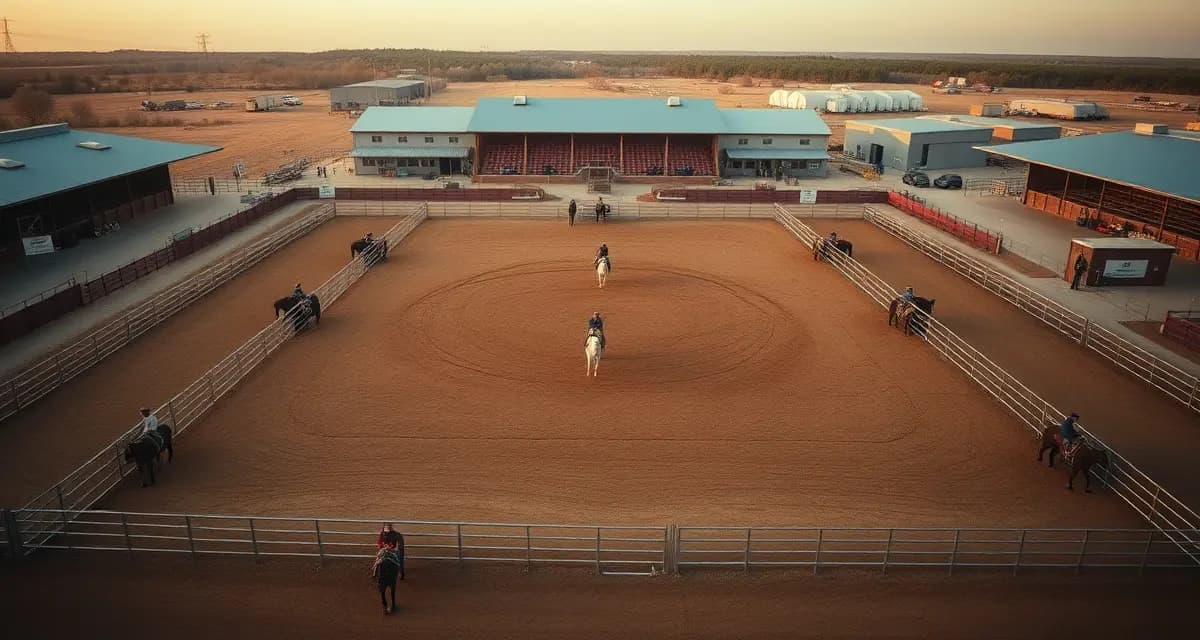
Team Roping Barn Scheduling: FAQ for Managers
Team roping barn scheduling is more complex than most generic barn software accounts for. Between coordinating header and heeler pairs, managing arena time across multiple runs, and tracking cattle rotation, the scheduling demands at a team roping facility are genuinely different from a boarding barn or a trail riding operation.
TL;DR
- Team roping facilities have distinct scheduling requirements driven by partner-based billing, cattle handling, and timed event scheduling.
- Split billing between roping partners for shared arena and cattle charges is a common source of administrative complexity.
- Cattle inventory and rotation tracking is a barn management requirement unique to team roping and working cow horse operations.
- Owner communication at team roping facilities should include horse performance notes tied to specific practice sessions.
- Purpose-built barn software handles partner split billing and cattle-related charges without manual workaround steps.
This FAQ covers the questions barn managers ask most often, with direct answers based on how high-volume team roping facilities actually operate.
The Core Problem With Team Roping Scheduling
Generic barn management tools are built around individual horse and rider bookings. Team roping doesn't work that way.
You're scheduling two riders per run, cattle counts per session, arena availability, and often multiple practice groups at different skill levels, all at the same time. A facility running 30 to 50 loops per day needs a system that understands those variables, not one that treats each booking as a single horse-and-rider pair.
That gap is exactly why purpose-built tools like BarnBeacon exist. Most barn management software on the market wasn't designed with team roping equine facility scheduling in mind, which means managers end up patching together spreadsheets, group texts, and paper sign-up sheets to fill the gaps.
How do team roping barn managers handle scheduling?
Most team roping barn managers rely on a combination of manual methods: whiteboard calendars, shared Google Sheets, and text message chains with regular clients. This works at low volume but breaks down fast when you're managing 20 or more active ropers, cattle availability, and back-to-back arena slots.
The managers running the most efficient facilities have moved to software that lets clients self-book their slots within rules the manager sets, such as maximum loops per session, required cattle rest periods, and partner pairing requirements. That shift alone reduces the back-and-forth communication that eats up hours each week.
BarnBeacon is built specifically for this workflow. Managers set the parameters, and the system handles the booking logic, confirmations, and conflict detection automatically.
What software do team roping barns use for scheduling?
Most team roping facilities use one of three approaches: general-purpose scheduling tools like Calendly or Google Calendar, generic barn software not built for roping, or nothing formal at all.
The problem with general-purpose tools is that they have no concept of cattle rotation, loop limits, or partner coordination. Generic barn software handles stall management and feeding schedules well, but typically treats arena bookings as simple time blocks with no roping-specific logic.
BarnBeacon fills that gap with features built around how team roping facilities actually run, including paired rider bookings, cattle usage tracking, and session capacity rules. For managers who want to understand the full operational picture, the team roping barn operations resources on this site cover how scheduling connects to the broader facility workflow.
What are the scheduling challenges at team roping facilities?
Team roping facilities face several scheduling challenges that don't exist at other equine operations.
Paired bookings. Every run involves a header and a heeler. Scheduling one without confirming the other creates gaps, no-shows, and wasted arena time. A system that doesn't enforce partner confirmation before finalizing a slot creates problems at the gate.
Cattle rotation and rest. Cattle need rest between runs to stay sound and perform consistently. Most generic scheduling tools have no mechanism to track cattle usage across sessions or enforce mandatory rest periods. Managers end up doing this manually, which is error-prone at scale.
Skill-level separation. Many facilities run beginner, intermediate, and open sessions at different times. Without clear session tagging and access rules, ropers book into the wrong groups, which creates friction and safety concerns.
Arena conflicts during events. When a facility hosts a jackpot or clinic alongside regular practice sessions, the scheduling complexity multiplies. You need a system that can hold arena blocks for events while keeping regular client slots visible and bookable.
Last-minute cancellations. Team roping has a high cancellation rate compared to other disciplines, often because one partner drops out. Without automated waitlist management and cancellation notifications, those slots go unfilled and revenue is lost.
BarnBeacon addresses each of these with purpose-built scheduling logic, not workarounds.
How do team roping facilities handle billing when a horse and rider participate in events with multiple partners?
Partner billing at team roping facilities requires the ability to assign a single session or event cost to two or more client accounts. The split configuration should be documented at the time the arrangement is made, not reconstructed at month end. When a horse works with different partners across different events, each session record should specify the cost split in use for that event. Purpose-built barn software handles these variable split configurations automatically; general billing tools require manual entry for each instance.
What health monitoring practices are most important for working cattle horses?
Horses that work cattle regularly are exposed to higher physical demands and more variable conditions than horses in controlled arena work. Post-work health checks focusing on limb temperature and filling, respiratory recovery rate, and any gait changes should be logged after each cattle work session. Baseline vitals established at intake give staff a reference point for assessing whether post-work findings are within normal range or warrant follow-up.
FAQ
What is Team Roping Barn Scheduling: FAQ for Managers?
Team roping barn scheduling refers to the specialized process of coordinating arena time, cattle rotation, and partner pairings at a team roping facility. Unlike standard barn management, it requires tracking header and heeler combinations, managing cattle availability across multiple runs, and handling split billing between roping partners. Managers at high-volume facilities deal with layered scheduling demands that generic horse barn software wasn't designed to handle efficiently.
How much does Team Roping Barn Scheduling: FAQ for Managers cost?
There is no single cost for team roping barn scheduling—it depends on whether you're using staff time, generic software, or a purpose-built barn management platform. Generic tools often require costly manual workarounds for partner billing and cattle tracking. Purpose-built platforms vary in pricing but typically charge a monthly subscription. The real cost question is how much time your staff loses to manual scheduling tasks each week.
How does Team Roping Barn Scheduling: FAQ for Managers work?
Team roping barn scheduling works by coordinating arena blocks for header and heeler pairs, tracking cattle rotation to ensure animal welfare and fair usage, and logging session data tied to specific horses and riders. In well-run facilities, this process is supported by software that automates partner split billing, sends session reminders, and maintains cattle inventory records alongside standard horse and rider booking functions.
What are the benefits of Team Roping Barn Scheduling: FAQ for Managers?
Effective team roping barn scheduling reduces double-bookings, prevents cattle overuse, simplifies partner billing disputes, and gives managers clear visibility into arena utilization. It also improves owner communication by tying horse performance notes to specific practice sessions. Facilities that run structured scheduling report fewer conflicts between ropers, better cattle rotation compliance, and faster invoice processing at month-end.
Who needs Team Roping Barn Scheduling: FAQ for Managers?
Any manager running a team roping facility with multiple active pairs, shared arena time, and cattle on-site needs a structured scheduling approach. This includes facilities hosting regular jackpots, private practice sessions, or team roping clinics. Operations where header and heeler partners split costs—and expect accurate, itemized billing—benefit most from purpose-built scheduling tools rather than spreadsheets or generic barn management software.
How long does Team Roping Barn Scheduling: FAQ for Managers take?
Setting up a team roping barn scheduling system typically takes one to two weeks for a facility transitioning from manual processes. This includes importing horse and rider records, configuring arena blocks, setting up cattle inventory, and establishing billing rules for partner splits. Day-to-day scheduling itself is ongoing, but once the system is configured correctly, booking a session and generating a split invoice should take under five minutes.
What should I look for when choosing Team Roping Barn Scheduling: FAQ for Managers?
Look for software that natively supports partner split billing without manual calculations, includes cattle inventory and rotation tracking, and allows session notes tied to individual horses. Arena block management with conflict detection is essential for high-volume facilities. Owner-facing communication tools that send session summaries and performance notes add significant value. Avoid generic barn platforms that require workarounds for any of these core team roping functions.
Is Team Roping Barn Scheduling: FAQ for Managers worth it?
Yes, for any team roping facility managing more than a handful of active pairs, structured scheduling is worth the investment. The administrative time saved on billing disputes, cattle rotation logs, and arena conflict resolution typically outweighs software costs within the first month. Facilities that move from spreadsheets or generic tools to purpose-built scheduling consistently report cleaner books, fewer roper complaints, and better cattle welfare outcomes.
Sources
- American Quarter Horse Association (AQHA)
- National Reining Horse Association (NRHA)
- National Cutting Horse Association (NCHA)
- American Horse Council
- Oklahoma State University Extension Equine Program
Get Started with BarnBeacon
Team roping facilities carry billing and scheduling complexity -- partner splits, cattle charges, timed event bookings -- that generic barn software was never designed to handle. BarnBeacon is built for equine facilities with exactly this kind of operational specificity, connecting daily care records to billing and owner communication in a single platform. If your team roping operation is managing these workflows through manual workarounds, BarnBeacon gives you tools that match how your facility actually runs.