Therapeutic Riding Barn Seasonal Operations: Complete Guide for Facility Managers
PATH International certifies 900+ therapeutic riding centers in the US, and the seasonal patterns at those centers are shaped by factors that other equine facilities don't experience: school calendars that drive participant attendance, grant funding cycles that affect program finances, and the wellbeing needs of therapeutic riding horses who have demanding jobs and need planned recovery.
TL;DR
- Therapeutic riding facilities operate under PATH Intl. accreditation standards that create specific documentation and billing requirements.
- Sliding-scale fees, scholarship funds, and multi-payer invoicing are daily realities that generic barn software was not built to handle.
- Session documentation tied to IEPs or therapist review requirements must stay connected to billing records for payer verification.
- Grant and scholarship reporting requires session-level data that manual spreadsheet tracking makes time-consuming and error-prone.
- Purpose-built therapeutic program software eliminates the parallel spreadsheet systems most centers currently maintain.
This guide covers seasonal operations at therapeutic riding centers, with attention to the specific planning needs of each period in the annual cycle.
The Therapeutic Riding Seasonal Pattern
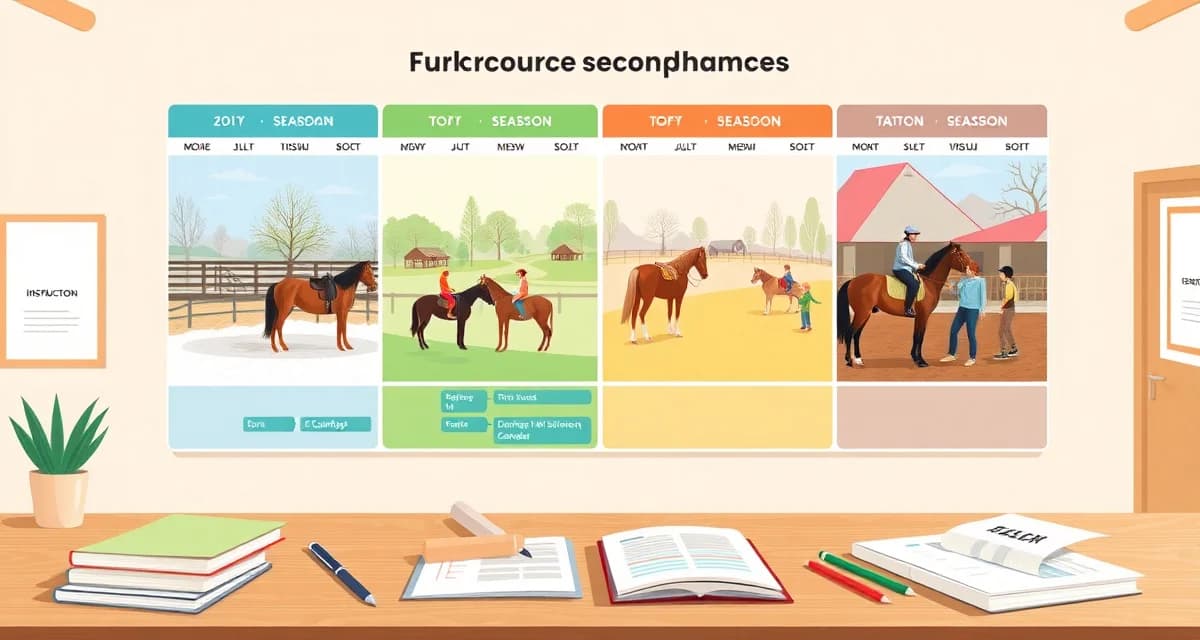
Therapeutic riding programs tend to follow patterns tied to the school year rather than the competitive equine calendar:
Fall session season (September through December). School is in session, participants return from summer, and program enrollment is typically at its peak. This is often the highest-demand period for many therapeutic riding centers.
Winter break (December through January). Many programs take a winter break aligned with school holidays. This is a natural window for facility maintenance, horse rest periods, and staff training.
Spring session season (January through May). The second major program period, often with a strong enrollment as families who started in fall continue and new participants join.
Summer program (June through August). Varies significantly by center. Some run reduced summer programs for participants who don't have school-year barriers to attendance. Others offer summer camps or modified programming. Some centers take a partial or full summer break.
Fall Season Operations
Fall is when program enrollment peaks and operational intensity is highest. Preparation for fall should happen in August:
Participant intake and scheduling. New participants need intake processes completed before their first session: registration, goal-setting conversations with families, horse-participant matching assessment, and scheduling. Building a systematic intake process prevents the backlog that happens when multiple families arrive at the start of fall without complete intake records.
Volunteer recruitment and training. The start of the school year is a prime volunteer recruitment window, particularly for university students seeking community service hours or experiential learning credit. Recruiting and training new volunteers in August and September ensures adequate coverage for the fall program.
Horse assessment. Before the fall season begins, all therapeutic riding horses should have a current veterinary assessment, dental check, and farrier appointment. A horse entering a high-volume program period with an unaddressed dental issue or uneven feet is a health and behavioral risk.
Billing setup. Confirm fee arrangements with all returning participants, send invoices to new participants with the first session, and set up any grant-funded slots with the appropriate documentation systems.
Winter Break Operations
Winter break is one of the most valuable planning and maintenance windows in the therapeutic riding calendar.
Horse rest and recovery. Horses that have worked through a full fall session season benefit from a rest period during winter break. This isn't pure time off: a structured rest period of two to three weeks, with light work and attention to any physical issues that developed during the busy period, prepares horses for the spring season.
Facility maintenance. Arena footing, barn infrastructure, fence repairs, and equipment maintenance are all easier to complete when the program is not running. Build a maintenance checklist for winter break and complete it systematically rather than rushing through it in January when the spring season is about to begin.
Staff training. Winter break is the best time for staff development: PATH certification renewals, first aid certifications, advanced training opportunities, and team training on new protocols. This investment is much harder to make during a busy session period.
Volunteer appreciation. A winter celebration or recognition event for volunteers, timed to the holiday season, acknowledges their contribution and helps maintain engagement through the break.
Spring Season Operations
Spring programs typically maintain the volunteer base and participant roster established in fall, with some attrition and some new participants.
Mid-year participant reviews. Many therapeutic riding programs conduct goal progress reviews at the mid-year point. These reviews are a communication touchpoint with families and inform any adjustments to individual session plans.
Grant reporting cycles. Depending on your grant calendar, spring may include mid-year or annual grant reporting. Having session documentation current and accessible makes those reports much easier to compile.
Summer program planning. If you offer summer programming, planning should happen in March or April. Which participants are continuing? Which horses will be in the summer program and which need summer rest? What's the volunteer coverage for summer sessions?
Summer Operations
Reduced programming. If your center runs a reduced summer program, this is a manageable size that allows for attention to individual participants and horses without the volume pressure of the school year.
Horse health management in heat. Summer heat creates additional horse care demands: adjusted work schedules, adequate water access, cooling protocols, and monitoring for heat-related health issues.
Volunteer availability shifts. Some volunteers who are reliable during the school year are unavailable in summer. University students may be away. Build a summer volunteer roster that reflects actual summer availability, not the fall roster.
Year-end grant reporting. Many foundation and government grants have June 30 fiscal year ends. Preparing for those reports in May rather than June reduces the last-minute scramble.
Using Software for Seasonal Operations
BarnBeacon's barn management software supports seasonal program management with participant records spanning multiple program periods, horse health records that track seasonal workload, and billing systems that can accommodate session-period billing structures.
For a complete view of therapeutic riding facility operations, see the therapeutic riding barn operations guide.
Frequently Asked Questions
How do therapeutic riding barn managers handle seasonal operations?
Therapeutic riding centers follow school-year-based seasonal patterns rather than the competitive equine calendar. The most organized centers use winter break for horse recovery, facility maintenance, and staff training, and prepare for fall enrollment peaks in August rather than September.
What software do therapeutic riding facilities use for seasonal operations?
Therapeutic riding centers benefit from software that tracks participant records across multiple session periods, manages horse health records throughout the year, and supports billing structures tied to session programs rather than monthly boarding cycles. BarnBeacon handles all three.
What are the unique seasonal operations challenges at therapeutic riding barns?
The school-year calendar dependency creates sudden transitions in demand at the start and end of each session period. Grant reporting cycles add a financial management dimension to seasonal planning that most equine facilities don't face. Horse wellbeing across high-volume session periods requires systematic planning for rest and recovery.
What documentation do therapeutic riding facilities need for insurance and grant reporting?
Documentation requirements vary by funder, but most grants and insurance programs require session attendance records by rider name and date, instructor and volunteer records for each session, horse records documenting the equines used in the program, and incident reports for any safety events. A barn management system that organizes these records by category and allows export for reporting periods reduces the administrative cost of compliance significantly.
What is Therapeutic Riding Barn Seasonal Operations: Complete Guide for Facility Managers?
This guide covers the full annual operational cycle for PATH International-accredited therapeutic riding centers. It addresses the unique planning demands these facilities face, including school-calendar-driven attendance patterns, grant funding cycles, multi-payer billing, IEP-linked session documentation, and therapeutic horse welfare planning. Unlike general barn management resources, it focuses on the specific administrative and programmatic needs of centers serving riders with disabilities under accreditation standards.
How much does Therapeutic Riding Barn Seasonal Operations: Complete Guide for Facility Managers cost?
The guide itself is a free editorial resource on BarnBeacon. However, running a therapeutic riding center involves significant costs: PATH accreditation fees, specialized staff certifications, therapeutic horse care, adaptive equipment, and software for billing and documentation. Many centers offset costs through sliding-scale fees, scholarship funds, and grant funding, which is why purpose-built program management software is a worthwhile operational investment for most facilities.
How does Therapeutic Riding Barn Seasonal Operations: Complete Guide for Facility Managers work?
The guide walks facility managers through each season of the therapeutic riding year, explaining how school calendars shape enrollment windows, how grant cycles affect budgeting, and how to plan horse rotation and recovery periods. It also covers documentation workflows, connecting IEP and therapist review records to billing for payer verification, and explains how purpose-built software replaces the parallel spreadsheet systems most centers currently rely on.
What are the benefits of Therapeutic Riding Barn Seasonal Operations: Complete Guide for Facility Managers?
Following a structured seasonal operations approach helps therapeutic riding centers maintain PATH accreditation compliance, reduce administrative burden, and improve financial sustainability. Coordinating enrollment, billing, session documentation, and grant reporting within a single system reduces errors, saves staff time, and ensures session-level data is available for scholarship and grant reporting. Better planning also supports horse welfare through deliberate workload management and scheduled recovery periods.
Who needs Therapeutic Riding Barn Seasonal Operations: Complete Guide for Facility Managers?
Facility managers, program directors, and administrative staff at PATH International-accredited therapeutic riding centers will find this guide most useful. It is also relevant to equine-assisted services organizations, occupational and physical therapists working within these programs, and board members or development staff responsible for grant reporting and financial oversight at nonprofit therapeutic riding facilities.
How long does Therapeutic Riding Barn Seasonal Operations: Complete Guide for Facility Managers take?
There is no fixed duration for implementing the practices described. Seasonal planning is an ongoing annual cycle. Transitioning from spreadsheet-based administration to purpose-built therapeutic program software typically takes a few weeks to a few months depending on facility size. Accreditation preparation timelines vary, but PATH International recommends centers begin documentation and process review well in advance of their accreditation visit window.
What should I look for when choosing Therapeutic Riding Barn Seasonal Operations: Complete Guide for Facility Managers?
Look for resources and software specifically designed for PATH-accredited or equine-assisted services programs rather than generic barn management tools. Key features to prioritize include multi-payer billing support, sliding-scale fee tracking, IEP-linked session documentation, grant and scholarship reporting at the session level, and school-calendar-aware scheduling. Vendor experience with therapeutic riding center workflows and compliance requirements is more valuable than general equine facility features.
Related Articles
- Eventing Barn Seasonal Operations: Complete Guide for Facility Managers
- Hunter/Jumper Barn Seasonal Operations: Complete Guide for Facility Managers
Sources
- PATH International (Professional Association of Therapeutic Horsemanship)
- American Hippotherapy Association
- American Association of Equine Practitioners (AAEP)
- Equine Assisted Growth and Learning Association (EAGALA)
- American Horse Council
Get Started with BarnBeacon
Therapeutic riding billing and program documentation have requirements that general-purpose barn software consistently fails to meet. BarnBeacon is built for equine facilities with complex billing structures, including sliding-scale fees, multi-payer invoicing, and the session documentation requirements that grant funders and therapists need. If your current system requires parallel spreadsheets to manage what your software cannot handle, BarnBeacon offers a platform designed for the work you actually do.