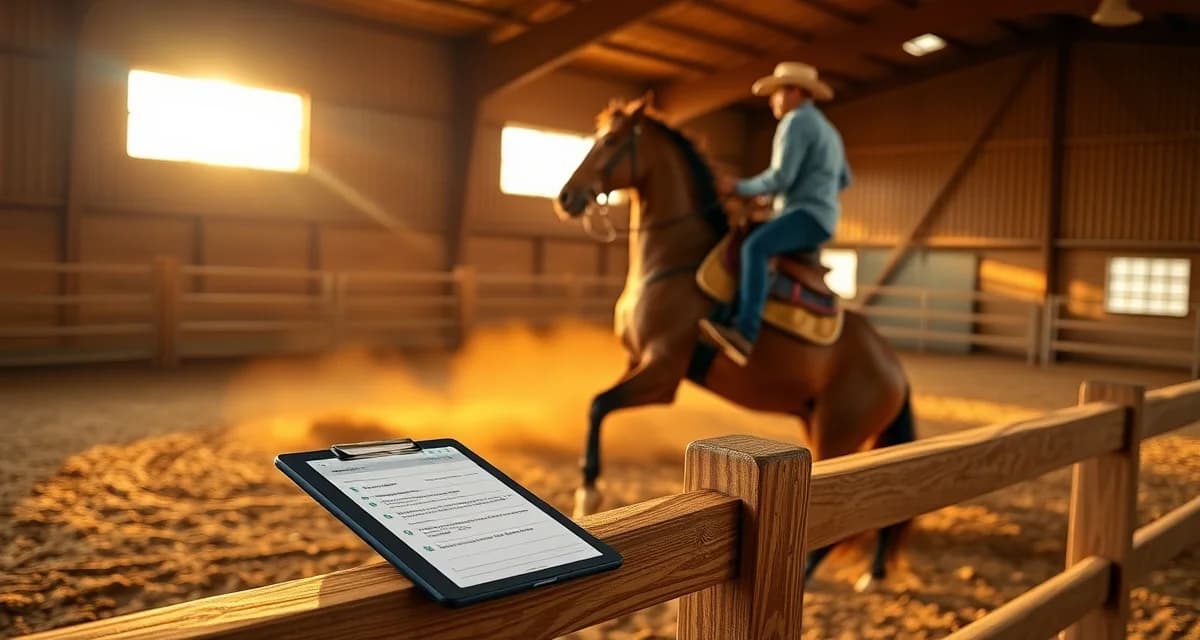
Reining Barn Owner Communication: Records and Updates
Reining barn owner communication runs on a different rhythm than most equine disciplines. Owners are tracking sliding stops, spin counts, and NRHA points alongside routine health records, and generic barn software rarely accounts for that combination.
TL;DR
- Reining facilities benefit from centralized vet records accessible to the treating vet, barn manager, and owner from a single platform.
- Vaccination histories, Coggins results, and current medication lists should be available without searching through paper files during a vet visit.
- Digital vet records with timestamps create an audit trail that protects the barn if a horse's care history is later questioned.
- Reining horse health records should include competition eligibility documentation and any discipline-specific compliance requirements.
- Sharing vet records digitally with owners eliminates the communication gap that occurs when verbal summaries replace written documentation.
Reining disciplines have unique owner communication patterns that off-the-shelf tools consistently miss. This guide walks through exactly how to build a communication system that covers vet records, training updates, and competition reporting in one place.
Why Reining Barn Communication Breaks Down
Most barn managers cobble together text messages, email threads, and paper files to keep owners informed. That works until a horse has a hock injection before a major show, the owner is three time zones away, and nobody can find the vet's post-treatment instructions.
Reining owners are often absentee investors or serious competitors who expect professional-grade reporting. They want to know what happened, when it happened, and what it means for the horse's show schedule. Vague updates create distrust and unnecessary phone calls.
The fix is a structured communication workflow built around the specific records reining owners actually need.
Step 1: Identify What Reining Owners Need to Track
Health and Veterinary Records
Reining horses are athletes under significant physical stress. Hock injections, stifle maintenance, and back treatments are routine, not exceptional. Every owner needs a clear record of:
- Injection dates, sites, and products used
- Farrier visits and shoeing changes (sliding plates are critical)
- Dental and Coggins records
- Any lameness evaluations or diagnostic imaging
Training Progress Reports
Owners want to see measurable progress, not just "he worked well today." Useful training updates include maneuver scores, pattern work notes, and specific feedback on stops, spins, and lead departures.
Competition Results and NRHA Points
After every show, owners expect a summary that includes the score, placing, points earned, and any notable observations from the pen. This is non-negotiable for owners with horses in the NRHA Futurity or Derby pipelines.
Step 2: Set a Communication Schedule
Weekly Training Updates
Send a brief written update every week, even during off-show periods. Three to five sentences covering what the horse worked on, how it responded, and any concerns is enough. Consistency matters more than length.
Post-Vet Visit Notifications
Send a notification within 24 hours of any veterinary visit. Include the vet's name, what was done, any withdrawal times or rest requirements, and the expected return-to-work date. Owners should never find out about a vet visit after the fact.
Monthly Summary Reports
A monthly report consolidates training notes, health records, and expenses into one document. This is especially valuable for absentee owners who want a single reference point rather than scattered messages.
Step 3: Choose the Right Tools
Why Generic Software Falls Short
Most barn management platforms are built for boarding facilities or lesson programs. They handle feeding schedules and stall assignments well, but they have no framework for logging maneuver-specific training notes or tracking NRHA points alongside health records.
Barn managers using those tools end up maintaining a second system for training data, which doubles the administrative workload and creates gaps in the owner's record.
What a Reining-Specific Owner Portal Looks Like
BarnBeacon's owner communication portal is built to handle both the health record side and the performance tracking side in one place. Owners log in and see their horse's complete picture: vet records, training notes, show results, and upcoming appointments.
The portal supports discipline-specific fields, so a reining barn can log sliding plate changes, maneuver scores, and pattern work notes without forcing that data into generic "training session" fields.
Document Storage and Sharing
Every vet record, Coggins certificate, and farrier invoice should be stored digitally and accessible to the owner on demand. Emailing PDFs works, but it creates version control problems and cluttered inboxes. A centralized document library eliminates both issues.
Step 4: Build Your Communication Templates
Weekly Training Update Template
> Horse: [Name] | Week of: [Date]
> Focus this week: [Maneuvers worked, pattern elements]
> How he responded: [Specific observations]
> Concerns or notes: [Any issues flagged]
> Next week's plan: [Goals]
Keep it short. Owners read these on their phones between meetings.
Post-Vet Visit Template
> Date: [Date] | Vet: [Name]
> Reason for visit: [Brief description]
> Treatment: [What was done, products used]
> Instructions: [Rest, withdrawal times, follow-up]
> Expected return to work: [Date]
Send this within 24 hours. If the visit was unplanned, send a brief text first, then follow up with the full template.
Monthly Summary Template
> Horse: [Name] | Month: [Month/Year]
> Health events: [List with dates]
> Training highlights: [Key progress or concerns]
> Shows attended: [Results, scores, points]
> Upcoming: [Next show, scheduled vet visits]
> Expenses this month: [Total with breakdown]
Step 5: Manage Sensitive Updates Professionally
Injury and Lameness Communication
Call first, then follow up in writing. Owners should never read about a significant injury in a text message without prior context. A brief phone call, even a voicemail, demonstrates professionalism and prevents panic.
After the call, send a written summary with the vet's assessment, the treatment plan, and a realistic timeline. Avoid speculation about show schedules until you have a veterinary opinion in writing.
Underperformance Conversations
If a horse is consistently scoring below expectations, address it directly in a monthly summary rather than letting it accumulate. Frame it around specific observations and a plan, not vague reassurances.
Owners who manage horses in reining barn operations at a high level expect honest assessments. Sugarcoating performance issues damages trust faster than the bad news itself.
Common Mistakes to Avoid
Waiting for owners to ask. Proactive communication prevents 80% of the anxious check-in calls that interrupt training days. If something happened, report it before they ask.
Using informal channels for formal records. Text messages are fine for quick updates, but vet records, invoices, and training reports need to live somewhere permanent and searchable.
Inconsistent update frequency. Sending three updates one week and nothing for two weeks signals disorganization. Set a schedule and hold to it.
Skipping updates during slow periods. "Nothing to report" is still a report. A brief note confirming the horse is healthy and on schedule takes two minutes and keeps owners confident.
Overloading owners with raw data. A photo dump of 40 training images with no context is not a useful update. Curate and contextualize.
Related Articles
FAQ
How do I communicate with reining horse owners?
Use a structured schedule: weekly training updates, post-vet notifications within 24 hours, and monthly summary reports. Combine a dedicated owner portal for document storage with direct communication for time-sensitive updates. Consistency and specificity matter more than volume.
What do reining owners want to know about their horses?
Reining owners prioritize three areas: health and maintenance records (especially injections and shoeing), training progress with maneuver-specific feedback, and competition results including scores and NRHA points. Absentee owners also want expense tracking and upcoming appointment visibility in one place.
What owner portal features matter for reining barns?
Look for discipline-specific data fields that support maneuver scoring and pattern notes, not just generic training logs. Document storage for vet records and Coggins certificates, show result tracking with points integration, and mobile-accessible owner dashboards are the features that actually reduce communication overhead for reining barn managers.
How should reining facilities handle vet records when a horse transfers to a new barn?
When a horse leaves your facility, provide the new barn with a complete digital copy of the horse's health record including vaccination history, Coggins certificate, current medications, and any ongoing treatment plans. Make this a standard part of your departure process rather than something done only when requested. Reining horse owners expect continuity of care documentation and a complete transfer record demonstrates your facility's professional standards.
Who at the barn should have permission to view and update vet records?
The barn manager should have full access to view and update vet records. Senior staff responsible for daily care should have read access to the sections relevant to their care duties -- current medications, dietary restrictions, and known conditions. Define access levels before implementing digital records, not after.
What is Reining Barn Owner Communication: Records and Updates?
Reining Barn Owner Communication: Records and Updates is a system for managing the unique information flow between reining facilities and horse owners. It centralizes vet records, vaccination histories, Coggins results, and competition documentation in one platform. Because reining owners track both health data and performance metrics like NRHA points and sliding stop progress, a dedicated communication system eliminates the gaps that occur when barn managers rely on verbal updates or scattered paper files.
How much does Reining Barn Owner Communication: Records and Updates cost?
BarnBeacon offers tiered pricing based on facility size and feature needs. A centralized records and communication platform typically costs less than the time spent manually tracking down paper files, coordinating vet visits by phone, or resolving disputes over undocumented care. Most reining facilities recover the subscription cost quickly by reducing administrative overhead and avoiding compliance issues tied to missing competition eligibility documentation. Visit BarnBeacon's pricing page for current plans.
How does Reining Barn Owner Communication: Records and Updates work?
Reining barn communication through BarnBeacon works by giving barn managers, horse owners, and treating vets shared access to a single digital record for each horse. When a vet visit occurs, records update in real time with timestamps. Owners receive notifications rather than waiting for a phone summary. Training updates and competition reports can be logged alongside health data, so everything from a recent Coggins test to last weekend's show score lives in one place.
Sources
- American Association of Equine Practitioners (AAEP)
- American College of Veterinary Internal Medicine (ACVIM)
- Cornell University College of Veterinary Medicine
- University of California Davis School of Veterinary Medicine
- The Horse magazine
Get Started with BarnBeacon
Reining facility managers who share vet records digitally give treating vets a complete clinical picture, give owners real-time visibility into their horse's care, and give themselves a documented record that protects the facility when health questions arise. BarnBeacon stores each horse's health history in a single accessible record that updates in real time and is accessible from any device. If your current approach to vet record management involves paper files or scattered spreadsheets, BarnBeacon offers a more reliable system.