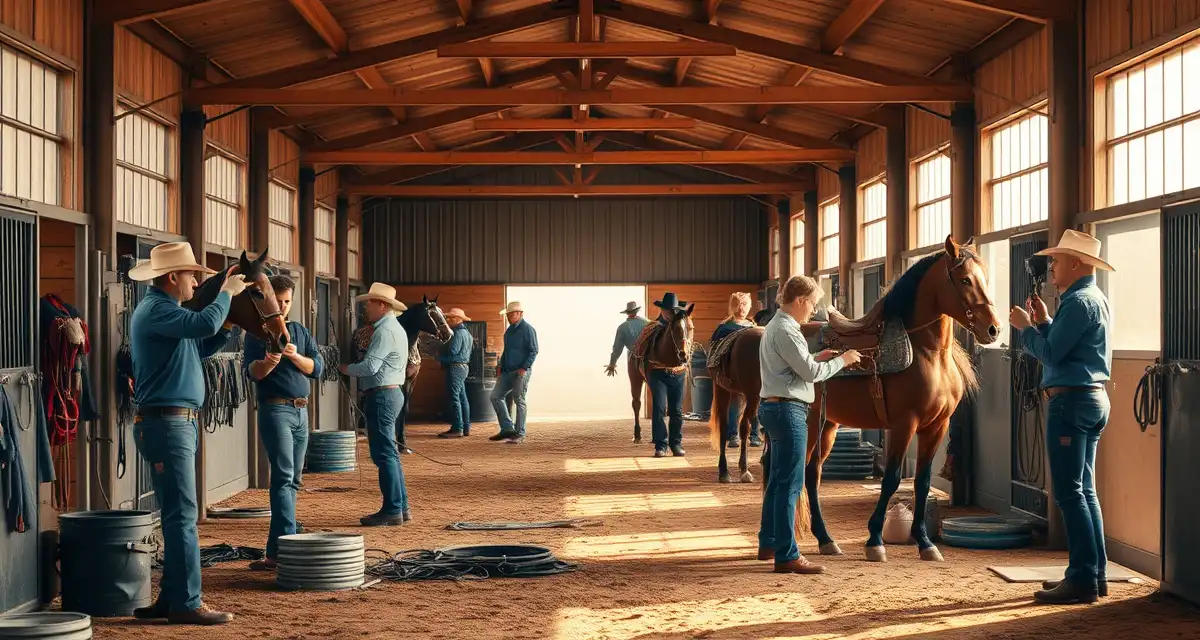
Western Barn Staff Management: Complete Guide for Facility Managers
Western horse events generated $2.4 billion in economic activity in 2024, and the staff at western facilities are a central part of what makes that economy run. From trainers who know the nuances of developing a reining futurity horse to grooms who can prep a barrel horse for a weekend event, the people at a western barn are skilled workers whose retention and coordination directly determines your facility's quality.
TL;DR
- Western facilities carry billing complexity -- cattle fees, arena time, split partner charges, discipline-specific packages -- that generic barn software was not built to handle.
- Multi-discipline operations running cutting, reining, and western pleasure under one roof need billing tools that differentiate by competition organization.
- Futurity development timeline visibility shifts owner communication from reactive to proactive, reducing check-in calls and disputes.
- NRHA, NCHA, and AQHA compliance requirements for drug testing and withdrawal periods require records tied to planned show entry dates.
- Purpose-built western facility software eliminates the spreadsheet workarounds that most operations currently use to fill software gaps.
Staff management at a western barn has some distinct characteristics. The discipline diversity means staff need more varied knowledge than at single-discipline facilities. The competition calendar creates seasonal staffing demands that are hard to plan for. And the working culture of western horse facilities has its own norms around roles, hours, and compensation that any manager needs to understand.
Roles at a Western Facility
Head trainer. The face of the facility's program. In a western barn serving multiple disciplines, the head trainer may specialize in one discipline (most commonly reining or barrel racing) with other trainers or assistants handling other programs. Their primary role is developing horses and managing client relationships in their discipline.
Assistant trainers and riding staff. Cover the training rides the head trainer can't get to, manage younger horses, and handle conditioning work. At facilities with multiple disciplines, you may have different assistants for different programs.
Grooms. At western show barns, grooms handle the daily care that keeps competition horses ready to perform. The groom's job at a western facility is somewhat different from an English show barn: western show prep (bathing, mane and tail management, polishing tack) is less intensive than hunter/jumper braiding, but the travel demands at some western facilities mean grooms spend a great deal of time on the road.
Barn staff. Feeding, stall cleaning, turnout, and facility maintenance. At smaller western operations, groom and barn staff roles may be the same person.
Working students. Less common than at English facilities, but present at some western barns, particularly those with active training programs that attract young riders who trade work for education.
The Staffing Challenges at Western Barns
Multi-discipline knowledge requirements. A groom at a reining barn needs to understand the management requirements of reining horses: the importance of even contact after slide stops, the care of horses with joint injection protocols, the feeding programs for horses in intense physical programs. That knowledge is specific and takes time to develop. Cross-training staff across disciplines is valuable but requires deliberate effort.
Show season travel demands. When horses travel to weekend events, the grooms who travel with them are working extended hours away from home. Compensation and scheduling for travel workers needs to reflect that reality. Grooms who feel they're being worked without appropriate recognition tend to leave, and replacement is difficult.
Physical demands and burnout. Barn work is physically hard. Western competitive programs, particularly during peak season, can push staff to their limits. Monitoring staff workload and building reasonable recovery into the schedule is a real management responsibility.
The informal western culture. Western horse culture is often informal, with hierarchy less explicitly stated than at English facilities. That informality is part of what many people find appealing. But it can make it harder to establish clear expectations, address performance issues, or set limits on hours. The best western barn managers hold standards clearly while maintaining the culture that attracts good people.
Get Started with BarnBeacon
Western facility billing, compliance tracking, and futurity program management require tools built for the specific demands of competitive western operations -- not generic barn software adapted with workarounds. BarnBeacon handles multi-discipline billing, NRHA and NCHA compliance records with withdrawal period alerts, and futurity development tracking with owner portal visibility in a single platform. If your western operation is managing these workflows across spreadsheets and manual entries, BarnBeacon gives you an integrated alternative.
Managing Across the Show Calendar
Show season creates predictable staffing pressure. The time to plan for it is before it starts, not when you're already in it.
Build a show calendar in the fall for the following year. Map out which events require which staff to travel. Identify the periods when your home operation will be running at reduced trainer capacity. Build a coverage plan for each of those periods and communicate it to your team before the season starts.
Pay particular attention to the major events in your discipline calendar. NRHA Futurity prep. The Reining by the Bay. Barrel racing finals. Whatever the key events are for your client base, the weeks around those events will push your team hardest. Build recovery time in after them.
Compensation and Retention
Western horse facilities often have compensation structures built around a mix of salary, board discount, use of a horse or housing, and show bonuses. That structure is common but creates complexity around what the total package is actually worth and whether it's competitive.
Be explicit about the full value of compensation, including any non-cash components. Review compensation annually, especially for grooms and assistants whose market value increases as they gain skills and experience at your facility.
Training opportunities also matter for retention. Grooms who can develop their skills, attend clinics, or learn from the trainers they work alongside are more likely to stay than those whose role is purely labor.
Using Software for Western Staff Management
BarnBeacon's barn management software includes task management and staff coordination tools that let managers assign daily care tasks to specific team members, track completion, and log any deviations or observations. For western facilities with multiple trainers managing different discipline groups, the software lets each trainer work within their program while the barn manager maintains visibility across all programs.
The daily task log also creates accountability without requiring a manager to physically verify every task. When a groom marks the morning leg check as complete, that check is logged with a timestamp. When something is missed, the log shows the gap.
See the western barn operations guide for more on integrating staff management with your overall facility systems.
Frequently Asked Questions
How do western barn managers handle staff management?
The most effective western barn managers define roles clearly in writing, plan show season staffing in advance rather than reactively, and use daily task systems that create accountability without micromanaging. Retention of skilled staff requires competitive compensation and visible career development.
What software do western facilities use for staff management?
Western facilities benefit from barn management software with task assignment, completion tracking, and shift communication features. BarnBeacon supports multi-trainer environments where different staff members manage different discipline groups under one facility.
What are the unique staff management challenges at western barns?
Multi-discipline knowledge requirements mean staff need to be cross-trained across barrel racing, reining, cutting, and general care protocols. Show season travel creates extended-hour demands that need to be compensated and managed carefully to prevent burnout and turnover.
How do western facilities handle billing for cattle-related charges?
Cattle charges -- whether per-head fees for working specific cattle, pen rental, or cattle sourcing costs -- should be captured at the time of each session rather than estimated at month end. Create dedicated billing categories for cattle-related charges in your management system so they are clearly separate from board, training, and arena fees on the owner's invoice. When multiple clients use the same cattle group in a session, the cost allocation method should be defined in writing and agreed to before the session occurs.
What compliance records are most critical for western performance facilities?
For NRHA and NCHA competing horses, joint injection records with specific product names, administration dates, and calculated clearance dates tied to planned competition entries are the highest-stakes compliance records. AQHA registration compliance -- ensuring competing horses have current registration and eligibility for entered classes -- is a second critical documentation area. Maintain these records in a system that allows date-based queries so you can pull clearance status for any horse before submitting an entry.
What is Western Barn Staff Management: Complete Guide for Facility Managers?
Western Barn Staff Management is a comprehensive operational framework designed for facility managers running western horse disciplines such as reining, cutting, barrel racing, and western pleasure. It covers hiring and coordinating specialized staff, managing multi-discipline billing, tracking futurity development timelines, and maintaining compliance with NRHA, NCHA, and AQHA requirements. The guide addresses the unique complexity of western facilities where cattle work, arena scheduling, and competition-specific workflows demand more than generic barn management approaches.
How much does Western Barn Staff Management: Complete Guide for Facility Managers cost?
The guide itself is a free educational resource for facility managers. Implementing the practices it describes may involve investing in purpose-built western facility software, which replaces costly spreadsheet workarounds and reduces administrative overhead. Software pricing varies by provider and facility size. The return on investment typically comes from reduced billing errors on discipline-specific packages, fewer owner disputes, and lower staff turnover driven by clearer role definitions and communication systems.
How does Western Barn Staff Management: Complete Guide for Facility Managers work?
Western barn staff management works by aligning your hiring, scheduling, billing, and compliance systems around the specific demands of western disciplines. Facility managers assign staff to discipline tracks, configure billing rules for cattle fees and arena time, set futurity development milestones visible to owners, and tie drug testing and withdrawal period records to planned show entry dates. Purpose-built software automates much of this coordination, replacing the manual spreadsheet systems most western operations currently rely on.
What are the benefits of Western Barn Staff Management: Complete Guide for Facility Managers?
The core benefits include reduced billing disputes through discipline-specific invoicing, proactive owner communication via futurity timeline visibility, and stronger regulatory compliance tied to show schedules. Facilities also see lower staff turnover when roles are clearly defined across cutting, reining, and western pleasure programs. Eliminating spreadsheet workarounds frees managers to focus on horsemanship rather than administration, and structured onboarding helps new hires reach competency faster in technically demanding western disciplines.
Who needs Western Barn Staff Management: Complete Guide for Facility Managers?
Any manager running a western horse facility with multiple disciplines, competition horses, or outside owners will benefit from this guide. It is particularly relevant for operations hosting reining futurities, cutting events, or barrel racing programs where billing complexity, staff specialization, and regulatory compliance intersect. Smaller single-discipline barns will find value in the staff coordination and owner communication sections, while larger multi-discipline facilities will benefit most from the billing and compliance framework.
How long does Western Barn Staff Management: Complete Guide for Facility Managers take?
Reading the guide takes under an hour. Fully implementing its recommendations varies by facility size and current systems. Facilities already using barn software can typically configure discipline-specific billing and compliance tracking within one to two weeks. Operations migrating from spreadsheets should plan four to eight weeks for data migration, staff training, and workflow adjustment. Futurity timeline communication and owner-facing tools often show measurable impact on check-in call volume within the first full show prep cycle.
Sources
- American Quarter Horse Association (AQHA)
- National Reining Horse Association (NRHA)
- National Cutting Horse Association (NCHA)
- American Horse Council
- Oklahoma State University Extension Equine Program