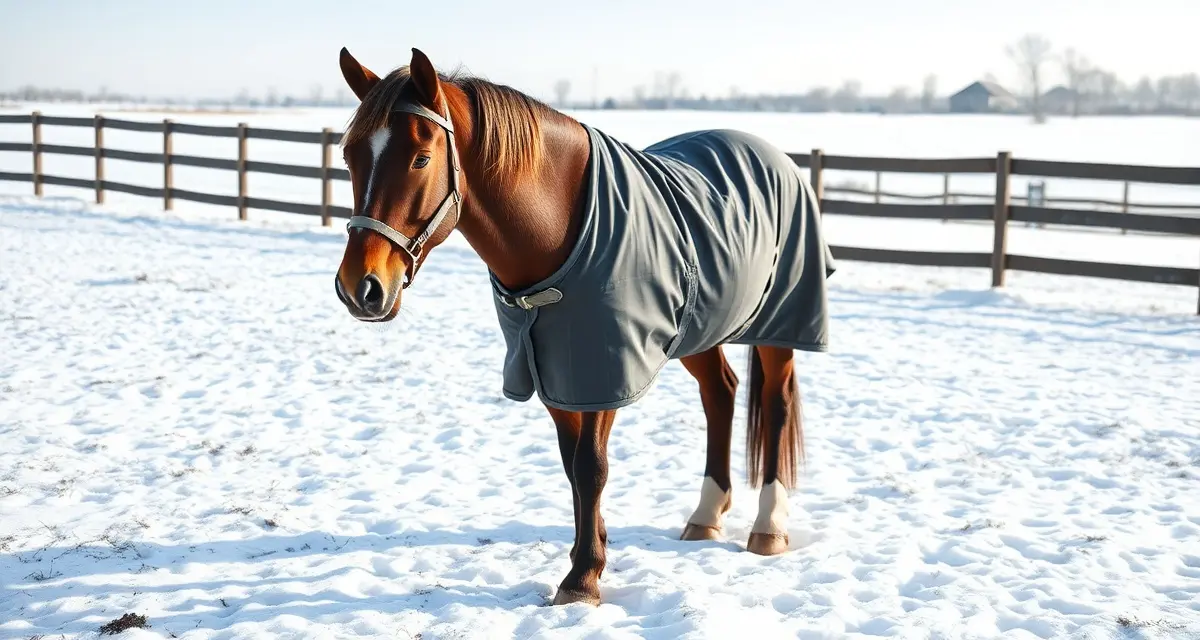
Winter [turnout management](/turnout-management) for Horse Barns
Managing winter turnout management at a horse barn is one of the most operationally demanding tasks a barn manager faces. Shorter days, frozen ground, mud, and blanketing logistics create a perfect storm of variables that can go wrong fast.
TL;DR
- Hard frozen ground is not inherently unsafe for horse turnout, but hoof-churned frozen surfaces and ice at gates and water points are significant injury risks.
- Traction modifications (borium studs, snowball pads) for horses working or turned out on icy surfaces should be decided with the farrier.
- A minimum turnout standard -- even in cold weather -- supports gut motility and reduces colic risk compared to extended stall rest.
- Group turnout compatibility should be reassessed in winter when horses may be more reactive due to reduced exercise and forage changes.
- Written winter turnout protocols with defined weather thresholds for cancellation or reduction give staff clear decision-making guidelines.
According to industry surveys, 72% of boarding disputes involve disagreements about turnout records. When a client claims their horse wasn't turned out, or was left out too long in freezing rain, you need documentation that holds up. That's the foundation of any solid cold weather horse turnout protocol.
Why Winter Turnout Goes Wrong
Most problems aren't caused by bad intentions. They're caused by shift handoffs, verbal-only instructions, and no paper trail.
A morning crew turns out a horse. The afternoon crew doesn't know when it went out, whether it's blanketed, or whether it's compatible with the horse already in that paddock. Mistakes happen. Horses get injured. Clients get angry.
The solution isn't more meetings. It's a system that logs every decision with a timestamp and a staff ID.
Step 1: Assess Your Paddocks Before the Season Starts
Check Footing and Drainage
Walk every paddock in late fall before the ground freezes. Identify low spots that will become mud traps and areas that ice over first. Mark them on a simple paddock map.
Horses turned out on ice are at serious risk of slipping and sustaining soft tissue injuries. If a paddock has poor drainage, it may need to be temporarily retired from the rotation or restricted to horses with shoes that have ice studs.
Inventory Your Fencing
Cold weather contracts metal hardware and makes wood brittle. Check latches, hinges, and post integrity before the first hard freeze. A gate that sticks in November becomes a gate that fails in January.
Step 2: Build a Cold Weather Turnout Protocol
Set Temperature and Wind Chill Limits
Establish written thresholds for your barn. A common baseline: no unblanketed turnout below 20°F, no turnout at all below 10°F with wind chill, and mandatory shelter access when temperatures drop below freezing.
Post these limits in the barn aisle, the tack room, and wherever your staff checks in. If it's not written down, it doesn't exist.
Define Mud Protocols
Mud is more than a nuisance. It pulls shoes, harbors bacteria that cause scratches (pastern dermatitis), and creates footing hazards. Designate specific paddocks as "mud rotation" paddocks that get rested when conditions exceed a set threshold.
Require staff to check paddock conditions before turnout, not just assume yesterday's conditions still apply. A freeze-thaw cycle overnight can turn a safe paddock into a hazard in hours.
Coordinate Blanketing Before Turnout
Every horse going out in winter needs a blanket check before the gate opens. Is the blanket appropriate for current conditions? Is it fitted correctly? Is it the right horse's blanket?
Build a barn daily checklist that includes blanket verification as a required step before turnout, not an afterthought.
Step 3: Adjust Your Schedule for Reduced Daylight
Shift Turnout Windows Earlier
In December and January, you may have fewer than 9 hours of usable daylight. If you're running the same turnout schedule you used in September, horses are going out in the dark or coming in after sunset.
Adjust your rotation windows by 30-minute increments starting in November. Build the new schedule before you need it, not after the first incident.
Stagger Turnout Groups
Staggering groups by 20-30 minutes reduces the chaos of multiple horses moving through gates and aisles simultaneously. It also gives staff time to do a proper paddock check between groups rather than rushing through the whole barn at once.
Step 4: Manage Compatibility and Paddock Assignments
Document Every Compatibility Decision
Horse compatibility isn't static. A horse that was fine with a paddock mate in summer may become aggressive when confined more during winter. Stress, reduced exercise, and dietary changes all affect behavior.
Keep a written record of which horses can share paddocks and which cannot. Update it when incidents occur. If you're managing 20 or more horses, a turnout rotation system that tracks compatibility by horse ID is far more reliable than memory or sticky notes.
Flag Conflicts Before They Happen
One of the most common gaps in barn management software is the absence of real-time conflict alerts. If a staff member assigns two incompatible horses to the same paddock, most systems won't catch it until after the fact.
BarnBeacon logs every turnout entry and exit with a staff ID, timestamp, and compatibility check at the point of assignment. If a conflict exists, the system flags it before the gate opens, not after the injury report is filed.
Step 5: Create an Audit Trail for Every Turnout
Log Who Did What and When
When a client asks why their horse was only out for 45 minutes on a Tuesday, you need an answer. "I think the morning crew handled it" is not an answer.
Every turnout event should be logged with the staff member's ID, the time out, the time in, the paddock used, and any notes about conditions or behavior. This isn't bureaucracy. It's protection for your staff and your business.
Use Shift Handoff Reports
Require a written or digital handoff at every shift change that includes current turnout status for every horse. Who's out, who's in, who's waiting, and any horses that need special attention due to weather or health.
BarnBeacon generates these handoff summaries automatically from logged turnout data, so the outgoing crew isn't scrambling to write notes from memory.
Common Mistakes in Winter Turnout Management
Skipping paddock checks when it's cold. Staff rushing through morning chores often skip the footing check. Make it a required step, not optional.
Assuming blanket assignments are stable. Horses gain and lose weight in winter. A blanket that fit in October may not fit in February. Schedule monthly blanket checks.
Not updating compatibility records after incidents. A kick or bite that gets written off as a one-time event often repeats. Document it and adjust the rotation.
Running the same schedule year-round. Daylight, temperature, and footing all change. Your schedule should change with them.
How do I create a turnout rotation for 30+ horses?
Start by grouping horses by compatibility, then assign each group a paddock and a time window. With 30+ horses, you'll likely need 4-6 rotation slots across the day. Use a digital system that tracks each horse's assigned group, paddock, and schedule so staff can execute the rotation without relying on verbal instructions. Review and update the rotation monthly, or after any compatibility incident.
How do I track paddock assignments across shifts?
The most reliable method is a centralized log that every staff member updates in real time, not a whiteboard that gets erased or a notebook that stays in one person's locker. Each entry should include the horse's name or ID, the paddock number, the time out, and the staff member who handled it. Digital systems with shift handoff summaries eliminate the gaps that happen during crew changes.
What factors affect horse turnout compatibility?
Herd hierarchy is the most obvious factor, but it's not the only one. Age, sex, reproductive status, energy level, and current health all play a role. A mare in heat, a horse recovering from an injury, or a new arrival that hasn't been integrated yet all require adjusted compatibility assessments. Compatibility should be treated as a living record, not a one-time determination.
How do I assess whether winter footing is safe enough for group turnout?
Before releasing horses to any turnout space in winter, walk the area and assess: is there ice at the gate, at water access points, or in high-traffic paths? Is the frozen ground hoof-churned and rough enough to create trip risk? A quick five-minute footing check before opening turnout -- made standard practice on any morning below freezing -- prevents the majority of winter turnout injuries. Document the check result in your daily task log.
Should horses be kept in during a cold snap or allowed to continue regular turnout?
Horses tolerate cold temperatures better than humans typically expect; a healthy adult horse in good body condition with shelter access is generally comfortable at temperatures well below zero Fahrenheit if wind and precipitation are not significant factors. The primary reasons to reduce or cancel turnout are unsafe footing (ice, deep mud), extreme wind chill that eliminates the horse's ability to maintain body temperature even with shelter, or health conditions in individual horses that make cold exposure a specific risk.
FAQ
What is Winter turnout management for Horse Barns?
Winter turnout management for horse barns is the structured practice of safely scheduling, monitoring, and documenting outdoor time for horses during cold months. It involves assessing frozen or icy ground conditions, managing blanketing logistics, maintaining safe footing at gates and water points, and establishing clear weather thresholds for when turnout should be cancelled or reduced. A solid winter protocol balances horse welfare with staff safety and client communication.(/turnout-management) for Horse Barns. Target 50-150 words.]
How much does Winter turnout management for Horse Barns cost?
Winter turnout management itself has no fixed price — it's an operational responsibility built into barn management. However, associated costs include footing materials like sand or rubber mats at high-risk areas, traction modifications such as borium studs or snowball pads (typically $50–$150 per horse with farrier fees), extra bedding for horses with reduced turnout, and any software or logging tools used to maintain accurate turnout records.(/turnout-management) for Horse Barns. Target 50-150 words.]
How does Winter turnout management for Horse Barns work?
Winter turnout management works by establishing written protocols that define conditions under which horses go out, how long they stay, and how groups are structured. Staff assess ground conditions daily — checking for ice, frozen ruts, and mud — then follow threshold-based decision trees. Each turnout session is logged with times, conditions, and any incidents, giving barn managers defensible documentation and consistent care standards across all horses.(/turnout-management) for Horse Barns. Target 50-150 words.]
What are the benefits of Winter turnout management for Horse Barns?
Consistent winter turnout supports gut motility and significantly reduces colic risk compared to extended stall rest. Horses benefit physically from movement and mentally from environmental stimulation. For barn managers, a documented protocol reduces boarding disputes — a key concern given that 72% of boarding conflicts involve turnout disagreements. Clear standards also improve staff confidence, reduce liability exposure, and ensure horses maintain baseline fitness through the winter months.(/turnout-management) for Horse Barns. Target 50-150 words.]
Who needs Winter turnout management for Horse Barns?
Any horse barn offering boarding, training, or layup services needs a winter turnout management plan. This is especially critical for facilities with multiple horses at different fitness levels, varying owner expectations, and limited daylight hours. Barn managers overseeing staff schedules, farriers advising on traction, and horse owners monitoring their animals' welfare all have a stake in how winter turnout is structured and communicated.(/turnout-management) for Horse Barns. Target 50-150 words.]
How long does Winter turnout management for Horse Barns take?
Individual turnout sessions typically run 2–6 hours depending on weather conditions, horse temperament, and barn scheduling. On days with hard ice, freezing rain, or extreme wind chill, sessions may be shortened or cancelled per protocol. Over the full winter season — roughly November through March in most northern climates — consistent daily turnout, even in abbreviated form, adds up to a meaningful contribution to a horse's physical and mental health.(/turnout-management) for Horse Barns. Target 50-150 words.]
What should I look for when choosing Winter turnout management for Horse Barns?
Look for a protocol that includes defined weather cancellation thresholds, daily ground condition assessments, and a clear logging system. The best approaches account for group compatibility reviews (horses can be more reactive in winter), traction modifications decided in partnership with your farrier, and staff training on identifying ice hazards. Protocols should be written, not verbal, so every team member makes consistent decisions without needing manager oversight for every call.(/turnout-management) for Horse Barns. Target 50-150 words.]
Is Winter turnout management for Horse Barns worth it?
Yes — for any barn managing more than a few horses, a structured winter turnout protocol is worth the upfront planning effort. It reduces colic risk, prevents footing-related injuries, and creates documentation that protects you in boarding disputes. The operational cost of logging turnout and maintaining safe footing is far lower than the liability, veterinary bills, or client loss that can follow an undocumented injury or turnout disagreement on a freezing January morning.(/turnout-management) for Horse Barns. Target 50-150 words.]
Sources
- American Association of Equine Practitioners (AAEP)
- University of Minnesota Extension Equine Program
- Rutgers Cooperative Extension Equine Program
- Kentucky Equine Research
- The Horse magazine
Get Started with BarnBeacon
Winter turnout decisions -- when to go out, for how long, in what group -- benefit from a system that tracks current protocols and creates a record of what was decided and why. BarnBeacon's scheduling and care logging tools keep winter turnout assignments current and accessible to all staff, reducing the verbal relay chains that lead to inconsistencies on cold mornings. If winter turnout management at your barn generates more confusion than it should, BarnBeacon gives you a cleaner coordination system.