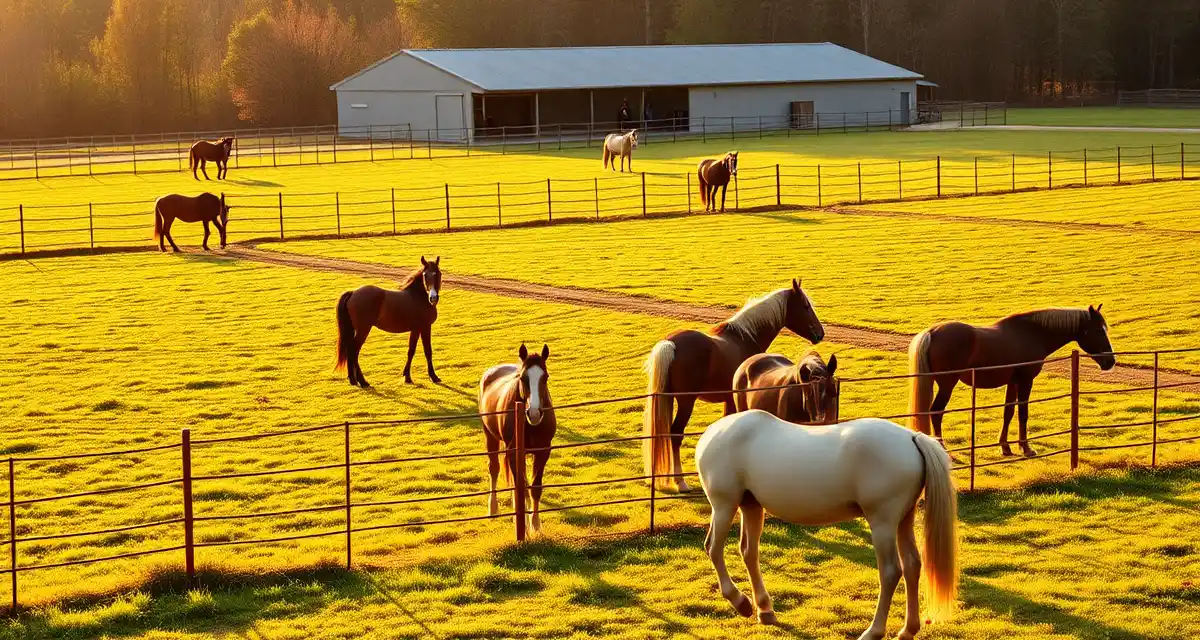
Turnout Management for Equine Facilities: A Practical Guide
Turnout is one of the most operationally demanding parts of running a boarding barn. It involves compatibility decisions, pasture health, individual horse restrictions, staff execution, and boarder expectations, all converging in a window of time that usually happens before 10am. When the system works, nobody notices. When it breaks down, you're dealing with injured horses, overworked pastures, or boarders who feel like their horse isn't being cared for properly.
This guide covers how to build a turnout management system that holds up across staff turnover, seasonal changes, and the variability that comes with a full barn.
Why Turnout Management Fails at Most Barns
Most barns start with informal turnout systems. The manager knows which horses go where, communicates it verbally, and relies on experienced staff to execute correctly. This works until it doesn't: a new hire puts two incompatible horses in the same paddock, a horse with a vet restriction gets turned out without the limitation being communicated, or a boarder asks about turnout hours and the answer is "I think he was out for about three hours."
The underlying problem is that turnout knowledge lives in people's heads rather than in a documented system. Daily care records that aren't written down can't be referenced when something goes wrong or when staff rotates.
Building Compatible Turnout Groups
The first structural task in turnout management is defining your groups. Horses that share turnout time need to be socially compatible, appropriate in size and age relative to each other, and free of conflicting veterinary restrictions.
Start by listing every horse in your barn and the factors that constrain their group placement:
- Dominance history with specific horses
- Mare/gelding/stallion considerations
- Age considerations, including young horses with joint concerns and seniors with different movement needs
- Medical restrictions from current vet orders
- Owner preferences that you have agreed to accommodate
Once you have that matrix, your groups essentially define themselves. Most barns end up with three to five groups depending on herd size and paddock availability. Document the groups formally, not just in your memory. Every staff member who handles morning turnout needs to be able to read the groupings from a written source. Vet and farrier scheduling restrictions that change seasonally also need to be reflected in your turnout assignments whenever they're updated.
Scheduling Daily Turnout
A turnout schedule assigns each group a specific paddock and time window. Consistency matters here for the horses as much as for the staff. Horses are highly routine-dependent, and irregular turnout timing increases stall behavior and stress.
Your schedule should account for:
- Group sequence - Which group goes out first, second, and so on
- Duration - Minimum and maximum outdoor time per group
- Paddock assignment - Which pasture each group uses, and how that rotates
- Buffer time - Gaps between groups to allow safe gate transitions and quick paddock checks
- Weather contingencies - What changes when footing is poor, temperatures are extreme, or the forecast warrants modification
Build the schedule for your least experienced staff member. If a fill-in groom can execute turnout correctly by reading the documented plan, the system is robust. If it requires institutional knowledge to interpret, it's a liability.
Pasture Rotation and Land Management
Turnout management isn't just about the horses. It's also about the land. Overgrazing, muddy high-traffic areas, and uneven wear patterns on paddocks create real problems for pasture health and horse safety.
A basic rotation cycles each paddock through active use and a rest period. Most extension programs recommend a minimum two-week rest period for each paddock under moderate use, longer after heavy grazing or wet seasons. A three-paddock rotation with one paddock always resting is a common starting point for small to mid-size barns.
Track your rotation dates in writing or in barn management software so you can see actual rest intervals rather than estimating. Turnout rotation planning becomes significantly easier when you have historical data on when each pasture was last used and rested.
Logging Turnout for Staff and Boarders
Turnout logs serve two audiences with different needs.
For staff, the log is an operational continuity tool. It shows what happened, who executed it, and whether anything deviated from the plan. When a horse is found with a minor injury, the turnout log helps reconstruct the timeline.
For boarders, the log is a transparency and trust tool. Full-board agreements generally include turnout as part of the service. When a boarder asks how much time their horse spent outside this week, a complete log with timestamps is a better answer than your recollection. Boarders who can verify care through documented records tend to raise fewer concerns and stay longer.
Manual turnout logs work but require consistent discipline from every staff member involved. Barn management software automates the timestamp, links the entry to the specific horse and paddock, and makes records searchable without extra effort. BarnBeacon's turnout scheduling tools handle this at the individual horse level, so records are granular enough to be useful.
Handling Exceptions and Restrictions
Not every day goes according to the standard plan. A horse comes in lame and turnout is modified. A boarder requests a schedule change. A pasture gate has a maintenance issue. Your turnout system needs a clear process for exceptions.
For veterinary restrictions, the safest practice is a flag in the horse's record that appears whenever staff view the turnout plan. Verbal-only instructions are the most common cause of restricted horses getting turned out incorrectly. Write it down, attach it to the horse's profile, and make it visible at the point of decision.
For boarder requests, route changes through a consistent channel and confirm in writing. "I mentioned it to the barn manager" is not a reliable instruction handoff.
Key Takeaways
Turnout management is a documentation and communication problem as much as a logistics problem. The barns that handle it well have written group assignments, consistent schedules, pasture rotation plans, and turnout logs that are complete enough to answer questions retroactively. Software like BarnBeacon makes the logging and scheduling side manageable without adding significant administrative overhead.
How do I track individual horse turnout hours?
Use barn management software that logs turnout by horse, paddock, and timestamp. Manual logs work but require consistent staff discipline and are harder to search.
How many horses per paddock is safe?
Industry guidance is generally one horse per acre for sustained grazing. Group size also depends on social compatibility, not just space.
What's the best way to communicate turnout changes to boarders?
Same-day notification through a consistent channel, tied to the specific horse's record. Barn management platforms with built-in messaging handle this without requiring separate texts or calls.
FAQ
What is Turnout Management for Equine Facilities: A Practical Guide?
Turnout Management for Equine Facilities: A Practical Guide is a comprehensive resource published on BarnBeacon that helps barn managers build reliable, documented turnout systems. It covers compatibility decisions, pasture health, individual horse restrictions, staff communication, and boarder expectations. The guide addresses why informal turnout systems fail and provides actionable frameworks for creating processes that hold up through staff turnover, seasonal changes, and the daily variability of running a full boarding barn.
How much does Turnout Management for Equine Facilities: A Practical Guide cost?
The guide is free to access on BarnBeacon. There is no cost to read or implement the advice it contains. BarnBeacon publishes practical barn management resources at no charge to help facility operators improve their operations. If you choose to adopt barn management software based on the guide's recommendations, costs will vary by platform, but the guide itself is a complimentary resource.
How does Turnout Management for Equine Facilities: A Practical Guide work?
The guide works by diagnosing the root causes of turnout failure, primarily reliance on informal, undocumented systems, and then walking managers through building a structured alternative. It covers how to document horse-specific restrictions, create compatible groupings, standardize staff handoffs, and track daily turnout records. The goal is to move turnout knowledge out of people's heads and into a repeatable, verifiable system that anyone on your team can execute correctly.
What are the benefits of Turnout Management for Equine Facilities: A Practical Guide?
A documented turnout system reduces horse injuries from incompatible pairings, prevents vet restriction errors during staff transitions, protects pasture health through rotation planning, and gives boarders confident answers about their horse's daily care. It also reduces manager workload by making expectations explicit rather than relying on institutional knowledge. When turnout runs smoothly, it builds boarder trust and reduces the operational firefighting that comes with reactive barn management.
Who needs Turnout Management for Equine Facilities: A Practical Guide?
Any boarding barn manager, barn owner, or barn staff member responsible for daily turnout operations will benefit from this guide. It is especially useful for facilities experiencing staff turnover, rapid growth, or boarder complaints about inconsistent care. Smaller barns moving from informal systems to documented processes and larger barns struggling to maintain consistency across multiple employees or pastures will find the most immediate practical value.
How long does Turnout Management for Equine Facilities: A Practical Guide take?
Reading the guide takes roughly 10 to 20 minutes. Implementing the systems it describes will take longer, typically a few hours to document existing horse groupings, restrictions, and rotation schedules, followed by a brief training period for staff. Once built, the system is designed to run with minimal ongoing effort. The initial investment in setup pays back quickly through reduced errors, faster staff onboarding, and fewer boarder complaints.
What should I look for when choosing Turnout Management for Equine Facilities: A Practical Guide?
Look for a guide that addresses your specific operational pressure points: staff communication gaps, pasture overuse, boarder transparency, or individual horse restriction tracking. A strong resource will go beyond general advice and provide concrete documentation frameworks you can adapt to your barn. The BarnBeacon guide is practical rather than theoretical, grounded in the real operational constraints of a busy boarding facility running turnout in a compressed morning window.
Is Turnout Management for Equine Facilities: A Practical Guide worth it?
Yes. The cost of poor turnout management, including horse injuries, boarder churn, overworked pastures, and staff errors, far exceeds the time required to build a documented system. Even barns that operate smoothly under one manager become vulnerable the moment a key person leaves or the barn grows. A structured turnout system is a foundational operational asset. This guide gives you a clear, actionable starting point at no cost.
Sources
- American Association of Equine Practitioners (AAEP), equine management guidelines
- University of Minnesota Extension, horse pasture management publications
- Rutgers Equine Science Center, grazing and land management resources
- Penn State Extension, equine facilities management guides