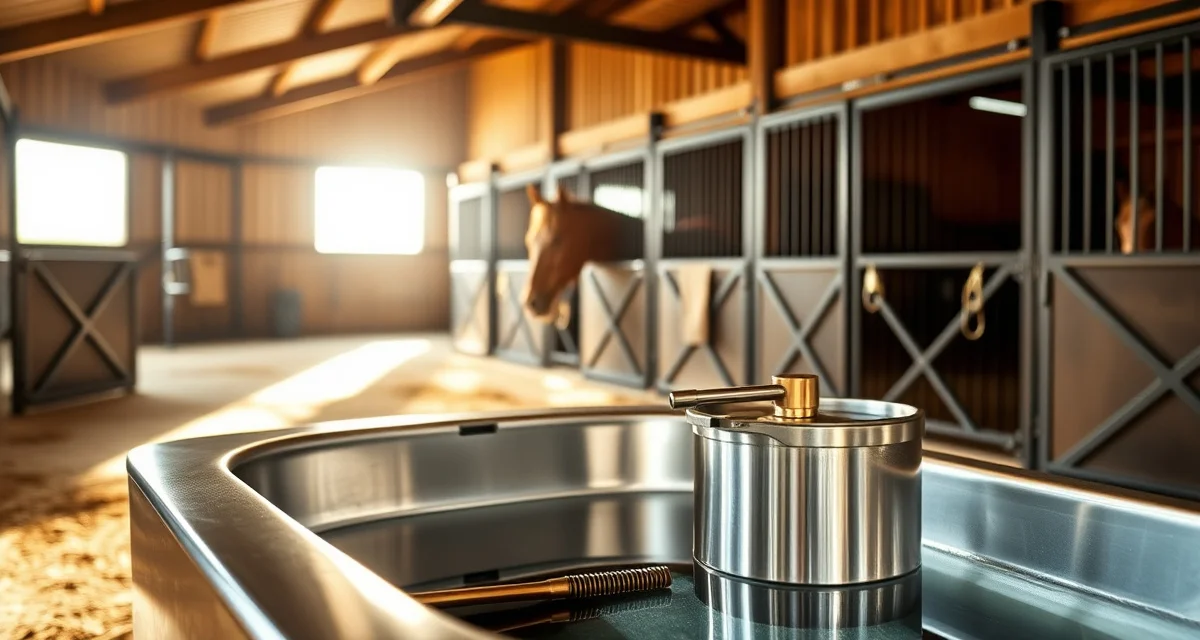
Automatic Waterer Monitoring for Horse Barns
Automatic waterers are supposed to simplify barn management. But without a structured monitoring system, they create a false sense of security. A unit can malfunction, freeze, or run low while staff assume it's working fine.
TL;DR
- A horse that stops drinking for 12 hours is already at risk for dehydration, and the AAEP identifies feed and water errors as the number two cause of preventable colic.
- Each automatic waterer should be physically inspected once per day at minimum, with a second check added any time temperatures drop below 32°F.
- Normal daily water intake is 5 to 10 gallons per horse, and a sudden drop in consumption is often the first sign of illness before other symptoms appear.
- Every service event, freeze incident, and daily check should be logged with a timestamp and staff initials so gaps in coverage can be identified.
- Slow-fill issues almost always indicate a failing float valve, which is a $15 fix if caught early and a full unit replacement if ignored.
- Scheduled maintenance tasks (monthly cleaning, quarterly float valve inspection, annual heating element test) must be built into a recurring reminder system or they will be missed.
Dehydration moves fast in horses. A horse that stops drinking for 12 hours is already at risk, and inadequate water intake is directly linked to impaction colic. According to the AAEP, feed and water errors are the number two cause of preventable colic. Automatic waterer monitoring across your barn is not optional maintenance. It's a daily safety protocol.
Why Automatic Waterers Still Need Active Oversight
Automatic waterers reduce labor, but they don't eliminate the need for checks. Float valves stick. Heating elements fail in winter. Algae and biofilm build up in units that aren't cleaned regularly. Horses also have individual consumption patterns, and a sudden drop in drinking is often the first sign of illness.
Without tracking, you won't notice the drop until the horse is already symptomatic.
Step 1: Map Every Waterer in the Barn
Create a Physical Inventory
Walk the barn and document every automatic waterer by stall number or paddock location. Note the brand, model, installation date, and whether it has a heating element. This becomes your master reference for maintenance schedules and troubleshooting.
Assign each unit a unique ID. Even something simple like "Stall 4-W" works. Consistency matters when you're logging issues across multiple staff members and shifts.
Record Baseline Flow Rates
When units are new or freshly serviced, record how long it takes to refill after a full drain. This gives you a baseline. If a unit that normally refills in 45 seconds is taking three minutes, the float valve is likely failing.
Step 2: Build a Daily Check Routine
What to Check Every Morning
Each waterer should be physically inspected once per day at minimum. The check should take under 60 seconds per unit if nothing is wrong.
Check for:
- Water present and at normal level
- No visible debris, algae, or discoloration
- Heating element indicator light active (in winter)
- No unusual sounds from the fill valve
- Horse has been drinking (wet muzzle, normal manure consistency)
Log the check with a timestamp and the staff member's initials. A missed check is as important to document as a failed unit.
Add a Second Check in Freezing Conditions
When temperatures drop below 32°F, add an afternoon check. Heating elements can fail mid-day, and a unit that was fine at 7 a.m. can be frozen solid by 2 p.m. This is especially critical for units in exterior-facing stalls or paddocks with wind exposure.
Step 3: Track Individual Horse Water Consumption
Why Individual Tracking Matters
A horse should drink 5 to 10 gallons of water per day under normal conditions. That number increases with exercise, heat, and dry forage. Horses on hay-heavy diets need more water than those on pasture.
Tracking consumption per horse lets you catch problems early. A horse that normally drains its waterer twice a day and suddenly stops is telling you something. Pair this with your medication tracking records to identify whether a health issue or a new medication might be affecting intake.
How to Track Without Flow Meters
Most barn-installed automatic waterers don't have built-in flow meters. You can estimate consumption by observing fill frequency during daily checks and noting whether the bowl is consistently full or frequently empty.
For horses with known health conditions or post-surgical recovery, consider a temporary bucket alongside the automatic unit to get an accurate daily volume. This is also useful when a vet asks for intake data. Keeping this information organized alongside your horse health records means you can pull accurate intake history quickly when a veterinarian needs it.
Use a Standardized Log Format
Your consumption log should include: date, horse name, stall number, estimated intake (normal/low/high), and any notes. Keep it simple enough that every staff member will actually fill it out. A log that takes five minutes per horse won't get done consistently.
Connecting this data to your feeding schedules gives you a fuller picture. A horse eating less and drinking less on the same day is a more urgent flag than either observation alone.
Step 4: Set Up Freeze Alerts
Know Your Equipment's Limits
Most heated automatic waterers are rated to maintain water temperature down to -20°F, but that assumes the heating element is functioning and the unit is properly insulated. Check manufacturer specs for every unit in your barn and note the rated temperature range in your inventory log.
Manual Alert Triggers
If you're not using a connected monitoring system, set calendar alerts or use a weather app with push notifications for freeze warnings in your area. When a freeze warning is issued, trigger your cold-weather protocol: confirm all heating elements are active, check insulation around exterior units, and add the afternoon inspection to the daily schedule.
Document every freeze event and how each unit performed. Over two or three winters, this data tells you which units are aging out and need replacement before next season.
Step 5: Maintain a Maintenance Log
What to Track
Every service event should be logged: date, unit ID, issue description, action taken, parts replaced, and who performed the work. This is not just good practice. It's essential when a unit fails repeatedly and you need to make a case for replacement.
Track scheduled maintenance separately from reactive repairs. Scheduled tasks include:
- Monthly bowl cleaning and disinfection
- Quarterly float valve inspection
- Annual heating element test (before first freeze)
- Annual full unit inspection and descaling
Set Recurring Reminders
Maintenance that isn't scheduled doesn't happen. Build recurring reminders into whatever system your barn uses for task management. If you're managing 20 or more stalls, manual spreadsheets make it easy to miss a quarterly task when things get busy.
Common Mistakes in Automatic Waterer Monitoring
Assuming a full bowl means the horse drank. A full bowl can mean the horse hasn't touched it. Always cross-reference with behavioral observations and manure checks.
Skipping checks in mild weather. Waterer failures happen year-round. Algae growth is actually worse in warm months. Don't reduce check frequency just because it's not freezing.
No documentation of who checked what. Without initials and timestamps, you can't identify gaps in coverage or hold staff accountable for missed checks.
Ignoring slow-fill issues. A unit that fills slowly is a unit that's about to fail. Slow fill is almost always a float valve issue. Catch it early and the repair is a $15 part. Ignore it and you're replacing the unit.
FAQ
How do I manage feeding schedules for 30+ horses?
Managing feeding schedules at scale requires a system that every staff member can access and update in real time. Static spreadsheets break down quickly when horses have individual rations, supplements, or owner-requested changes. A digital feed management tool that generates individual horse cards visible to all staff on mobile eliminates the communication gaps that lead to errors.
What should a horse feed card include?
A complete feed card should include the horse's name, stall number, morning and evening ration details, any supplements with exact amounts, current medications, feeding restrictions, and the date of the last update. It should also note who authorized any recent changes. Cards that are vague or outdated are nearly as dangerous as no card at all.
How do I handle owner-requested feed changes across a whole barn?
Owner-requested changes need a clear intake and approval process. When a change comes in, it should be logged with the date, the owner's name, the specific change requested, and who approved it. The update then needs to reach every staff member who handles that horse before the next feeding. Real-time digital systems handle this better than printed sheets or verbal handoffs, which are the most common points of failure in multi-staff barns.
How often should automatic waterer bowls be cleaned and disinfected?
Bowls should be cleaned and disinfected at least once per month under normal conditions, and more frequently in warm weather when algae and biofilm accumulate faster. During cleaning, inspect the bowl surface for cracks or mineral deposits that can harbor bacteria. A diluted bleach solution followed by a thorough rinse is the standard approach recommended by most equine facility guidelines.
What's the best way to document a waterer failure so the barn owner or vet has a clear record?
Log the unit ID, the date and time the issue was discovered, what the failure looked like (frozen, no flow, slow fill, discoloration), what immediate action was taken, and when the unit was returned to service. If a horse in that stall showed any behavioral or health changes during the outage, note that in the same record. Keeping equipment failure logs alongside horse health observations in one place makes it much easier to identify patterns over time.
Can automatic waterers be used reliably in unheated outdoor paddocks during winter?
Heated automatic waterers can function in unheated outdoor paddocks, but they require more frequent monitoring than indoor stall units. Wind chill accelerates heat loss around the unit housing, and power supply interruptions are more common in outdoor setups. Units in exposed paddocks should be checked twice daily during any period of freezing temperatures, and the power connection should be inspected at the start of each winter season.
What is Automatic Waterer Monitoring for Horse Barns?
Automatic waterer monitoring for horse barns is a structured system for inspecting, logging, and maintaining automatic waterers to ensure horses always have access to clean, functioning water. It includes daily physical checks, temperature-triggered inspections below 32°F, consumption tracking, and scheduled maintenance tasks like float valve inspections and heating element tests. Without it, a malfunctioning unit can go undetected for hours, putting horses at serious risk of dehydration and impaction colic.
How much does Automatic Waterer Monitoring for Horse Barns cost?
Automatic waterer monitoring itself costs little beyond staff time for daily checks and a simple log system. The real savings come from catching issues early—a failing float valve runs about $15 to replace but can become a full unit replacement if ignored. Heating elements, freeze-prevention components, and cleaning supplies add modest recurring costs. The true cost of not monitoring is far higher: emergency vet calls for colic can run $500 to $10,000 or more, making a disciplined inspection routine one of the best-value practices in barn management.
Sources
- American Association of Equine Practitioners (AAEP), Colic Prevention and Water Intake Guidelines
- University of Minnesota Extension, Horse Water Requirements and Hydration Management
- Rutgers Cooperative Extension, Equine Facility Management and Barn Safety
- Penn State Extension, Winter Horse Care and Water System Maintenance
- The Horse magazine, published by Blood-Horse Publications, Equine Health and Facility Management
Get Started with BarnBeacon
BarnBeacon brings your waterer check logs, horse health records, feeding schedules, and maintenance reminders into one place your whole team can access from any device. If daily monitoring across 20 or more stalls is stretching your current system, try BarnBeacon free and see how much easier it is to catch problems before they become emergencies.