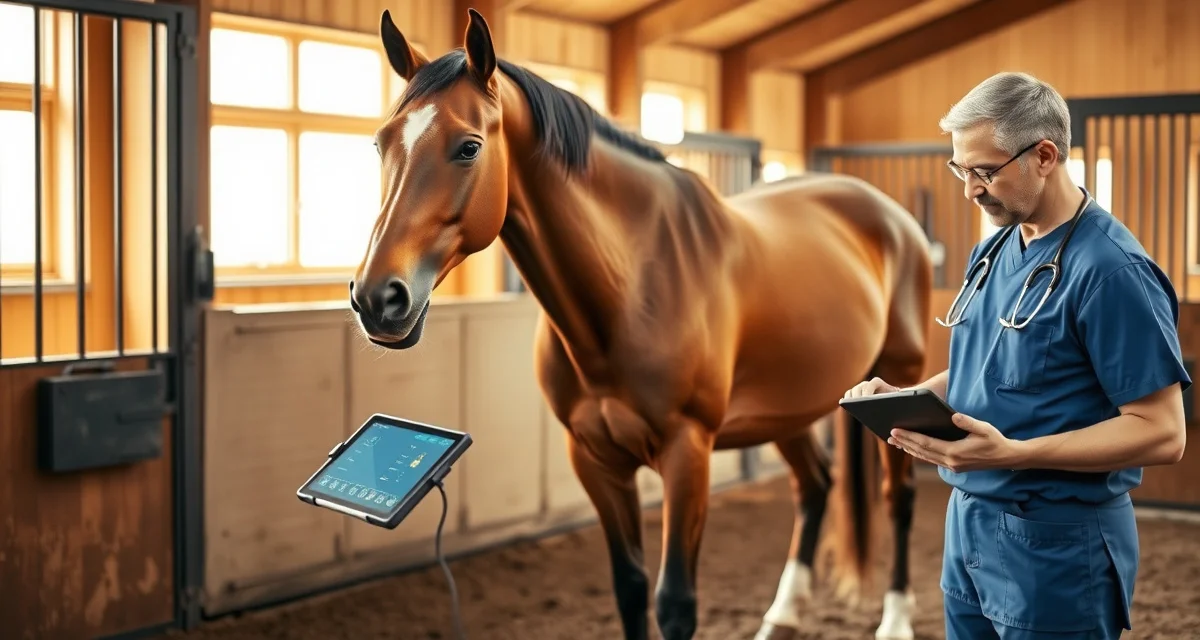
Horse Health Monitoring at Breeding Barns: AI Detection Guide
Breeding facilities represent a distinct segment with unique management needs that general equine software rarely addresses. A mare in late gestation, a stallion on a breeding schedule, and a foal in its first 72 hours of life all require different monitoring thresholds, alert logic, and documentation workflows. Standard barn software treats them the same. That's where horse health monitoring at a breeding barn breaks down.
TL;DR
- Effective barn management requires systems that match actual daily workflows, not adapted generic tools
- Per-horse record keeping with digital access reduces the response time to owner questions from hours to seconds
- Automated owner communication and health alerts reduce inbound calls while increasing owner satisfaction and retention
- Billing errors cost barns thousands of dollars annually; point-of-service charge logging is the most effective prevention
- Staff accountability systems with named task assignments and completion logs prevent care gaps without micromanagement
- Purpose-built equine software connects health records, billing, and owner communication in one place
This guide walks through how AI-based health monitoring works in a breeding facility context, from baseline learning through alert triggers, vet record integration, and owner notification.
Why Breeding Barns Need a Different Monitoring Approach
A boarding barn monitors horses that are largely stable in their routines. A breeding barn monitors horses in constant physiological flux.
Mares cycle through estrus, gestation, foaling, and lactation. Stallions have performance demands tied to collection schedules. Foals go from birth to weaning in a matter of months, with health risks peaking in the first week of life. Each of these stages requires different behavioral baselines and different alert thresholds.
An AI system that doesn't account for reproductive stage will generate false positives constantly, or worse, miss real problems because it's comparing a mare at day 320 of gestation to her behavior from six months ago.
Step 1: Establish Individual Baselines Per Horse
Set Up Profiles With Reproductive Context
Before any alert logic can work, the system needs to know what "normal" looks like for each animal. For a breeding barn, that means capturing reproductive status at intake and updating it as it changes.
Enter each horse's current status: open mare, bred mare, gestating mare (with breeding date), lactating mare, stallion, or foal. This context tells the AI which behavioral model to apply.
Allow 7-14 Days of Passive Learning
AI health monitoring systems build baselines by observing movement patterns, stall activity, eating behavior, and rest cycles. Give the system at least one full week before expecting meaningful alerts. Two weeks is better for mares in early gestation, where behavioral changes are subtle.
During this window, flag any known health events manually so the system doesn't incorporate abnormal behavior into the baseline.
Step 2: Configure Alert Thresholds by Reproductive Stage
Late-Gestation Mares
Mares in the final 30 days of gestation should have tighter monitoring windows. Configure alerts for:
- Reduced feed intake lasting more than 4 hours
- Unusual lying patterns or extended time spent recumbent
- Increased restlessness between 10 PM and 4 AM (the peak foaling window)
Most foaling alerts are triggered by behavioral change, not a single dramatic event. The AI should be looking for combinations of signals, not individual data points.
Stallions on Active Breeding Schedules
A stallion's activity levels will spike on collection days and drop on rest days. If your system doesn't know the breeding schedule, it will flag normal post-collection fatigue as a health concern.
Sync your breeding calendar with the monitoring system so the AI can adjust expected activity ranges accordingly.
Foals in the First 72 Hours
Neonatal foals are the highest-risk animals in any breeding barn. Configure alerts for nursing frequency (foals should nurse every 1-2 hours), standing time, and any extended periods of lateral recumbency beyond normal sleep.
A foal that hasn't nursed in three hours needs a human check, not a wait-and-see approach.
Step 3: Integrate With Veterinary Records
Connect Health Events to Monitoring Data
Every vaccination, deworming, reproductive exam, and treatment should be logged in the same system that holds your monitoring data. When a vet administers a sedative or performs a uterine flush, the monitoring system needs to know, or it will flag the resulting behavioral changes as anomalies.
Good barn management software creates a shared record layer where vet notes and sensor data sit side by side. This makes pattern recognition more accurate and gives your vet context when reviewing alerts remotely.
Build a Reproductive Event Timeline
Breeding dates, ultrasound results, pregnancy confirmations, and foaling dates should all be logged with timestamps. This timeline becomes the backbone of your monitoring logic. A mare confirmed in foal at 45 days should trigger a shift in her monitoring profile automatically.
Step 4: Set Up Owner Notification Workflows
Segment Owners by Horse Type
Breeding barn clients are not all the same. A mare owner who sent their horse for a single breeding cycle has different notification needs than a stallion owner whose horse lives on property year-round.
Build notification profiles that match the relationship. Mare owners typically want alerts tied to reproductive milestones and health events. Stallion owners may want weekly performance summaries plus immediate alerts for anything unusual.
Define Escalation Paths
Not every alert should go to the owner first. Define a clear escalation path: barn staff gets the first alert, assesses the situation, and then decides whether to escalate to the vet or notify the owner.
Owners who receive every minor alert quickly start ignoring them. Owners who receive filtered, meaningful alerts trust the system.
Automate Foaling Notifications
Foaling is the one event where immediate owner notification is almost always appropriate. Configure your system to send an automatic alert the moment foaling indicators cross a defined threshold, with a follow-up confirmation once the foal is on the ground and nursing.
For a deeper look at how these workflows fit into overall facility management, the breeding barn operations guide covers staffing, scheduling, and client communication in detail.
Step 5: Review and Refine Monthly
Audit Your Alert History
Pull a monthly report of every alert generated, how it was resolved, and whether it was a true positive or a false alarm. A well-tuned system should have a false positive rate below 15% after the first 60 days.
If you're seeing high false positive rates, the most common causes are:
- Baselines that weren't updated after a reproductive status change
- Breeding calendar events not synced to the monitoring system
- Sensor placement issues in stalls with unusual layouts
Update Profiles After Major Events
Foaling, weaning, and the end of a breeding season all require profile updates. A mare who foaled last week is not the same animal she was during late gestation. Update her status, reset her baseline window, and adjust her alert thresholds for the lactation period.
Common Mistakes to Avoid
Skipping the baseline period. Turning on alerts before the system has learned normal behavior guarantees alert fatigue. Give it time.
Using one alert threshold for all horses. A 28-day gestating mare and a 320-day gestating mare are not comparable. Reproductive stage must drive threshold configuration.
Not logging vet visits in the monitoring system. Every treatment that affects behavior needs to be documented. If it's not in the system, the AI doesn't know it happened.
Sending all alerts directly to owners. This erodes trust faster than no alerts at all. Filter, escalate, and communicate with context.
How does BarnBeacon compare to spreadsheets for barn management?
Spreadsheets require manual updates, lack real-time notifications, and create version control problems when multiple staff members are working from different files. BarnBeacon centralizes records, pushes alerts automatically based on logged events, and connects care records to billing and owner communication in one system. Most facilities report saving several hours per week after switching from spreadsheets.
What is the setup process like for BarnBeacon?
Most facilities complete the initial setup in under a week. Horse profiles, service templates, and billing configurations can be imported from existing records or entered directly. BarnBeacon's US-based support team is available to assist with setup, and most managers are running their first billing cycle through the platform within days of starting.
Can BarnBeacon support a barn with multiple staff members?
Yes. BarnBeacon supports multiple user accounts with role-based access, so barn managers, barn staff, and owners each see the information relevant to their role. Task assignments, completion logs, and communication history are all attached to the barn's account rather than to individual staff phones or email addresses.
FAQ
What is Horse Health Monitoring at Breeding Barns: AI Detection Guide?
Horse Health Monitoring at Breeding Barns: AI Detection Guide is a comprehensive resource explaining how AI-powered software addresses the unique care needs of breeding facilities. Unlike general barn management tools, it covers monitoring protocols tailored to mares in late gestation, stallions on breeding schedules, and newborn foals in their critical first 72 hours. The guide details how purpose-built systems integrate health records, automated alerts, owner communication, and billing into a single workflow designed specifically for breeding barn operations.
How much does Horse Health Monitoring at Breeding Barns: AI Detection Guide cost?
AI-based health monitoring platforms for breeding barns vary in pricing depending on herd size, feature set, and subscription tier. Most purpose-built equine management systems charge a monthly fee per horse or a flat facility rate, typically ranging from a few hundred to over a thousand dollars monthly for full-featured platforms. However, the cost should be weighed against savings from reduced billing errors, fewer missed charges, and lower staff time spent on manual record keeping and owner phone calls.
How does Horse Health Monitoring at Breeding Barns: AI Detection Guide work?
AI health monitoring for breeding barns works by collecting continuous data from sensors, wearables, or camera systems and comparing readings against species- and stage-specific thresholds. For example, a late-gestation mare triggers different alert logic than a nursing foal. The software flags anomalies, notifies staff instantly, and logs all events to a digital health record. Owner communication tools can automatically send updates, reducing inbound calls while keeping clients informed in real time.
What are the benefits of Horse Health Monitoring at Breeding Barns: AI Detection Guide?
The key benefits include earlier detection of health issues before they become emergencies, reduced staff workload through automated alerts and task assignment, fewer billing errors through point-of-service charge logging, and higher owner satisfaction through proactive communication. Breeding facilities specifically benefit from stage-aware monitoring that applies different protocols to mares, stallions, and foals. Digital records also speed up responses to owner inquiries from hours to seconds, supporting retention and barn reputation.
Who needs Horse Health Monitoring at Breeding Barns: AI Detection Guide?
Any breeding facility managing mares through gestation, foaling, and early foal development needs purpose-built health monitoring. This includes small private breeding operations, large commercial studs, embryo transfer facilities, and layup barns that periodically handle breeding stock. General boarding software lacks the alert logic and documentation workflows required for high-risk life stages like foaling and the neonatal period. Staff managing multiple horses in different reproductive phases benefit most from stage-specific monitoring and automated care reminders.
How long does Horse Health Monitoring at Breeding Barns: AI Detection Guide take?
Implementation timelines vary by platform and facility size. Most cloud-based equine management systems can be set up and operational within one to two weeks, including data migration, staff onboarding, and sensor installation if applicable. The guide itself can be read in under 30 minutes and applied to purchasing decisions immediately. Ongoing monitoring is continuous once configured, with alert thresholds and protocols adjustable as horses move through different breeding and gestation stages.
What should I look for when choosing Horse Health Monitoring at Breeding Barns: AI Detection Guide?
When evaluating AI health monitoring solutions for a breeding barn, prioritize stage-specific alert logic that differentiates between mares, stallions, and foals at various life stages. Look for integrated owner communication tools, digital health records with fast retrieval, and point-of-service billing capture. Ensure the platform supports named task assignment and completion tracking for staff accountability. Scalability, mobile access, veterinarian record sharing, and responsive customer support are also important factors for busy breeding operations.
Is Horse Health Monitoring at Breeding Barns: AI Detection Guide worth it?
For breeding facilities, purpose-built AI health monitoring is generally worth the investment. The cost of a missed foaling complication, a billing error on a high-value breeding service, or an owner who leaves due to poor communication typically exceeds a full year of software subscription fees. Facilities that switch from generic barn software or manual systems consistently report faster response times, fewer care gaps, and improved owner retention. The ROI is strongest for barns managing high-value breeding stock with complex, stage-dependent care protocols.
Sources
- American Association of Equine Practitioners (AAEP)
- American Horse Council
- Kentucky Equine Research
- UC Davis Center for Equine Health
- American Horse Council Economic Impact Study
Get Started with BarnBeacon
Running a breeding operation well requires the right tools behind the right protocols. BarnBeacon gives managers the health record tracking, billing automation, and owner communication infrastructure to operate efficiently without adding administrative staff. Start a free trial and see how the platform fits the way your barn already works.