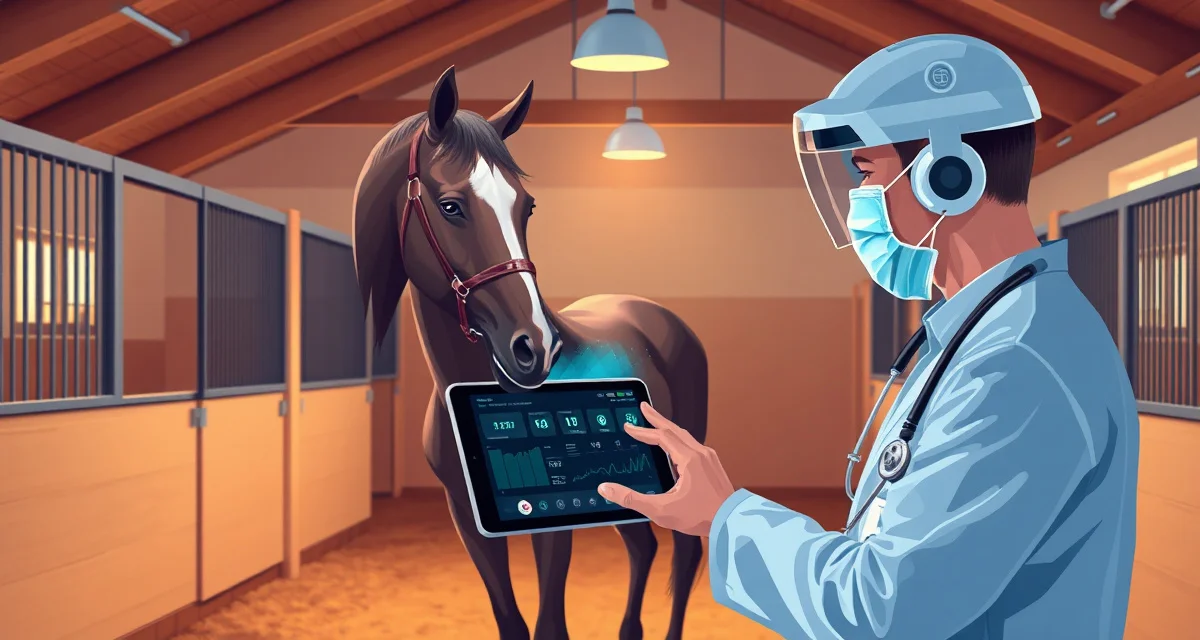
Horse Health Monitoring at Layup Barns: AI Detection Guide
Layup facilities aren't general boarding barns. Every horse on the property is recovering from something, and the margin for missing a health change is razor thin. Horse health monitoring at a layup barn demands a different level of precision than standard equine care operations.
TL;DR
- Effective barn management requires systems that match actual daily workflows, not adapted generic tools
- Per-horse record keeping with digital access reduces the response time to owner questions from hours to seconds
- Automated owner communication and health alerts reduce inbound calls while increasing owner satisfaction and retention
- Billing errors cost barns thousands of dollars annually; point-of-service charge logging is the most effective prevention
- Staff accountability systems with named task assignments and completion logs prevent care gaps without micromanagement
- Purpose-built equine software connects health records, billing, and owner communication in one place
Layup facilities represent a distinct segment with unique management needs: horses arrive post-surgery or post-injury, owners are often remote, vets are checking in on structured schedules, and any behavioral or physical change carries clinical weight. Generic monitoring tools weren't built for this environment. AI-based detection systems that adapt to layup workflows are.
Why Standard Monitoring Falls Short at Layup Facilities
Most barn monitoring tools were designed for active performance horses or general boarding. They flag obvious problems but don't account for the baseline variability that comes with a recovering horse.
A horse three days post-colic surgery moves differently than a horse two weeks out. A horse on stall rest after a suspensory injury has a different normal than one on controlled hand-walking. If your monitoring system can't account for that shifting baseline, you'll either miss real alerts or drown in false ones.
Layup barn managers also deal with a higher volume of owner communication. Remote owners want updates. Trainers want updates. Vets want documentation. Without a system that connects health data to communication and records, staff spend hours on the phone instead of in the barn.
How AI Health Monitoring Works at a Layup Barn
Step 1: Establish a Per-Horse Baseline on Arrival
When a horse arrives at your layup facility, the AI system begins a baseline learning period. This typically runs 48 to 72 hours, during which the system records resting posture, movement frequency, eating and drinking patterns, and time spent standing versus lying down.
This baseline is individual. A horse recovering from a tendon injury will have a different movement profile than one recovering from a respiratory illness. The system doesn't compare horses to each other; it compares each horse to its own established normal.
Document the horse's intake condition, current medications, and vet-prescribed activity restrictions at this stage. That clinical context feeds directly into how the system interprets behavioral data going forward.
Step 2: Configure Alert Thresholds Based on Recovery Stage
Not every deviation from baseline warrants a 2 a.m. phone call. AI monitoring systems allow you to set tiered alert thresholds based on the horse's recovery stage and clinical risk level.
A horse in week one post-surgery might have a low threshold for movement anomalies, triggering a staff check-in if lying time increases by 20 percent. The same horse in week six might have a wider tolerance as normal activity resumes. Work with your attending vet to define these thresholds at intake and update them as the horse progresses through recovery milestones.
Common alert triggers at layup facilities include:
- Prolonged recumbency outside normal rest windows
- Reduced feed or water consumption over a 12-hour period
- Elevated movement or pawing patterns consistent with discomfort
- Significant deviation from established daily routine
Step 3: Integrate Monitoring Data with Vet Records
AI health data is only useful if it connects to the clinical record. When an alert fires, the attending vet needs context: what was the horse's baseline, when did the deviation start, what was the magnitude of change?
Systems like BarnBeacon are built to integrate with vet visit logs and treatment records, so every alert is timestamped against the horse's clinical history. This matters at layup facilities where multiple vets may be involved, including the referring vet, the facility vet, and the owner's home vet.
Structured data also supports billing. Layup facilities charge differently than boarding operations, often by recovery phase or service tier. When your barn management software connects monitoring data to billing records, you can document exactly what care was delivered and when.
Step 4: Set Up Owner Notification Protocols
Remote owners are a defining feature of layup facility management. They're not on-site, they're anxious, and they want information without overwhelming your staff.
Configure your notification system to send automated updates at defined intervals, such as a daily summary report and immediate alerts for threshold breaches. Separate routine updates from urgent alerts so owners learn to read the difference. A daily "all clear" message builds trust without generating unnecessary calls.
BarnBeacon's layup-specific workflow adapts notification settings by owner preference and horse risk level. High-risk post-surgical horses can have more frequent check-in notifications while horses in late-stage recovery move to a lighter update schedule.
Step 5: Document Recovery Milestones and Adjust Monitoring Parameters
Layup care is not static. A horse moves through phases: stall rest, hand-walking, controlled turnout, gradual return to work. Each phase changes what normal looks like.
Build a review checkpoint into your protocol at each recovery milestone. When the vet clears a horse for hand-walking, update the activity baseline. When turnout begins, recalibrate movement thresholds. This keeps the AI system accurate and prevents alert fatigue from outdated parameters.
Consistent documentation at each milestone also protects you legally and professionally. If an owner disputes the care provided, you have a timestamped record of every alert, every staff response, and every vet communication.
Common Mistakes in Layup Health Monitoring
Setting a single alert threshold for all horses. Recovery is individual. A one-size threshold generates noise for low-risk horses and misses critical changes in high-risk ones. Configure per horse, per phase.
Skipping the baseline learning period. Rushing a horse into active monitoring without establishing a baseline means the system has nothing meaningful to compare against. Give the system its 48 to 72 hours before relying on alerts.
Disconnecting monitoring from communication. Health data that lives in a silo doesn't help owners, vets, or your billing department. Integration is the point. If your current tools don't connect, review the layup barn operations guide for a full workflow overview.
Failing to update parameters at recovery milestones. This is the most common source of alert fatigue. Outdated thresholds produce false positives that train staff to ignore alerts, which defeats the entire system.
What to Look for in a Monitoring System for Layup Facilities
Most equine health tracking layup facility operators have tried are built for performance barns. They track fitness metrics, training load, and competition readiness. That's the wrong frame for a recovery environment.
Look for systems that offer individual baseline learning rather than population averages, tiered alert configurations by recovery phase, integration with vet records and billing, and owner notification tools that separate routine updates from urgent alerts.
BarnBeacon was built with layup facility workflows in mind, including billing structures that reflect the phased nature of recovery care. That specificity matters when you're managing horses at different stages of rehabilitation simultaneously.
Equine health tracking at a layup facility is not a passive function. It's an active clinical support tool that, when configured correctly, reduces staff burden, improves owner communication, and catches problems before they become emergencies.
How does BarnBeacon compare to spreadsheets for barn management?
Spreadsheets require manual updates, lack real-time notifications, and create version control problems when multiple staff members are working from different files. BarnBeacon centralizes records, pushes alerts automatically based on logged events, and connects care records to billing and owner communication in one system. Most facilities report saving several hours per week after switching from spreadsheets.
What is the setup process like for BarnBeacon?
Most facilities complete the initial setup in under a week. Horse profiles, service templates, and billing configurations can be imported from existing records or entered directly. BarnBeacon's US-based support team is available to assist with setup, and most managers are running their first billing cycle through the platform within days of starting.
Can BarnBeacon support a barn with multiple staff members?
Yes. BarnBeacon supports multiple user accounts with role-based access, so barn managers, barn staff, and owners each see the information relevant to their role. Task assignments, completion logs, and communication history are all attached to the barn's account rather than to individual staff phones or email addresses.
FAQ
What is Horse Health Monitoring at Layup Barns: AI Detection Guide?
Horse health monitoring at layup barns is a specialized approach to tracking the physical and behavioral condition of recovering horses using AI-assisted detection tools. Unlike standard boarding operations, layup facilities house post-surgical or post-injury horses where any change in condition carries clinical significance. AI detection systems continuously observe horses for subtle signs of distress, lameness, or abnormal behavior, alerting staff before conditions escalate and supporting the structured veterinary schedules common at layup facilities.
How much does Horse Health Monitoring at Layup Barns: AI Detection Guide cost?
Costs vary depending on barn size, number of stalls monitored, and software platform chosen. Entry-level equine health monitoring software typically starts around $100–$300 per month, while full AI detection systems with camera hardware and integrated management platforms can range from $500 to several thousand dollars monthly. Many providers offer per-horse or per-stall pricing. Given that billing errors and missed health events can cost barns thousands annually, most layup facilities find the investment pays for itself quickly.
How does Horse Health Monitoring at Layup Barns: AI Detection Guide work?
AI detection systems use stall-mounted cameras and sensors to continuously observe horse movement, posture, eating patterns, and behavior. Machine learning algorithms establish a baseline for each horse and flag deviations in real time. Alerts are pushed to staff phones or management dashboards. This integrates with digital health records, so any flagged event is automatically logged against that horse's recovery profile, keeping veterinarians, owners, and barn managers aligned without relying on manual observation alone.
What are the benefits of Horse Health Monitoring at Layup Barns: AI Detection Guide?
Key benefits include earlier detection of health changes, reduced staff monitoring burden, faster owner communication, and more accurate record keeping. Layup barns using AI monitoring report fewer missed health events, lower inbound call volume from anxious owners, and stronger client retention. Automated alerts and digital logs also reduce liability exposure and billing errors. Staff can focus on hands-on care rather than manual tracking, improving both animal outcomes and overall barn efficiency.
Who needs Horse Health Monitoring at Layup Barns: AI Detection Guide?
Layup barn managers, rehabilitation facility operators, and equine recovery specialists benefit most from AI health monitoring. It is particularly valuable for operations with high-value horses, remote owners, or structured vet check schedules where documentation matters. Any barn housing post-surgical, post-injury, or competition-resting horses where a missed health change could have serious consequences should consider purpose-built monitoring. General boarding barns adapting generic tools often find them insufficient for this level of clinical precision.
How long does Horse Health Monitoring at Layup Barns: AI Detection Guide take?
Initial hardware setup typically takes one to three days depending on barn size. Software onboarding and staff training generally require another few days to a week before the system is running reliably. AI baseline learning for individual horses usually stabilizes within one to two weeks of consistent data collection. Most layup facilities are fully operational with accurate, horse-specific alerts within 30 days of installation, with ROI visible in the first billing cycle through reduced errors and owner communication time.
What should I look for when choosing Horse Health Monitoring at Layup Barns: AI Detection Guide?
Look for a system built specifically for equine care rather than adapted from livestock or general farm software. Key features include per-horse health record integration, automated owner communication tools, point-of-service charge logging, and named staff task assignment with completion tracking. Ensure the AI detection layer connects directly to your record keeping and billing workflows. Evaluate vendor support responsiveness, ease of staff adoption, and whether the platform scales with your barn's census without a large jump in cost.
Is Horse Health Monitoring at Layup Barns: AI Detection Guide worth it?
For layup barns, yes. The margin for missing a health change in a recovering horse is too narrow to rely on manual observation alone. AI detection reduces response times, supports structured vet communication, and gives remote owners real-time confidence in their horse's care. When you factor in prevented billing errors, reduced phone interruptions, and stronger client retention, the operational return is clear. Purpose-built equine monitoring pays for itself faster at layup facilities than at almost any other barn type.
Sources
- American Association of Equine Practitioners (AAEP)
- United States Equestrian Federation (USEF)
- American Horse Council
- Kentucky Equine Research
- UC Davis Center for Equine Health
Get Started with BarnBeacon
Running a layup facility well requires the right tools behind the right protocols. BarnBeacon gives managers the health record tracking, billing automation, and owner communication infrastructure to operate efficiently without adding administrative staff. Start a free trial and see how the platform fits the way your barn already works.