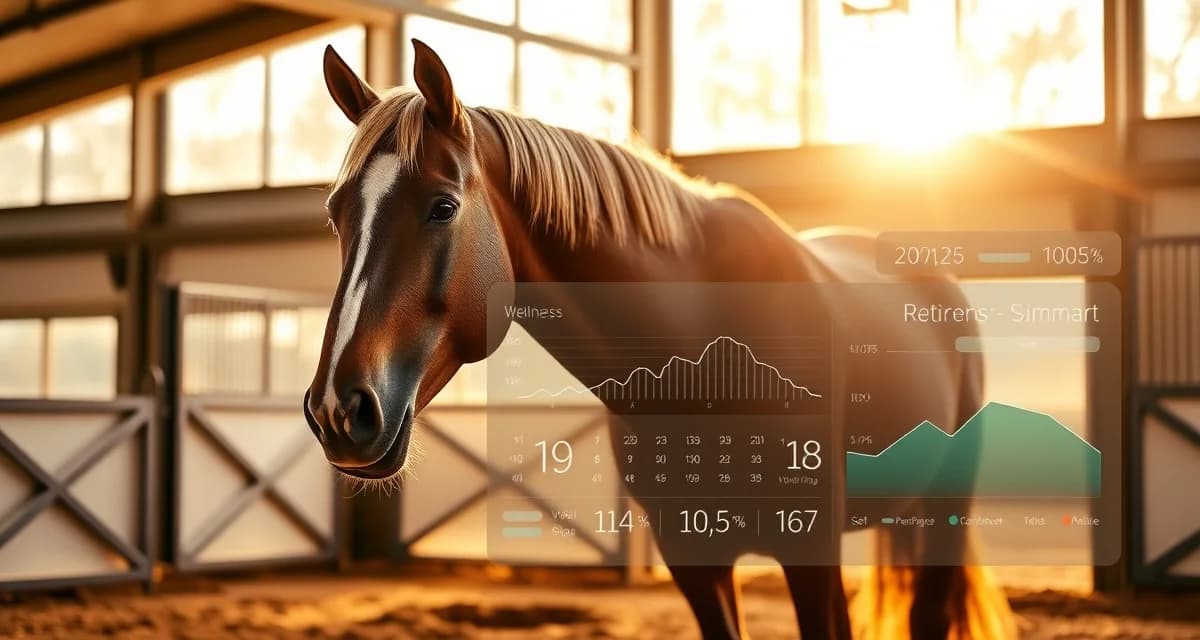
Horse Health Monitoring at Retirement Barns: AI Detection Guide
Retirement barns operate differently from training or boarding facilities, and most health monitoring tools are not built with that in mind. Horses in retirement tend to be older, managing chronic conditions, and often owned by people who live hours away. That combination makes consistent, automated horse health monitoring at a retirement barn not just convenient, but essential.
TL;DR
- Effective barn management requires systems that match actual daily workflows, not adapted generic tools
- Per-horse record keeping with digital access reduces the response time to owner questions from hours to seconds
- Automated owner communication and health alerts reduce inbound calls while increasing owner satisfaction and retention
- Billing errors cost barns thousands of dollars annually; point-of-service charge logging is the most effective prevention
- Staff accountability systems with named task assignments and completion logs prevent care gaps without micromanagement
- Purpose-built equine software connects health records, billing, and owner communication in one place
Unlike performance horses with daily hands-on contact from trainers and riders, retired horses may go days without intensive human interaction. Catching a subtle change in behavior, gait, or eating patterns early can be the difference between a manageable condition and a crisis.
Why Retirement Facilities Have Distinct Monitoring Needs
Retirement facilities represent a distinct segment with unique management needs that general barn software rarely addresses. The horse population skews older, with a higher prevalence of Cushing's disease, arthritis, laminitis, and metabolic conditions. These horses require baseline tracking that accounts for their existing diagnoses, not just flags against a generic healthy-horse standard.
Owners are also emotionally invested and often anxious. They want regular updates, not just emergency calls. A monitoring system that integrates owner notifications into its normal workflow reduces staff time spent on phone calls while keeping owners informed.
Step 1: Establish Individual Health Baselines
Why Baselines Matter More in Retirement Settings
Before any alert system can work, it needs to know what "normal" looks like for each horse. A 28-year-old horse with managed Cushing's will have different vital patterns, movement levels, and eating behaviors than a 15-year-old recently retired from competition.
AI-based monitoring tools like BarnBeacon use a learning period, typically 7 to 14 days, to establish individual baselines. During this window, the system records movement frequency, time spent at the feeder, water consumption patterns, and rest behavior. These become the reference points for every alert going forward.
What to Record at Intake
When a new horse arrives at your retirement facility, document the following before the monitoring system goes live:
- Current diagnoses and managed conditions
- Medications and supplement schedule
- Known behavioral quirks (e.g., a horse that naturally paces at feeding time)
- Previous vet records, including recent bloodwork
Feeding this context into the system prevents false positives that would otherwise erode staff trust in the alerts.
Step 2: Configure Alert Triggers for Retirement-Specific Risks
Common Conditions to Monitor For
Retirement horses face a different risk profile than younger horses. Your alert thresholds should reflect that. Key triggers to configure include:
- Reduced movement over 12+ hours: A strong early indicator of colic, laminitis flare-up, or musculoskeletal pain
- Missed feedings: Especially significant in horses on medication mixed into feed
- Extended time lying down: Can indicate colic or severe joint pain in older horses
- Increased nighttime restlessness: Often precedes a health event by 12 to 24 hours
Avoiding Alert Fatigue
Set thresholds that are sensitive enough to catch real problems but not so tight that staff receive dozens of notifications per day. BarnBeacon allows per-horse threshold customization, which is critical in a retirement setting where one horse's "normal" would be another horse's red flag.
Review and adjust thresholds during the first 30 days. Most facilities find their alert volume stabilizes after the first month once baselines are properly calibrated.
Step 3: Integrate with Veterinary Records
Connecting Monitoring Data to Clinical History
A health alert is only useful if the person responding to it has context. When your monitoring system connects to your vet records, the on-call staff member or attending vet can immediately see the horse's history alongside the alert.
BarnBeacon integrates with common equine practice management platforms, allowing vet notes, diagnosis history, and medication logs to appear alongside real-time monitoring data. This is particularly valuable for retirement facilities that work with multiple vets across a large geographic area.
Documenting Observations for Vet Visits
Use the monitoring data as a clinical log. If a horse has been showing reduced movement for three days before a scheduled vet visit, that trend data is far more useful than a verbal report of "he seemed a little off." Many retirement barn managers use this feature to support barn management software workflows that include automated health summaries ahead of appointments.
Step 4: Set Up Owner Notification Workflows
What Owners of Retired Horses Expect
Owners who have placed a horse in retirement care are often managing grief alongside hope. They want to know their horse is comfortable and well-monitored. A notification system that only contacts them during emergencies will feel inadequate.
Build a tiered notification structure:
- Daily or weekly wellness summaries: Automated reports showing movement levels, feeding behavior, and any minor flags
- Non-urgent alerts: Sent within a few hours for minor deviations from baseline
- Urgent alerts: Immediate notification for high-priority triggers like extended colic indicators or complete feed refusal
Keeping Owners Informed Without Overwhelming Staff
Automated notifications handle the routine communication load. Staff time is reserved for situations that require a human response. This structure also creates a documentation trail that protects the facility if questions arise about the quality of care.
For a deeper look at how this fits into overall facility operations, the retirement barn operations guide covers staffing models and communication protocols in detail.
Step 5: Review and Refine Monthly
Treating Monitoring as an Ongoing Process
A monitoring system is not a set-and-forget tool. Schedule a monthly review of alert history, false positive rates, and any health events that occurred. Ask:
- Were there alerts that preceded a health event? Did staff respond appropriately?
- Were there health events that the system did not flag? Why not?
- Have any horses' baselines shifted due to seasonal changes, new medications, or aging?
Older horses change. A horse that was stable at intake may develop new conditions within 12 months. Updating baselines and thresholds regularly keeps the system accurate.
Tracking Outcomes Over Time
Use the data to improve care protocols across your entire herd. If you notice that laminitis flare-ups are consistently preceded by a specific movement pattern 18 to 24 hours before clinical signs appear, that becomes a facility-wide early warning protocol. This kind of equine health tracking at a retirement facility turns monitoring data into institutional knowledge.
Common Mistakes to Avoid
Skipping the baseline learning period. Rushing a horse into full monitoring before the system has enough data leads to unreliable alerts and staff frustration.
Using generic thresholds for all horses. A one-size-fits-all approach fails in retirement settings. Customize per horse from the start.
Neglecting owner communication setup. If owners are not receiving regular updates, they will call staff directly, which defeats the purpose of an automated system.
Not reviewing alert history. The data is only valuable if someone is analyzing it. Build the monthly review into your standard operating procedures.
How does BarnBeacon compare to spreadsheets for barn management?
Spreadsheets require manual updates, lack real-time notifications, and create version control problems when multiple staff members are working from different files. BarnBeacon centralizes records, pushes alerts automatically based on logged events, and connects care records to billing and owner communication in one system. Most facilities report saving several hours per week after switching from spreadsheets.
What is the setup process like for BarnBeacon?
Most facilities complete the initial setup in under a week. Horse profiles, service templates, and billing configurations can be imported from existing records or entered directly. BarnBeacon's US-based support team is available to assist with setup, and most managers are running their first billing cycle through the platform within days of starting.
Can BarnBeacon support a barn with multiple staff members?
Yes. BarnBeacon supports multiple user accounts with role-based access, so barn managers, barn staff, and owners each see the information relevant to their role. Task assignments, completion logs, and communication history are all attached to the barn's account rather than to individual staff phones or email addresses.
FAQ
What is Horse Health Monitoring at Retirement Barns: AI Detection Guide?
Horse health monitoring at retirement barns using AI detection refers to automated systems that track vital signs, movement patterns, feeding behavior, and physical condition in older horses. Unlike generic barn tools, these solutions are designed for retirement facilities where horses may have chronic conditions and owners live remotely. AI detection flags early warning signs—lameness, weight loss, behavioral changes—so staff can respond before issues escalate, reducing emergency vet calls and improving overall horse welfare.
How much does Horse Health Monitoring at Retirement Barns: AI Detection Guide cost?
Costs vary widely depending on the platform and facility size. Basic software subscriptions typically range from $50–$200 per month for small barns, while full AI-integrated sensor systems with camera monitoring can run $300–$1,000 or more monthly. Per-horse pricing models are common, often $10–$30 per horse monthly. Many providers offer tiered plans. The investment frequently offsets itself through reduced billing errors, fewer emergency vet visits, and improved owner retention, which directly impacts long-term revenue.
How does Horse Health Monitoring at Retirement Barns: AI Detection Guide work?
AI monitoring systems combine wearable sensors, stall cameras, and software algorithms to continuously observe horse behavior and physical indicators. Data is analyzed against baseline patterns to detect anomalies—unusual lying times, reduced feed intake, gait irregularities. Alerts are sent automatically to staff and owners via app or text. Barn management software integrates health records, task assignments, and owner communication so everything is centralized, giving remote owners real-time visibility and staff clear daily accountability.
What are the benefits of Horse Health Monitoring at Retirement Barns: AI Detection Guide?
Key benefits include early disease detection before symptoms become severe, automated owner updates that reduce inbound calls, digital health records accessible from anywhere, and reduced billing errors through point-of-service charge logging. Staff accountability improves with named task assignments and completion tracking. For retirement barns specifically, these systems provide consistent oversight for horses that may see limited daily hands-on contact, bridging the gap between infrequent visits and continuous care.
Who needs Horse Health Monitoring at Retirement Barns: AI Detection Guide?
Retirement barn operators managing older horses with chronic conditions are the primary users. This is especially critical for facilities where owners live far away and rely on the barn for day-to-day health decisions. Barn managers, veterinarians coordinating ongoing care, and remote owners all benefit. Any retirement operation housing five or more horses managing conditions like Cushing's disease, arthritis, or metabolic disorders will find structured AI monitoring particularly valuable.
How long does Horse Health Monitoring at Retirement Barns: AI Detection Guide take?
Implementation timelines depend on system complexity. Software-only platforms can be operational within a few days—data entry, staff onboarding, and owner portal setup typically take one to two weeks. Hardware-dependent systems with sensors or cameras require physical installation, which may take one to four weeks per barn setup. Staff training adds another one to two weeks before the system runs efficiently. Most barns reach full operational use within 30 days of starting implementation.
What should I look for when choosing Horse Health Monitoring at Retirement Barns: AI Detection Guide?
Look for software purpose-built for equine retirement management rather than adapted generic barn tools. Key features to evaluate: per-horse health record logging with vet and medication tracking, automated owner communication with customizable alert thresholds, integrated billing with point-of-service charge capture, staff task assignment with completion verification, and mobile accessibility for remote management. Confirm the system scales with your herd size and that customer support understands the specific demands of retirement barn operations.
Is Horse Health Monitoring at Retirement Barns: AI Detection Guide worth it?
For most retirement barns, yes. The combination of older horses with elevated health risk, remote ownership, and the reputational cost of missed care events makes robust monitoring essential rather than optional. Barns report recovering the system cost through reduced billing leakage alone. Beyond revenue, proactive health alerts reduce emergency vet expenses and owner churn. If your facility manages horses with chronic conditions or serves absentee owners, structured AI-assisted monitoring typically delivers measurable return within the first few months.
Sources
- American Association of Equine Practitioners (AAEP)
- United States Equestrian Federation (USEF)
- American Competitive Trail Horse Association (ACTHA)
- American Horse Council
- Kentucky Equine Research
Get Started with BarnBeacon
Running a retirement barn well requires the right tools behind the right protocols. BarnBeacon gives managers the health record tracking, billing automation, and owner communication infrastructure to operate efficiently without adding administrative staff. Start a free trial and see how the platform fits the way your barn already works.